Text-to-image diffusion models achieve impressive performance, but reconciling multiple spatial conditions usually requires costly retraining or labor intensive weight tuning. We introduce Cross-ControlNet, a training-free framework for text-to-image generation with multiple conditions. It exploits two observations: intermediate features from different ControlNet branches are spatially aligned, and their condition strength can be measured by spatial and channel level variance. Cross-ControlNet contains three modules: PixFusion, which fuses features pixelwise under the guidance of standard deviation maps smoothed by a Gaussian to suppress early-stage noise; ChannelFusion, which applies per channel hybrid fusion via a consistency ratio gate, reducing threshold degradation in high dimensions; and KV-Injection, which injects foreground- and background-specific key/value pairs under text-derived attention masks to disentangle conflicting cues and enforce each condition faithfully. Extensive experiments demonstrate that Cross-ControlNet consistently improves controllable generation under both conflicting and complementary conditions, and further generalizes to the DiT-based FLUX model without additional training.
We recently developed a joint speech and language model (SLM [1]) which fuses a pretrained foundational speech model and a large language model (LLM), while preserving the in-context learning capability intrinsic to the pretrained LLM. In this paper, we apply SLM to dialog applications where the dialog states are inferred directly from the audio signal.Task-oriented dialogs often contain domain-specific entities, i.e., restaurants, hotels, train stations, and city names, which are difficult to recognize, however, critical for the downstream applications. Inspired by the RAG (retrieval-augmented generation) models, we propose a retrieval augmented SLM (ReSLM) that overcomes this weakness. We first train a retriever to retrieve text entities given audio inputs. The retrieved entities are then added as text inputs to the underlying LLM to bias model predictions. We evaluated ReSLM on speech MultiWoz task (DSTC-11 Challenge), and found that the retrieval augmentation boosts model performance, achieving joint goal accuracy (38.6% vs 32.7%), slot error rate (20.6% vs 24.8%) and ASR word error rate (5.5% vs 6.7%). While demonstrated on dialog state tracking, our approach is broadly applicable to speech tasks requiring custom contextual information or domain-specific entities.
Spoken language identification refers to the task of automatically predicting the spoken language in a given utterance. Conventionally, it is modeled as a speech-based language identification task. Prior techniques have been constrained to a single modality; however in the case of video data there is a wealth of other metadata that may be beneficial for this task. In this work, we propose MuSeLI, a Multimodal Spoken Language Identification method, which delves into the use of various metadata sources to enhance language identification. Our study reveals that metadata such as video title, description and geographic location provide substantial information to identify the spoken language of the multimedia recording. We conduct experiments using two diverse public datasets of YouTube videos, and obtain state-of-the-art results on the language identification task. We additionally conduct an ablation study that describes the distinct contribution of each modality for language recognition.
We present a scalable, bottom-up and intrinsically diverse data collection scheme that can be used for high-level reasoning with long and medium horizons and that has 2.2x higher throughput compared to traditional narrow top-down step-by-step collection. We collect realistic data by performing any user requests within the entirety of 3 office buildings and using multiple robot and human embodiments. With this data, we show that models trained on all embodiments perform better than ones trained on the robot data only, even when evaluated solely on robot episodes. We find that for a fixed collection budget it is beneficial to take advantage of cheaper human collection along with robot collection. We release a large and highly diverse (29,520 unique instructions) dataset dubbed RoboVQA containing 829,502 (video, text) pairs for robotics-focused visual question answering. We also demonstrate how evaluating real robot experiments with an intervention mechanism enables performing tasks to completion, making it deployable with human oversight even if imperfect while also providing a single performance metric. We demonstrate a single video-conditioned model named RoboVQA-VideoCoCa trained on our dataset that is capable of performing a variety of grounded high-level reasoning tasks in broad realistic settings with a cognitive intervention rate 46% lower than the zero-shot state of the art visual language model (VLM) baseline and is able to guide real robots through long-horizon tasks. The performance gap with zero-shot state-of-the-art models indicates that a lot of grounded data remains to be collected for real-world deployment, emphasizing the critical need for scalable data collection approaches. Finally, we show that video VLMs significantly outperform single-image VLMs with an average error rate reduction of 19% across all VQA tasks. Data and videos available at https://robovqa.github.io
We present the Pathways Autoregressive Text-to-Image (Parti) model, which generates high-fidelity photorealistic images and supports content-rich synthesis involving complex compositions and world knowledge. Parti treats text-to-image generation as a sequence-to-sequence modeling problem, akin to machine translation, with sequences of image tokens as the target outputs rather than text tokens in another language. This strategy can naturally tap into the rich body of prior work on large language models, which have seen continued advances in capabilities and performance through scaling data and model sizes. Our approach is simple: First, Parti uses a Transformer-based image tokenizer, ViT-VQGAN, to encode images as sequences of discrete tokens. Second, we achieve consistent quality improvements by scaling the encoder-decoder Transformer model up to 20B parameters, with a new state-of-the-art zero-shot FID score of 7.23 and finetuned FID score of 3.22 on MS-COCO. Our detailed analysis on Localized Narratives as well as PartiPrompts (P2), a new holistic benchmark of over 1600 English prompts, demonstrate the effectiveness of Parti across a wide variety of categories and difficulty aspects. We also explore and highlight limitations of our models in order to define and exemplify key areas of focus for further improvements. See https://parti.research.google/ for high-resolution images.
This paper introduces a new speech dataset called ``LibriTTS-R'' designed for text-to-speech (TTS) use. It is derived by applying speech restoration to the LibriTTS corpus, which consists of 585 hours of speech data at 24 kHz sampling rate from 2,456 speakers and the corresponding texts. The constituent samples of LibriTTS-R are identical to those of LibriTTS, with only the sound quality improved. Experimental results show that the LibriTTS-R ground-truth samples showed significantly improved sound quality compared to those in LibriTTS. In addition, neural end-to-end TTS trained with LibriTTS-R achieved speech naturalness on par with that of the ground-truth samples. The corpus is freely available for download from \url{http://www.openslr.org/141/}.
We present a joint Speech and Language Model (SLM), a multitask, multilingual, and dual-modal model that takes advantage of pretrained foundational speech and language models. SLM freezes the pretrained foundation models to maximally preserves their capabilities, and only trains a simple adapter with just 1\% (156M) of the foundation models' parameters. This adaptation not only leads SLM to achieve strong performance on conventional tasks such as speech recognition (ASR) and speech translation (AST), but also introduces the novel capability of zero-shot instruction-following for more diverse tasks: given a speech input and a text instruction, SLM is able to perform unseen generation tasks including contextual biasing ASR using real-time context, dialog generation, speech continuation, and question answering, etc. Our approach demonstrates that the representational gap between pretrained speech and language models might be narrower than one would expect, and can be bridged by a simple adaptation mechanism. As a result, SLM is not only efficient to train, but also inherits strong capabilities already acquired in foundation models of different modalities.
Most research on task oriented dialog modeling is based on written text input. However, users interact with practical dialog systems often using speech as input. Typically, systems convert speech into text using an Automatic Speech Recognition (ASR) system, introducing errors. Furthermore, these systems do not address the differences in written and spoken language. The research on this topic is stymied by the lack of a public corpus. Motivated by these considerations, our goal in hosting the speech-aware dialog state tracking challenge was to create a public corpus or task which can be used to investigate the performance gap between the written and spoken forms of input, develop models that could alleviate this gap, and establish whether Text-to-Speech-based (TTS) systems is a reasonable surrogate to the more-labor intensive human data collection. We created three spoken versions of the popular written-domain MultiWoz task -- (a) TTS-Verbatim: written user inputs were converted into speech waveforms using a TTS system, (b) Human-Verbatim: humans spoke the user inputs verbatim, and (c) Human-paraphrased: humans paraphrased the user inputs. Additionally, we provided different forms of ASR output to encourage wider participation from teams that may not have access to state-of-the-art ASR systems. These included ASR transcripts, word time stamps, and latent representations of the audio (audio encoder outputs). In this paper, we describe the corpus, report results from participating teams, provide preliminary analyses of their results, and summarize the current state-of-the-art in this domain.
Speech representation learning approaches for non-semantic tasks such as language recognition have either explored supervised embedding extraction methods using a classifier model or self-supervised representation learning approaches using raw data. In this paper, we propose a novel framework of combining self-supervised representation learning with the language label information for the pre-training task. This framework, termed as Label Aware Speech Representation (LASR) learning, uses a triplet based objective function to incorporate language labels along with the self-supervised loss function. The speech representations are further fine-tuned for the downstream task. The language recognition experiments are performed on two public datasets - FLEURS and Dhwani. In these experiments, we illustrate that the proposed LASR framework improves over the state-of-the-art systems on language identification. We also report an analysis of the robustness of LASR approach to noisy/missing labels as well as its application to multi-lingual speech recognition tasks.
We introduce AudioPaLM, a large language model for speech understanding and generation. AudioPaLM fuses text-based and speech-based language models, PaLM-2 [Anil et al., 2023] and AudioLM [Borsos et al., 2022], into a unified multimodal architecture that can process and generate text and speech with applications including speech recognition and speech-to-speech translation. AudioPaLM inherits the capability to preserve paralinguistic information such as speaker identity and intonation from AudioLM and the linguistic knowledge present only in text large language models such as PaLM-2. We demonstrate that initializing AudioPaLM with the weights of a text-only large language model improves speech processing, successfully leveraging the larger quantity of text training data used in pretraining to assist with the speech tasks. The resulting model significantly outperforms existing systems for speech translation tasks and has the ability to perform zero-shot speech-to-text translation for many languages for which input/target language combinations were not seen in training. AudioPaLM also demonstrates features of audio language models, such as transferring a voice across languages based on a short spoken prompt. We release examples of our method at https://google-research.github.io/seanet/audiopalm/examples
Speech restoration (SR) is a task of converting degraded speech signals into high-quality ones. In this study, we propose a robust SR model called Miipher, and apply Miipher to a new SR application: increasing the amount of high-quality training data for speech generation by converting speech samples collected from the Web to studio-quality. To make our SR model robust against various degradation, we use (i) a speech representation extracted from w2v-BERT for the input feature, and (ii) a text representation extracted from transcripts via PnG-BERT as a linguistic conditioning feature. Experiments show that Miipher (i) is robust against various audio degradation and (ii) enable us to train a high-quality text-to-speech (TTS) model from restored speech samples collected from the Web. Audio samples are available at our demo page: google.github.io/df- conformer/miipher/.
Large Language Models (LLMs) have been applied in the speech domain, often incurring a performance drop due to misaligned between speech and language representations. To bridge this gap, we propose a joint speech and language model (SLM) using a Speech2Text adapter, which maps speech into text token embedding space without speech information loss. Additionally, using a CTC-based blank-filtering, we can reduce the speech sequence length to that of text. In speech MultiWoz dataset (DSTC11 challenge), SLM largely improves the dialog state tracking (DST) performance (24.7% to 28.4% accuracy). Further to address errors on rare entities, we augment SLM with a Speech2Entity retriever, which uses speech to retrieve relevant entities, and then adds them to the original SLM input as a prefix. With this retrieval-augmented SLM (ReSLM), the DST performance jumps to 34.6% accuracy. Moreover, augmenting the ASR task with the dialog understanding task improves the ASR performance from 9.4% to 8.5% WER.
We introduce the Universal Speech Model (USM), a single large model that performs automatic speech recognition (ASR) across 100+ languages. This is achieved by pre-training the encoder of the model on a large unlabeled multilingual dataset of 12 million (M) hours spanning over 300 languages, and fine-tuning on a smaller labeled dataset. We use multilingual pre-training with random-projection quantization and speech-text modality matching to achieve state-of-the-art performance on downstream multilingual ASR and speech-to-text translation tasks. We also demonstrate that despite using a labeled training set 1/7-th the size of that used for the Whisper model, our model exhibits comparable or better performance on both in-domain and out-of-domain speech recognition tasks across many languages.
We propose a novel method to accelerate training and inference process of recurrent neural network transducer (RNN-T) based on the guidance from a co-trained connectionist temporal classification (CTC) model. We made a key assumption that if an encoder embedding frame is classified as a blank frame by the CTC model, it is likely that this frame will be aligned to blank for all the partial alignments or hypotheses in RNN-T and it can be discarded from the decoder input. We also show that this frame reduction operation can be applied in the middle of the encoder, which result in significant speed up for the training and inference in RNN-T. We further show that the CTC alignment, a by-product of the CTC decoder, can also be used to perform lattice reduction for RNN-T during training. Our method is evaluated on the Librispeech and SpeechStew tasks. We demonstrate that the proposed method is able to accelerate the RNN-T inference by 2.2 times with similar or slightly better word error rates (WER).
Foundation models (FMs), that are trained on broad data at scale and are adaptable to a wide range of downstream tasks, have brought large interest in the research community. Benefiting from the diverse data sources such as different modalities, languages and application domains, foundation models have demonstrated strong generalization and knowledge transfer capabilities. In this paper, we present a pioneering study towards building an efficient solution for FM-based speech recognition systems. We adopt the recently developed self-supervised BEST-RQ for pretraining, and propose the joint finetuning with both source and unsupervised target domain data using JUST Hydra. The FM encoder adapter and decoder are then finetuned to the target domain with a small amount of supervised in-domain data. On a large-scale YouTube and Voice Search task, our method is shown to be both data and model parameter efficient. It achieves the same quality with only 21.6M supervised in-domain data and 130.8M finetuned parameters, compared to the 731.1M model trained from scratch on additional 300M supervised in-domain data.
We introduce Noise2Music, where a series of diffusion models is trained to generate high-quality 30-second music clips from text prompts. Two types of diffusion models, a generator model, which generates an intermediate representation conditioned on text, and a cascader model, which generates high-fidelity audio conditioned on the intermediate representation and possibly the text, are trained and utilized in succession to generate high-fidelity music. We explore two options for the intermediate representation, one using a spectrogram and the other using audio with lower fidelity. We find that the generated audio is not only able to faithfully reflect key elements of the text prompt such as genre, tempo, instruments, mood, and era, but goes beyond to ground fine-grained semantics of the prompt. Pretrained large language models play a key role in this story -- they are used to generate paired text for the audio of the training set and to extract embeddings of the text prompts ingested by the diffusion models. Generated examples: https://google-research.github.io/noise2music
Building inclusive speech recognition systems is a crucial step towards developing technologies that speakers of all language varieties can use. Therefore, ASR systems must work for everybody independently of the way they speak. To accomplish this goal, there should be available data sets representing language varieties, and also an understanding of model configuration that is the most helpful in achieving robust understanding of all types of speech. However, there are not enough data sets for accented speech, and for the ones that are already available, more training approaches need to be explored to improve the quality of accented speech recognition. In this paper, we discuss recent progress towards developing more inclusive ASR systems, namely, the importance of building new data sets representing linguistic diversity, and exploring novel training approaches to improve performance for all users. We address recent directions within benchmarking ASR systems for accented speech, measure the effects of wav2vec 2.0 pre-training on accented speech recognition, and highlight corpora relevant for diverse ASR evaluations.
Most research on task oriented dialog modeling is based on written text input. However, users interact with practical dialog systems often using speech as input. Typically, systems convert speech into text using an Automatic Speech Recognition (ASR) system, introducing errors. Furthermore, these systems do not address the differences in written and spoken language. The research on this topic is stymied by the lack of a public corpus. Motivated by these considerations, our goal in hosting the speech-aware dialog state tracking challenge was to create a public corpus or task which can be used to investigate the performance gap between the written and spoken forms of input, develop models that could alleviate this gap, and establish whether Text-to-Speech-based (TTS) systems is a reasonable surrogate to the more-labor intensive human data collection. We created three spoken versions of the popular written-domain MultiWoz task – (a) TTS-Verbatim: written user inputs were converted into speech waveforms using a TTS system, (b) Human-Verbatim: humans spoke the user inputs verbatim, and (c) Human-paraphrased: humans paraphrased the user inputs. Additionally, we provided different forms of ASR output to encourage wider participation from teams that may not have access to state-of-the-art ASR systems. These included ASR transcripts, word time stamps, and latent representations of the audio (audio encoder outputs). In this paper, we describe the corpus, report results from participating teams, provide preliminary analyses of their results, and summarize the current state-of-the-art in this domain.
Self-supervised learning of speech representations has achieved impressive results in improving automatic speech recognition (ASR). In this paper, we show that data selection is important for self-supervised learning. We propose a simple and effective unsupervised data selection method which selects acoustically similar speech to a target domain. It takes the discrete speech representation available in common self-supervised learning frameworks as input, and applies a contrastive data selection method on the discrete tokens. Through extensive empirical studies we show that our proposed method reduces the amount of required pre-training data and improves the downstream ASR performance. Pre-training on a selected subset of 6% of the general data pool results in 11.8% relative improvements in LibriSpeech test-other compared to pre-training on the full set. On Multilingual LibriSpeech French, German, and Spanish test sets, selecting 6% data for pre-training reduces word error rate by more than 15% relatively compared to the full set, and achieves competitive results compared to current state-of-the-art performances.
We summarize the results of a host of efforts using giant automatic speech recognition (ASR) models pre-trained using large, diverse unlabeled datasets containing approximately a million hours of audio. We find that the combination of pre-training, self-training and scaling up model size greatly increases data efficiency, even for extremely large tasks with tens of thousands of hours of labeled data. In particular, on an ASR task with 34k hours of labeled data, by fine-tuning an 8 billion parameter pre-trained Conformer model we can match state-of-the-art (SoTA) performance with only 3% of the training data and significantly improve SoTA with the full training set. We also report on the universal benefits gained from using big pre-trained and self-trained models for a large set of downstream tasks that cover a wide range of speech domains and span multiple orders of magnitudes of dataset sizes, including obtaining SoTA performance on many public benchmarks. In addition, we utilize the learned representation of pre-trained networks to achieve SoTA results on non-ASR tasks.
 Yu Zhang (张羽)合作论文数Meta Superintelligence Labs17
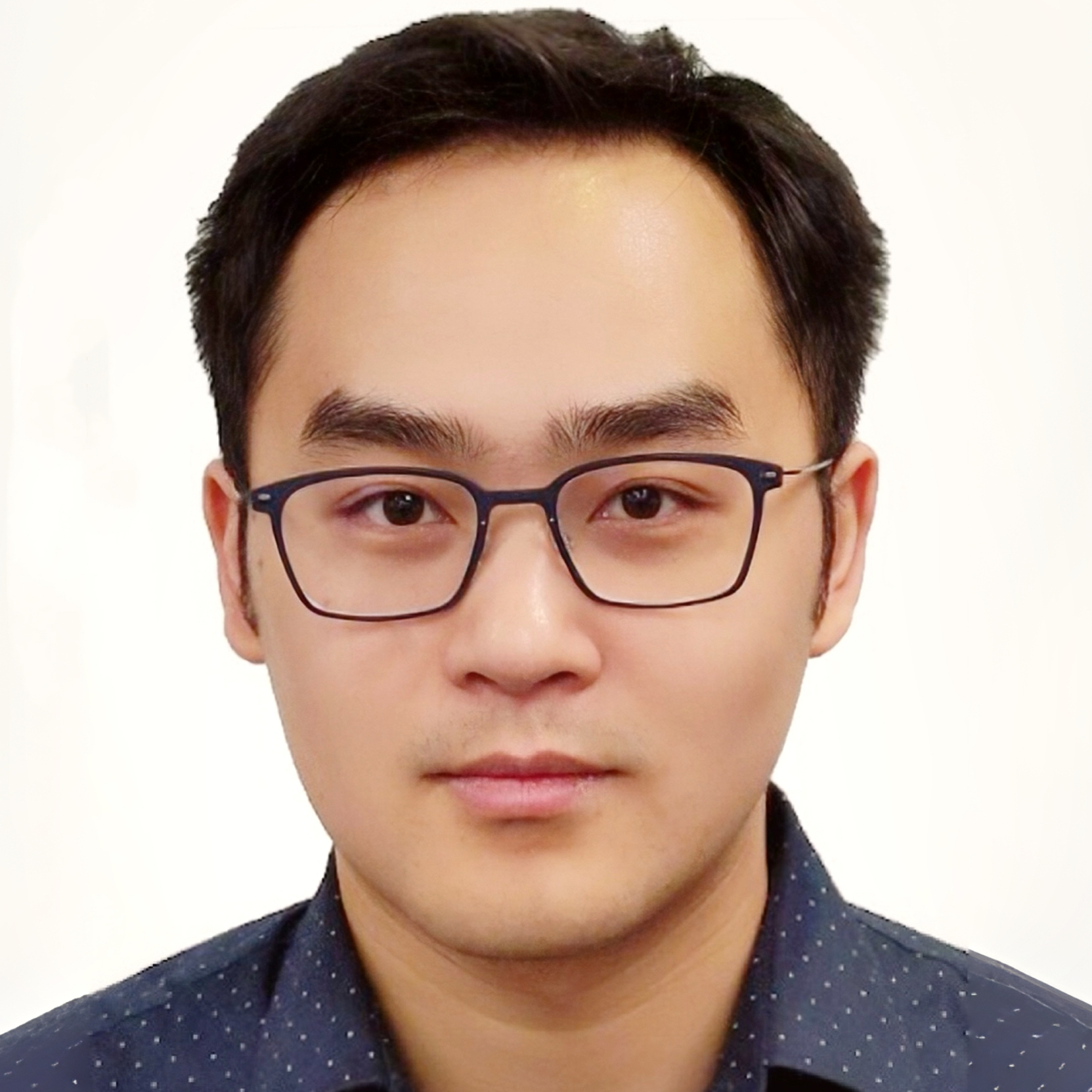 Jiahui Yu合作论文数Meta12
 Chung-Cheng Chiu合作论文数Google Brain12
 Thomas S. Huang (黄煦涛)合作论文数Beckman Institute, University of Illinois, Urbana-Champaign11
 Yonghui Wu (吴永辉)合作论文数ByteDance Seed11
 Ruoming Pang (庞若鸣)合作论文数OpenAI10
 Tara Sainath合作论文数Google DeepMind8
 Lijuan Wang合作论文数Microsoft8
 Frank K. Soong合作论文数Microsoft Research Asia8
 James Qin合作论文数Google7
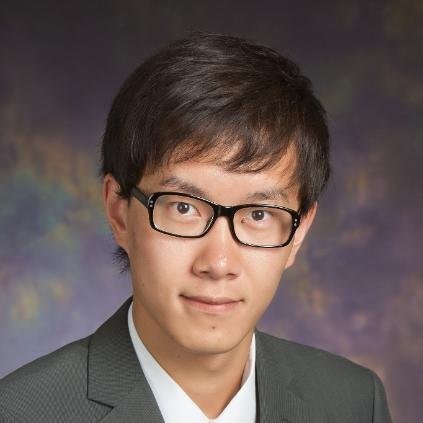 Ding Liu合作论文数ByteDance;TikTok7
 Bo Li合作论文数Google DeepMind6
 Ankur Bapna合作论文数Google DeepMind6
 Yongqiang Wang合作论文数NVIDIA6
 Yuan Cao合作论文数Google DeepMind6
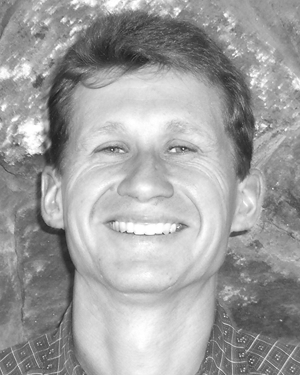 Hagen Soltau合作论文数Interactive Systems Laboratories;University of Karlsruhe;Carnegie Mellon University6
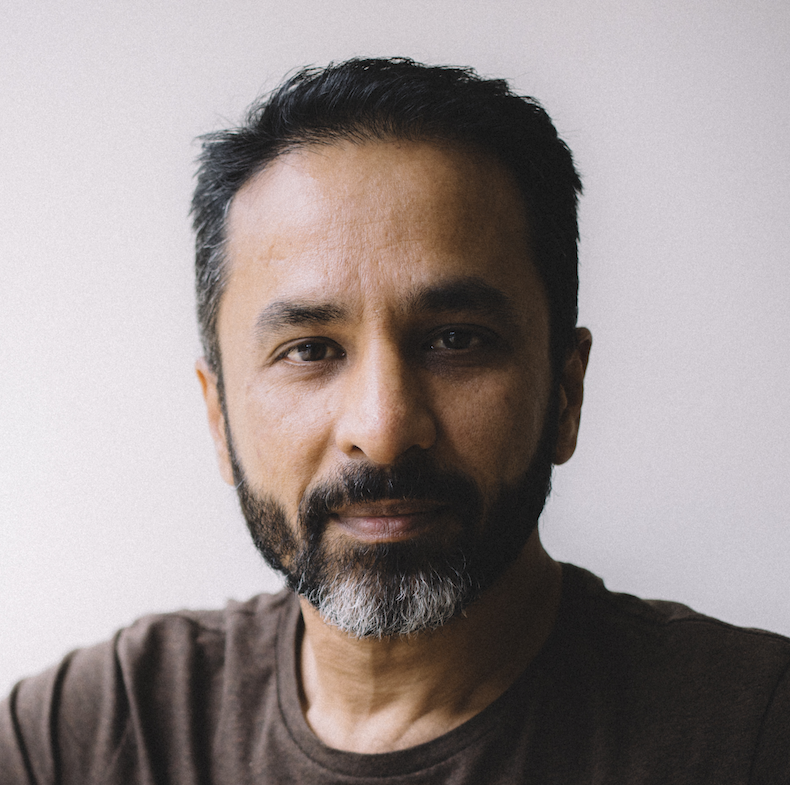 Izhak Shafran合作论文数Google6
 Mingqiu Wang合作论文数Google5
 Zhifeng Chen合作论文数Apple5
 Anmol Gulati合作论文数Google5
 Jianchao Yang (杨建朝)合作论文数Bytedance Inc.5
 Zhehuai Chen (陈哲怀)合作论文数Google;AISpeech4
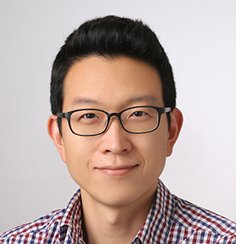 Daniel S. Park合作论文数Google Brain4
 Humphrey Shi合作论文数School of Interactive Computing, College of Computing, Georgia Institute of Technology;NVIDIA;University of Illinois at Urbana-Champaign4
 Shiyu Chang合作论文数College of Engineering, University of California, Santa Barbara4Xiaojun Qian合作论文数4
 Haichao Yu合作论文数3
 Jeffrey Zhao合作论文数Google DeepMind3Vera Axelrod合作论文数Google3
 Xinchao Wang合作论文数Department of Electrical and Computer Engineering, National University of Singapore3
 Bhuvana Ramabhadran合作论文数Google;Columbia University3
 Yuchen Fan (范雨晨)合作论文数Meta3
 Min Ma合作论文数Google DeepMind3
 Francoise Beaufays合作论文数Google3
 Zhengdong Zhang合作论文数3
 Zhaowen Wang合作论文数Adobe3
 Nanxin Chen合作论文数OpenAI3
 Dian Yu合作论文数Google Brain3
 Ning Xu合作论文数Adeia3
 Vijay Vasudevan合作论文数Lutra AI3Johan Schalkwyk合作论文数Google3
 Pooya Khorrami合作论文数University of Illinois at Urbana–Champaign3
 Arun Narayanan合作论文数Google Inc.3Trevor Strohman合作论文数University of Massachusetts Amherst3
 Quoc V. Le合作论文数Google3
 Parisa Haghani合作论文数EPFL3Lukas Zilka合作论文数2
 Shikhar Bharadwaj合作论文数2
 Christian Frank合作论文数2




