Cloud cover, cloud properties, and the change in cloud cover over time are important variables to quantify in planning for ground-space bidirectional high bandwidth optical communication systems. As operators of optical communication systems will endeavor to function when skies have optically thin cloud cover, a climatological study that includes cloud physics in the dataset (i.e., cloud emissivity and cloud optical depth) will provide beneficial guidance. As a first step in undertaking such an investigation, we have initiated a study of the Australian continent with the aim of identifying any significant decadal trends in cloud climatology over a 40-year period. The database, covering PATMOS-x AVHRR cloud data from 1979 to 2018, includes sampling of the climatology at four times during the diurnal cycle so that selection of operating conditions can be further analyzed. Examples of the spatial and temporal variability of satellite-derived cloud fractional amounts over Australia will be presented along with an approach to analyzing and interpreting this information in aid of the decision-making process to optimize clear-sky optical ground station positioning. When used in conjunction with the average monthly cloud amount, monthly specific decadal time-specific anomalies can highlight when and where minimum levels of cloud cover occur.
Cloud cover, cloud properties, and the change in cloud cover over time are important variables to quantify in planning for ground-space bidirectional high bandwidth optical communication systems. As operators of optical communication systems will endeavor to function when skies have optically thin cloud cover, a climatological study that includes cloud physics in the dataset (i.e., cloud emissivity and cloud optical depth) will provide beneficial guidance. As a first step in undertaking such an investigation, we have initiated a study of the Australian continent with the aim of identifying any significant decadal trends in cloud climatology over a 40-year period. The database, covering PATMOS-x AVHRR cloud data from 1979 to 2018, includes sampling of the climatology at four times during the diurnal cycle so that selection of operating conditions can be further analyzed. Examples of the spatial and temporal variability of satellite-derived cloud fractional amounts over Australia will be presented along with an approach to analyzing and interpreting this information in aid of the decision-making process to optimize clear-sky optical ground station positioning. When used in conjunction with the average monthly cloud amount, monthly specific decadal time-specific anomalies can highlight when and where minimum levels of cloud cover occur.
An FPGA-based digital-receiver has been developed for a low-frequency imaging radio interferometer, the Murchison Widefield Array (MWA). The MWA, located at the Murchison Radio-astronomy Observatory (MRO) in Western Australia, consists of 128 dual-polarized aperture-array elements (tiles) operating between 80 and 300 MHz, with a total processed bandwidth of 30.72 MHz for each polarization. Radio-frequency signals from the tiles are amplified and band limited using analog signal conditioning units; sampled and channelized by digital-receivers. The signals from eight tiles are processed by a single digital-receiver, thus requiring 16 digital-receivers for the MWA. The main function of the digital-receivers is to digitize the broad-band signals from each tile, channelize them to form the sky-band, and transport it through optical fibers to a centrally located correlator for further processing. The digital-receiver firmware also implements functions to measure the signal power, perform power equalization across the band, detect interference-like events, and invoke diagnostic modes. The digital-receiver is controlled by high-level programs running on a single-board-computer. This paper presents the digital-receiver design, implementation, current status, and plans for future enhancements.
We present a search for transient and variable radio sources at 154 MHz with the Murchison Widefield Array 32-tile prototype. 51 images were obtained that cover a field of view of 1430 deg(2) centred on Hydra A. The observations were obtained over three days in 2010 March and three days in 2011 April and May. The mean cadence of the observations was 26 min and there was additional temporal information on day and year time-scales. We explore the variability of a sample of 105 low-frequency radio sources within the field. Four bright (S > 6 Jy) candidate variable radio sources were identified that displayed low levels of short time-scale variability (26 min). We conclude that this variability is likely caused by simplifications in the calibration strategy or ionospheric effects. On the time-scale of 1 yr we find two sources that show significant variability. We attribute this variability to either refractive scintillation or intrinsic variability. No radio transients were identified and we place an upper limit on the surface density of sources rho < 7.5 x 10(-5) deg(-2) with flux densities > 5.5 Jy, and characteristic time-scales of both 26 min and 1 yr.
We present a Stokes I, Q and U survey at 189 MHz with the Murchison Widefield Array 32 element prototype covering 2400 deg2. The survey has a 15.6 arcmin angular resolution and achieves a noise level of 15 mJy beam−1. We demonstrate a novel interferometric data analysis that involves calibration of drift scan data, integration through the co-addition of warped snapshot images, and deconvolution of the point-spread function through forward modeling. We present a point source catalog down to a flux limit of 4 Jy. We detect polarization from only one of the sources, PMN J0351-2744, at a level of 1.8% ± 0.4%, whereas the remaining sources have a polarization fraction below 2%. Compared to a reported average value of 7% at 1.4 GHz, the polarization fraction of compact sources significantly decreases at low frequencies. We find a wealth of diffuse polarized emission across a large area of the survey with a maximum peak of ∼13 K, primarily with positive rotation measure values smaller than +10 rad m−2. The small values observed indicate that the emission is likely to have a local origin (closer than a few hundred parsecs). There is a large sky area at α ⩾ 2h30m where the diffuse polarized emission rms is fainter than 1 K. Within this area of low Galactic polarization we characterize the foreground properties in a cold sky patch at (α, δ) = (4h, −27.°6) in terms of three-dimensional power spectra.
Using the final 128 antenna locations of the MurchisonWidefield Array (MWA), we calculate its sensitivity to the epoch of reionization (EoR) power spectrum of redshifted 21 cm emission for a fiducial model and provide the tools to calculate the sensitivity for any model. Our calculation takes into account synthesis rotation, chromatic and asymmetrical baseline effects, and excludes modes that will be contaminated by foreground subtraction. For the fiducial model, the MWA will be capable of a 14 σ detection of the EoR signal with one full season of observation on two fields (900 and 700 h).
The Murchison Widefield Array (MWA) is a new low-frequency interferometric radio telescope, operating in the benign radio frequency environment of remote Western Australia. The MWA is the low-frequency precursor to the Square Kilometre Array (SKA) and is the first of three SKA precursors to be operational, supporting a varied science mission ranging from the attempted detection of the Epoch of Reionization to the monitoring of solar flares and space weather. In this paper we explore the possibility that the MWA can be used for the purposes of Space Situational Awareness (SSA). In particular we propose that the MWA can be used as an element of a passive radar facility operating in the frequency range 87.5–108 MHz (the commercial FM broadcast band). In this scenario the MWA can be considered the receiving element in a bi-static radar configuration, with FM broadcast stations serving as non-cooperative transmitters. The FM broadcasts propagate into space, are reflected off debris in Earth orbit, and are received at the MWA. The imaging capabilities of the MWA can be used to simultaneously detect multiple pieces of space debris, image their positions on the sky as a function of time, and provide tracking data that can be used to determine orbital parameters. Such a capability would be a valuable addition to Australian and global SSA assets, in terms of southern and eastern hemispheric coverage. We provide a feasibility assessment of this proposal, based on simple calculations and electromagnetic simulations, that shows that the detection of sub-meter size debris should be possible (debris radius of >0.5 m to ∼1000 km altitude). We also present a proof-of-concept set of observations that demonstrate the feasibility of the proposal, based on the detection and tracking of the International Space Station via reflected FM broadcast signals originating in southwest Western Australia. These observations broadly validate our calculations and simulations. We discuss some significant challenges that need to be addressed in order to turn the feasible concept into a robust operational capability for SSA. The aggregate received power due to reflections off space debris in the FM band is equivalent to a <1 mJy increase in the background confusion noise for the long integrations needed for Epoch of Reionization experiments, which is insignificant.
The Murchison Widefield Array is a low frequency (80-300 MHz) SKA Precursor, comprising 128 aperture array elements (known as tiles) distributed over an area of 3 km diameter. The MWA is located at the extraordinarily radio quiet Murchison Radioastronomy Observatory in the mid-west of Western Australia, the selected home for the Phase 1 and Phase 2 SKA low frequency arrays. The MWA science goals include: 1) detection of fluctuations in the brightness temperature of the diffuse redshifted 21 cm line of neutral hydrogen from the epoch of reionisation; 2) studies of Galactic and extragalactic processes based on deep, confusion-limited surveys of the full sky visible to the array; 3) time domain astrophysics through exploration of the variable radio sky; and 4) solar imaging and characterisation of the heliosphere and ionosphere via propagation effects on background radio source emission. This paper concentrates on the capabilities of the MWA for solar science and summarises some of the solar science results to date, in advance of the initial operation of the final instrument in 2013.
The Murchison Widefield Array (MWA) is one of three Square Kilometre Array Precursor telescopes and is located at the Murchison Radio-astronomy Observatory in the Murchison Shire of the mid-west of Western Australia, a location chosen for its extremely low levels of radio frequency interference. The MWA operates at low radio frequencies, 80-300 MHz, with a processed bandwidth of 30.72 MHz for both linear polarisations, and consists of 128 aperture arrays (known as tiles) distributed over a 3 km diameter area. Novel hybrid hardware/software correlation and a real-time imaging and calibration systems comprise the MWA signal processing backend. In this paper the as-built MWA is described both at a system and sub-system level, the expected performance of the array is presented, and the science goals of the instrument are summarised.
In this paper, we explore for the first time the relative magnitudes of three fundamental sources of uncertainty, namely, foreground contamination, thermal noise, and sample variance, in detecting the Hi power spectrum from the epoch of reionization (EoR). We derive limits on the sensitivity of a Fourier synthesis telescope to detect EoR based on its array configuration and a statistical representation of images made by the instrument. We use the Murchison Widefield Array (MWA) configuration for our studies. Using a unified framework for estimating signal and noise components in the Hi power spectrum, we derive an expression for and estimate the contamination from extragalactic point-like sources in three-dimensional k-space. Sensitivity for EoR Hi power spectrum detection is estimated for different observing modes with MWA. With 1000 hr of observing on a single field using the 128 tile MWA, EoR detection is feasible (S/N > 1 for k less than or similar to 0.8 Mpc(-1)). Bandpass shaping and refinements to the EoR window are found to be effective in containing foreground contamination, which makes the instrument tolerant to imaging errors. We find that for a given observing time, observing many independent fields of view does not offer an advantage over a single field observation when thermal noise dominates over other uncertainties in the derived power spectrum.
Significant new opportunities for astrophysics and cosmology have been identified at low radio frequencies. The Murchison Widefield Array is the first telescope in the southern hemisphere designed specifically to explore the low-frequency astronomical sky between 80 and 300 MHz with arcminute angular resolution and high survey efficiency. The telescope will enable new advances along four key science themes, including searching for redshifted 21-cm emission from the EoR in the early Universe; Galactic and extragalactic all-sky southern hemisphere surveys; time-domain astrophysics; and solar, heliospheric, and ionospheric science and space weather. The Murchison Widefield Array is located in Western Australia at the site of the planned Square Kilometre Array (SKA) low-band telescope and is the only low-frequency SKA precursor facility. In this paper, we review the performance properties of the Murchison Widefield Array and describe its primary scientific objectives.
We present new wide-field observations of Centaurus A (Cen A) and the surrounding region at 118 MHz with the Murchison Widefield Array (MWA) 32-tile prototype, with which we investigate the spectral-index distribution of Cen A's giant radio lobes. We compare our images to 1.4 GHz maps of Cen A and compute spectral indices using temperature–temperature plots and spectral tomography. We find that the morphologies at 118 MHz and 1.4 GHz match very closely apart from an extra peak in the southern lobe at 118 MHz, which provides tentative evidence for the existence of a southern counterpart to the northern middle lobe of Cen A. Our spatially averaged spectral indices for both the northern and southern lobes are consistent with previous analyses, however we find significant spatial variation of the spectra across the extent of each lobe. Both the spectral-index distribution and the morphology at low radio frequencies support a scenario of multiple outbursts of activity from the central engine. Our results are consistent with inverse-Compton modelling of radio and gamma-ray data that support a value for the lobe age of between 10 and 80 Myr.
Having an accurate method to estimate and remove ionospheric effects is a major issue for low-frequency radio astronomy arrays, as the ionosphere is one of their largest error terms. One way to estimate the ionosphere is to measure total electron content (TEC) using dual frequency global positioning system (GPS) signals. This technique uses the dispersive nature of the ionosphere, as both group and phase velocities are (to first order) dependent on the inverse square of the frequency and on TEC. Using these properties, TEC can be measured to a high degree of accuracy by computing the delay difference between signals at GPS's two frequencies (L1=1575.42 and L2=1227.6MHz). Unfortunately, effects other than ionospheric dispersion also introduce differential delay differences. These additional differences, called biases, can be separated into those introduced by the satellite and those by the receiver. Receiver biases show the most significant variations, sometimes over intervals of hours. Changing temperature conditions at the receiver antenna, along the cable, or in the internal receiver hardware are thought to be responsible for some of these variations. We report here on an investigation of the temperature dependence of the GPS receiver bias. Our results show that for our particular receiver, antenna, and cable set-up, a temperature-dependent bias is clearly evident, and that this temperature dependence varies from receiver to receiver. When the receiver bias temperature dependence is removed, a noise level of 13 TEC units still remains in the bias estimation.
The Murchison Widefield Array (MWA) is a new low-frequency, wide-field-of-view radio interferometer under development at the Murchison Radio-astronomy Observatory in Western Australia. We have used a 32 element MWA prototype interferometer (MWA-32T) to observe two 50 degrees diameter fields in the southern sky, covering a total of similar to 2700 deg(2), in order to evaluate the performance of the MWA-32T, to develop techniques for epoch of reionization experiments, and to make measurements of astronomical foregrounds. We developed a calibration and imaging pipeline for the MWA-32T, and used it to produce similar to 15' angular resolution maps of the two fields in the 110-200 MHz band. We perform a blind source extraction using these confusion-limited images, and detect 655 sources at high significance with an additional 871 lower significance source candidates. We compare these sources with existing low-frequency radio surveys in order to assess the MWA-32T system performance, wide-field analysis algorithms, and catalog quality. Our source catalog is found to agree well with existing low-frequency surveys in these regions of the sky and with statistical distributions of point sources derived from Northern Hemisphere surveys; it represents one of the deepest surveys to date of this sky field in the 110-200 MHz band.
Midlatitude space weather events are being monitored at a location in Western Australia (−26.7° latitude, 116.7° longitude, and −38° magnetic latitude). This location is that of the Murchison Widefield Array (MWA), a new low radio frequency array (80 to 300 MHz) being built with the objective of developing powerful new capabilities for radio astronomy, solar, heliospheric, and ionospheric science. The MWA is a radio interferometer that images large fields of view with unprecedented fidelity and dynamic range at these frequencies. With respect to the ionosphere, it will be able to make important new measurements of ionospheric scintillation and improve our understanding of midlatitude space weather events in the Southern Hemisphere. For example, by studying midlatitude space weather events in the Australian sector, the seasonal and geomagnetic dependencies of storm enhanced density (SED) can be characterized and separated from other forces that may impact its formation elsewhere, such as in the longitudinal sector of the South Atlantic Anomaly (SAA). After full commissioning, the MWA will consist of 2048 dipole antennas arranged as 128 “tiles,” each being a 4 × 4 array of dual‐polarization dipoles. Currently, an engineering prototype comprising 32 tiles has been installed and has been used to observe the Faraday rotation from a linearly polarized satellite beacon on the DMSP‐15 satellite. We will report on these initial observations of ionospheric Faraday rotation and on results from GPS receivers located at the site and elsewhere in the Australian continent. We will also discuss future space weather products enabled by the MWA.
Antenna layout is an important design consideration for radio interferometers because it determines the quality of the snapshot point spread function (PSF, or array beam). This is particularly true for experiments targeting the 21 cm Epoch of Reionization signal as the quality of the foreground subtraction depends directly on the spatial dynamic range and thus the smoothness of the baseline distribution. Nearly all sites have constraints on where antennas can be placed—even at the remote Australian location of the MWA (Murchison Widefield Array) there are rock outcrops, flood zones, heritages areas, emergency runways and trees. These exclusion areas can introduce spatial structure into the baseline distribution that enhance the PSF sidelobes and reduce the angular dynamic range. In this paper we present a new method of constrained antenna placement that reduces the spatial structure in the baseline distribution. This method not only outperforms random placement algorithms that avoid exclusion zones, but surprisingly outperforms random placement algorithms without constraints to provide what we believe are the smoothest constrained baseline distributions developed to date. We use our new algorithm to determine the final antenna placement for the MWA, and present the planned antenna locations, baseline distribution, and snapshot PSF for the observatory.
We introduce the Fast Holographic Deconvolution method for analyzing interferometric radio data. Our new method is an extension of A-projection/software-holography/forward modeling analysis techniques and shares their precision deconvolution and widefield polarimetry, while being significantly faster than current implementations that use full direction-dependent antenna gains. Using data from the MWA 32 antenna prototype, we demonstrate the effectiveness and precision of our new algorithm. Fast Holographic Deconvolution may be particularly important for upcoming 21 cm cosmology observations of the Epoch of Reionization and Dark Energy where foreground subtraction is intimately related to the precision of the data reduction.
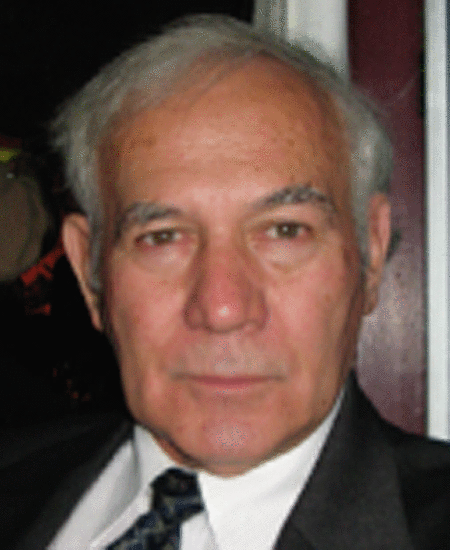 Mervyn J. Lynch合作论文数CSIRO Division of Atmospheric Research26
 Divya Oberoi合作论文数Tata Institute of Fundamental Research National Centre for Radio Astrophysics24
 Randall Wayth合作论文数Curtin Institute of Radio Astronomy, School of Electrical Engineering, Computing and Mathematical Sciences, Faculty of Science and Engineering, Curtin University;SKA Observatory20
 Miguel F. Morales合作论文数Department of Physics, College of Arts & Sciences, University of Washington20
 Colin J. Lonsdale合作论文数Massachusetts Institute of Technology Haystack Observatory20
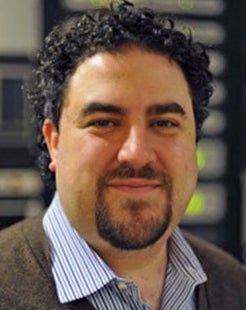 Justin C. Kasper合作论文数Climate and Space Sciences and Engineering Department, College of Engineering, University of Michigan;High Energy Astrophysics Division, Smithsonian Astrophysical Observatory, Harvard-Smithsonian Center for Astrophysics;Astronomy Department, Harvard University;BWX Technologies Inc20
 Joseph E. Salah合作论文数20
 Rachel Webster合作论文数School of Physics, University of Melbourne20Brian E. Corey合作论文数20
 Judd Bowman合作论文数LoCo Lab, School of Earth and Space Exploration, Arizona State University;College of Liberal Arts and Sciences, Arizona State University20J. Stevens合作论文数19Frank H Briggs合作论文数19
 Jacqueline N. Hewitt合作论文数Department of Physics, Massachusetts Institute of Technology19b b kincaid合作论文数18
 Steven J Tingay合作论文数International Centre for Radio Astronomy Research, Curtin University18Daniel A. Mitchell合作论文数Australia Telescope Natl Facil, CSIRO Astron & Space Sci18
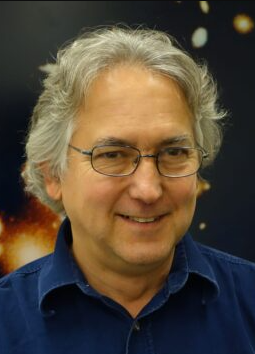 Edward Morgan合作论文数Kavli Institute for Astrophysics and Space Research, Massachusetts Institute of Technology18Alan E. E. Rogers合作论文数18K. S. Srivani合作论文数18
 Prabu Thiagaraj合作论文数Raman Research Institute18
 John D Bunton合作论文数Australia Telescope National Facility18
 Udaya Shankar Narayana Rao合作论文数Raman Research Institute18
 Lincoln J. Greenhill合作论文数Department of Astronomy, Faculty of Arts and Sciences, Harvard University;Smithsonian Astrophysical Observatory18E. Kratzenberg合作论文数17Robert J. Sault合作论文数School of Physics;University of Melbourne;School of Physics, University of Melbourne17L Desouza合作论文数17
 Joseph Pathikulangara合作论文数commonwealth scientific and industrial research organisation17David Emrich合作论文数16
 Avinash A. Deshpande合作论文数Raman Res Inst16Stephen R. Mcwhirter合作论文数16
 Rigel Cappallo合作论文数Haystack Observatory, Massachusetts Institute of Technology16Stephen Mark Ord合作论文数Swinburne University of Technology;Centre for Astrophysics and Supercomputing;Centre for Astrophysics and Supercomputing, Swinburne University of Technology16W. Arcus合作论文数ICRAR, Curtin Univ16
 David G. Barnes合作论文数Centre for Astrophysics and Supercomputing;Swinburne University of Technology;Centre for Astrophysics and Supercomputing, Swinburne University of Technology16
 Ravi Subrahmanyan合作论文数Raman Research Institute15
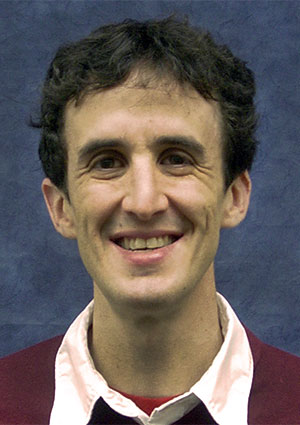 David Kaplan合作论文数Department of Physics, College of Letters & Science, University of Wisconsin-Milwaukee15
 Andrew John Williams合作论文数15ronald j koenig合作论文数14
 Ronald A. Remillard合作论文数Kavli Institute for Astrophysics and Space Research, Massachusetts Institute of Technology14
 Bryan M Gaensler合作论文数Division of Physical and Biological Sciences, University of California, Santa Cruz;Department of Astronomy and Astrophysics, University of California, Santa Cruz13Michael Waterson合作论文数University of Newcastle upon Tyne13Bernardi G.合作论文数12
 Stuart Wyithe合作论文数School of Physics, University of Melbourne12C. L. Williams合作论文数11Ronald S Goeke合作论文数11A. Roshi合作论文数10B. J. Hazelton合作论文数10M. Johnston-Hollitt合作论文数7
 Jonathon Kocz合作论文数CALTECH, Div Phys Math & Astron, Pasadena, CA 91125 USA7




