We demonstrate that a small transformer can learn to execute programs in MicroPy, a simplified yet computationally universal programming language. Given procedure definitions together with an expression to evaluate, the transformer predicts small-step execution using PENCIL scaffolding for space-efficient execution within a bounded context window. After training on randomly generated, meaningless MicroPy programs, the learned transformer generalizes to various human-written programs including bit copying and flipping, binary addition and multiplication, and SAT verification and solving. We note that the trained model can achieve out-of-distribution generalization; i.e., evaluate novel programs from distribution on programs. Since MicroPy can express any computation, our results provide empirical evidence that a standard transformer can be trained to act as a universal computer.
There has recently been considerable interest in incorporating information retrieval into large language models (LLMs). Retrieval from a dynamically expanding external corpus of text allows a model to incorporate current events and can be viewed as a form of episodic memory. Here we demonstrate that pre-processing the external corpus into semi-structured ”atomic facts” makes retrieval more efficient. More specifically, we demonstrate that our particular form of atomic facts improves performance on various question answering tasks when the amount of retrieved text is limited. Limiting the amount of retrieval reduces the size of the context and improves inference efficiency.
Knowledge-intensive question answering is central to large language models (LLMs) and is typically assessed using static benchmarks derived from sources like Wikipedia and textbooks. However, these benchmarks fail to capture evolving knowledge in a dynamic world, and centralized curation struggles to keep pace with rapid LLM advancements. To address these drawbacks, we propose Open Knowledge Bench (OKBench), a fully automated framework for generating high-quality, dynamic knowledge benchmarks on demand. Focusing on the news domain where knowledge updates daily, OKBench is an agentic framework that automates the sourcing, creation, validation, and distribution of benchmarks. Our approach democratizes benchmark creation and facilitates thorough evaluation of retrieval-augmented methods by reducing overlap with pretraining data. We evaluate our framework on a wide range open-source and proprietary LLMs of various sizes and configurations, both with and without retrieval over freshly generated knowledge. Our results reveal distinct model behaviors when confronted with new information and highlight how retrieval narrows the performance gap between small and large models. These findings underscore the importance of evaluating LLMs on evolving knowledge benchmarks.
While state-of-the-art LLMs have demonstrated great promise of using long Chains-of-Thought (CoT) to boost reasoning, scaling it up to more challenging problems is fundamentally limited by suboptimal memory usage — intermediate computations accumulate indefinitely in context even no longer needed for future thoughts. We introduce PENCIL, which incorporates a novel reduction mechanism into the autoregressive generation process that recursively clean up intermediate thoughts based on patterns learned from training. By alternately generating and erasing, PENCIL can think deeper to solve harder problems using shorter context and less computes. Empirically, for example, we demonstrate PENCIL with a small 25M-parameter transformer and 2048 context length solves Einstein's puzzle — a task that challenges much larger models like GPT-4. Theoretically, we prove PENCIL can perform universal efficient computation by simulating any Turing machines with optimal time and space complexity, and thus can solve arbitrary computable tasks that are otherwise intractable for vanilla CoT.
This paper gives direct derivations of the differential equations and likelihood formulas of diffusion models assuming only knowledge of Gaussian distributions. A VAE analysis derives both forward and backward stochastic differential equations (SDEs) as well as non-variational integral expressions for likelihood formulas. A score-matching analysis derives the reverse diffusion ordinary differential equation (ODE) and a family of reverse-diffusion SDEs parameterized by noise level. The paper presents the mathematics directly with attributions saved for a final section.
This paper develops a version of dependent type theory in which isomorphism is handled through a direct generalization of the 1939 definitions of Bourbaki. More specifically we generalize the Bourbaki definition of structure from simple type signatures to dependent type signatures. Both the original Bourbaki notion of isomorphism and its generalization given here define an isomorphism between two structures $N$ and $N'$ to consist of bijections between their sorts that transport the structure of $N$ to the structure of $N'$. Here transport is defined by commutativity conditions stated with set-theoretic equality. This differs from the dependent type theoretic treatments of isomorphism given in the groupoid model and homotopy type theory where no analogously straightforward set-theoretic definition of transport is specified. The straightforward definition of transport also leads to a straightforward constructive proof (constructive content) for the validity of the substitution of isomorphics -- something that is difficult in the groupoid model or homotopy type theory.
We study image segmentation from an information-theoretic perspective, proposing a novel adversarial method that performs unsupervised segmentation by partitioning images into maximally independent sets. More specifically, we group image pixels into foreground and background, with the goal of minimizing predictability of one set from the other. An easily computed loss drives a greedy search process to maximize inpainting error over these partitions. Our method does not involve training deep networks, is computationally cheap, class-agnostic, and even applicable in isolation to a single unlabeled image. Experiments demonstrate that it achieves a new state-of-the-art in unsupervised segmentation quality, while being substantially faster and more general than competing approaches.
From a simplified analysis of adaptive methods, we derive AvaGrad, a new optimizer which outperforms SGD on vision tasks when its adaptability is properly tuned. We observe that the power of our method is partially explained by a decoupling of learning rate and adaptability, greatly simplifying hyperparameter search. In light of this observation, we demonstrate that, against conventional wisdom, Adam can also outperform SGD on vision tasks, as long as the coupling between its learning rate and adaptability is taken into account. In practice, AvaGrad matches the best results, as measured by generalization accuracy, delivered by any existing optimizer (SGD or adaptive) across image classification (CIFAR, ImageNet) and character-level language modelling (Penn Treebank) tasks. When training GANs, AvaGrad improves upon existing optimizers. 1
Here we experiment with the use of information retrieval as an augmentation for pre-trained language models. The text corpus used in information retrieval can be viewed as form of episodic memory which grows over time. By augmenting GPT 2.0 with information retrieval we achieve a zero shot 15% relative reduction in perplexity on Gigaword corpus without any re-training. We also validate our IR augmentation on an event co-reference task.
AlphaZero learns to play go, chess and shogi at a superhuman level through self play given only the rules of the game. This raises the question of whether a similar thing could be done for mathematics -- a MathZero. MathZero would require a formal foundation and an objective. We propose the foundation of set-theoretic dependent type theory and an objective defined in terms of the classification problem -- the problem of classifying concept instances up to isomorphism. The natural numbers arise as the solution to the classification problem for finite sets. Here we generalize classical Bourbaki set-theoretic isomorphism to set-theoretic dependent type theory. To our knowledge we give the first isomorphism inference rules for set-theoretic dependent type theory with propositional set-theoretic equality. The presentation is intended to be accessible to mathematicians with no prior exposure to type theory.
Measuring mutual information from finite data is difficult. Recent work has considered variational methods maximizing a lower bound. In this paper, we prove that serious statistical limitations are inherent to any method of measuring mutual information. More specifically, we show that any distribution-free high-confidence lower bound on mutual information estimated from N samples cannot be larger than O(ln N).
Motivated by applications to unsupervised learning, we consider the problem of measuring mutual information. Recent analysis has shown that naive kNN estimators of mutual information have serious statistical limitations motivating more refined methods. In this paper we prove that serious statistical limitations are inherent to any measurement method. More specifically, we show that any distribution-free high-confidence lower bound on mutual information cannot be larger than $O(\ln N)$ where $N$ is the size of the data sample. We also analyze the Donsker-Varadhan lower bound on KL divergence in particular and show that, when simple statistical considerations are taken into account, this bound can never produce a high-confidence value larger than $\ln N$. While large high-confidence lower bounds are impossible, in practice one can use estimators without formal guarantees. We suggest expressing mutual information as a difference of entropies and using cross entropy as an entropy estimator. We observe that, although cross entropy is only an upper bound on entropy, cross-entropy estimates converge to the true cross entropy at the rate of $1/\sqrt{N}$.
Remarkable success has been achieved in the last few years on some limited machine reading comprehension (MRC) tasks. However, it is still difficult to interpret the predictions of existing MRC models. In this paper, we focus on extracting evidence sentences that can explain or support the answers of multiple-choice MRC tasks, where the majority of answer options cannot be directly extracted from reference documents. Due to the lack of ground truth evidence sentence labels in most cases, we apply distant supervision to generate imperfect labels and then use them to train an evidence sentence extractor. To denoise the noisy labels, we apply a recently proposed deep probabilistic logic learning framework to incorporate both sentence-level and cross-sentence linguistic indicators for indirect supervision. We feed the extracted evidence sentences into existing MRC models and evaluate the end-to-end performance on three challenging multiple-choice MRC datasets: MultiRC, RACE, and DREAM, achieving comparable or better performance than the same models that take as input the full reference document. To the best of our knowledge, this is the first work extracting evidence sentences for multiple-choice MRC.
Isomorphism is central to the structure of mathematics and has been formalized in various ways within dependent type theory. All previous treatments have done this by replacing quantification over sets with quantification over groupoids of some form --- categories in which every morphism is an isomorphism. Quantification over sets is replaced by quantification over standard groupoids in the groupoid model, by quantification over infinity groupoid in Homotopy type theory, and by quantification over morphoids in the morphoid model. Here we give a treatment of isomorphism based on the intuitive notion of sets as collections without internal structure. Quantification over sets remains as quantification over sets. Isomorphism and groupoid structure then emerge from simple but subtle syntactic restrictions on set-theoretic language. This approach more fully unifies the classical ZFC foundations with a rigorous treatments of isomorphism, symmetry, canonicality, functors, and natural transformations. This is all done without reference to category theory.
This paper introduces an information theoretic co-training objective for unsupervised learning. We consider the problem of predicting the future. Rather than predict future sensations (image pixels or sound waves) we predict "hypotheses" to be confirmed by future sensations. More formally, we assume a population distribution on pairs (x,y) where we can think of x as a past sensation and y as a future sensation. We train both a predictor model P_Φ(z|x) and a confirmation model P_Ψ(z|y) where we view z as hypotheses (when predicted) or facts (when confirmed). For a population distribution on pairs (x,y) we focus on the problem of measuring the mutual information between x and y. By the data processing inequality this mutual information is at least as large as the mutual information between x and z under the distribution on triples (x,z,y) defined by the confirmation model P_Ψ(z|y). The information theoretic training objective for P_Φ(z|x) and P_Ψ(z|y) can be viewed as a form of co-training where we want the prediction from x to match the confirmation from y.
With a goal of understanding what drives generalization in deep networks, we consider several recently suggested explanations, including norm-based control, sharpness and robustness. We study how these measures can ensure generalization, highlighting the importance of scale normalization, and making a connection between sharpness and PAC-Bayes theory. We then investigate how well the measures explain different observed phenomena.
A significant number of neural architectures for reading comprehension have recently been developed and evaluated on large cloze-style datasets. We present experiments supporting the emergence of “predication structure” in the hidden state vectors of these readers. More specifically, we provide evidence that the hidden state vectors represent atomic formulas \Phi[c] where \Phi is a semantic property (predicate) and c is a constant symbol entity identifier.
Reading comprehension is a question answering task where the answer is to be found in a given passage about entities and events not mentioned in general knowledge sources. A significant number of neural architectures for this task (neural readers) have recently been developed and evaluated on large cloze-style datasets. We present experiments supporting the emergence of “predication structure” in the hidden state vectors of a class of neural readers including the Attentive Reader and Stanford Reader. We posits that the hidden state vectors can be viewed as (a representation of) a concatenation [P, c] of a “predicate vector” P and a “constant symbol vector” c and that the hidden state represents the atomic formula P(c). This predication structure plays a conceptual role in relating “aggregation readers” such as the Attentive Reader and the Stanford Reader to “explicit reference readers” such as the Attention-Sum Reader, the Gated-Attention Reader and the Attention-over-Attention Reader. In an independent contribution, we show that the addition of linguistics features to the input to existing neural readers significantly boosts performance yielding the best results to date on the Who-did-What dataset.
Reading comprehension is a question answering task where the answer is to be found in a given passage about entities and events not mentioned in general knowledge sources. A significant number of neural architectures for this task (neural readers) have recently been developed and evaluated on large cloze-style datasets. We present experiments supporting the emergence of “predication structure” in the hidden state vectors of a class of neural readers including the Attentive Reader and Stanford Reader. We posits that the hidden state vectors can be viewed as (a representation of) a concatenation [P, c] of a “predicate vector” P and a “constant symbol vector” c and that the hidden state represents the atomic formula P(c). This predication structure plays a conceptual role in relating “aggregation readers” such as the Attentive Reader and the Stanford Reader to “explicit reference readers” such as the Attention-Sum Reader, the Gated-Attention Reader and the Attention-over-Attention Reader. In an independent contribution, we show that the addition of linguistics features to the input to existing neural readers significantly boosts performance yielding the best results to date on the Who-did-What dataset.
Progress in text understanding has been driven by large datasets that test particular capabilities, like recent datasets for reading comprehension (Hermann et al., 2015). We focus here on the LAMBADA dataset (Paperno et al., 2016), a word prediction task requiring broader context than the immediate sentence. We view LAMBADA as a reading comprehension problem and apply comprehension models based on neural networks. Though these models are constrained to choose a word from the context, they improve the state of the art on LAMBADA from 7.3% to 49%. We analyze 100 instances, finding that neural network readers perform well in cases that involve selecting a name from the context based on dialogue or discourse cues but struggle when coreference resolution or external knowledge is needed.
 Seiichi Mita合作论文数oyota Technological Institute13
 Chunzhao Guo合作论文数Toyota Technological Institute9
 Hai Wang (汪海)合作论文数School of Physical Sciences, University of Science and Technology of China8
 Pedro Felipe Felzenszwalb合作论文数School of Engineering, Brown University8
 Bob Givan合作论文数Elmore Family School of Electrical and Computer Engineering, Purdue University7
 Bart Selman合作论文数Department of Computer Science, Cornell University6
 Tamir Hazan合作论文数Sunbit;Technion - Israel Institute of Technology6
 Raquel Urtasun合作论文数Department of Computer Science, Faculty of Arts and Science, University of Toronto;Waabi6
 Ross Girshick合作论文数Anthropic6
 Kevin Gimpel合作论文数QuillBot6
 Peter Stone合作论文数Department of Computer Science, College of Natural Sciences, The University of Texas at Austin;Sony AI;Sony Research6
 Takeshi Onishi合作论文数Cedars-Sinai Medical Center4
 Henry Kautz合作论文数Department of Computer Science, Hajim School of Engineering & Applied Sciences, University of Rochester;Department of Computer Science, School of Engineering and Applied Science, University of Virginia;AIM Intelligent Machines4
 Yishay Mansour合作论文数School of Computer Science, Tel Aviv University;Google Research4
 Robert Schapire合作论文数Microsoft Research4
 Deva Ramanan合作论文数Center for Autonomous Vehicle Research, Robotics Institute, School of Computer Science, Carnegie Mellon University4
 Michael Collins合作论文数Google Research;Department of Computer Science, Columbia University3
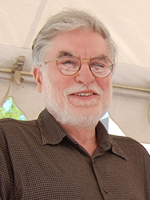 Deepak Kapur合作论文数Department of Computer Science, School of Engineering, University of New Mexico3
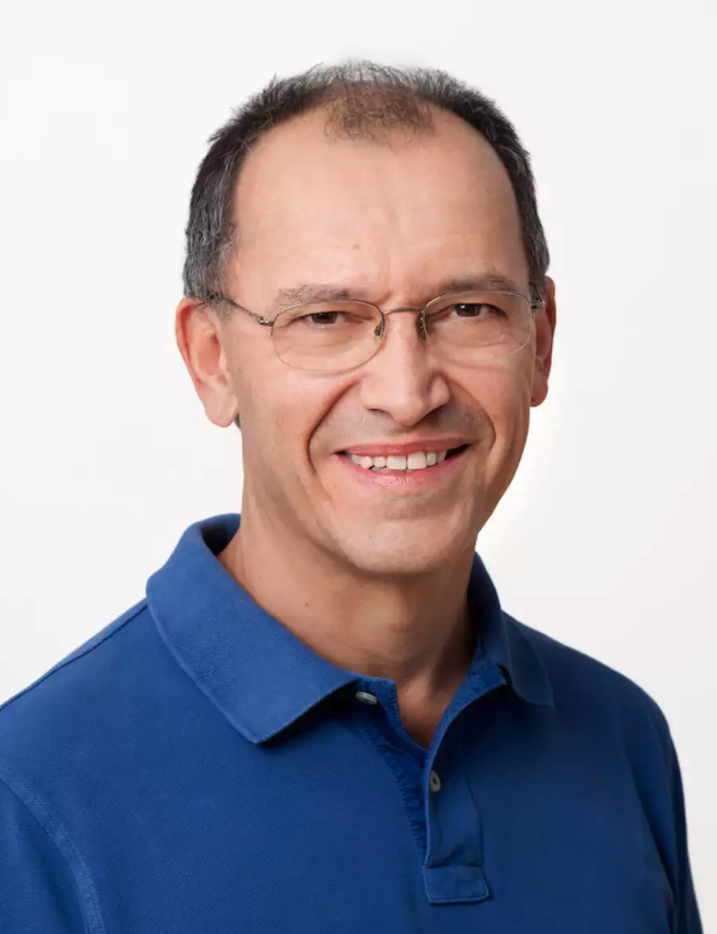 Fernando Pereira合作论文数Google DeepMind3
 Richard S. Sutton合作论文数Department of Computing Science, Faculty of Science, University of Alberta;Alberta Machine Intelligence Institute, Faculty of Science, University of Alberta;Keen Technologies;Openmind Research Institute3
 Michael L. Littman合作论文数Department of Computer Science, Brown University3Nevin Heintze合作论文数3
 Joseph ‘Yossi’ Keshet合作论文数Andrew and Erna Viterbi Faculty of Electrical and Computer Engineering, Technion - Israel Institute of Technology;aiOla3
 Hoang Trinh合作论文数IBM T. J. Watson Research Center3
 Harald Ganzinger合作论文数Max-Planck-Institut fur Informatik3
 Ramin Zabih合作论文数Department of Computer Science, Cornell University;arXiv3
 Hossein Tehrani合作论文数Department of Mathematical Sciences, University of Nevada3
 Koichiro Yamaguchi合作论文数Japan/ Toyota Central R&D Labs, Inc., Nara Institute of Science and Technology3P Vanhentenryck合作论文数2conference on uncertainty in artificial intelligence合作论文数2Sameer Shalaby合作论文数2
 Pedro Savarese合作论文数Toyota Technological Institute, University of Chicago2
 Satinder Singh合作论文数Computer Science and Engineering Division, Electrical Engineering and Computer Science Department, University of Michigan;Google DeepMind2
 Greg Shakhnarovich合作论文数Toyota Technological Institute at Chicago2
 Jian Peng合作论文数Helixon2
 Koji Takahashi合作论文数Faculty of Engineering, Kyushu University2
 Michael Maire合作论文数Department of Computer Science, University of Chicago2
 Petri Myllymäki合作论文数Department of Computer Science,University of Helsinki,Finland2János A. Csirik合作论文数of Department of Computer Algorithms and Artificial Intelligence
University of Szeged2
Petri Myllymäki合作论文数Department of Computer Science,University of Helsinki,Finland2János A. Csirik合作论文数of Department of Computer Algorithms and Artificial Intelligence
University of Szeged2 Jeffrey Mark Siskind合作论文数Elmore Family School of Electrical and Computer Engineering, College of Engineering, Purdue University2
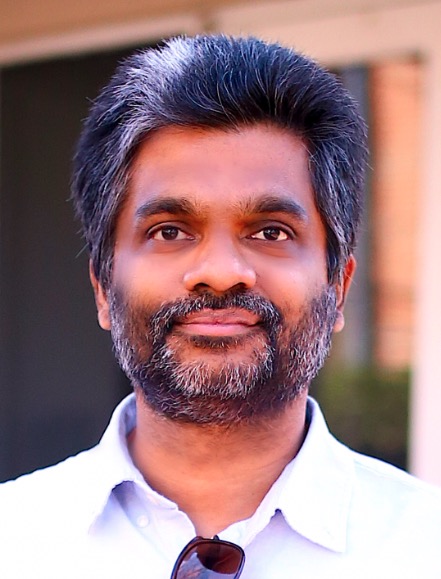 Mohit Bansal合作论文数Multimodal Understanding, Reasoning, and Generation for Language Lab, Department of Computer Science, College of Arts and Sciences, University of North Carolina at Chapel Hill2
 Yasemin Altun合作论文数Toyota Technological Institute at Chicago2
 Karl Stratos合作论文数Essential AI2Y Mansour合作论文数1L Ortiz合作论文数1T FATIMA合作论文数1JM SISKIND合作论文数1Nati Srebro合作论文数1Chenxiao Yang合作论文数1




