ALS-U is an ongoing upgrade of the Advance Light Source (ALS) at Lawrence Berkeley National Laboratory (LBL). The upgraded ring of the ALS will use a multi-bend-archomat (MBA) lattice, which will allow increasing the brightness of soft x-ray sources 2-3 orders of magnitude with respect to current ALS ca-pabilities. One of the goals of the project is maintaining support for existing x-ray beamlines with useful intensity around 12.5 keV, which are used for a macromolecular crystallography. The medium energy x-ray source points will be provided by replacing six gradient-dipole magnets of the upgraded ring with high-field magnets generating a higher peak field at the source point. Two defocusing quadrupoles will be installed together with each high-field magnet in order to match the quadrupole field component of removed gradient dipole. Two alternative designs were investigated. The first design is a warm-bore superconducting magnet. Its coils are made of an internally reinforced bronze-route Nb 3 Sn wire and a holmium pole is used as a flux concentrator. The second option is NdFeB permanent magnet system with build-in field clamps. Due to limited space in the accelerator lattice and the magnetic field requirements for the x-ray source points, both designs present challenges due to high magnetic forces acting on the magnet components and due to impact of the magnet cross-talk on the beam trajectory.
We present a design of superconducting magnets, optimized for application in a gantry for proton therapy. We have introduced a new magnet design concept, called an alternating-gradient canted cosine theta (AG-CCT) concept, which is compatible with an achromatic layout. This layout allows a large momentum acceptance. The 15 cm radius of the bore aperture enables the application of pencil beam scanning in front of the SC-magnet. The optical and dynamic performance of a gantry based on these magnets has been analyzed using the fields derived (via Biot-Savart law) from the actual windings of the AG-CCT combined with the full equations of motion. The results show that with appropriate higher order correction, a large 3D volume can be rapidly scanned with little beam shape distortion. A very big advantage is that all this can be done while keeping the AG-CCT fields fixed. This reduces the need for fast field ramping of the superconducting magnets between the successive beam energies used for the scanning in depth and it is important for medical application since this reduces the technical risk (e.g., a quench) associated with fast field changes in superconducting magnets. For proton gantries the corresponding superconducting magnet system holds promise of dramatic reduction in weight. For heavier ion gantries there may furthermore be a significant reduction in size.
Storage ring lattice design is a highly constrained multiobjective optimization problem. The objectives can include lattice functions or derived quantities like emittance, brightness, or luminosity while simultaneously fulfilling constraints such as linear stability of the lattice. In this paper we explore the use of multiobjective genetic algorithms (MOGA) to find globally optimized lattice settings in a storage ring. Using the Advanced Light Source (ALS) for illustration, three examples of MOGA are shown and analyzed—(i) using three fit parameters to optimize the straight section betatron function and the natural emittance, (ii) using three fit parameters to optimize the photon brightness of bending magnet and insertion device source points in the lattice and (iii) a six parameter fit creating alternating high and low horizontal betatron functions in subsequent straight sections while still minimizing the natural emittance. Making use of one of the main benefits of MOGA, we also study the trade-offs in the optimization objectives between sets of optimal solutions.
The purpose of this document is to outline the Advanced Light Source (ALS) approach for preventing a radiation accident scenario on the ALS experimental floor due to top-off operation. The document will describe the potential risks, the analysis, and the resulting specifications for the controls.
The traditional process of designing and tuning the magnetic lattice of a particle storage ring lattice to produce certain desired properties is not straightforward. Often solutions are found through trial and error and it is not clear that the solutions are close to optimal. This can be a very unsatisfying process. In this paper we take a step back and look at the general stability limits of the lattice. We employ a technique we call GLASS (GLobal scan of All Stable Settings) that allows us to rapidly scan and find all possible stable modes and then characterize their associated properties. In this paper we illustrate how the GLASS technique gives a global and comprehensive vision of the capabilities of the lattice. In a sense, GLASS functions as a lattice observatory clearly displaying all possibilities. The power of the GLASS technique is that it is fast and comprehensive. There is no fitting involved. It gives the lattice designer clear guidance as to where to look for interesting operational points. We demonstrate the technique by applying it to two existing storage ring lattices - the triple bend achromat of the Advanced Light Source and the double bend achromat of CAMD. We show that, using GLASS, we have uncovered many interesting and in some cases previously unknown stability regions.
Author(s): Falcone, Roger W.; Feinberg, Benedict; Hussain, Zahid; Kirz, Janos; Moxon, Elizabeth J.; Padmore, Howard A.; Robin, David S.; Warwick, Tony
A new strategic plan is in place to upgrade the ALS so it can continue to address fundamental questions, such as size-dependent and dimensional-confinement phenomena at the nanoscale; correlation and complexity in physical, biological, and environmental systems; and temporal evolution, assembly, dynamics and ultrafast phenomena. Moreover, the growing number of ALS users (now exceeding 2,000 per year) requires increased attention. Accordingly, our plan concentrates on projects that will continue to make it possible for ALS users to address grand scientific and technological challenges with incisive world-class tools and quality user support. Our highest priority is to begin top-off operation, in which electrons are injected into the storage ring at intervals of approximately I minute. The combination of top-off and concurrent development of small-gap in-vacuum undulators and superconducting undulators will allow an increase in brightness from eight to more than 100 times, depending on the specific undulators and photon energy range. As part of our core mission in the VUV and soft x-ray regions, we plan to exploit these accelerator developments to extend our capabilities for high spatial and temporal resolution and utilize the remarkable coherence properties of the ALS in a new generation of beamlines. Ranked by priority, several proposed beamlines will follow completion of five new beamlines already under construction or funded. The intellectual excitement of the ALS has been a powerful tool in the recruitment and retention of outstanding staff, but additional sustained efforts are required to increase diversity both in gender and in underrepresented groups. To this end, we intend to expand the ALS Doctoral Fellowship Program by giving special emphasis to under-represented groups. We also envision a distinguished postdoctoral fellowship program with the same emphasis, to increase and diversify our pool of candidates for beamline scientist positions.
CIRCE (Coherent InfraRed CEnter) at the Advanced Light Source, Lawrence Berkeley National Lab (LBNL), is a proposal for a new electron storage ring optimized for the generation of coherent synchrotron radiation (CSR) in the terahertz frequency range. One of the main requirement for this special mode of operation is the capability of the ring of operating at small momentum compaction values. In this regime, the longitudinal dynamics becomes strongly non- linear and an accurate control of the higher order energy dependent terms of the momentum compaction is neces- sary. The lattice for CIRCE allows controlling these terms up to the third order. The paper describes the lattice and presents the calculated performances in terms of momen- tum acceptance, dynamic aperture, lifetime and momentum compaction tune capabilities.
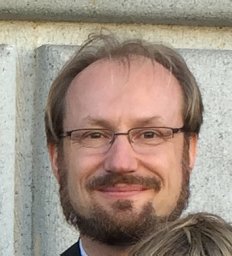 Christoph Steier合作论文数Accelerator Technology and Applied Physics Division, Lawrence Berkeley National Laboratory13
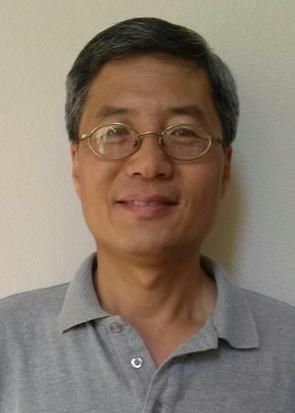 Weishi Wan (万唯实)合作论文数School of Physical Science and Technology, ShanghaiTech University11
 hiroshi nishimura合作论文数10
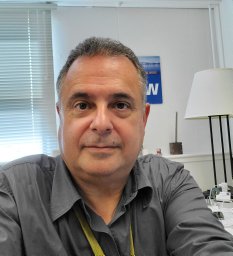 Fernando Sannibale合作论文数Advanced Technology and Accelerator Physics Division, Lawrence Berkeley National Laboratory;Advanced Light Source Division, Lawrence Berkeley National Laboratory8
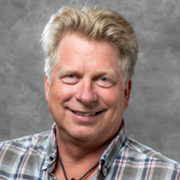 Soren Prestemon合作论文数Accelerator Technology and Applied Physics Division, Lawrence Berkeley National Laboratory6W Wan合作论文数5
 Changchun Sun合作论文数Lawrence Berkeley National Laboratory5A. Biocca合作论文数5A. Madur合作论文数5tom scarvie合作论文数5Robert A. Schlueter合作论文数4
 J. M. Byrd合作论文数4c pappas合作论文数3andrew m sessler合作论文数3d colomb合作论文数3Jin-Young Jung合作论文数3hiroaki nishimura合作论文数3
 Howard Padmore合作论文数Lawrence Berkeley National Laboratory3S. Caspi合作论文数3
 Alexander Zholents合作论文数Argonne National Laboratory3Tony Warwick合作论文数3Georges Portmann合作论文数Lawrence Berkeley National Laboratory3A. Black合作论文数2walter barry合作论文数2Charles Swenson合作论文数2Ross Schlueter合作论文数2
 A. Gerbershagen合作论文数European Organisation for Nuclear Research (CERN), Meyrin, Switzerland2J. M. Schippers合作论文数2
 S Rossi合作论文数Nathan Kline Institute2Na Li合作论文数Central South University China(Central South University ^),Changsha,China2
 Lucas Brouwer合作论文数Univ. of California;c;Univ. of California2
 Janos Kirz合作论文数Physics Department, SUNY2Sandy C. Marks合作论文数2Etienne Forest合作论文数2
 Roger W. Falcone合作论文数Graduate School, Department of Physics, University of California, Berkeley2Winfried Decking合作论文数2S. De Santis合作论文数2
 Zahid Hussain合作论文数Department of Material Physics, Materials Sciences Division, Lawrence Berkeley National Laboratory2J. N. Corlett合作论文数2Diego Arbelaez合作论文数Department of Mechanical Engineering, University of California2A. Wolski合作论文数2Robert Duarte合作论文数2
 Hamed Tarawneh合作论文数Lund University2
 Tor Raubenheimer合作论文数2B Gunion合作论文数1d kairan合作论文数1greg portmann合作论文数1E. Forest合作论文数1g stover合作论文数1




