ABSTRACT Plant‐based beverages that attempt to mimic milk are increasingly popular with consumers, but there are profound differences in nutritional composition and microstructure compared to milk. A structural nutrition approach is needed to understand the effect on digestibility of microstructures, bioaccessibility and bioavailability of components, and ultimately on nutritional delivery and human health.
Gymnema lactiferum (G. lactiferum) is a medicinal plant that contains potent bioactive phytochemicals, which are prone to degradation during processing and digestion. In this study, G. lactiferum extract was prepared and encapsulated into soy lecithin primary liposomes (PL) and then coated with chitosan to form secondary liposomes (chitosomes, CS) to enhance stability. Physicochemical characteristics, morphology, thermal behavior, and storage stability were evaluated. Extract loading significantly (p < 0.05) increased the mean diameter of PL from 128.6 nm to 146.3 nm and of CS from 359.1 nm to 408.9 nm compared with unloaded liposomes. Both liposomal systems exhibited homogeneous size distributions and good colloidal stability, with zeta potentials of −39.4 mV for PL and +35.8 mV for CS and low polydispersity indices (<0.25) for both systems. Transmission electron microscopy demonstrated predominantly spherical morphologies in both systems. Chitosan coating significantly (p < 0.05) improved both encapsulation efficiency (77.3%) and encapsulation yield (82.4%) compared with PL (73.7% and 79.1%, respectively). HPLC-based quantification using rutin as a reference analyte further indicated EE-R% values of 59.8% for PL-GE and 70.3% for CS-GE, supporting improved extract retention following chitosan coating. Fourier transform infrared spectroscopy confirmed successful encapsulation without apparent chemical alterations or reactions. Differential scanning calorimetry indicated that chitosan coating modified the thermal transition behavior of the liposomal membrane, consistent with altered bilayer packing and increased membrane fluidity, while incorporation of the extract partially restored thermal order within the coated system. Overall, chitosan coating effectively enhanced the encapsulation efficiency, stability, and yield of G. lactiferum extract-loaded liposomes towards their incorporation into functional food formulations.
The nutritive value of a protein is determined not only by its amino acid composition, but also by its digestibility in the gastrointestinal tract. The interaction between proteins and pepsin in the gastric stage is the first step and plays an important role in protein hydrolysis. Moreover, it affects the amino acid release rates and the allergenicity of the proteins. The interaction between pepsin and proteins from different food sources is highly dependent on the protein species, composition, processing treatment, and the presence of other food components. Coagulation of milk proteins under gastric conditions to form a coagulum is a unique behavior that affects gastric emptying and further hydrolysis of proteins. The processing treatment of proteins, either from milk or other sources, may change their structure, interactions with pepsin, and allergenicity. For example, the heat treatment of milk proteins results in the formation of a looser curd in the gastric phase and facilitates protein digestion by pepsin. Heated meat proteins undergo denaturation and conformational changes that enhance the rate of pepsin digestion. This review provides new ideas for the design of food products containing high protein concentrations that optimize nutrition while facilitating low allergenicity for consumers.
Dairy products often serve as matrices for delivering probiotic bacteria to humans through the diet; however, little is known about the impact of milk fat globules on the growth and survival of probiotic microorganisms. This review discusses current knowledge on the structure and functionality of the milk fat globule membrane (MFGM) and the structural components contributing to the mechanisms of interactions with probiotic bacteria. We analyzed studies published between 2001 and 2025 with reference to earlier foundational research on probiotics and MFGM structure to explore the functional significance of MFGM–probiotic interactions. Recent research indicates that the effects of MFGM interaction with bacteria are species-specific and may influence probiotic activity in the host, including enhancing probiotic viability during intestinal transit and modulating probiotic colonization. In general, research findings suggest that the MFGM holds potential for use as a probiotic carrier to the gut with beneficial health consequences.
The nutritional value of any food product has historically been measured by the calorific value of individual components, harking back to the days of the development of the bomb calorimeter. A fuller understanding of nutrition later took into account the need for specific components, such as proteins, carbohydrates, vitamins and minerals, that are known to be required for good human health and growth. In milk and milk products, these include casein and whey proteins, lactose, milk fat triacylglycerides, minor lipid components (both charged and neutral), calcium, and micronutrients. Whey proteins are known to be richer in EAA, compared with casein, and also to contain branched chain amino acids for muscle growth. Calcium is found in the form of the calcium phosphate mineral and is dispersed, but largely insoluble, in milk. All of this information does not take into account interactions between milk components, and therefore can be considered as a reductionist nutritional approach. This review takes a structural and physical chemical approach to understand how digestibility and nutritional delivery is affected by microstructures and nutrient component interactions, with a focus on mechanistic explanations.
Giant unilamellar vesicle (GUV) bilayers were constructed from polar lipids and cholesterol by electroformation as a model system to investigate the formation of ordered lipid domains (OLD) within the milk fat globule membrane (MFGM). Dark regions without fluorescent staining on the surfaces of GUV, observed by confocal laser scanning microscopy, were characterized as OLD. Lipid formulations were designed by mixing 1,2-dipalmitoyl-sn-glycero-3-phosphocholine; 1,2-dioleoyl-sn-glycero-3-phosphoethanolamine; milk sphingomyelin; and cholesterol with designated molar ratios to reveal the key components responsible for segregated OLD formation. Cholesterol, rather than milk sphingomyelin, was more responsible for OLD formation. Dark regions were observed in GUV, which contained sphingomyelin but no cholesterol. This observation revealed that at room temperature (below the melting transition temperature [Tm]), not only do cholesterol-mediated ordered domains contribute to lipid phase separation, but phospholipids with high Tm in MFGM are also segregated from the bright fluorescent liquid-disordered domains. This work provides visible evidence demonstrating the comparative roles of sphingomyelin and cholesterol in forming OLD in phospholipid bilayers.
The nutritional value of any food product has historically been measured by the calorific value of individual components, harking back to the days of the development of the bomb calorimeter. A fuller understanding of nutrition later took into account the need for specific components, such as proteins, carbohydrates, vitamins and minerals, that ere known to be required for good human health and growth. In milk and milk products, these include casein and whey proteins, lactose, milk fat triacylglycerides, minor lipid components (both charged and neutral), calcium, and micronutrients. Whey proteins are known to be richer in essential amino acids, compared with casein, and also to contain branched chain amino acids for muscle growth. Calcium is found in the form of the calcium phosphate mineral and is dispersed, but largely insoluble in milk. All of this information does not take into account interactions between milk components, and therefore can be considered as a reductionist nutritional approach. This review takes a structural and physical chemical approach to understand how digestibility and nutritional delivery is impacted by microstructures and nutrient component interactions, with a focus on mechanistic explanations.
The production of structured triacylglycerols (STAGs) enriched in sn-2 specific fatty acids were examined for the microalgae Chlamydomonas reinhardtii, Scenedesmus obliquus, Nannochloropsis oceanica, and Nannochloropsis oculata. The objective was to explore the effects of varied cultivation conditions-including nutrient (nitrogen and phosphorus) starvation, and light saturation-on triacylglycerol (TAG) accumulation and the resultant fatty acid profiles. The total TAG content and specific fatty acid distribution, particularly focusing on the sn-2 position, were determined using an accelerated solvent extraction method and quantification by high-performance liquid chromatography and gas chromatography. Nutrient limitation significantly enhanced total lipid (up to two to threefold increase) and TAG accumulation across all species, with nitrogen starvation leading to the highest increases (C. reinhardtii = 172.99 +/- 18.55 mg/g; S. obliquus = 221.65 +/- 0.91 mg/g; N. oculata = 128.066 +/- 8.37 mg/g; and N. oceanica = 211.96 +/- 18.83 mg/g). Among the three types of sn-2 fatty acids (C16:0, C18:1, and C18:2) elevated levels of sn-2 palmitate (C16:0) = 64%-85% were recorded for both the Nannochloropsis strains under nitrogen- and phosphorus-limiting conditions, whereas under nitrogen-limiting conditions, around 56.8% and only 18% of sn-2 palmitate were recorded for C. reinhardtii and S. obliquus, respectively. Considering the total TAG content and higher cellular levels of sn-2 palmitate, both Nannochloropsis and C. reinhardtii strains could be promising candidates for natural STAG production. These findings provide valuable insight into leveraging microalgae for high-value lipid ingredients, paving the way for sustainable applications in clinical nutrition and infant formula development.
Acid- and pepsin-induced milk protein coagulation plays a crucial role in the gastric digestion of milk. Real-time structural evolution at a nano- (e.g. colloidal calcium phosphate (CCP) and micelle) and micro- (gel network) level of unheated and heated (85 degrees C for 30 min) bovine milk was examined under acidic conditions and at low and high concentrations of pepsin using ultra-small- and small-angle neutron scattering (USANS and SANS), small-amplitude oscillatory rheometry and confocal scanning laser microscopy. Milk was treated with glucono-delta-lactone (GDL), pepsin or a combination of GDL and pepsin to induce coagulation. Heat-treated milk showed a faster increase in elastic storage modulus (G ') and scattering intensity (USANS and SANS) compared with unheated milk when coagulated with GDL or the combination of GDL and pepsin. At pH 6.3, heat treatment retarded pepsin (1.10 U/mL)-induced milk coagulation, with slower increases in G ' and scattering intensity. At a high concentration of pepsin (2000 U/mL) that mimics the concentration found in the stomach, general proteolysis followed coagulation. Heat treatment retarded coagulation but accelerated curd proteolysis. This study demonstrates how time-resolved USANS and SANS can be used to investigate the structural evolution of protein coagulation and degradation under gastric environment conditions at nano- and micro-metre length scales.
 Rashidinejad Ali合作论文数Department of Food Science, University of Otago;Riddet Institute;Riddet Institute, University of Otago16
 Edward John Birch合作论文数Dept Food Sci, Univ Otago14
 Sundaram Gunasekaran合作论文数Department of Biological Systems Engineering, College of Agricultural and Life Sciences, University of Wisconsin-Madison12
 Indrawati Oey合作论文数Department of Food Science, University of Otago11
 Rafael Jimenez-Flores合作论文数10
 Harjinder Singh合作论文数Riddet Institute, Massey University9
 Phil Bremer合作论文数Department of Food Science, University of Otago8
 Ofir Benjamin合作论文数Department of Food Science, Tel Hai College8
 Elliot Paul Gilbert合作论文数Bragg Institute, Australian Nuclear Science and Technology Organisation8
 Aiqian Ye合作论文数Riddet Institute, Massey University8
 Mengxiao Yang合作论文数Riddet Institute, Massey University7
 Thum Caroline合作论文数Food and Bio-based Products Group, AgResearch Grasslands7
 M Mehmet Ak合作论文数7
 Dongxiao Sun-Waterhouse (孙东晓)合作论文数School of Chemical Sciences, University of Auckland;Henan University;Shandong Agricultural University;South China University of Technology7
 Patrick Silcock合作论文数Department of Food Science, University of Otago7P Roupas合作论文数6Yuying Fu合作论文数6
 Zhi Yang合作论文数6
 Sophie Gallier合作论文数6D. E. Gragson合作论文数6
 Zahra Haddadian合作论文数Department of Food Science, University of Otago5Teng Li合作论文数5
 Zheng Haotian合作论文数Riddet Institute;Department of Food Science, University of Otago;Dairy Products Technology Center, California Polytechnic State University;University of Otago, California Polytechnic State University5
 Graham Eyres合作论文数CSIRO Food and Nutritional Sciences5Malcolm Wayne Hickey合作论文数5
 Andrea Buettner合作论文数4Patrick Tai合作论文数4
 Alan Carne合作论文数Department of Biochemistry, University of Otago4
 Matt Golding合作论文数Procter Department of Food Science, University of Leeds4
 Shahin Roohinejad合作论文数Department of Food;Faculty of Food Science and Technology;Universiti Putra Malaysia;Faculty of Food Science and Technology, Universiti Putra Malaysia4
 Jonathan D Beauchamp合作论文数4Peter Roupas合作论文数4
 Michelle Leus合作论文数3Huanhuan Su合作论文数3
 Goldy De Bhowmick合作论文数Te Ohu Rangahau Kai, AgResearch Ltd3Petr Dejmek合作论文数Institutionen För Livsmedelsteknik, Lunds Universitet3
 Clulow Andrew J合作论文数Centre for Organic Photonics &Electronics, The University of Queensland;Centre for Organic Photonics & Electronics, The University of Queensland3
 Alan L. Kelly合作论文数Department of Food and Nutritional Sciences, School of Food and Nutritional Sciences, University College Cork3Mariza Gomes Reis合作论文数Instituto de Quı́mica, Universidade Estadual de Campinas3Paul Jelen合作论文数Department of Agricultural, Food and Nutritional Science, Faculty of Agricultural, Life and Environmental Science, University of Alberta3Michelle K. Rowney合作论文数3Benoit Guieysse合作论文数3
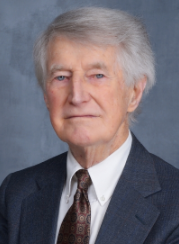 Norman F. Olson合作论文数Department of Food Science, University of Wisconsin-Madison3M. Rowney合作论文数3L. Drury合作论文数2Jan Wouters合作论文数2Yao, Junze合作论文数2
 Ben J. Boyd合作论文数University of Copenhagen;Monash Institute of Pharmaceutical Sciences, Monash University2Yun Zhai合作论文数2




