This paper introduces ARAPDiffusion, a latent diffusion model to learn the underlying continuous shape space of a deformation shape collection. The key innovation is in injecting the as-rigid-as-possible (ARAP) deformation model as regularization losses into latent diffusion (LD), releasing the requirement of having abundant 3D training data for learning generative models. In contrast to the standard LD, we show how the ARAP model can be used to improve both the encoder/decoder and the LD model. The training procedure alternates between using the synthetic distribution defined by the LD model to develop a regularization loss that enhances the shape encoder/decoder and using the shape decoder to develop a regularization loss to improve the LD model. We also show the benefit of the LD paradigm in combining a representation-free LD process and an implicit shape decoder that is applicable to unorganized point clouds. The experimental results of unconditional and conditional shape generation demonstrate the advantages of ARAPDiffusion over baseline approaches.
Existing industrial 3D garment meshes already cover most real-world clothing geometries, yet their texture diversity remains limited. To acquire more realistic textures, generative methods are often used to extract Physically-based Rendering (PBR) textures and materials from large collections of wild images and project them back onto garment meshes. However, most image-conditioned texture generation approaches require strict topological consistency between the input image and the input 3D mesh, or rely on accurate mesh deformation to match to the image poses, which significantly constrains the texture generation quality and flexibility. To address the challenging problem of non-isometric image-based garment texture generation, we construct 3D Garment Videos, a physically simulated, garment-centric dataset that provides consistent geometry and material supervision across diverse deformations, enabling robust cross-pose texture learning. We further employ Nano Banana for high-quality non-isometric image editing, achieving reliable cross-topology texture generation between non-isometric image-geometry pairs. Finally, we propose an iterative baking method via uncertainty-guided view selection and reweighting that fuses multi-view predictions into seamless, production-ready PBR textures. Through extensive experiments, we demonstrate that our feedforward dual-branch architecture generates versatile and spatially aligned PBR materials suitable for industry-level 3D garment design.
Using the latent diffusion model has proven effective in developing novel 3D generation techniques. To harness the latent diffusion model, a key challenge is designing a high-fidelity and efficient representation that links the latent space and the 3D space. In this paper, we introduce Atlas Gaussians, a novel representation for feed-forward native 3D generation. Atlas Gaussians represent a shape as the union of local patches, and each patch can decode 3D Gaussians. We parameterize a patch as a sequence of feature vectors and design a learnable function to decode 3D Gaussians from the feature vectors. In this process, we incorporate UV-based sampling, enabling the generation of a sufficiently large, and theoretically infinite, number of 3D Gaussian points. The large amount of 3D Gaussians enables the generation of high-quality details. Moreover, due to local awareness of the representation, the transformer-based decoding procedure operates on a patch level, ensuring efficiency. We train a variational autoencoder to learn the Atlas Gaussians representation, and then apply a latent diffusion model on its latent space for learning 3D Generation. Experiments show that our approach outperforms the prior arts of feed-forward native 3D generation. Project page: https://yanghtr.github.io/projects/atlas_gaussians.
3D scene synthesis using natural language instructions has become a popular direction in computer graphics, with significant progress made by data-driven generative models recently. However, previous methods have mainly focused on one-time scene generation, lacking the interactive capability to generate, update, or correct scenes according to user instructions. To overcome this limitation, this paper focuses on text-guided interactive scene synthesis. First, we introduce the SceneMod dataset, which comprises 168k paired scenes with textual descriptions of the modifications. To support the interactive scene synthesis task, we propose a two-stage diffusion generative model that integrates scene-prior guidance into the denoising process to explicitly enforce physical constraints and foster more realistic scenes. Experimental results demonstrate that our approach outperforms baseline methods in text-guided scene synthesis tasks. Our system expands the scope of data-driven scene synthesis tasks and provides a novel, more flexible tool for users and designers in 3D scene generation. Code and dataset are available at https://github.com/bshfang/SceneMod.
We present GenAnalysis, an implicit shape generation framework that allows joint analysis of man-made shapes, including shape matching and joint shape segmentation. The key idea is to enforce an as-affine-as-possible (AAAP) deformation between synthetic shapes of the implicit generator that are close to each other in the latent space, which we achieve by designing a regularization loss. It allows us to understand the shape variation of each shape in the context of neighboring shapes and also offers structure-preserving interpolations between the input shapes. We show how to extract these shape variations by recovering piecewise affine vector fields in the tangent space of each shape. These vector fields provide single-shape segmentation cues. We then derive shape correspondences by iteratively propagating AAAP deformations across a sequence of intermediate shapes. These correspondences are then used to aggregate single-shape segmentation cues into consistent segmentations. We conduct experiments on the ShapeNet dataset to show superior performance in shape matching and joint shape segmentation over previous methods.
This paper presents a novel approach 4DRecons that takes a single camera RGB-D sequence of a dynamic subject as input and outputs a complete textured deforming 3D model over time. 4DRecons encodes the output as a 4D neural implicit surface and presents an optimization procedure that combines a data term and two regularization terms. The data term fits the 4D implicit surface to the input partial observations. We address fundamental challenges in fitting a complete implicit surface to partial observations. The first regularization term enforces that the deformation among adjacent frames is as rigid as possible (ARAP). To this end, we introduce a novel approach to compute correspondences between adjacent textured implicit surfaces, which are used to define the ARAP regularization term. The second regularization term enforces that the topology of the underlying object remains fixed over time. This regularization is critical for avoiding self-intersections that are typical in implicit-based reconstructions. We have evaluated the performance of 4DRecons on a variety of datasets. Experimental results show that 4DRecons can handle large deformations and complex inter-part interactions and outperform state-of-the-art approaches considerably.
This paper introduces GenCorres, a novel unsupervised joint shape matching (JSM) approach. Our key idea is to learn a mesh generator to fit an unorganized deformable shape collection while constraining deformations between adjacent synthetic shapes to preserve geometric structures such as local rigidity and local conformality. GenCorres presents three appealing advantages over existing JSM techniques. First, GenCorres performs JSM among a synthetic shape collection whose size is much bigger than the input shapes and fully leverages the datadriven power of JSM. Second, GenCorres unifies consistent shape matching and pairwise matching (i.e., by enforcing deformation priors between adjacent synthetic shapes). Third, the generator provides a concise encoding of consistent shape correspondences. However, learning a mesh generator from an unorganized shape collection is challenging, requiring a good initialization. GenCorres addresses this issue by learning an implicit generator from the input shapes, which provides intermediate shapes between two arbitrary shapes. We introduce a novel approach for computing correspondences between adjacent implicit surfaces, which we use to regularize the implicit generator. Synthetic shapes of the implicit generator then guide initial fittings (i.e., via template-based deformation) for learning the mesh generator. Experimental results show that GenCorres considerably outperforms state-of-the-art JSM techniques. The synthetic shapes of GenCorres also achieve salient performance gains against state-of-the-art deformable shape generators.
This paper introduces CoFie, a novel local geometry-aware neural surface representation. CoFie is motivated by the theoretical analysis of local SDFs with quadratic approximation. We find that local shapes are highly compressive in an aligned coordinate frame defined by the normal and tangent directions of local shapes. Accordingly, we introduce Coordinate Field, which is a composition of coordinate frames of all local shapes. The Coordinate Field is optimizable and is used to transform the local shapes from the world coordinate frame to the aligned shape coordinate frame. It largely reduces the complexity of local shapes and benefits the learning of MLP-based implicit representations. Moreover, we introduce quadratic layers into the MLP to enhance expressiveness concerning local shape geometry. CoFie is a generalizable surface representation. It is trained on a curated set of 3D shapes and works on novel shape instances during testing. When using the same amount of parameters with prior works, CoFie reduces the shape error by 48% and 56% on novel instances of both training and unseen shape categories. Moreover, CoFie demonstrates comparable performance to prior works when using even 70% fewer parameters. Code and model can be found here: https://hwjiang1510.github.io/CoFie/
We study how to optimize the latent space of neural shape generators that map latent codes to 3D deformable shapes. The key focus is to look at a deformable shape generator from a differential geometry perspective. We define a Riemannian metric based on as-rigid-as-possible and as-conformal-as-possible deformation energies. Under this metric, we study two desired properties of the latent space: 1) straight-line interpolations in latent codes follow geodesic curves; 2) latent codes disentangle pose and shape variations at different scales. Strictly enforcing the geometric interpolation property, however, only applies if the metric matrix is a constant. We show how to achieve this property approximately by enforcing that geodesic interpolations are axis-aligned, i.e., interpolations along coordinate axis follow geodesic curves. In addition, we introduce a novel approach that decouples pose and shape variations via generalized eigendecomposition. We also study efficient regularization terms for learning deformable shape generators, e.g., that promote smooth interpolations. Experimental results on benchmark datasets show that our approach leads to interpretable latent codes, improves the generalizability of synthetic shapes, and enhances performance in geodesic interpolation and geodesic shooting.
Bird's-Eye View (BEV) features are popular intermediate scene representations shared by the 3D backbone and the detector head in LiDAR-based object detectors. However, little research has been done to investigate how to incorporate additional supervision on the BEV features to improve proposal generation in the detector head, while still balancing the number of powerful 3D layers and efficient 2D network operations. This paper proposes a novel scene representation that encodes both the semantics and geometry of the 3D environment in 2D, which serves as a dense supervision signal for better BEV feature learning. The key idea is to use auxiliary networks to predict a combination of explicit and implicit semantic probabilities by exploiting their complementary properties. Extensive experiments show that our simple yet effective design can be easily integrated into most state-of-the-art 3D object detectors and consistently improves upon baseline models.
Developing deep neural networks to generate 3D scenes is a fundamental problem in neural synthesis with immediate applications in architectural CAD, computer graphics, as well as in generating virtual robot training environments. This task is challenging because 3D scenes exhibit diverse patterns, ranging from continuous ones, such as object sizes and the relative poses between pairs of shapes, to discrete patterns, such as occurrence and co-occurrence of objects with symmetrical relationships. This paper introduces a novel neural scene synthesis approach that can capture diverse feature patterns of 3D scenes. Our method combines the strength of both neural network-based and conventional scene synthesis approaches. We use the parametric prior distributions learned from training data, which provide uncertainties of object attributes and relative attributes, to regularize the outputs of feed-forward neural models. Moreover, instead of merely predicting a scene layout, our approach predicts an over-complete set of attributes. This methodology allows us to utilize the underlying consistency constraints among the predicted attributes to prune infeasible predictions. Experimental results show that our approach outperforms existing methods considerably. The generated 3D scenes interpolate the training data faithfully while preserving both continuous and discrete feature patterns.
We introduce an approach for establishing dense correspondences between partial scans of human models and a complete template model. Our approach's key novelty lies in formulating dense correspondence computation as initializing and synchronizing local transformations between the scan and the template model. We introduce an optimization formulation for synchronizing transformations among a graph of the input scan, which automatically enforces smoothness of correspondences and recovers the underlying articulated deformations. We then show how to convert the iterative optimization procedure among a graph of the input scan into an end-to-end trainable network. The network design utilizes additional trainable parameters to break the barrier of the original optimization formulation's exact and robust recovery conditions. Experimental results on benchmark datasets demonstrate that our approach considerably outperforms baseline approaches.
We introduce H3DNet, which takes a colorless 3D point cloud as input and outputs a collection of oriented object bounding boxes (or BB) and their semantic labels. The critical idea of H3DNet is to predict a hybrid set of geometric primitives, i.e., BB centers, BB face centers, and BB edge centers. We show how to convert the predicted geometric primitives into object proposals by defining a distance function between an object and the geometric primitives. This distance function enables continuous optimization of object proposals, and its local minimums provide high-fidelity object proposals. H3DNet then utilizes a matching and refinement module to classify object proposals into detected objects and fine-tune the geometric parameters of the detected objects. The hybrid set of geometric primitives not only provides more accurate signals for object detection than using a single type of geometric primitives, but it also provides an overcomplete set of constraints on the resulting 3D layout. Therefore, H3DNet can tolerate outliers in predicted geometric primitives. Our model achieves state-of-the-art 3D detection results on two large datasets with real 3D scans, ScanNet and SUN RGB-D. Our code is open-sourced at here .
The nucleation, growth and arrangement of MgSO4 product layers during the reaction of single-crystal MgO with SO2 and O2 were investigated via atomic force microscopy (AFM). The morphology of the single-crystal MgO surface after reacting with SO2 and O2 consisted of three-dimensional cone-shaped MgSO4 product islands. Most of the islands appeared at locations with terraces, steps and kinks. With increasing reaction time, small product islands grew to large islands, finally coalescing into continuous islands. The nucleation, growth and arrangement of the solid products on the reactant surface are controlled by thermodynamics and kinetics. The morphology of the MgSO4 product islands is governed by the competition between the intrinsic chemical reaction rate and the product molecular diffusion rate, which are both significantly affected by the reaction temperature. As the reaction temperature increases, the mean size of the MgSO4 islands increases while the island density decreases. The nucleation, growth and arrangement of the solid product layers and the product layer morphology on the solid reactant surface directly affect the mechanism of the gas–solid reaction.
The direct sulfation of single-crystal CaCO3 with SO2 and O2 at high CO2 concentrations was studied using Thermo-gravimetric Analysis (TGA), an Atomic Force Microscope (AFM), a Scanning Electron Microscope (SEM) and Energy-Dispersive Spectroscopy (EDS). Nucleation and crystal grain growth of the solid product were observed on the surface of the sulfated single-crystal CaCO3. The morphology of single-crystal CaCO3 surface after reacting with SO2 and O2 at 600°C consists of island-shaped CaSO4 product. As the reaction proceeded, small islands began to grow, with coalescence of these islands during this growth stage. The product layer formed during the direct sulfation reaction has been shown to be porous due to spaces between the product islands.
 Qixing Huang合作论文数12
 Xiangru Huang (黄相如)合作论文数School of Engineering, Westlake University;Foundational Algorithms for 3D Big Data Laboratory, Westlake University5
 Hanwen Jiang (江翰文)合作论文数Department of Computer Science, The University of Texas at Austin3
 Zaiwei Zhang合作论文数Amazon Web Services3
 Georgios Pavlakos合作论文数Department of Computer Science, University of Texas at Austin3
 Chandrajit Bajaj合作论文数Department of Computer Science, College of Natural Sciences, The University of Texas at Austin;Center for Computational Visualization, The Oden Institute of Computational Engineering and Sciences, The University of Texas at Austin;NuTechnix Consultants Inc.3
 Xiaoyu Tang合作论文数Dept Chem Engn, Univ Calif Santa Barbara2
 Zhenshan Li (李振山)合作论文数Department of Energy and Power Engineering, Tsinghua University2
 Ningsheng Cai (蔡宁生)合作论文数Department of Energy and Power Engineering, Tsinghua University2
 Dejia Xu合作论文数Luma AI2
 Fan Fang合作论文数2Kiyohiroe Nakayama合作论文数1Yuezhi Yang合作论文数1Yuan Dong合作论文数1Liyan Chen合作论文数1Yi Zheng合作论文数1
 Bo Sun (孙波)合作论文数Institute of Soil Science, Chinese Academy of Sciences1
 Siming Yan合作论文数Computer Science Department, The University of Texas at Austin;Huawei1
 Haibin Huang (黄海斌)合作论文数ByteDance1
 Chen Song (宋晨)合作论文数Department of Computer Science, The University of Texas at Austin;Cruise1
 Yi Li (李轶)合作论文数Tsinghua Shenzhen International Graduate School1
 Ming Li (李明)合作论文数College of Computer Science and Technology, Zhejiang University1
 Leonidas Guibas合作论文数Computer Science Department, School of Engineering, Stanford University;Department of Electrical Engineering, Stanford University1
 Raymond J. Mooney合作论文数Department of Computer Science, College of Natural Sciences, University of Texas at Austin;UT Artificial Intelligence Laboratory, University of Texas at Austin1
 Etienne Vouga合作论文数Department of Computer Science The University of Texas at Austin1
 Yanwei Fu (付彦伟)合作论文数School of Date Science, Fudan University1
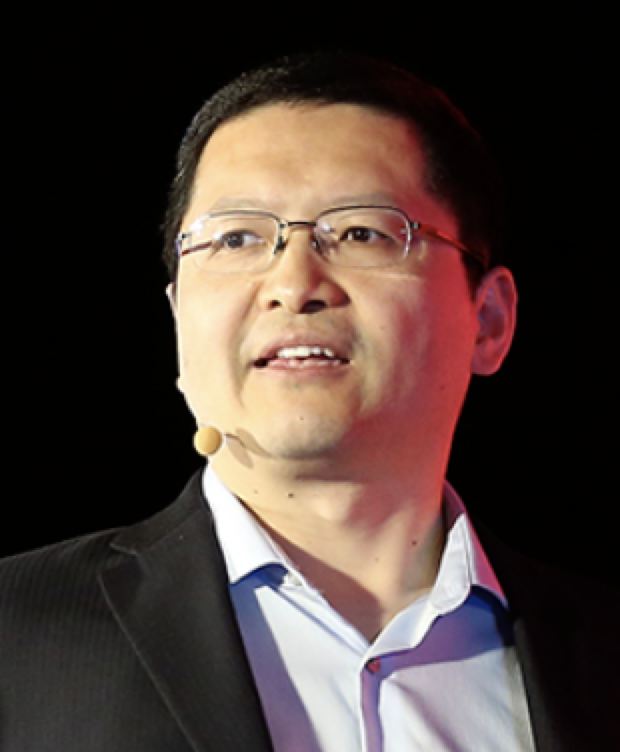 Li Erran Li合作论文数Department of Computer Science, Columbia University;Amazon Web Services1
 Amy Pavel合作论文数Department of Computer Science, University of Texas at Austin1
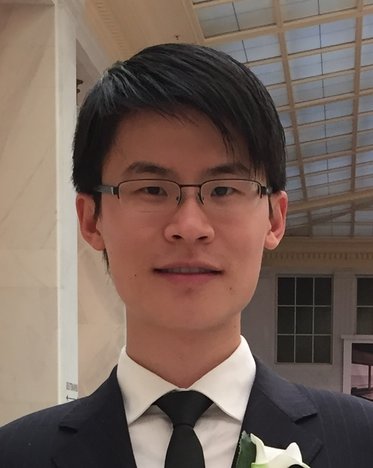 Min Bai合作论文数Amazon Web Services1
 Chongyang Ma (马重阳)合作论文数ByteDance1




