This study analyzes the performance of the Administration and General Affairs Section of the Regional Office of the Ministry of Law in West Sumatra as an administrative support unit within a vertical government organization. The study uses a qualitative approach with a case study design. Data were collected through interviews, observation, and documentation of performance reports, personnel data, budget realization, facilities and infrastructure, and organizational reporting documents. Analysis was conducted using Dwiyanto’s theory of public organization performance, which encompasses productivity, service quality, responsiveness, responsibility, and accountability. The results indicate that the Administration and General Affairs Section performs well administratively. This is evidenced by high budget realization, the provision of internal services, compliance with standard operating procedures, and completeness of performance reporting. However, substantively the performance is not yet optimal due to imbalances in human resource distribution, limitations in facilities and infrastructure, weak cross-unit coordination, dependence on certain employees, and the underutilization of performance information as a basis for organizational improvement. These findings reveal a condition of administrative order but substantive stagnation. This study contributes to the development of public organization performance research by emphasizing that the performance of administrative support units should not be judged solely by formal compliance, but must be viewed in terms of the organization’s capacity to deliver adaptive, coordinated, and results-based support.
Background This study investigates the role of 'lapau' as a mechanism for social accountability in the budget planning of the Salayo Nagari government. Set within the framework of village autonomy as defined by Law Number 6 of 2014, the research addresses the disparity between formal, procedural accountability and the substantive community practices that exist in reality. Methods Through qualitative methodology involving interviews, observations and document analysis, the study identifies 'Lapau' as a critical informal public sphere. The presence of government officials within the 'Lapau' reduces social distance and encourages continuous dialogue, which contributes to greater public trust and responsiveness. Results The findings suggest that this social arena facilitates transparency, direct discourse and rapid problem solving, thereby overcoming the limitations of rigid formal procedures. Instead of replacing the formal accountability mechanisms, the 'Lapau' works with the institutional arrangements that already exist by embedding accountability practices within social and cultural relations. Conclusions Ultimately, the 'Lapau' strengthens the Nagari government's legitimacy and fosters a deeper emotional bond with the community, ensuring a sustainable response to citizen aspirations.
Penelitian ini bertujuan untuk menganalisis pengaruh kompetensi dan motivasi kerja terhadap kinerja pegawai pada Badan Pendapatan Daerah (Bapenda) Kota Padang. Penelitian dilatarbelakangi oleh tingginya tingkat job mismatch, belum optimalnya pengembangan kompetensi, serta fluktuasi pencapaian target realisasi pajak daerah. Pendekatan penelitian menggunakan kuantitatif deskriptif-korelasional. Sampel penelitian berjumlah 68 pegawai yang dipilih dari populasi sebanyak 215 pegawai (PNS dan PPPK) menggunakan teknik proportionate stratified random sampling. Pengumpulan data dilakukan melalui kuesioner terstruktur yang telah diuji validitas (Korelasi Bivariate Pearson) dan reliabilitasnya (Cronbach's Alpha). Teknik analisis data mencakup deskriptif Tingkat Capaian Responden (TCR) dan statistik inferensial regresi linear berganda. Hasil analisis deskriptif menunjukkan variabel Kompetensi (X1) berada pada kriteria Baik (TCR 88,7%), Motivasi (X2) Baik (TCR 85,7%), dan Kinerja Pegawai (Y) Baik (TCR 87,5%). Secara simultan (Uji F), kompetensi dan motivasi kerja berpengaruh signifikan terhadap kinerja pegawai (F = 43,931; p = 0,000 < 0,05). Secara parsial (Uji t), kompetensi berpengaruh positif dan signifikan terhadap kinerja pegawai (t = 6,793; p = 0,000 < 0,05), sedangkan motivasi kerja secara parsial tidak menunjukkan pengaruh signifikan (t = 1,639; p = 0,106 > 0,05). Koefisien determinasi (R2) sebesar 0,575 menunjukkan bahwa 57,5% variasi kinerja pegawai dijelaskan oleh kompetensi dan motivasi kerja, sedangkan 42,5% sisanya dipengaruhi oleh faktor-faktor lain di luar model penelitian.
Public Service Malls (PSMs) are designed to integrate services from multiple agencies within a single service environment, yet physical co-location does not necessarily ensure organizational integration. This study examines how structural arrangements shape coordination and service integration in the Payakumbuh City Public Service Mall and provides an empirical diagnosis of organizational fragmentation underlying its operation. Using a qualitative single-case study design, data were collected through an in-depth semi-structured interview with the Coordinator of the Integrated Service Substance Sector of the Payakumbuh City Investment and One-Stop Integrated Service Office (DPMPTSP), non-participant observation, and analysis of organizational and cooperation documents. Data were analyzed through thematic coding across structural dimensions, including division of labor, authority distribution, coordination, formalization, communication, technological integration, human resources, and institutional support, supported by source triangulation. The findings indicate that the Payakumbuh City PSM has successfully improved physical accessibility through shared facilities, common front-office arrangements, and municipal support. However, participating agencies continue to retain their own mandates, procedures, personnel arrangements, and decision-making authority. DPMPTSP performs a coordinating role but lacks sufficient formal authority to harmonize substantive service procedures across agencies. As a result, coordination remains partly reactive, digital integration is limited, and staff rotation affects service continuity. The study concludes that the Payakumbuh City PSM demonstrates physical integration without equivalent organizational integration. Its contribution is not the development of a universal organizational-design model, but a case-based structural diagnosis showing how fragmented authority, agency-specific formalization, and limited integrative mechanisms constrain one-stop public service arrangements. The findings highlight that effective public service integration requires not only physical co-location but also aligned authority, procedures, technology, and human resources across institutional boundaries.
This study analyzes local government policies' capacity to implement Indonesia's Minimum Service Standards (MSS), focusing on enforcing Government Regulation No. 2/2018 and Minister of Home Affairs Regulation No. 59/2021. These policies encompass six sectors: education, health, public works, housing, public order and safety, and social affairs. The findings reveal uneven and fluctuating MSS achievements. Although mandatory spending—20% for education and 10% for health—is in place, it does not consistently lead to improved outcomes. Similarly, fiscal capacity does not always correlate with MSS performance. Using a qualitative method—through interviews, FGDs, observations, and literature review—this study identifies that the policy capacities of individuals, organizations, and political actors influence the achievement of MSS. Among these, political capacity—particularly weak commitment from implementers—emerges as the most significant barrier. The study concludes that a new model and formula within the policy framework is essential to address service disparities and improve performance across all regions to ensure equitable and effective MSS implementation.
Penelitian ini bertujuan untuk mengevaluasi kebijakan Rencana Induk Pembangunan Kepariwisataan Provinsi Sumatera Barat 2014-2024, dengan fokus pada potensi dan tantangan yang dihadapi dalam implementasinya. Metode yang digunakan adalah deskriptif kualitatif, yang melibatkan wawancara semi-terstruktur dengan pemangku kepentingan kunci dan analisis dokumentasi untuk mengumpulkan data yang relevan. Hasil penelitian menunjukkan bahwa meskipun Sumatera Barat memiliki potensi pariwisata yang besar, tantangan seperti infrastruktur yang belum memadai, kurangnya kolaborasi antara pemangku kepentingan, dan strategi pemasaran yang tidak efektif menghambat pengembangan sektor ini. Kesimpulan dari evaluasi ini menekankan pentingnya investasi dalam infrastruktur, peningkatan keterlibatan masyarakat lokal, serta pemanfaatan teknologi digital untuk promosi, guna menciptakan pariwisata yang berkelanjutan dan memberikan manfaat ekonomi yang merata bagi masyarakat. Pengukuran evaluasi kebijakan RIPPARPROV 2014-2024 melalui pendekatan komprehensif yang mencakup input, process, output, dan outcomes. Hasil evaluasi menunjukkan keberhasilan implementasi kebijakan yang tercermin dari peningkatan data kuantitatif seperti jumlah kunjungan wisatawan dan pendapatan daerah, serta aspek kualitatif berupa partisipasi aktif masyarakat dalam pengembangan pariwisata yang berkelanjutan di Sumatera Barat
The Kepenuhan Hulu Village Government has successfully encouraged the community to participate actively in deliberation forums to convey information about accountability and receive feedback from the community. This indicates the existence of social accountability practices in financial management in Kepenuhan Hulu Village. This study examines how social accountability in village financial management is implemented using the Social Accountability theory of Grandvoinnet et al. The results show that social accountability in financial management in Kepenuhan Hulu Village is built through active community involvement and the village government's commitment to creating transparent and participatory governance. Social accountability is manifested in deliberation forums such as hamlet deliberations, village deliberations, and village development planning deliberations. These forums have become a space for the community to express aspirations and determine the direction of village development. The findings of this social accountability study have implications for strengthening accountability in village financial management by optimizing the deliberation mechanism regulated by the regulation to be more inclusive and based on real community needs. With a clear commitment from the village government to meeting community demands and needs, this social accountability approach can serve as a reference for strengthening more transparent village financial management.
This study aims to describe the Implementation of the Child Identity Card (KIA) Program at the Population and Civil Registration Office of Bukittinggi City. KIA is implemented based on the Regulation of the Minister of Home Affairs Number 2 of 2016 concerning Child Identity Cards. In the implementation, there are stakeholders involved, namely schools, LPKA Class II Payakumbuh in Tanjung Pati, and Bukittinggi City Hospital. This study was analyzed using the implementation theory according to Donald Van Meter and Carl Van Horn. The research method used is descriptive qualitative, with data collection techniques through interviews and documentation. Then the data validity technique uses source triangulation. The results of the study indicate that the Implementation of the Child Identity Card (KIA) Program at the Population and Civil Registration Office of Bukittinggi City has not run optimally. As the indicator of justice in the effort to pick up the ball to school has not been carried out evenly in Bukittinggi City, human resources in terms of quantity are inadequate, there is still a lack of budget, and the existence of facilities that are in a damaged condition, less supportive social conditions, and constraints on economic conditions.
Public services of activities aimed at meeting the service needs of every citizen. One effort to support the creation of quality public services is through digital-based innovation by making maximum use of developments in information technology. The West Pasaman Regency Population and Civil Registration Service initiated the PANDAWA innovation, which is a form of digital-based innovation as a form of application of the e-Government concept. The theory used by researchers is the Logic Model by Wholey. A logic model is a systematic model to describe the changes that occur, and describes the logical causal relationship (cause-effect). There are four components of this theory, namely evaluation of input, activities, output, and results. The research method used is descriptive qualitative. To collect data, researchers used three methods, namely interviews, documentation and observation. Research informants were selected using purposive sampling. The results research are that the evaluation of the PANDAWA program from the input components to the output components is quite good. However, in the input component, service facilities need to be added, clarifying the partnership system established with the parent village; In the activity component, it is necessary to increase socialization activities related to PANDAWA both directly and through mass media. So that the output of this program has increased and the entire West Pasaman community can experience the ease of PANDAWA services evenly and the realization of excellent service at the West Pasaman Regency Population and Civil Registration Service.
Padang Panjang City, known as the “Kota Serambi Mekkah”, is determined to become one of the smart cities in West Sumatra. According to Mayor Regulation Number 37 of 2019 concerning the Smart City Masterplan, Padang Panjang City has initiated the smart surau program. The smart surau program aims to restore the pivotal role of surau (mosques) as traditional educational institutions collaborating with internet technology to guide the behavior of adolescents vulnerable to social issues. Masjid Jami’ Nurul Huda has been chosen as the pilot mosque in Padang Panjang to implement the smart surau program due to its collaboration with Amal Sosial program initiated by the mosque administrators. The research methodology utilized in this study is qualitative descriptive. Data collection techniques encompass direct observation, interviews, documentation, and audiovisual materials. Informant selection is performed using purposive sampling obtained from the interview results. Research findings indicate that the transformation of public services at Masjid Jami’ Nurul Huda through the smart surau and social welfare programs has a significant impact on meeting the spiritual, social, and religious needs of the surrounding community. Masjid Jami’ Nurul Huda has successfully adapted to the changing times and taken on a broader role in enhancing quality of life and strengthening social bonds within the community.
The purpose of this study is to describe the implementation of public service innovations carried out by Disdukcapil Pasaman Regency. This type of research is qualitative by describing the form of implementation of public service innovation by Disdukcapil Pasaman Regency. Innovation is the creation and implementation of new processes, products, services and methods that can produce quality improvements that are effective and efficient. However, innovation can also be in the form of expansion or improvement of existing services, so as to create better service than before. Public Service Innovation is an increase in population administration services by making these services accessible anywhere and anytime by the public.
This thesis aims to describe how tourism development in the Equator Bonjol Tourism Area, Pasaman Regency. This research is motivated by the small number of visitors who come to the Equator Bonjol Tourism Area, while this tourism has the potential and has become a leading tourism that will be a reference for the development of tourism in other tourist attractions in Pasaman Regency. In addition, Pasaman Regency in its RPJMD sets Pasaman Tourism Destinations as one of the priority programs. Therefore, researchers are interested in describing how tourism development in the Equator Bonjol Tourism area. The method used in this study is a qualitative descriptive method using interview, observation and documentation data collection techniques. Then to test the validity of the data obtained in the field, it is carried out using the source triangulation technique. As well as for the selection of informants, researchers use purposive sampling techniques. Based on research that has been conducted on tourism development in the Equator Bonjol Tourism Area, it can be concluded that broadly speaking these 4 core components already exist but have not been maximized because there are still some parts of these components that are not yet available. The available ones also cannot be developed optimally because the management carried out is not good enough. So that the development of the Equator Bonjol Tourism Area needs to be addressed further.
The high number of elderly people, namely 7.01%, is the basis for the Dharmasraya Regency Government to make the elderly one of the regional problems that must be resolved. Based on the guidelines issued by the Central Government through the Ministry of Social Affairs, Dharmasraya Regency issued an Elderly Area Policy through the 2020-2024 Regional Medium Term Development Plan. This research aims to describe and analyze the Implementation of the Elderly Dharmasraya Regency Policy. This research uses Edward III's theory 4 variables to determine the success of implementing a policy: communication, resources, disposition, and bureaucratic structure. The research results show that characteristics within agencies, a clear division of tasks and responsibilities, and good coordination between agencies are key factors for success. Despite the government's commitment to providing adequate funding, there are still potential problems in allocating and using funds that are not on target due to a lack of supervision and monitoring. So, concrete steps need to be taken to improve coordination and ensure that all parties involved have effective communication channels. Tingginya jumlah angka penduduk lanjut usia di Kabupaten Dharmasraya yakni sebesar 7,01%, menjadi dasar bagi pemerintah untuk menjadikan persoalan lansia sebagai salah satu permasalahan daerah yang harus di prioritaskan. Berdasarkan pedoman yang dikeluarkan oleh pemerintah pusat melalui kementerian sosial, Pemerintah Kabupaten Dharmasraya kemudian mengeluarkan Kebijakan mengenai Kawasan Ramah lansia melalui Rencana Pembangunan Jangka Menangah Daerah pada Tahun 2020-2024. Tujuan penelitian ini untuk mendeskripsikan dan menganalisis Implementasi Kebijakan Kabupaten Dharmasraya terkait kebijakan Kawasan Ramah Lansia tersebut. Penelitian ini menggunakan metode penelitian kualitatif deskriptif dengan berlandaskan teori Edward III. Terdapat 4 variabel yang menentukan keberhasilan implementasi suatu kebijakan, yaitu komunikasi, sumberdaya, disposisi dan struktur birokrasi. Hasil penelitian kemudian menunjukkan bahwa karakteristik dalam badan-badan, pembagian tugas dan tanggung jawab yang jelas, serta koordinasi yang baik antar badan-badan menjadi faktor kunci untuk mencapai keberhasilan implementasi kebijakan. Meskipun ada komitmen pemerintah untuk menyediakan pendanaan yang mencukupi, masih terdapat potensi masalah dalam alokasi dan penggunaan dana yang tidak tepat sasaran karena kurangnya pengawasan dan monitoring. Maka perlu ada langkah-langkah konkret untuk memperbaiki koordinasi dan memastikan bahwa semua pihak terlibat memiliki saluran komunikasi yang efektif.
The e-Kelurahan services program is one of the leading innovative programs in Padang City, which aims to realize the convenience of essential services at the urban village. The result of research in 2022 shows that the implementation of e-kelurahan has yet to be effective, and this study is a follow up research that aims to evaluate e-Kelurahan services using Maturity e-Government Models. The evaluation model used the Five pillars of e-Government framework put forward by Fietkiewicz, Mainka & Stock in 2017, which consists of Information Dissemination, Communication, Transactions, Interoperability, and Participation. The research method used qualitative descriptive through collecting data, interviews, observation, and documentation. According to the findings of the study, that four pillars must still be fulfilled. communication pillar through the website that is not presented to the public, the transaction pillar has decreased function because the community can no longer submit letters online, interoperability is not fulfilled because integration with Dukcapil is interrupted and the participation pillar of e-Kelurahan utilization is not used for more democratic things. The Government of Padang City has only reached the stage of providing online service applications to produce the documents. The weakness of this theory is that the analysis only focuses on website development, ignoring other factors such as organization, resources, and supervision, which are also implementation problems.
Kaum is one of three forms of kinship groups in Minangkabau society. Kaum is a collection of several paruik, and suku is a collection of several kaum and nagari consists of at least four suku. The existence of paruik, kaum and suku in the lives of nagari people is still felt to this day. The existence of this group is still felt in Nagari Pasia Laweh, including in development activities. This research will look further at the existence of groups in development in Nagari Pasia Laweh, Palupuah District, Agam Regency. The research method used is qualitative with descriptive analysis. Data collection techniques use interviews and documentation. The results of the research show that the people of Nagari Pasia Laweh still live in groups called tribes. People are the most important element in development in Nagari Pasia Laweh, and every stage of development is carried out by people. sahino samalu motto makes all people want to be actively involved in development activities, in order to advance the nagari and meet the needs of the people.
Kantor Badan Pertanahan Nasional Kota Padang merupakan instansi yang bergerak pada bidang pertanahan yang sesuai dengan ketentuan peraturan perundang-undangan. Terdapat adanya masalah pada Kantor Badan Pertanahan Kota Padang terhadap pegawai yang menjadi penyebab rendahnya nilai kualitas dalam pelayanan dan mutu sumber daya manusia. Berdasarkan permasalahan tersebut, maka tesis ini bertujuan untuk menguji dan menganalisis pengaruh budaya kerja, motivasi kerja dan kepuasan kerja terhadap kinerja pegawai Kantor Badan Pertanahan Kota Padang. Dalam penelitian ini seluruh populasi dijadikan sebagai sampel, sehingga jumlah sampel pada penelitian ini sebanyak 44 orang responden dan teknik pengambilan sampel ini menggunakan Total Sampling. Jenis dan sumber data yang digunakan peneliti yaitu data primer dan sekunder, sedangkan untuk teknik analisis menggunakan analisis deskriptif, uji kelayakan angket dan uji asumsi klasik dengan model regresi ganda. Hasil penelitian menunjukan bahwa budaya kerja berpengaruh terhadap tingkat kinerja pegawai Kantor Badan Pertanahan Kota Padang, motivasi kerja berpengaruh pada tingkat kinerja pegawai Kantor Badan Pertanahan Kota Padang, dan kepuasan kerja berpengaruh terhadap tingkat kinerja pegawai Kantor Badan Pertanahan Kota Padang Kata Kunci: Budaya Kerja, Motivasi Kerja, Kepuasan Kerja, Kinerja.
The e-Kelurahan program is one of the leading smartcity programs in the Padang Citywhich aim of realizing the convenience of basic services at sub-district level. The results of research in 2020 show that the implementation of e-kelurahan has not been effective. Then it is necessary to evaluate the e-Kelurahan program to make an assessment of the data and information on the results of the assessment that researchers have carried out in previous research through observation and data collection on the evaluation object. To discuss more deeply about this matter, it can be elaborated using Maturity e-Government Models using a pillar approach framework or the Five pillars of e-Government put forward by Fietkiewicz, Mainka & Stock in 2017 which consists of Information Dissemination, Communication, Transactions, Interoperability and Participation. This model is the latest evolution of E-Government Maturity Models. The research method uses descriptive qualitative. Data is obtainedthrough interviews, observation and documentation. The results of the study show that many features have been overlooked by the Municipal Government of Padang in developing e-Kelurahan. In building the e-Kelurahan application, the Padang City government has only reached the stage where the government is still focusing on the availability of applications to meet community needs compared to improving the quality and strengthening the performance of these applications. The drawbacks of this theory, like other maturity e-Government theories, the analysis only focuses on website development, ignoring other factors such as organization, resources and supervision which are also implementation problems
Regional Technical Implementation Unit of Rendang Service and Development Center still faces obstacles in efforts to develop the Rendang Small and Medium Industry. So that coordination, integration, and synchronization with stakeholders from internal and external Payakumbuh City government are formed in a network governance. This paper aims to describe the implementation of network governance in the development of the Rendang Small and Medium Industry in Payakumbuh City. The author uses a descriptive qualitative approach to explain, record, and analyze data obtained from relevant literature studies. The phenomena found will be analyzed using network governance theory by Klijn and Koppenjan. The conclusion is that the implementation of network governance in the development of the Rendang Small and Medium Industry in Payakumbuh City has not run optimally due to unclear network management, despite the involvement and trust of stakeholders. This unclear network management has implications for achieving results that are not maximized. In general, the network formed has resulted in innovation, integrated solutions, contributions from stakeholders, problem-solving capacity, efficiency and support. However, it is still necessary to pay attention to indicators of resilience, conflict resolution, and network development due to poor network management.
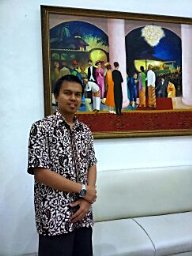 Roni Ekha Putera合作论文数Andalas University20
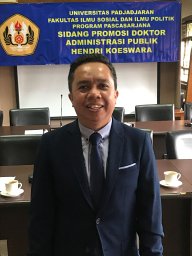 Hendri Koeswara合作论文数Andalas University15
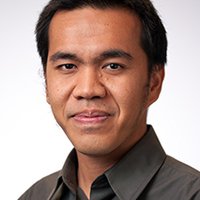 Muhammad Ichsan Kabullah合作论文数Dept Publ Adm, Andalas Univ7
 Ria Ariany合作论文数Andalas University5
 Malse Yulivestra合作论文数4
 Robi Eka Putra合作论文数3Misnar Sitriwanti合作论文数3
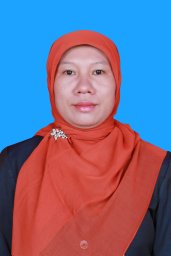 Roza Liesmana合作论文数Andalas University3Yoserizal Yoserizal合作论文数2Nia Audia合作论文数2
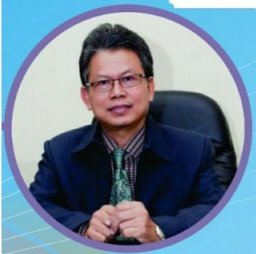 Entang Adhy Muhtar合作论文数2
 Kusdarini Kusdarini合作论文数2
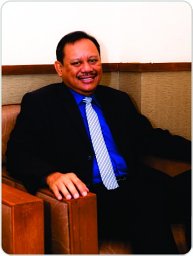 Heru Nurasa合作论文数Padjadjaran University2
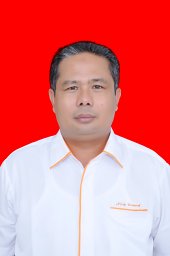 Syamsurizaldi合作论文数Andalas University2
 Wewen Kusumi Rahayu合作论文数Andalas University2
 Ida Widianingsih合作论文数Publ Adm Dept, Univ Padjadjaran2Ilham Aldelano Azre合作论文数1
 Rozidateno Putri Hanida合作论文数Andalas University1Fajri Rahman合作论文数Andalas University1
 Nila Wahyuni合作论文数Andalas University1
 Maryam Jamilah合作论文数Andalas University1
 Zulkifli Harza合作论文数1Hazid Jalma合作论文数1




