Understanding high-velocity impact, and the subsequent high strain rate material deformation and potential catastrophic failure, is of critical importance across a range of scientific and engineering disciplines that include astrophysics, materials science, and aerospace engineering. The deformation and failure mechanisms are not thoroughly understood, given the challenges of experimentally quantifying material evolution at extremely short time scales. Here, copper foils are rapidly strained via picosecond laser ablation and probed in situ with femtosecond x-ray free electron (XFEL) pulses. Small-angle x-ray scattering (SAXS) monitors the void distribution evolution, while wide-angle scattering (WAXS) simultaneously determines the strain evolution. The ability to quantifiably characterize the nanoscale during high strain rate failure with ultrafast SAXS, complementing WAXS, represents a broadening in the range of science that can be performed with XFEL. It is shown that ultimate failure occurs via void nucleation, growth, and coalescence, and the data agree well with molecular dynamics simulations.
Absolute Equation-of-State Measurement for Polystyrene from 25 60 Mbar Using a Spherically Converging Shock Wave Döppner, T.; Swift, D. C.; Kritcher, A. L.; Bachmann, B.; Collins, G. W.; Chapman, D. A.; Hawreliak, J.; Kraus, D.; Nilsen, J.; Rothman, S.; Benedict, L. X.; Dewald, E.; Fratanduono, D. E.; Gaffney, J. A.; Glenzer, S. H.; Hamel, S.; Landen, O. L.; Lee, H. J.; Lepape, S.; Ma, T.; Macdonald, M. J.; Macphee, A.; Milathianaki, D.; Millot, M.; Neumayer, P.; Sterne, P. A.; Tommasini, R.; Falcone, R. W.;
Photosynthetic reaction centres harvest the energy content of sunlight by transporting electrons across an energy-transducing biological membrane. Here we use time-resolved serial femtosecond crystallography1 using an X-ray free-electron laser2 to observe light-induced structural changes in the photosynthetic reaction centre of Blastochloris viridis on a timescale of picoseconds. Structural perturbations first occur at the special pair of chlorophyll molecules of the photosynthetic reaction centre that are photo-oxidized by light. Electron transfer to the menaquinone acceptor on the opposite side of the membrane induces a movement of this cofactor together with lower amplitude protein rearrangements. These observations reveal how proteins use conformational dynamics to stabilize the charge-separation steps of electron-transfer reactions.
We have developed an experimental platform for the National Ignition Facility that uses spherically converging shock waves for absolute equation-of-state (EOS) measurements along the principal Hugoniot. In this Letter, we present one indirect-drive implosion experiment with a polystyrene sample that employs radiographic compression measurements over a range of shock pressures reaching up to 60 Mbar (6 TPa). This significantly exceeds previously published results obtained on the Nova laser [R. Cauble et al., Phys. Rev. Lett. 80, 1248 (1998)PRLTAO0031-900710.1103/PhysRevLett.80.1248] at a strongly improved precision, allowing us to discriminate between different EOS models. We find excellent agreement with Kohn-Sham density-functional-theory-based molecular dynamics simulations.
Serial protein crystallography was developed at X-ray free-electron lasers (XFELs) and is now also being applied at storage ring facilities. Robust strategies for the growth and optimization of microcrystals are needed to advance the field. Here we illustrate a generic strategy for recovering high-density homogeneous samples of microcrystals starting from conditions known to yield large (macro) crystals of the photosynthetic reaction center of Blastochloris viridis (RCvir). We first crushed these crystals prior to multiple rounds of microseeding. Each cycle of microseeding facilitated improvements in the RCvir serial femtosecond crystallography (SFX) structure from 3.3-Å to 2.4-Å resolution. This approach may allow known crystallization conditions for other proteins to be adapted to exploit novel scientific opportunities created by serial crystallography.
Explosions are spectacular and intriguing phenomena that expose the dynamics of matter under extreme conditions. We investigated, using time-resolved imaging, explosions induced by ultraintense X-ray laser pulses in water drops and jets. Our observations revealed an explosive vaporization followed by high-velocity interacting flows of liquid and vapour, and by the generation of shock trains in the liquid jets. These flows are different from those previously observed in laser ablation, owing to a simpler spatial pattern of X-ray absorption. We show that the explosion dynamics in our experiments is consistent with a redistribution of absorbed energy, mediated by a pressure or shock wave in the liquid, and we model the effects of explosions, including their adverse impact on X-ray laser experiments. X-ray laser explosions have predictable dynamics that may prove useful for controlling the state of pure liquids over broad energy scales and timescales, and for triggering pressure-sensitive molecular dynamics in solutions.
Serial femtosecond crystallography (SFX) using X-ray free-electron laser sources is an emerging method with considerable potential for time-resolved pump-probe experiments. Here we present a lipidic cubic phase SFX structure of the light-driven proton pump bacteriorhodopsin (bR) to 2.3 Å resolution and a method to investigate protein dynamics with modest sample requirement. Time-resolved SFX (TR-SFX) with a pump-probe delay of 1 ms yields difference Fourier maps compatible with the dark to M state transition of bR. Importantly, the method is very sample efficient and reduces sample consumption to about 1 mg per collected time point. Accumulation of M intermediate within the crystal lattice is confirmed by time-resolved visible absorption spectroscopy. This study provides an important step towards characterizing the complete photocycle dynamics of retinal proteins and demonstrates the feasibility of a sample efficient viscous medium jet for TR-SFX.
High-pressure solid-state transformations at high strain rates are usually observed after the fact, either during static holding or after unloading, or inferred from interferometry measurements of the sample surface. The emergence of femtosecond x-ray diffraction techniques provides insight into the dynamics of short-time-scale events such as shocks. We report laser pump-probe experiments of the response of Zr to laser-driven shocks over the first few nanoseconds of the shock event, enabling the alpha -> omega transition and orientation relationship to be observed in real time with picosecond resolution. A clear orientation relationship of (10 (1) over bar0)(alpha)parallel to(10 (1) over bar1)(omega) is found, in conflict with omega -> alpha annealing experiments in zirconium and the two alpha -> omega pathways proposed for titanium.
A growing number of shock compression experiments, especially those involving laser compression, are taking advantage of in situ x-ray diffraction as a tool to interrogate structure and microstructure evolution. Although these experiments are becoming increasingly sophisticated, there has been little work on exploiting the textured nature of polycrystalline targets to gain information on sample response. Here, we describe how to generate simulated x-ray diffraction patterns from materials with an arbitrary texture function subject to a general deformation gradient. We will present simulations of Debye-Scherrer x-ray diffraction from highly textured polycrystalline targets that have been subjected to uniaxial compression, as may occur under planar shock conditions. In particular, we study samples with a fibre texture, and find that the azimuthal dependence of the diffraction patterns contains information that, in principle, affords discrimination between a number of similar shock-deformation mechanisms. For certain cases, we compare our method with results obtained by taking the Fourier transform of the atomic positions calculated by classical molecular dynamics simulations. Illustrative results are presented for the shock-induced α–ϵ phase transition in iron, the α–ω transition in titanium and deformation due to twinning in tantalum that is initially preferentially textured along [001] and [011]. The simulations are relevant to experiments that can now be performed using 4th generation light sources, where single-shot x-ray diffraction patterns from crystals compressed via laser-ablation can be obtained on timescales shorter than a phonon period.
Nat. Methods 11, 545–548 (2014); published online 16 March 2014; corrected after print 3 June 2015 In the version of this article initially published, the authors claimed that with the tool cctbx.xfel, weak diffraction signals can be measured using fewer crystal specimens than are needed for the previously available program CrystFEL.
Ultrafast optical lasers play an essential role in exploiting the unique capabilities of recently commissioned X-ray free-electron laser facilities such as the Linac Coherent Light Source (LCLS). Pump-probe experimental techniques reveal ultrafast dynamics in atomic and molecular processes and reveal new insights in chemistry, biology, material science and high-energy-density physics. This manuscript describes the laser systems and experimental methods that enable cutting-edge optical laser/X-ray pump-probe experiments to be performed at LCLS.
Nature Communications 6: Article number: 8191 doi: (2015); Published 4 September 2015; Updated 13 October 2015 An incorrect version of the Supplementary Information was inadvertently published with this Article and did not show axes labels for Supplementary Figs 2–4. The HTML has now been updated toinclude the correct version of the Supplementary Information.
 Sebastien Boutet合作论文数Radiation Laboratory;Stanford Linear Accelerator Center34
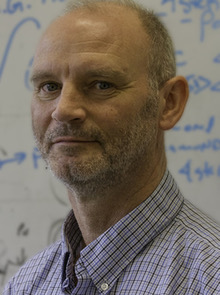 Damian C. Swift合作论文数Physics Division, Lawrence Livermore National Laboratory;3E Research Inc18
 Jason E Koglin合作论文数Los Alamos National Laboratory16
 Marc Messerschmidt合作论文数SLAC Natl Accelerator Lab, Linac Coherent Light Source, Menlo Pk, CA 94025 USA15
 Ilme Schlichting合作论文数Department of Biosciences, Heidelberg University;Department of Physics and Astronomy, Heidelberg University;Department of Biomolecular Mechanisms, Max Planck Institute for Medical Research15
 Garth J. Williams合作论文数Australian Research Council Centre of Excellence for Coherent X-Ray Science15Williams G J合作论文数Lawrence Livermore National Laboratory14
 Justin Wark合作论文数Oxford Centre for High Energy Density Science, Department of Physics, University of Oxford;Trinity College, University of Oxford14R. Bruce Doak合作论文数14James Hawreliak合作论文数Lawrence Livermore National Laboratory13M. Marvin Seibert合作论文数Department of Cell and Molecular Biology, Uppsala University13
 Henrik Till Lemke合作论文数Laboratory for Condensed Matter, Center for Photon Science, Paul Scherrer Institute12
 Irene Burghardt合作论文数Goethe University Frankfurt12R.L. Shoeman合作论文数11C.M. Roome合作论文数11G. Kovacsova合作论文数11J. Koefinger合作论文数11M.C. Hoffmann合作论文数11K. Falahati合作论文数11S. Botha合作论文数11K.J. Nass合作论文数11A. Ardevol合作论文数11T.R.M. Barends合作论文数11J. Reinstein合作论文数11L. Foucar合作论文数11J. Koglin合作论文数11E. Hartmann合作论文数11M. Heinz合作论文数11M. Hilpert合作论文数11M. Liang合作论文数11A. Aquila合作论文数11G. Hummer合作论文数11Bob Nagler合作论文数SLAC National Accelerator Laboratory11Dimosthenis Sokaras合作论文数10
 Junko Yano合作论文数Molecular Biophysics and Integrated Bioimaging Division, Lawrence Berkeley National Laboratory10
 Vittal K. Yachandra合作论文数Lawrence Berkeley National Laboratory10
 Roberto Alonso-Mori合作论文数SLAC National Accelerator Laboratory, Stanford University;Biochemistry and Condensed Phase Chemistry Group, Chemical Sciences Department, Stanford University10
 Johannes Messinger合作论文数Angstrom Laboratory, Department of Chemistry, Uppsala University10
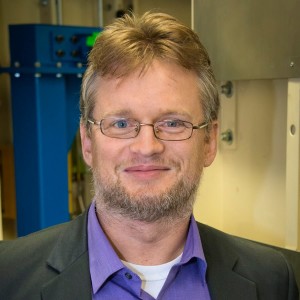 Peter Zwart合作论文数Physical Biosciences Division, Lawrence Berkeley National Laboratory10
 Paul D. Adams合作论文数Department of Bioengineering, UC Berkeley;Lawrence Berkeley National Laboratory10
 Pieter Glatzel合作论文数European Synchrotron Radiation Facility10
 Andrew Higginbotham合作论文数School of Physics, Engineering and Technology, University of York10
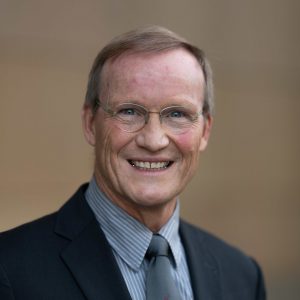 Uwe Bergmann合作论文数Department of Materials Science and Engineering, University of Wisconsin-Madison/Department of Physics, University of Wisconsin-Madison/SLAC National Accelerator Laboratory10
 Todd Ditmire合作论文数Department of Physics, College of Natural Sciences, The University of Texas at Austin;Institute for Fusion Studies, The University of Texas at Austin;Center for High Energy Density Physics, The University of Texas at Austin;National Energetics9
 James Mcnaney合作论文数8Hector Lorenzana合作论文数8Bassem S. El-Dasher合作论文数8
 Arianna E Gleason-Holbrook合作论文数Stanford Doerr School of Sustainability, Stanford University;SLAC National Accelerator Laboratory, Stanford University7
 Raymond G. Sierra合作论文数SLAC National Accelerator Laboratory, PULSE Institute;SLAC National Accelerator Laboratory, PULSE Institute7




