The LoRa Wireless Mesh Network was developed to collect lake health data and to make the data readily accessible to researchers or other individuals who wish to study or monitor lake health. This project will include buoys which are deployed as nodes at key locations on a lake, such as in bays or other low traffic monitoring points. Each node includes a LoRa Arduino board capable of wireless communication on the 915 MHz LoRa band and four different sensors (temperature, turbidity, DO2, and pH). Each node collects sensor data and passes it from node to node until it reaches the hub node. The hub node will store that data and upload it to an online dashboard, segregated by node location, where it may be presented graphically. The focus of his project is to utilize a mesh network to pass data from node to node without data loss over long distances and without line-of-site. Initially, data communications were established between two nodes. The network was then subsequently expanded through the inclusion of additional data source nodes and finally the hub node. The result is that sensor data can be collected and transmitted from each of the nodes at defined intervals and the network protocol will drop duplicate data transmissions to reduce network congestion. This provides an expandable and dependable node-based mesh network which enables real-time lake health monitoring capability, replacing current labor and time intensive manual measurements. The resulting data set will be valuable to biologists and ecologists conducting limnological research.
In this paper, the design and testing of a novel valve for the intuitive spatial control of soft or continuum manipulators are presented. The design of the valve is based on the style of a hydraulic flapper valve, but with simultaneous control of three pressure feed points, which can be used to drive three antagonistically arranged hydraulic actuators for positioning soft robots. The variable control orifices are arranged in a rotationally symmetric radial pattern to allow for an inline mounting configuration of the valve within the body of a manipulator. Positioning the valve ring at various 3D configurations results in different pressurizations of the actuators and corresponding spatial configurations of the manipulator. The design of the valve is suitable for miniaturization and use in applications with size constraints such as small soft manipulators and surgical robotics. Experimental validation showed that the performance of the valve can be reasonably modeled and can effectively drive an antagonistic arrangement of three actuators for soft manipulator control.
In this article, we describe our views on the benefits, and possible downsides, of openness in engineering research. We attempt to examine the issue from multiple perspectives, including reasons and motivations for introducing open practices into an engineering researcher's workflow and the challenges faced by scholars looking to do so. Further, we present our thoughts and reflections on the role that open engineering research can play in defining the purpose and activities of the university. We have made some specific recommendations on how the public university can recommit to and push the boundaries of its role as the creator and promoter of public knowledge. In doing so, the university will further demonstrate its vital role in the continued economic, social, and technological development of society. We have also included some thoughts on how this applies specifically to the field of engineering and how a culture of openness and sharing within the engineering community can help drive societal development.
This complete research paper will describe our qualitative analysis of the impacts of a first-year engineering course which includes curricular elements of social justice, social responsibility, and ethics. We present our interpretation of four interesting results that came out of our mixed-methods study (n=231) in which we surveyed students taking a first-year engineering course on their perceptions of the role of engineering in society and the world. We find that while a single course is unlikely to be sufficient to greatly influence student perceptions, for some sub-groups, the influence was greater than for the study sample as a whole. We specifically highlight four notable findings and discuss their implications.
Background: The application of continuum manipulators as assistive robots is discussed and tested through the use of Bendy ARM, a simple manually teleoperated tendon driven continuum manipulator prototype. Methods: Two rounds of user testing were performed to evaluate the potential of this arm to aid people living with disabilities in completing activities of daily living. Results: In the first round of user testing, 14 able-bodied subjects successfully completed the prescribed task (pick-and-place) using multiple control schemes after being given a brief introduction and one minute of practice with each scheme. In the second round of user testing, subjects ( n = 3 ) demonstrated between 29.5 and 48.9 percent improvement in completion time across twelve trials of a peg-in-hole task, and between 8.4 and 33.8 percent improvement across six trials of a task involving opening and closing a drawer. Conclusion: Based on these results, it is posited that continuum manipulators merit further consideration as a safer and more cost-effective alternative to existing commercially available assistive robotic manipulators.
As part of a larger project examining the role of humanitarian service learning in engineering (NSF project number EEC-1540301), we conducted an investigation of first-year engineering students' perceptions of humanitarian service learning projects, social responsibility in their discipline, and ethics in STEM.Students (n=231) taking a required freshmen level engineering course were surveyed with a pre-and post-instrument, and provided with these working definitions:• Community Service is voluntary work intended to help people in a particular community.• Social Responsibility is an obligation that an individual (or company) has to act with concern and sensitivity, aware of the impacts of their own action on others, particularly the disadvantaged.• Social Justice relates to the distribution of the advantages and disadvantages in society, including the way in which they are allocated.• Pro bono-work done without compensation (pay) for the public good.This course specifically addresses the issues described above with the goal of providing early exposure to topics that will be reinforced in non-major coursework, such as general education elective courses.Results showed that there was little change in student perceptions before and after completion of the course in terms of their perceptions of ethics, social responsibility, and social justice.In the areas in which there were statistically significant changes, students were, on average, slightly less sure the engineering profession can help people or solve social issues and slightly less interested in a job that involves helping people.On the other hand, students were slightly more aware, after the course, of the need to include social aspects in engineering practice and rated technical and professional skills as slightly less important after the class.It was also found that some groups in the class (women, minority students, first-generation students, and student less focused on salary in thinking about their future jobs) entered the class with different attitudes and changed in different ways by the end of the course.Overall, the results of this survey support other findings in engineering ethics which suggests that one course is insufficient to make significant impacts on the ways engineering students think about the societal implications of their work.However, these declines in student confidence, while small, are important to take seriously and this paper will draw out potential implications of this finding.Finally, we will discuss the implications of the differences within the class in terms of effective teaching of these topics and retention of underrepresented students.
Service-learning activities, such as development projects organized under the Engineers Without Borders USA organization, are popular on many university campuses as a mechanism for providing applied, global learning experiences for both engineering and non-engineering students. Existing studies have found that these experiences are meaningful for students and help them to apply what they learn in the classroom to the “real world” while learning valuable teamwork, communication, project management, and other skills. In this paper, we report on our ongoing research about EWB-USA participation and outcomes and, using case studies from our ethnographic research, discuss barriers to EWB-USA project participation among less privileged students. The implications this issue has for institutions interested in using service-learning to meet core learning outcomes as well as the need to diversify service-learning will be considered.
Impacts of Engineering is a three-credit required course for all incoming engineering freshmen and is also available as a general education elective to all university students. The course was developed to address the needs of new engineering students while setting the stage for how they might approach engineering work in later curriculum. Prior to the development of this course, engineering students at UW-Stout were exposed to the topics of ethics, social justice, and social responsibility solely through general education electives and through limited discussion in capstone courses. In addition, there is a selection of ``extra-curricular'' opportunities for student engagement, most notably a chapter of Engineers Without Borders USA, however these opportunities don’t carry curricular integration. The first effort at more directly integrating these topics into the engineering curriculum was through the development of a new course called ``Impacts of Engineering,'' which is described in the course documentation as shown in the following section. Broadly, this course supports the program educational objective of graduating students who are ``committed to high ethical standards, global perspectives, and principles of social responsibility and social justice.'' The course aims to supplement the technical content typically found in introductory engineering coursework with professional or life skills such as good communication, time management, and ability to function on a diverse team. Finally, the course objectives include several that are specifically directed at developing an understanding of engineering design from a global perspective.
Service learning, and specifically the work of organizations such as Engineers Without Borders USA, have become popular with universities looking to provide their students with applied educational opportunities which blend technical skills with a broader social mission and help the institution demonstrate its global impact. However, questions remain regarding the truly realized outcomes for students, as well as the unintended consequences that may be experienced by the partnering communities. This paper describes early results results from a four-year, mixed-method study which collected data through a combination of interviews and focus groups with members of the Engineers Without Borders USA organization, analysis and coding of completed project documentation, and observations and notes collected during a field visit to a project site. We conclude from our early data that students who are able (given sufficient resources) to fully participate in these type of projects do see positive benefits. However, barriers may prevent all students from having this opportunity. Further, the nature of student service learning projects inherently creates challenges for the communities that partner on these projects. Ongoing revisions to the Engineers Without Borders USA operating procedures may remedy some of the deficiencies, while researchers, participants, and institutions should continue to critically evaluate the impacts and outcomes of their work.
In this article, we describe our views on the benefits, and possible downsides, of openness in engineering research. We attempt to examine the issue from multiple perspectives, including reasons and motivations for introducing open practices into an engineering researcher's workflow and the challenges faced by scholars looking to do so. Further, we present our thoughts and reflections on the role that open engineering research can play in defining the purpose and activities of the university. We have made some specific recommendations on how the public university can recommit to and push the boundaries of its role as the creator and promoter of public knowledge. In doing so, the university will further demonstrate its vital role in the continued economic, social, and technological development of society. We have also included some thoughts on how this applies specifically to the field of engineering and how a culture of openness and sharing within the engineering community can help drive societal development.
In the 21st Century, research is increasingly data- and computation-driven. Researchers, funders, and the larger community today emphasize the traits of openness and reproducibility. In March 2017, 13 mostly early-career research leaders who are building their careers around these traits came together with ten university leaders (presidents, vice presidents, and vice provosts), representatives from four funding agencies, and eleven organizers and other stakeholders in an NIH- and NSF-funded one-day, invitation-only workshop titled "Imagining Tomorrow's University." Workshop attendees were charged with launching a new dialog around open research – the current status, opportunities for advancement, and challenges that limit sharing. The workshop examined how the internet-enabled research world has changed, and how universities need to change to adapt commensurately, aiming to understand how universities can and should make themselves competitive and attract the best students, staff, and faculty in this new world. During the workshop, the participants re-imagined scholarship, education, and institutions for an open, networked era, to uncover new opportunities for universities to create value and serve society. They expressed the results of these deliberations as a set of 22 principles of tomorrow's university across six areas: credit and attribution, communities, outreach and engagement, education, preservation and reproducibility, and technologies. Activities that follow on from workshop results take one of three forms. First, since the workshop, a number of workshop authors have further developed and published their white papers to make their reflections and recommendations more concrete. These authors are also conducting efforts to implement these ideas, and to make changes in the university system. Second, we plan to organise a follow-up workshop that focuses on how these principles could be implemented. Third, we believe that the outcomes of this workshop support and are connected with recent theoretical work on the position and future of open knowledge institutions.
An abstract submitted to accompany a presentation at the 2018 Polytechnic Summit, June 4--6, in Lima, Peru.
Artificial muscle actuators have become a popular choice as actuation units for robotic applications, particularly in the growing area of soft robotics. The precise specification of an artificial muscle actuator for a particular application requires the consideration of several parameters that work together to achieve the performance characteristics of the actuator. This paper explores the specification of artificial muscle actuator parameters by presenting and applying the analytical description of the actuator, simulation by finite element method for investigating material stresses under a wide variety of configurations, and a specific parameter selection process. This is followed by an experimental validation using an example actuator to compare against the predicted actuator performance. Some discussion of appropriateness of this type of actuator as a candidate solution for use in the example application of a dexterous continuum manipulator is included.This work has been submitted to the IEEE for possible publication.
In this article, we review the literature on the benefits, and possible downsides, of openness in engineering research. We attempt to examine the issue from multiple perspectives, including reasons and motivations for introducing open practices into an engineering researcher's workflow and the challenges faced by scholars looking to do so. Further, we present our thoughts and reflections on the role that open engineering research can play in defining the purpose and activities of the university. We have made some specific recommendations on how the public university can recommit to and push the boundaries of its role as the creator and promoter of public knowledge. In doing so, the university will further demonstrate its vital role in the continued economic, social, and technological development of society. We have also included some thoughts on how this applies specifically to the field of engineering and how a culture of openness and sharing within the engineering community can help drive societal development.
Studies have shown that there are a significant number of chemical species present in engine exhaust particulate matter emissions. Additionally, the majority of current world-wide regulatory methods for measuring engine particulate emissions are gravimetrically based. As modern engines produce increasingly lower particulate mass emissions, these methods become less and less stable and have high levels of measurement uncertainty. In this study, a characterization of mass emissions from engines with a range of particulate emission levels was made in order to gain a better understanding of the variability and uncertainty associated with common mass measurement methods, as well as how well these methods compare with each other. Two gravimetric mass measurement methods and a reconstructed mass method were analyzed as part of the present study. The results have shown that each of the mass measurement methods analyzed compare well at higher emission levels, but show significant disparity at the ultra-low emission levels commonly seen from modern diesel engines. Additionally, at ultra-low emission the uncertainty in the measurement becomes large, thus reducing confidence in the accuracy of the measurement. Based upon these findings, it would be difficult to justify a comparison between any two gravimetric measurement methods and it may be more appropriate to perform a reconstruction of the particulate mass due to a lower susceptibility to measurement error.
Inquiry-based learning is an educational approach that allows the student to take ownership over the education process by self-identifying a problem and formulating their own solution. The application of this method of teaching was explored in an introductory mechanics course taken by both engineering and engineering technology students. Students were tasked with applying the principles of fundamental static equilibrium analysis to objects found in their normal surroundings. The deliverable for this assignment consisted of a photograph of an object they found to be in static equilibrium and a short description of how the state of the object could be described mathematically. Student submissions for this task exhibited a wide range of quality and imagination. Examples of student work are presented along with discussion of lessons learned and recommendations for the use of this method in the future. The overall student response to this task was positive and thus these efforts will be expanded.
In the 21st Century, research is increasingly data- and computation-driven. Researchers, funders, and the larger community today emphasize the traits of openness and reproducibility. In March 2017, 13 mostly early-career research leaders who are building their careers around these traits came together with ten university leaders (presidents, vice presidents, and vice provosts), representatives from four funding agencies, and eleven organizers and other stakeholders in an NIH- and NSF-funded one-day, invitation-only workshop titled "Imagining Tomorrow's University." Workshop attendees were charged with launching a new dialog around open research – the current status, opportunities for advancement, and challenges that limit sharing. The workshop examined how the internet-enabled research world has changed, and how universities need to change to adapt commensurately, aiming to understand how universities can and should make themselves competitive and attract the best students, staff, and faculty in this new world. During the workshop, the participants re-imagined scholarship, education, and institutions for an open, networked era, to uncover new opportunities for universities to create value and serve society. They expressed the results of these deliberations as a set of 22 principles of tomorrow's university across six areas: credit and attribution, communities, outreach and engagement, education, preservation and reproducibility, and technologies. Activities that follow on from workshop results take one of three forms. First, since the workshop, a number of workshop authors have further developed and published their white papers to make their reflections and recommendations more concrete. These authors are also conducting efforts to implement these ideas, and to make changes in the university system. Second, we plan to organise a follow-up workshop that focuses on how these principles could be implemented. Third, we believe that the outcomes of this workshop support and are connected with recent theoretical work on the position and future of open knowledge institutions.
The U.S. has introduced ultra low sulfur diesel fuel in 2007 and by 2010 will completely replace the current low-sulfur diesel fuel which has a sulfur content of less than 500 ppm. As a result, most diesel engines, including new and aged ones, are currently implementing ULSD. Thus, it is important to understand how ULSD will affect these engines’ emissions, especially under transient conditions when the load, speed, exhaust gas temperature, and primary dilution ratio change continuously. This study is to assess the effects of fuel sulfur content and aging condition on PM emissions under transient conditions. Combinations of fuels and primary dilutions were used. The primary dilution was accomplished by a CFV-CVS, a system which maintains proportional sampling throughout temperature excursions and is designed for engine emission certification. Data were collected by a Scanning Mobility Particle Sizer and an Engine Exhaust Particle Sizer for steady-state and transient testing, respectively. Although the steady-state results show reasonable agreement with previous studies, the transient results display significant discrepancy when ULSD and LSD were used with the high primary dilution ratio.
The application of continuum manipulators as assistive robots is discussed and tested through the use of Bendy ARM, a tendon-driven continuum manipulator prototype. Two rounds of user testing were completed to evaluate the potential of this robot to aid disabled individuals in the completion of activities of daily living. In the first round of user testing, 14 able-bodied subjects successfully completed the prescribed task (pick-and-place) using multiple control schemes after being given a brief introduction and one minute of practice with each scheme. In the second round of user testing, subjects chosen from the first round of testing (n = 3) demonstrated between 29.45 and 48.91 percent improvement in completion time across three sessions (twelve trials total) of a peg-in-hole task, and between 8.39 and 33.81 percent improvement across two sessions (six trials total) of a task involving opening and closing a drawer. Based on these results, it is posited that continuum manipulators merit further consideration as a safer and more cost-effective alternative to existing commercially available assistive robotic manipulators.
 Kyle E. Niemeyer合作论文数School of Mechanical, Industrial, and Manufacturing Engineering, College of Engineering, Oregon State University9
 Tina Lee合作论文数Univ Wisconsin Stout7
 Elizabeth Buchanan合作论文数7
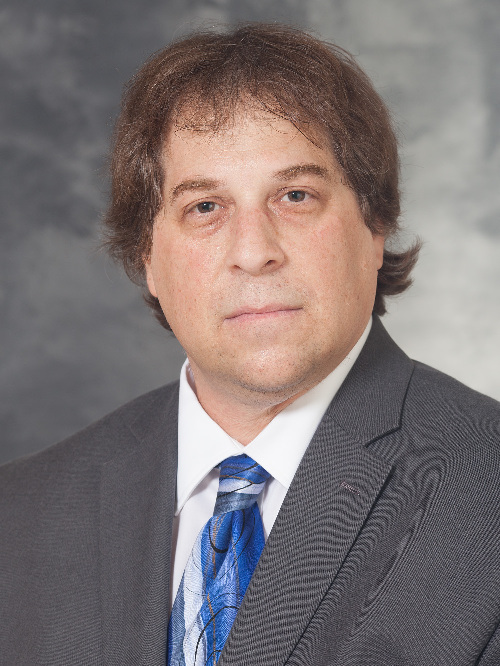 James Jay Schauer合作论文数Department of Civil & Environmental Engineering, College of Engineering, University of Wisconsin-Madison7
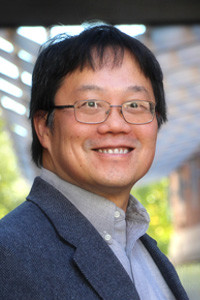 Perry Y. Li合作论文数Department of Mechanical Engineering, College of Science and Engineering, University of Minnesota7
 Z. Gerald Liu合作论文数7
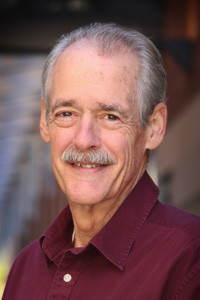 Arthur Erdman合作论文数Earl E. Bakken Medical Devices Center, University of Minnesota;Department of Mechanical Engineering, College of Science and Engineering, University of Minnesota6
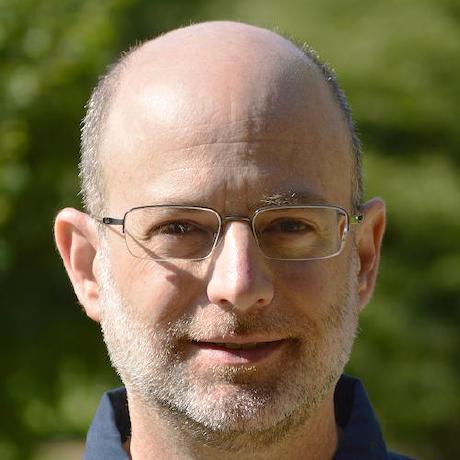 Daniel S. Katz合作论文数University of Illinois Urbana-Champaign, University of Illinois Urbana-Champaign;School of Information Sciences, University of Illinois Urbana-Champaign4Megan Robinson合作论文数3Jason Dekarske合作论文数3
 Max Kirkpatrick合作论文数Siemens Prod Lifecycle Management Software Inc3
 Ryan Coulson合作论文数Robot Inst, Carnegie Mellon Univ3Jonathan M. Dugan合作论文数2Jay Walsh合作论文数2roush allison合作论文数2Lillian Rigling合作论文数2
 Christopher Madan合作论文数School of Psychology, Faculty of Science, The University of Nottingham2Sarah Kearns合作论文数<label>*</label><p>Equal contributions</p>2joshua m greenberg合作论文数Alfred P. Sloan Foundation, New York, NY 10111.2
 Adina Howe合作论文数Iowa State Univ, Dept Agr & Biosyst Engn, Ames, IA USA2
 Bastian Greshake Tzovaras合作论文数Goethe Univ, Inst Cell Biol & Neurosci, Dept Appl Bioinformat, D-60438 Frankfurt, Germany2
 Marios Isaakidis合作论文数University College London2
 Manojkumar Selvaraju合作论文数2
 Nazeefa Fatima合作论文数Department of Biology, Faculty of Science, Lund University, Lund, Sweden.2
 Lisa Matthias合作论文数Univ Gottingen, State & Univ Lib, D-37073 Gottingen, Germany2
 Tony Ross-Hellauer合作论文数Know Ctr GmbH, Graz, Austria2
 François Waldner合作论文数European Commiss Joint Res Ctr JRC2
 Anthony Caravaggi合作论文数Queens Univ Belfast, Sch Biol Sci, Quercus, Belfast BT9 7BL, Antrim, North Ireland2
 Martin Paul Eve合作论文数Presenters2Julien Colomb合作论文数2
 Carl Boettiger合作论文数Department of Environmental Science, Policy and Management, College of Natural Resources, University of California, Berkeley2
 Josmel Pacheco-Mendoza合作论文数2
 Bik Holly M合作论文数Univ Calif Davis, UC Davis Genome Ctr2
 Khanna May合作论文数Stark Neuroscience Research Institute, Indiana University Cancer Center2
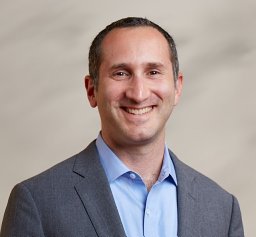 Chris Mentzel合作论文数2
 Sara Mannheimer合作论文数2
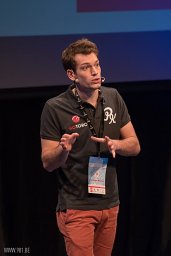 Jacques, D.合作论文数2
 Tennant Jonathan P合作论文数Department of Earth Science and Engineering, Imperial College London2
 Masuzzo Paola合作论文数2Barbara Zielinska合作论文数2
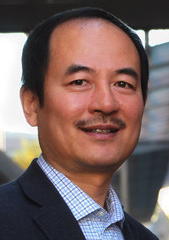 Tianhong Cui (崔天宏)合作论文数Department of Mechanical Engineering, College of Science and Engineering, University of Minnesota2
 Christine L. Borgman合作论文数Department of Information Studies, School of Education and Information Studies, University of California, Los Angeles2
 Lorena A Barba合作论文数Mechanical Engineering Department2
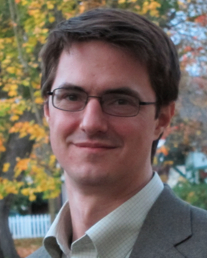 Bill Howe合作论文数Information School, University of Washington2
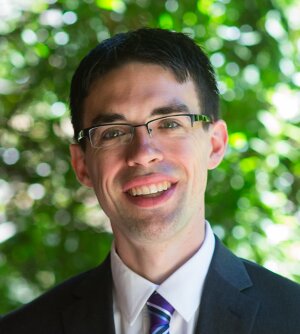 Matthew J Turk合作论文数Department of Astronomy, College of Liberal Arts and Sciences, University of Illinois at Urbana-Champaign2
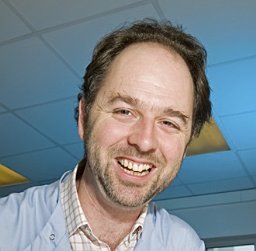 Cameron Neylon合作论文数Science and Technology;Rutherford Appleton Laboratory;Science and Technology|Rutherford Appleton Laboratory2
 Gabrielle Allen合作论文数School of Computing, University of Wyoming;Department of Mathematics & Statistics, University of Wyoming;Department of Physics & Astronomy, University of Wyoming2
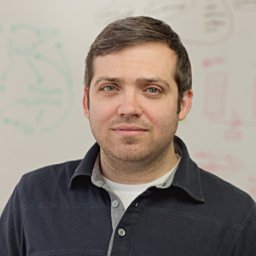 Jeffrey R. Spies合作论文数Department of Psychology;University of Virginia;Department of Psychology, University of Virginia2
 Nirav Merchant合作论文数Data Science Institute, University of Arizona2




