Introduction Ayushman Bharat Pradhan Mantri Jan Aarogya Yojana (AB PM-JAY) has enabled the Government of India to become a strategic purchaser of health care services from private providers. To generate base cost evidence for evidence-based policymaking the Costing of Health Services in India (CHSI) study was commissioned in 2018 for the price setting of health benefit packages. This paper reports the findings of a process evaluation of the cost data collection in the private hospitals.Methods The process evaluation of health system costing in private hospitals was an exploratory survey with mixed methods (quantitative and qualitative). We used three approaches-an online survey using a semi-structured questionnaire, in-depth interviews, and a review of monitoring data. The process of data collection was assessed in terms of time taken for different aspects, resources used, level and nature of difficulty encountered, challenges and solutions.Results The mean time taken for data collection in a private hospital was 9.31 (+/- 1.0) person months including time for obtaining permissions, actual data collection and entry, and addressing queries for data completeness and quality. The longest time was taken to collect data on human resources (30%), while it took the least time for collecting information on building and space (5%). On a scale of 1 (lowest) to 10 (highest) difficulty levels, the data on human resources was the most difficult to collect. This included data on salaries (8), time allocation (5.5) and leaves (5).Discussion Cost data from private hospitals is crucial for mixed health systems. Developing formal mechanisms of cost accounting data and data sharing as pre-requisites for empanelment under a national insurance scheme can significantly ease the process of cost data collection.
BACKGROUND:In low- and middle-income countries (LMICs), provisioning for surgical care is a public health priority. Ayushman Bharat Pradhan Mantri-Jan Aarogya Yojana (AB PM-JAY) is India's largest national insurance scheme providing free surgical and medical care. In this paper, we present the costs of surgical health benefit packages (HBPs) for secondary care in public district hospitals.METHODS:The costs were estimated using mixed (top-down and bottom-up) micro-costing methods. In phase II of the Costing of Health Services in India (CHSI) study, data were collected from a sample of 27 district hospitals from nine states of India. The district hospitals were selected using stratified random sampling based on the district's composite development score. We estimated unit costs for individual services-outpatient (OP) visit, per bed-day in inpatient (IP) and intensive care unit (ICU) stays, and surgical procedures. Together, this was used to estimate the cost of 250 AB PM-JAY HBPs.RESULTS:At the current level of utilization, the mean cost per OP consultation varied from US$4.10 to US$2.60 among different surgical specialities. The mean unit cost per IP bed-day ranged from US$13.40 to US$35.60. For the ICU, the mean unit cost per bed-day was US$74. Further, the unit cost of HBPs varied from US$564 for bone tumour excision to US$49 for lid tear repair.CONCLUSIONS:Data on the cost of delivering surgical care at the level of district hospitals is of critical value for evidence-based policymaking, price-setting for surgical care and planning to strengthen the availability of high quality and cost-effective surgical care in district hospitals.
Background Anaemia is a worldwide problem and iron deficiency is the most common cause. In pregnancy, anaemia increases the risk of adverse maternal, foetal and neonatal outcomes. India’s anaemia rate is among the highest in the world with India’s National Family Health Survey indicating over 50% of pregnant women were affected by anaemia. India’s Anaemia Mukt Bharat-Intensified National Iron Plus Initiative aims to reduce the prevalence of anaemia among reproductive-age women, adolescents and children by 3% per year and facilitate the achievement of a Global World Health Assembly 2025 objective to achieve a 50% reduction of anaemia among women of reproductive age. However, preliminary results of the NFHS-5 survey completed in 2020 indicate that anaemia rates are increasing in some states and these targets are unlikely to be achieved. With oral iron being the first-line treatment for iron deficiency anaemia (IDA) in pregnancy, these results are likely to be impacted by the side effects, poor adherence to tablet ingestion and low therapeutic impact of oral iron. These reports suggest a new approach to treating IDA, specifically the importance of single-dose intravenous iron infusions, may be the key to India effectively reaching its targets for anaemia reduction. Methods This 3-arm, randomized controlled trial is powered to report two primary outcomes. The first is to assess whether a single dose of two different intravenous formulations administered early in the second trimester of pregnancy to women with moderate IDA will result in a higher percentage of participants achieving a normal for pregnancy Hb concentration at 30–34 weeks’ gestation or just prior to delivery when compared to participants taking standard doses of oral iron. The second is a clinical outcome of low birth weight (LBW) (< 2500 g), with a hypothesis that the risk of LBW delivery will be lower in the intravenous iron arms when compared to the oral iron arm. Discussion The RAPIDIRON trial will provide evidence to determine if a single-dose intravenous iron infusion is more effective and economically feasible in reducing IDA in pregnancy than the current standard of care. Trial registration Clinical Trials Registry – India CTRI/2020/09/027730. Registered on 10 September 2020, http://ctri.nic.in/Clinicaltrials/showallp.php?mid1=46801&EncHid=&userName=anemia%20in%20pregnancy
Background: In 2018, the Government of India launched Ayushman Bharat – Pradhan Mantri Jan Aarogya Yojana (AB - PMJAY), a large tax-funded health insurance scheme. Provider payment rates for the AB-PMJAY health benefit packages (HBPs) were determined through consultative process and review of existing publicly financed health insurance (PFHI) schemes. In this paper, we present findings of the Costing of Health Services in India (CHSI) study and the process of price revision in 2019. Methods: Reference costs were generated from first phase of CHSI study which sampled 11 tertiary public hospitals from 11 Indian states. Economic costs were estimated using mixed (top-down & bottom-up) micro-costing methods. Based on stakeholder consultations, the cost of HBPs were analysed with different combinations of fixed and variable costs. The HBP cost was compared with AB-PMJAY prices of 2018 and 2019 and the budgetary impact was estimated. Finding: Only 13% of the HBPs in 2018, were close to (± 10%) to the actual cost of providing care. More than one-third (42%) of the HBPs had price less than 50% of the cost. After revision of prices in 2019, the latter decreased to 20%. The evidence-informed revision of HBP prices is estimated to increase claims amount by 200 million (0·7%). Interpretation: Strategic purchasing and price-setting of HBPs require creation of systems of evidence generation on the cost of providing services. Further, research is recommended to develop a cost-function for unit cost estimation with changes in time, region, prices, skill-mix and other factors. Funding Department of Health Research. Funding Statement: The study is funded by Department of Health Research (DHR), Ministry of Health & Family Welfare, Government of India. Declaration of Interests: The authors declare no conflict of interest. Ethics Approval Statement: The present study was approved by the Institutional Ethics Committee (IEC) vide letter no. PGI/IEC/2018/00125A and Institutional Collaborative Committee (ICC) vide letter no. 79/30-Edu-13/111273 of Postgraduate Institute of Medical Education & Research, Chandigarh, India.
 K. Narayanasamy合作论文数3Raghunath Misra合作论文数3Jyotsna Naik合作论文数3Ankita Panigrahy合作论文数3Jai Prakash Pankaj合作论文数3Sashi Bhusan Biswal合作论文数3Oshima Sachin合作论文数3Sharminder Kaur合作论文数3
 Maninder Pal Singh合作论文数3
 Rakesh Bahl合作论文数3
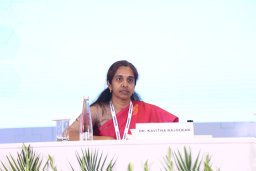 Kavitha Rajsekar合作论文数Ministry of Health and Family Welfare, Government of India3
 Amit Sachdeva合作论文数School of Electronics and Electrical Engineering, Lovely Professional University3
 Chitra Annamalai合作论文数Sch. of Electr. Eng., VIT Univ.;c3
 Avijit Hazra合作论文数Dept Pharmacol, Postgrad Inst Med Educ & Res3
 Patel Prakash B合作论文数Department of Community Medicine, Surat Municipal Institute of Medical Education and Research3
 Pulaganti Madhusudana合作论文数Department of Biochemistry, Sri Krishnadevaraya University3Gajanan D Velhal合作论文数PSM Department, T.N. Medical College3
 Setu Sinha合作论文数C. E. S., Indian Institute of Technology3
 Shankar Prinja合作论文数School of Public Health, Post Graduate Institute of Medical Education and Research3
 Divya Mehrotra合作论文数Department of Oral and Maxillofacial Surgery, CSMMU (Formerly King George’s Medical University),3Amit C Patel合作论文数2Anu Nagar合作论文数2
 Sanjay Kumar合作论文数2Praveen Gedam合作论文数2Balram Bhargava合作论文数2Bhabagrahi Rath合作论文数1S Yogeshkumar合作论文数1Frances J Jaeger合作论文数1Kusum Lata Gaur合作论文数1Amarjeet Mehta合作论文数1Simal Thind合作论文数1Riya Popli合作论文数1
 Rajendra V. Joshi合作论文数1Arun Gupta合作论文数1Manjula Singh合作论文数1Vipul Aggarwal合作论文数1Amit Revankar合作论文数J N Medical College, KLE Academy of Higher Education and Research1Sehr Brar合作论文数1Sudhir Bhandari合作论文数1Sudhir Mehta合作论文数1Hemang Shah合作论文数1
 Malkeet Singh合作论文数Indian Inst Technol Ropar1
 Umesh Charanthimath合作论文数1
 Parth Lalakia合作论文数Department of Biology, The State University of New Jersey1
 Ramesh Kumar Verma合作论文数Department of Community Medicine, Pt. B.D. Sharma PGIMS1
 Michael Georgieff合作论文数Institute of Child Development, College of Education and Human Development, University of Minnesota;Department of Pediatrics, University of Minnesota Medical School;Masonic Institute for the Developing Brain, University of Minnesota1
 Pankaj Bahuguna合作论文数1




