Deep learning models often operate as black-boxes, raising trust concerns in sensitive applications such as mental health monitoring. Moreover, centralized training requires aggregating personal data on central servers, posing privacy risks. Existing lightweight models often struggle with cross-dataset generalization, while the evaluation of explainability methods remains largely qualitative, with limited quantitative validation. These challenges hinder the deployment of Facial Emotion Recognition (FER) systems in privacy-sensitive and resource-constrained environments. To address these issues, this work introduces FedXAI, a framework that integrates federated learning and explainability metrics to guide privacy-preserving model optimization for continuous mental health monitoring on edge devices. Lightweight architectures were evaluated on three in-the-wild datasets, FER2013, RAF-DB, and ExpW, using classification accuracy, cross-dataset generalization, and explainability quality as evaluation criteria. Explainability was assessed using Grad-CAM++, LIME, and SHAP with quantitative metrics aligned with three complementary domains of the Co-12 framework: Sharpness, Compactness, and Fidelity. The selected model, requiring only 0.42 GFLOPs, achieved a cross-dataset accuracy of 76.2% in centralized training and 74.3% under federated learning, outperforming existing lightweight methods and surpassing most large-scale architectures while achieving 17 frames per second on a Raspberry Pi 4, demonstrating its suitability for potential edge deployment. These improvements were validated through comparisons with strong cross-dataset baselines and were found to be statistically significant. Furthermore, SHAP emerged as the most reliable explainability method, and Fidelity analysis showed that the top 10% most important pixels corresponded to discriminative facial regions while introducing minimal noise. The results also revealed that models with similar classification accuracy can exhibit markedly different explainability performance, whereas higher class-level accuracy was associated with better explanation quality.
Transformer-based architectures have become central to medical image analysis, yet their practical value remains difficult to assess because studies vary widely in tasks, datasets, validation protocols, baselines, and reporting quality. This survey critically reviews recent transformer-based, hybrid, foundation, and transformer-alternative models across segmentation, classification, reconstruction, and image registration. A total of 128 studies published between 2021 and 2026 are organized using a task-, modality-, and architecture-aware taxonomy, with reported performance synthesized alongside baseline comparisons, reproducibility, computational cost, and clinical-readiness evidence. The findings indicate that the most convincing gains arise from task-adapted hybrid designs that combine local feature extraction with global context modeling, rather than from an unconditional superiority of transformers over convolutional networks. Persistent gaps include non-standardized benchmarks, limited external validation, incomplete code and weight availability, inconsistent efficiency reporting, weak uncertainty analysis, and insufficient clinical evaluation. Progress will require transparent reporting, multicenter validation, and clinically grounded assessment.
The rapid advancements in wireless technology and digital electronics have led to the widespread adoption of compact, intelligent devices in various aspects of daily life. These advanced systems possess the capability to sense environmental changes, process data, and communicate seamlessly within interconnected networks. Typically, such devices integrate low-power radio transmitters and multiple smart sensors, hence enabling efficient functionality across wide ranges of applications. Alongside these technological developments, the concept of the IoT has emerged as a transformative paradigm, facilitating the interconnection of uniquely identifiable devices through internet-based networks. This paper aims to provide a comprehensive exploration of sensor technologies, detailing their integral role within IoT frameworks and examining their impact on optimizing efficiency and service delivery in modern wireless communications systems. Also, it presents a thorough review of sensor technologies, current research trends, and the associated challenges in this evolving field, providing a detailed explanation of recent advancements and IoT-integrated sensor systems, with a particular emphasis on the fundamental architecture of sensors and their pivotal role in modern technological applications. It explores the core benefits of sensor technologies and delivers an in-depth classification of their fundamental types. Beyond reviewing existing developments, this study identifies key open research challenges and outlines prospective directions for future exploration, offering valuable insights for both academic researchers and industry professionals. Ultimately, this paper serves as an essential reference for understanding sensor technologies and their potential contributions to IoT-driven solutions. This study offers meaningful contributions to academic and industrial sectors, facilitating advancements in sensor innovation.
Enforcing Internet censorship in decentralised networks, such as those in India, Iraq, and Russia, poses significant challenges due to the intricate nature of their interconnected subnetworks. This paper presents a novel approach that combines Internet routing traffic analysis with IP geolocation data to identify smuggled prefixes and their associated autonomous system numbers, using Iraq as a case study. Our methodology integrates diverse datasets, including integrated autonomous system number data from IPinfo and Cloudflare Radar, Internet routing traffic from the RouteViews project, and patterns observed during periodic Internet shutdowns for national exams. By cross-referencing these data sources, we enhance the detection of smuggled autonomous system numbers and provide insights into the geographical distribution of unauthorised Internet traffic. Furthermore, the study addresses evasion techniques, such as AS-PATH prepending, and proposes collaborative strategies to improve detection accuracy. These contributions provide a scalable and robust framework for strengthening Internet governance and enhancing security in fragmented network infrastructures.
The continuous analysis of emotional cues through facial emotion recognition (FER) systems can support mental health evaluation and psychological well-being monitoring systems. Most FER systems face privacy and trust concerns due to their centralized data approaches and lack of transparency, making potential deployment difficult. To address these concerns, a federated, explainability-driven FER framework designed to provide trustworthy and privacy-preserving emotion recognition with potential applications in mental health monitoring is proposed in this paper. The proposed lightweight Convolutional Neural Network (CNN) enables real-time inference while preserving high accuracy. Comprehensive evaluations on RAF-DB, ExpW, and FER2013 datasets, show that the proposed model demonstrates improved cross-dataset generalization compared to related works, achieving average accuracies of 75.5% and 74.3% in centralized and federated settings, respectively. Quantitative perturbation-based metrics, including Insertion and Deletion Area Under Curve (IAUC and DAUC), Average Drop (AD), Increase in Confidence (IC), Average Drop in Accuracy (ADA), and Active Pixel Ratio, were employed to objectively evaluate the quality and reliability of the model Grad-CAM++ explanations. The results confirm that model explainability enhances transparency and is directly associated with improved model performance.
With the growing global interest in autonomous driving from big car companies and the research community, road lane detection has become a hot topic. In this paper, You Only Look Once for Panoptic Driving (YOLOPv2), which is a deep learning network that is designed to perform multitasks including lane detection, is studied and evaluated using three challenging datasets. The authors also collected a DubaiLanes dataset which consists of 70 images under various conditions. The YOLOPv2 model was evaluated using Pixel Accuracy, MSE, IoU, and F1-score. The model was found to perform well with different lighting conditions, multiple lanes, and different curves. However, it was also found that it misdetects tiny speed bumps for lanes and does not create continuous lanes when obstacles are observed.
Lane detection is a critical component of many autonomous and advanced driver assistance systems. In this paper, the performance of “You Only Look Once for Panoptic” driving perception (YOLOP) deep learning model is evaluated on challenging conditions targeting road lane detection. YOLOP is evaluated on two publicly available datasets, including the BDD100K dataset and the KITTI dataset. Moreover, a third test dataset, which was created by the authors containing road images in Dubai city, was also utilized in the evaluation. The performance of YOLOP model was demonstrated on detecting lanes in challenging conditions such as curved roads, occluded markings, presence of shadow, and on rainy and foggy weather conditions. Results suggest that YOLOP achieves high Pixel Accuracy (PA) and low Mean Square Error (MSE) on all test sets. However, the Intersection over Union (IoU) metric was only 12.45
The rapid proliferation of the Internet of Things (IoT) has revolutionized connectivity across various sectors, but it has also introduced significant security vulnerabilities. As IoT networks expand, they become prime targets for increasingly sophisticated cyberattacks, underscoring the critical need for effective intrusion detection systems (IDS) capable of protecting these environments. In response, this paper introduces a novel hybrid machine learning framework, the Concatenated Ensemble Model, which combines the strengths of Decision Trees, Gradient Boosting, and AdaBoost to improve the detection and classification of IoT-based attacks. The model is rigorously evaluated on multiple IoT datasets, with a focus on identifying anomalous activities using performance metrics such as accuracy, precision, recall, F1 score, and Cohen's Kappa. Our results demonstrate significant improvements in detection rates, showcasing the model's robustness and adaptability in diverse IoT environments. This research not only advances the state-of-the-art in IoT security but also provides valuable insights into the practical implementation of ensemble learning techniques for intrusion detection. By enhancing both the precision and resilience of attack detection, the proposed approach contributes to a more secure IoT landscape, addressing the growing challenges of cyber threats in this domain.
Facial expressions are a vital component of human communication, conveying emotional information that enhances the social experience. However, for individuals with visual impairments, perceiving and interpreting facial expressions can be challenging, hindering their ability to engage fully in social interactions. This paper presents an enhanced facial emotion recognition system specifically designed to aid visually impaired individuals. Two enhanced approaches for facial emotion recognition systems are proposed. The first approach consolidates negative emotions (anger, fear, sadness, disgust) into a single class, while the second approach incorporates diverse training datasets from real-world environments. The negative emotion consolidation approach achieved $\mathbf{9 0. 9 \%}$ and $\mathbf{9 4. 7 \%}$ accuracy on the FER2013 and CK+ datasets, respectively. While, the diverse dataset integration approach achieved $\mathbf{8 4. 9 \%}$ and $\mathbf{7 0. 6 \%}$ accuracy on FER2013 and CK+ datasets, respectively. This is a significant improvement when benchmarked with other approaches available in the literature. The feasibility of the enhanced proposed systems as assistive technology for the visually impaired indicated its ability to be applied in real-world applications.
As individuals increasingly engage with the digital landscape, they face a multitude of risks associated with their online activities and the security of their personal information. Individuals seek guidance in balancing the benefits and risks of the digital transformation. To effectively mitigate these risks, it is essential to establish a comprehensive Digital Risk Assessment Framework tailored to individual users. In this research, an a interpretive study have been carried out to propose a novel Digital Security Management Framework. The main contribution of this study is providing a novel approach by examining the recent recorded threats against individuals, quantifying these threats, and proposing a novel digital risk framework detailing the list of threats and the corresponding risk treatment options tailored for individuals. The scenario of the case study is a family that use personal computers to access banking and investment accounts online, engage in online shopping and also frequently use social media to share artwork and opinions. 17 types of digital risks were identified and the probability of loss and impact of each risk have been quantified using Bernoulli distribution f(L;p). The quantified values were used to prioritise mitigation measures. According to the results, and the proposed framework, suitable treatment option(s) was recommended for each risk. The results show that online scams present the biggest financial risk to individuals, that security incidents present a moderate risk, and that communication-based harms (e.g. bullying and radicalization) are difficult to quantify.
Image steganography is the study and practice of concealing information within images with the purpose of deceiving the viewer as if there is no information hidden within the images. Transferring the embedded information to the destination securely without being detected is considered the biggest challenge. In this paper, a comparative analysis of image steganography in both the spatial and a transform domains, particularly the Least Significant Bit (LSB) and Discrete Cosine Transform (DCT) was conducted. Two experiments were carried out to evaluate the performance of LSB and DCT based steganography techniques with respect to the quality of the generated stego images and their robustness against some known attacks. ALASKA2 and BOSSBase datasets were utilized in this study. The results show that the DCT based stenography technique outperforms the LSB counterpart as it generates stego images with higher quality and higher (Peak to Signal Ratio) PSNR values. It was also shown that DCT steganography is more robust against steganalysis.
Classification with imbalanced datasets can be quite challenging as it can make classifiers biased towards the majority class. This can cause imbalanced classification, which indicates poor predictive performance, particularly with the minority class. This paper is concerned with a comparative study to investigate the impact of the different sampling techniques to address the imbalanced classification problem of an extremely imbalanced binary dataset with 284,807 instances. In the dataset, 99.83% of the samples belong to one class and the remaining 0.17% belong to the other class. The impact of the imbalanced dataset was studied on three classification algorithms: Logistic Regression, K-Nearest Neighbor, and Random Forest. Moreover, Over Sampling, Under Sampling, and Hybrid Sampling, were applied to tackle the problem of imbalanced classification. A detailed evaluation of the performance of each algorithm, before and after applying the sampling techniques is provided. The performance is evaluated based on six metrics which are: Confusion Matrix, Accuracy, Recall, Precision, F1 Score, and Area Under Precision-Recall Curve. Results showed that Logistic Regression was heavily impacted by the imbalanced dataset. The best classification results were achieved by K-Nearest Neighbor and Random Forest classifiers when applying the Random Over Sampling technique to balance the dataset.
The inability to perceive visual and other non-verbal cues for individuals with visual impairment can pose a significant challenge for their correct conversational interactions and can be an impediment for various daily life activities. Recent advancements in computational resources, particularly the computer vision capabilities can be utilized to design effective applications for visually impaired people (VIP).Among various assistive technologies, automated facial impression recognition with real-time accurate interpretation can be proven useful to tackle the above problem. Using such approach, facial emotions (e.g., sad, happy) can be robustly recognized and conveyed to the associated individuals. In this paper, a partial transfer learning approach is adopted utilizing a custom trained Convolutional Neural Network (CNN) for facial emotion recognition. A novel model that transfers features from one dataset to another is proposed. This model enables the transfer of features learned from a small number of instances to solve new challenging instances. Using the proposed approach based on a newly trained CNN, a portable lightweight facial expression recognition system with wireless connectivity and high detection accuracy was constructed and targeted specifically for VIP. The proposed recognition model provides a notable improvement over the current state-of-the-art, by providing the highest recognition accuracy of 82.1% on the enhanced Facial Expression Recognition 2013 (FER2013) dataset. Moreover, with only 1.49M parameters, the model is operable on edge devices with limited memory and processing power. Overall, three labeled emotions happy, sad, surprise were recognized by the model with high accuracy whereas a relatively lower accuracy rate for anger, disgust, fear was noticed with higher misclassification labels for sad.
Internet of things (IoT) provides connectivity between different smart devices. IoT systems aim to make data collection, and processing easier. Studies show that we can expect over 75 Billion IoT devices to be active by 2025. There is an increase in the interest in IoT systems, due to their ability to provide a better quality of services to end users. However, many critical challenges arise when deployed in the various applications. Among these issues are security, bandwidth, scalability, and network latency. Security is one of the most critical issues in IoT applications. Moreover, IoT devices can have different computational capabilities, and might be as simple as sensors nodes, or as complex as smart devices. As a result, it is not feasible to adopt standard security methods into IoT devices. In this paper, we propose a new solution that is suitable to IoT systems. The proposed solution is a Fog computing based trust and reputation system. Using Fog nodes, each IoT device evaluates trust towards other IoT devices and only proceed with an interaction with a device, if it meets a certain threshold trust value. This evaluation is necessary to eliminate any malicious devices from affecting the system and quality of service. It will also help protect the system from many attacks such as Bad Mouthing, On Off, and Self Promoting attacks. Simulation results are provided to highlight the behavior of the system under these attacks. Moreover, the proposed solution is suitable for large-scale IoT systems. A comparison between the proposed model and the related works show that the proposed model outperforms the previous works in terms of suitability to IoT systems, and security.
Ensuring trust between Internet of Things (IoT) devices is crucial to ensure the quality and the functionality of the system. However, with the dynamism and distributed nature of IoT systems, finding a solution that not only provides trust among IoT systems but is also suitable to their nature of operation is considered a challenge. In recent years, Blockchain technology has attracted significant scientific interest in research areas such as IoT. A Blockchain is a distributed ledger capable of maintaining an immutable log of transactions happening in a network. Blockchain is seen as the missing link towards building a truly decentralized and secure environment for the IoT. This paper gives a taxonomy and a side by side comparison of the state of the art methods securing IoT systems with Blockchain technology. The taxonomy aims to evaluate the methods with respect to security functions, suitability to IoT, viability, main features, and limitations.
The use of Automatic Dependent Surveillance - Broadcast (ADS-B) for aircraft tracking and flight management operations is widely used today. However, ADS-B is prone to several cyber-security threats due to the lack of data authentication and encryption. Recently, Blockchain has emerged as new paradigm that can provide promising solutions in decentralized systems. Furthermore, software containers and Microservices facilitate the scaling of Blockchain implementations within cloud computing environment. When fused together, these technologies could help improve Air Traffic Control (ATC) processing of ADS-B data. In this paper, a Blockchain implementation within a Microservices framework for ADS-B data verification is proposed. The aim of this work is to enable data feeds coming from third-party receivers to be processed and correlated with that of the ATC ground station receivers. The proposed framework could mitigate ADS- B security issues of message spoofing and anomalous traffic data. and hence minimize the cost of ATC infrastructure by throughout third-party support.
Ensuring security to IoT devices is important in order to provide privacy and quality of services. Proposing a security solution is considered an important step towards achieving protection, however, proving the soundness of the solution is also crucial. In this paper, we propose a methodology for the performance evaluation of lightweight IoT-based authentication protocols based on execution time. Then, a formal verification test is conducted on a lightweight protocol proposed in the literature. The formal verification test conducted with Scyther tool proofs that the model provides mutual authentication, authorization, integrity, confidentiality, non-repudiation, and accountability. The protocol also was proven to provide protection from various attacks.
Mobile agents (MAs) are being widely used in distributed applications development. The motivation behind the interest in MAs is derived from the various advantages they offer, such as, autonomous behavior, mobility and intelligence. Also, their small size and requirement of a low bandwidth are other attractive features. However, the dynamic behavior of agents and hosts in Mobile Agent Systems (MASs) has posed a challenging problem. Maintaining good performance is important for MASs to guarantee the quality of provided services. To address both of these issues we propose a new adaptive trust and reputation model for MASs. The proposed model provides users with the means to assess service providers and decision making basis on who to interact with. It combines direct and indirect witnesses' experience evaluations. It also assesses the honesty of witnesses to filter out false evaluations. In addition, new "Incentive and Penalty" and "Second Chance" approaches are incorporated into the model to motivate an honest behavior and accommodate changes in the system. A testbed is conducted to show how the system adapts to changes in witnesses' behavior. Also a framework for comparison is also developed to evaluate and compare the proposed model and compare it to other existing models found in the literature.
Low cost, power efficiency, and small size are the star features desired for Internet of Things (IoT) platform. This paper presents a novel hardware-based secure conference communication system rather than application-level algorithms existing in the literature. The proposed system depends on the fingerprint I-V characteristics of HfO2 memristor devices. The suggested novel nano-thick layer stack provides the memristors with highly probabilistic number and strength of filaments created in the devices. The experimental results reveal different I-V curves obtained for identical devices. In addition, within the same device, the set and reset operations result in new I-V characteristics, which can be used for session key generation. The distinctive features of the fabricated devices allow symmetric-key cryptography-based communication. Security analysis proves that mutual authentication, confidentiality, integrity, and authorization are obtained. In addition, the system is resilient to eavesdropping, replay, and Man-in-the-Middle attacks.
Mobile agents are smart programs that migrate from one platform to another to perform the user task. Mobile agents offer flexibility and performance enhancements to systems and service real-time applications. However, security in mobile agent systems is a great concern. In this paper, we propose a novel Broadcast based Secure Mobile Agent Protocol (BROSMAP) for distributed service applications that provides mutual authentication, authorization, accountability, nonrepudiation, integrity, and confidentiality. The proposed system also provides protection from man in the middle, replay, repudiation, and modification attacks. We proved the efficiency of the proposed protocol through formal verification with Scyther verification tool.
 Chan Yeob Yeun合作论文数14
 Jamal Zemerly合作论文数7
 Ahmed Bouridane合作论文数Faculty, Queen’s University Belfast6
 Abir Jaafar Hussain合作论文数Department of Electrical Engineering, College of Engineering, University of Sharjah;Faculty of Engineering and Technology, Liverpool John Moores University5
 Yousof Al-Hammadi合作论文数School of Computer Science;University of Nottingham;School of Computer Science, University of Nottingham5
 Mahmoud Al-Qutayri合作论文数khalifa university5
 Amjad Gawanmeh合作论文数Dept Elect & Comp Engn, Khalifa Univ4
 Baker Mohammad合作论文数3
 Suadad Muammar合作论文数College of Engineering and IT, University of Dubai3
 Jiankun Hu合作论文数School of Engineering & Information Technology, The University of New South Wales Canberra;School of Systems & Computing, The University of New South Wales Canberra3
 Heba Abunahla合作论文数Dept. of Electr. & Comput. Eng., Khalifa Univ.;c;Dept. of Electr. & Comput. Eng., Khalifa Univ.3
 Ernesto Damiani合作论文数Robotics and Intelligent Systems Institute, Khalifa University3
 H. Tawfik合作论文数liverpool hope university3
 Haitham Abu Damis合作论文数2
 Perpetus Jacques Houngbo合作论文数2
 Maguy Abi jaoude合作论文数Université Claude Bernard Lyon 1, Université de Lyon2
 Ehab Salahat合作论文数2
 Rasool Asal合作论文数2
 Wasiq Khan合作论文数2
 Stelvio Cimato合作论文数Department of Computer Science, University of Milan2
 Ayad Turky合作论文数Department of Computer Science, College of Computing and Informatics, University of Sharjah2
 Fulvio Frati合作论文数Università degli Studi di Milano2
 Joel Toyigbe Hounsou合作论文数2
 Claude Fachkha合作论文数2
 Wathiq Mansoor合作论文数College of Engineering and Information Technology, University of Dubai2
 Curtis James O'Kelly合作论文数1
 Alavikunhu Panthakkan合作论文数College of Engineering and IT, University of Dubai1
 Ebrahim Al Alkeem合作论文数khalifa university1
 Basheera M. Mahmmod合作论文数Univ Baghdad, Dept Comp Engn, Baghdad 10071, Iraq1Tasneem Salah合作论文数Khalifa Univ Sci Technol & Res, Dept Elect & Comp Engn, POB 127788, Abu Dhabi, U Arab Emirates1
 Haya Hasan合作论文数Khalifa Univ Sci Technol & Res, Dept Elect & Comp Engn, Abu Dhabi, U Arab Emirates1
 Sadiq H. Abdulhussain合作论文数Univ Baghdad, Dept Comp Engn, Baghdad 10071, Iraq1
 Bahaa Al-Musawi合作论文数Swinhurne Univ Technol, CAIA, Melbourne, Vic, Australia1
 S M Anzar合作论文数Corresponding author. Tel.: +91 9447244119 (mobile); fax: +91 494 2698081.1
 Lina Bariah合作论文数1
 Thanos Stouraitis合作论文数System-on-Chip Lab, Electrical and Computer Engineering Department, Khalifa University;Robotics and Intelligent Systems Institute, Khalifa University1
 Ahsan H. Khandoker合作论文数Department of Electrical & Electronic Engineering, The Universityof Melbourne1
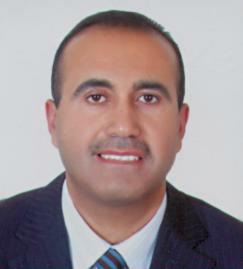 Jamal .N. Al-Othman Al-Karaki合作论文数Department of Computer Engineering, Faculty of Engineering, The Hashemite University;Faculty of Prince Hussein Bin Abdullah-II for Information Technology, The Hashemite University1
 Hussain Al-Ahmad合作论文数1
 Bilal Khan合作论文数City University of New York1




