In this paper, a color camera with a trichromatic mask is used to measure three-dimensional flow fields. The trichromatic mask separates imaging light paths through red, green and blue filters, and the image sensor of the color camera records the image superposition of the three perspectives of the tracer particles. Three view images are obtained by separating images through RGB channels, and color crosstalk correction is applied to improve image accuracy. The Shake-The-Box (STB) method is chosen to realize frame to frame particle tracking based on the images from three perspectives of tracer particles at high densities, and reconstruct the continuous-time three-dimensional Lagrangian trajectory. By artificially generating the flow field and its corresponding digitally synthesized images, the effects of key parameters such as particle density, aperture spacing of the trichromatic mask and camera magnification factor on particle tracking performance and computational efficiency were evaluated. The feasibility of the proposed method was demonstrated by the successful reconstruction of the three-dimensional flow field around a cylinder at a Reynolds number of 101.7.
Obtaining accurate wall shear stress (WSS) measurements with high spatiotemporal resolution remains a significant challenge in turbulent boundary layers (TBLs) research. We present the adjustable spatio-temporal resolution cross correlation (ASTRCC) algorithm. This method combines temporal ensemble averaging with elongated interrogation windows (IWs). It resolves the competing demands between spatial and temporal resolution in PIV-based approaches. When validated against direct numerical simulation (DNS) data at friction Reynolds number Reτ=360, the ASTRCC algorithm demonstrates a 34% reduction in mean absolute error and a 36% reduction in root mean square error compared to the traditional single-row cross correlation (SRCC) method. Our experimental implementation in TBLs at Reτ=519 achieves high spatiotemporal resolution (Δx+≈8.5, Δt+≈0.6), facilitating detailed characterization of instantaneous WSS dynamics. Multi-scale decomposition analysis reveals three distinct structural contributions to WSS fluctuations. Large-scale structures (λ+≈103–104) account for 46% of total energy. Medium-scale structures (λ+≈102–103) contribute 37%. Small-scale structures (λ+≈101) represent 17%. Our quadrant analysis establishes that sweep events exhibit strong correlations with high-WSS regions, while ejection events predominate in low-WSS areas, with WSS disturbances convecting at 0.53U∞ (where U∞ is the free-stream velocity). These results provide quantitative evidence for the multi-scale nature of WSS generation and establish the pronounced influence of large-scale structures on near-wall WSS dynamics, thereby offering experimental foundations for enhanced turbulence modeling and flow control strategies.
V-notched round jets at a Reynolds number of 2200 were subjected to strong forcing and were experimentally investigated at forcing frequencies corresponding to Strouhal numbers of 0, 0.25, 0.5, 0.75, and 1. Time-resolved particle image velocimetry results are presented, and the fundamental differences in the near-field vortex dynamics of the jet flow at the peak and trough planes of the V-notched nozzles are discussed. The flow phenomena, side jets, are of particular interest as they drastically increase the jet spread rate and mixing, and were observed to form in different nozzle planes depending on the forcing frequency. Forcing at the lowest frequency resulted in strong amplification of mechanical disturbances for the V-notched jets. This led to the suppression of the breakdown of the primary vortex ring and the formation of large-scale, symmetrical coherent flow structures near the jet centerline. Additional smaller-scale flow structures and side jets are also observed along the nozzle peak plane leading to significant enhancements of the jet spread rate. Flow bifurcation and forking of the vorticity branches were attributed to the formation of streamwise vortices that formed because of the heightened azimuthal instabilities incurred by the primary vortex ring. As the forcing frequency increases, the flow structures are observed to be increasingly destabilized with reductions in their length scales. Flow bifurcation in the peak plane would cease to exist and side jets appear along the trough planes instead. The formation of these side jets results from the jet fluid seeking to achieve pressure equilibrium with the ambient fluid due to the significant perturbations induced by the strong forcing. Based on the two V-notched aspect ratio nozzles studied, the sharper V-notched nozzle is more destabilizing to the primary vortex ring, which led to earlier breakdown of large-scale coherent structures.
Surface treatment processes such as mass finishing play a crucial role in enhancing the quality of machined parts across industries. However, accurate measurement of the velocity field of granular media in mass finishing presents significant challenges. Existing measurement methods suffer from issues such as complex and expensive equipment, limited to single-point measurements, interference with the flow field, and lack of universality in different scenarios. This study addresses these issues by proposing a single-camera-based method with deep learning to measure the three-dimensional velocity field of granular flow. We constructed a complete measurement system and analyzed the accuracy and performance of the proposed method by comparing the measurement results with those of the traditional DIC algorithm. The results show that the proposed method is very accurate in measuring spatial displacement, with an average error of less than 0.07 mm and a calculation speed that is 1291.67% of the traditional DIC algorithm under the same conditions. Additionally, experiments in a bowl-type vibratory finishing machine demonstrate the feasibility of the proposed method in capturing the three-dimensional flow of granular media. This research not only proposed a novel method for three-dimensional reconstruction and velocity field measurement using a single-color camera, but also demonstrated a way to combine deep learning with traditional optical techniques. It is of great significance to introduce deep learning to improve traditional optical techniques and apply them to practical engineering measurements.
A novel single color camera trichromatic mask 3D-PIV technique suitable for measurement of complex flow fields in confined spaces is presented in this paper. By using a trichromatic mask to modulate the imaging optical path of a color camera, the RGB (red, green, and blue) channels of the photosensitive chip were used to record full-frame full-resolution images of tracer particles from three viewing angles. The MLOS-SMART particle reconstruction algorithm was used to obtain three-dimensional particle distribution matrix from particle trichromatic mask images. The impact of parameters such as the inter-hole spacing and hole diameter of the trichromatic mask on the quality of particle reconstruction was analyzed. Through numerical simulation experiments on artificially synthesized three-dimensional flow fields of Gaussian vortex rings, the practicality of this technique in measuring three-dimensional transient velocity fields and the accuracy of velocity measurements were examined. The accuracy and feasibility of the technique are illustrated based on experimental measurements of a zero-net-mass-flux jet.
The formation and evolution of volumetric flow structures from a rectangular orifice synthetic jet (AR = 10, Re = 550, Sr = 0.0117, and L-o = 0.0855m) impinging on a flat plate is investigated using phase-locked single-camera light-field particle image velocimetry (LF-PIV). An impinging plate is located 24 orifice widths away from the rectangle orifice and this volumetric flow data is used to capture the mechanisms involved in the interaction. Flow statistics and structure information obtained by time-averaging and phase-averaging the volumetric data reveal the formation and evolution of three-dimensional vortical structures and sweeping vortex that characterise the flow-surface interaction.
Time-resolved particle image velocimetry measurements and proper orthogonal decomposition (POD) analysis were conducted on freely-exhausting V-notched nozzle jets at Re = 5000. Energy redistributions from low order modes to higher order modes are observed, particularly for the first two POD modes typically associated with large-scale coherent flow structures. Furthermore, analysis of the first two POD modes reveals highly cyclical large-scale coherent flow structures formed along the nozzle peak-to-peak (PP) planes, while non-cyclical incoherent flow structures are observed along the trough-to-trough (TT) planes. POD mode coefficients reveal mode pairing behaviour along the PP-planes and reduced peak frequencies in their power spectral densities. In contrast, no mode pairing behaviour is observed along the TT-planes and multiple instances of the same frequency peak transcending two adjacent POD modes are observed instead. This suggests an energy cascade process whereby large-scale flow structures are broken down into smaller-scale ones at a common frequency. Finally, a comparatively sharper nozzle leads to earlier formations of flow structures along both PP- and TT-planes but does not significantly impact upon the periodicity or coherence of the flow structures.
Light-field particle image velocimetry (LF-PIV) was recently introduced to measure three-dimensional, three-component velocity field with just a single light-field camera. One of the major challenges lies in the small viewing aperture affecting the depth resolution of such a single-camera based LF-PIV approach. In the present study, we show that this limitation may be mitigated by a dual light-field camera framework, one which includes a novel volumetric calibration model derived from Gaussian optics, a particle intensity reconstruction algorithm based on the multiplicative algebraic reconstruction technique and a post-processing technique for the reconstructed particle intensity field. The proposed approach was firstly validated with synthetic light-field particle images as well as experimental light-field images of five tiny glass beads imitating tracer particles. Secondly, parametric studies were conducted to analyze the influence of the viewing angle and seeding particle density on the reconstruction quality and spatial resolution. In particular, synthetic light-field particle images of a direct numerical simulation jet data set were utilized to compare the performance of single- and dual-camera LF-PIV techniques. Finally, experimental volumetric flow field results of a circular vortex-ring were also measured by single- and dual-camera LF-PIV techniques and compared. It is determined here that an additional light-field camera can mitigate the elongation effects of reconstructed particles and improve the measurement resolution in the depth direction.
This paper presents a novel snapshot three-dimensional (3D) imaging technique for fast turbomachinery blade geometrical measurements. The proposed measurement system employs a microlens array based light-field camera to capture 3D blade geometry into one light-field image, from which 100 new perspective images can be generated and the blade 3D point cloud can be recovered through sophisticated light-field rendering algorithms. The measurement accuracy is determined to be approximately by measuring a series of standard gauge blocks. Performance of the proposed technique is compared against a coordinate-measuring machine (CMM) and laser scanner by measuring a turbine blade. It reveals that the single light-field camera 3D measurement system can produce data point in with an average measurement accuracy of , which is considerably more efficient than the current CMM and laser scanning techniques.
光场相机粒子图像测速(Light Field Particle Image Velocimetry,LF-PIV)是一种近几年新发展起来的流动测试手段,能够仅通过单个光场相机测量3D-3C瞬态速度场,简化了三维流场测量的实验复杂度,特别是能实现受限空间的三维速度场测量.然而这一技术尚存在一些不足:由于光场相机沿景深方向的空间分辨率较低,沿该方向的速度测量精度低于垂直于景深方向的测量精度.本文尝试从硬件角度人手,发展一种双光场相机流动测试技术,通过增大对示踪粒子的观察视角,来提高光场三维测量系统沿景深方向的空间分辨率.基于乘积代数迭代技术(Multiplicative Algebraic Reconstruction Technique,MART),开发了针对双光场相机的粒子三维重构算法.分别利用直接数值模拟(Direct Numerical Simulation,DNS)水射流的数字合成图像与低速水射流涡环的实验图像,将双光场相机的测量结果与单光场相机的测量结果进行对比分析研究.结果 表明双光场相机与单光场相机相比显著提高了相机沿景深方向的测量精度.
This work presents a volumetric calibration method for single-camera light-field particle image velocimetry (light-field PIV or LF-PIV). The proposed technique makes use of the unique point-like feature of particle light-field images to accurately determine affected pixels for a spatial voxel over a relative large measurement volume. A calibration model is derived based on Gaussian optics, which relates a spatial point light source with its confusion circle produced on microlens array (MLA), and optical distortions are accounted for by introducing five calibration parameters. By taking lens defects and misalignment between MLA and image sensor into account, the calibration method can calculate weighting coefficient for particle image reconstruction more accurately than the theoretical ray-tracing method, especially for regions further away from focal plane where light ray deflections are significant due to optical distortions. The volumetric calibration method was validated by simulation tests using synthetic light-field images, and has been successfully applied to a classic vortex-ring LF-PIV measurement, where the measurable range in depth direction was successfully extended and the quality of reconstructed volumetric velocity field was greatly improved.
作为一种新兴的体三维粒子图像测速技术,光场单相机三维粒子图像测速技术(Single-Camera Light-Field Particle Image Velocimetry,LF-PIV)能够仅用单个相机获得三维速度场,其结果已在许多复杂三维流动测量中得到验证.LF-PIV的优势主要在于其紧凑简便的硬件设备以及对光学窗口较宽松的要求.应用LF-PIV技术对一个自相似的逆压湍流边界层(Adverse Pressure Gradient Turbulent Boundary Layer,APG-TBL)进行测量,该实验在澳大利亚莫纳什大学(Monash University)航空航天与燃烧湍流研究实验室(Laboratory for Turbulence Research in Aerospace and Combustion,ITRAC)水洞中完成.实验对远、近壁面测量所得到的各600组瞬态三维流场数据进行分析验证,并与相同工况下的2D-PIV实验结果对比,证明基于DRT-MART重构技术的LF-PIV能够进行基本的湍流边界层测量.
This paper conducts a comprehensive study between the single-camera light-field particle image velocimetry (LF-PIV) and the multi-camera tomographic particle image velocimetry (Tomo-PIV). Simulation studies were first performed using synthetic light-field and tomographic particle images, which extensively examine the difference between these two techniques by varying key parameters such as pixel to microlens ratio (PMR), light-field camera Tomo-camera pixel ratio (LTPR), particle seeding density and tomographic camera number. Simulation results indicate that the single LF-PIV can achieve accuracy consistent with that of multi-camera Tomo-PIV, but requires the use of overall greater number of pixels. Experimental studies were then conducted by simultaneously measuring low-speed jet flow with single-camera LF-PIV and four-camera Tomo-PIV systems. Experiments confirm that given a sufficiently high pixel resolution, a single-camera LF-PIV system can indeed deliver volumetric velocity field measurements for an equivalent field of view with a spatial resolution commensurate with those of multi-camera Tomo-PIV system, enabling accurate 3D measurements in applications where optical access is limited.
This paper presents a dense ray tracing reconstruction technique for a single light-field camera-based particle image velocimetry. The new approach pre-determines the location of a particle through inverse dense ray tracing and reconstructs the voxel value using multiplicative algebraic reconstruction technique (MART). Simulation studies were undertaken to identify the effects of iteration number, relaxation factor, particle density, voxel–pixel ratio and the effect of the velocity gradient on the performance of the proposed dense ray tracing-based MART method (DRT-MART). The results demonstrate that the DRT-MART method achieves higher reconstruction resolution at significantly better computational efficiency than the MART method (4–50 times faster). Both DRT-MART and MART approaches were applied to measure the velocity field of a low speed jet flow which revealed that for the same computational cost, the DRT-MART method accurately resolves the jet velocity field with improved precision, especially for the velocity component along the depth direction.
This paper presents a comprehensive investigation on how key design features can affect the performance of a plenoptic camera for single-camera volumetric velocity measurement technique. It firstly presents the prototyping of an in-house high resolution plenoptic camera; followed by an introduction to the framework of reconstructing 3D particle images from 2D light field images. Based on linear optics, a set of synthetic light field images were then generated by tracing light rays from a point light source to the plenoptic camera sensor. Detailed analysis were performed on these images to examine the effects of key parameters such as pixel microlens ratio (PMR), microlens geometry, reconstruction iteration number, relaxation factor and voxel to pixel ratio on the resolution of plenoptic camera and the final particle reconstruction quality. It is found that the microlens geometry is the vital parameter that affects the overall system performance. Hexagonal microlens generally outperforms square microlens in terms of resolution and reconstruction quality. Another important parameter is PMR, which affects resolution in x-, y- and z-directions, and high PMR does not necessarily lead to a better reconstruction quality.
A novel single camera volumetric velocity measurement technique is presented, which utilizes the advanced light field imaging technology to capture 3D PIV tracer particle images. The framework of Light Field Particle Image Velocimetry (LF-PIV) includes an in-house high resolution light field camera, multiplicative algebraic reconstruction technique (MART) based light field particle image reconstruction method and a ray tracing based synthetic light field particle image generation platform. The LF-PIV technique is compared with Tomographic Particle Image Velocimetry (Tomo-PIV) by using both synthetic DNS jet flow images as well as water jet experimental images. Results show that LF-PIV is capable of reconstructing the instantaneous volumetric velocity field with the accuracy similar to that of Tomo-PIV.
 Shengxian Shi (施圣贤)合作论文数Institute of Aerospace Propulsion, School of Mechanical Engineering, Shanghai Jiao Tong University12
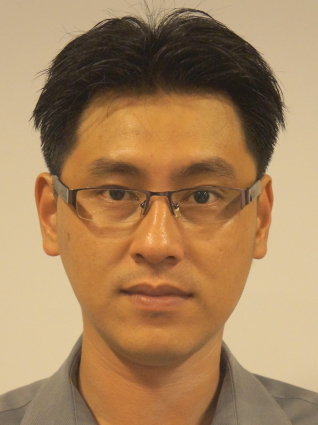 New Tze How Daniel合作论文数School of Mechanical and Aerospace Engineering, College of Engineering, Nanyang Technological University7
 Zhou Zhao合作论文数Sch Mech Engn, Shanghai Jiao Tong Univ3
 Julio Soria合作论文数Department of Mechanical and Aerospace Engineering, Faculty of Engineering, Monash University3
 Di Mei合作论文数2
 Desmond Lim合作论文数School of Engineering, Faculty of Engineering and Physical Sciences, University of Southampton2
 Haoxin Ma合作论文数National Laboratory of Pattern Recognition, Institute of Automation, Chinese Academy of Sciences;School of Artificial Intelligence, University of Chinese Academy of Sciences1
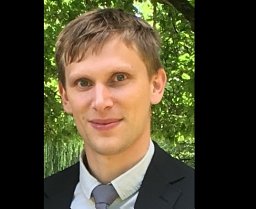 Rene Kaufmann合作论文数Structural Impact Laboratory, Norwegian University of Science and Technology1Shengming Xu (许晟明)合作论文数1
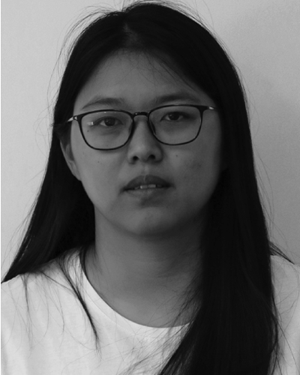 Jie Zou合作论文数1Hanmo Zhang合作论文数1Jianhua Wang合作论文数1
 You Liu (刘友)合作论文数College of Power and Energy Engineering, Harbin Engineering University1
 Yi Liu (刘毅)合作论文数College of Physics and Optoelectronics, Taiyuan University of Technology1
 Wenhui Li (李文辉)合作论文数College of Mechanical and Vehicle Engineering, Taiyuan University of Technology1
 Bharath Ganapathisubramani合作论文数Department of Aeronautics & Astronautics, School of Engineering, University of Southampton1
 Callum Atkinson合作论文数Department of Mechanical and Aerospace Engineering, Faculty of Engineering, Monash University1




