Acoustic radiation forces are increasingly used for the handling of micron sized particles (cells, functionalized beads, etc.) suspended in a fluid in the chamber of a manipulation device. The primary radiation forces arise as a nonlinear effect when an acoustic wave interacts with a particle. For specific robotic applications, precise control of the acoustic field in the cavity is important, which is excited, for example, by piezoelectric transducers attached to the device. Based on Gor'kov's potential, the relevant forces on spherical particles can be computed. The field can be controlled by varying the excitation parameters: chamber and electrode configuration, as well as frequency, amplitude and phase of the excitation and their modulation. In the first part of the present tutorial, a number of examples are described: displacement and rotation of particles in micro machined chambers and macroscopic transport of particles in a larger chamber. In the second part, numerical tools (finite volume method, COMSOL) are used to model the interaction of the acoustic field with a particle beyond the Gor'kov potential: viscosity, effects of walls near particles and acoustic radiation torque to rotate the particle. Excellent agreement between the various methods has been found.
Piezoelectric materials are widely used in the excitation of MHz frequency vibrations in devices for ultrasonic manipulation. An applied electrical voltage is transformed into mechanical stress, strain and displacement. Piezoelectric elements can be used in either a resonant or non-resonant manner. Depending on the desired motion, the piezoelectric longitudinal, transverse or shear effects are exploited. Because of the coupling between electrical and mechanical quantities in the constitutive law, the modelling of devices turns out to be quite complex. In this paper, the general equations that need to be used are delineated. For a one-dimensional actuator, the underlying physics is described, including the consequences resulting for the characterization of devices. For a practical setup used in ultrasonic manipulation, finite element models are used to model the complete system, including piezoelectric excitation, solid motion and acoustic field. It is shown how proper tailoring of transducer and electrodes allows selective excitation of desired modes.
BACKGROUND:For the design and characterization of ultrasonic particle manipulation devices the pressure field in the fluid cavity is of great interest. The schlieren method provides an optical tool for the visualization of such pressure fields. Due to its purely optical nature this experimental method has got some unique advantages compared to methods like particle tracking.RESULTS:A vertical schlieren setup and an investigation with the same of a mm-sized chamber used to agglomerate particles are presented here. The schlieren images show a two-dimensional representation of the whole pressure distribution recorded simultaneously with a good resolution in time. The gained description of the pressure field is shown to be in agreement with a numerical simulation. Thermal effects as well as streaming effects are shown.CONCLUSIONS:The results show the great potential of schlieren visualization to investigate ultrasonic particle manipulation devices. Visualized are pressure fields, acoustic streaming, temperature effects and effects caused by fluid volumes of different density.
This work models and experimentally investigates the transport of suspended microparticles with two acoustic methods. One method is continuous frequency sweeping based on acoustic radiation forces. The other method uses fluid flow generated by acoustic streaming. Furthermore, particle traps are presented which are based on single frequency acoustic radiation forces and can be combined with the presented acoustic streaming devices. Continuous frequency sweeping makes use of the shift of pressure nodes of standing waves when the frequency is changed. Acoustic radiation forces arise as non-linear effects when sound waves are scattered due to the presence of a particle and hence the method is ‘contactless’. Acoustic streaming is a net mean fluid flow generated by acoustic oscillations. This non-linear effect can be divided into bulk attenuation driven acoustic streaming due to the spatial attenuation of acoustic oscillations in free space, and boundary layer driven acoustic streaming due to the friction between the oscillating medium and a solid boundary. Particles or beads with a specific surface affinity to a target substance are often used for purification. This is of a particular interest for point of care or lab on a chip devices which aim at reducing the size of the analysis apparatus, the analysis chip, or both. One application followed here is nucleic acid concentration. The requirements for this application are a closed system, disposable devices and sample volumes in the mL range. The investigated ultrasonic devices are mm-sized and mainly fabricated from plastics. Particle transport with continuous frequency sweeping has been described experimentally in literature, but without providing a physical model. In this work continuous frequency sweeping is described with a one dimensional analytical model. Two device designs are proposed to employ the method. The first is a planar square device geometry with a transducer placed in line with the particle transport direction, and the second is a planar device where the transducer is placed perpendicular to it. The latter is used to investigate wave coupling mechanisms. The devices are investigated numerically with a simulation of the pressure field. In addition, a particle tracing simulation with time dependent frequency is developed. Particle experiments are combined with biochemical experiments and a simple schlieren visualization setup is designed which can visualize the full pressure field in real time. In this work, it is demonstrated that continuous frequency sweeping relies on attenuated standing waves which are present at all frequencies in a cavity, the shift of pressure nodes of any off-resonance standing wave depends on the position of the excitation and particles can be moved from one side of a cavity to another and back. Moreover, averaging effects are important for particle transport with a high
Because of uncertainties in material and geometrical parameters in ultrasonic devices, experimental characterization is an indispensable part in their successful application for the manipulation of particles or cells. Its miniaturized size precludes the use of many of the usual tools used for macroscopic systems. Also, a further challenge is the fact that the resulting motion due to the electromechanical actuation has both high frequency and small amplitudes. Contactless methods like laser interferometry are therefore promising methods. In addition, as long as there is strong electromechanical coupling between the transducer and the device also electrical measurements like admittance curves give insight into the frequencies at which the devices might work best. This is the case for example for piezoelectric transducers working at one of their resonance frequencies. Because the devices usually are used in resonant modes, narrow frequency detection methods like lock in amplifiers help to improve the signal to noise ratio. Also many analysis tools have been established in the context of modal analysis, which is based on frequency domain methods. Special emphasis is placed here on the determination of the quality factor Q of the resonator, as Q determines the efficiency of a device.
For macro scale plastic chambers with a target volume of about 1ml acoustic streaming is investigated. A FEM model including the piezo-electric transducer for the actuation, the structural mechanics as well as the fluid domain with the acoustic streaming and the acoustic radiation forces is presented. The actuation is in the MHz range. With transducers and chamber dimensions exceeding the excitation wavelengths, there are numerous flow patterns even for a square chamber which couldn't be described with one of the known analytical solutions. The numerical model allows optimization of the device, as local vortices and nodal planes of standing waves perpendicular to the flow should be avoided for the particle transport along with the fluid. The numerical model has been compared with experimental results measured with PIV. Good agreement between model and experiment has been achieved.
Acoustic radiation forces are increasingly used for the handling of micron sized particles (cells, functionalized beads, etc.) suspended in a fluid in the chamber of a manipulation device. The primary radiation forces arise as a nonlinear effect when an acoustic wave interacts with a particle. For specific robotic applications, precise control of the acoustic field in the cavity is important, which is excited, for example, by piezoelectric transducers attached to the device. Based on Gor'kov's potential the relevant forces on spherical particles can be computed. The field can be controlled by varying the excitation parameters: chamber and electrode configuration, as well as frequency, amplitude and phase of the excitation and their modulation. In the first part of the present tutorial, a number of examples are described: displacement and rotation of particles in micro machined chambers and macroscopic transport of particles in a larger chamber. In the second part, numerical tools (Finite Volume Method, COMSOL) are used to model the interaction of the acoustic field with a particle beyond a Gor'kov potential: viscosity, effects of walls near particles and acoustic radiation torque to rotate the particle. Excellent agreement between the various methods has been found.
A model was developed to determine the local changes of concentration of particles and the formations of bands induced by a standing acoustic wave field subjected to a sawtooth frequency ramping pattern. The mass transport equation was modified to incorporate the effect of acoustic forces on the concentration of particles. This was achieved by balancing the forces acting on particles. The frequency ramping was implemented as a parametric sweep for the time harmonic frequency response in time steps of 0.1s. The physics phenomena of piezoelectricity, acoustic fields and diffusion of particles were coupled and solved in COMSOL Multiphysics™ (COMSOL AB, Stockholm, Sweden) following a three step approach. The first step solves the governing partial differential equations describing the acoustic field by assuming that the pressure field achieves a pseudo steady state. In the second step, the acoustic radiation force is calculated from the pressure field. The final step allows calculating the locally changing concentration of particles as a function of time by solving the modified equation of particle transport. The diffusivity was calculated as function of concentration following the Garg and Ruthven equation which describes the steep increase of diffusivity when the concentration approaches saturation. However, it was found that this steep increase creates numerical instabilities at high voltages (in the piezoelectricity equations) and high initial particle concentration. The model was simplified to a pseudo one-dimensional case due to computation power limitations. The predicted particle distribution calculated with the model is in good agreement with the experimental data as it follows accurately the movement of the bands in the centre of the chamber.
Piezoelectric materials are widely used in the excitation of MHz frequency vibrations in devices for ultrasonic manipulation. An applied electrical voltage is transformed into mechanical stress, strain and displacement. Piezoelectric elements can be used in either a resonant or non-resonant manner. Depending on the desired motion the piezoelectric longitudinal, transverse or shear effects are exploited. Because of the coupling between electrical and mechanical quantities in the constitutive law the modelling of devices turns out to be quite complex. In this paper, the general equations that need to be used are delineated. For a one-dimensional actuator the underlying physics is described, including the consequences resulting for the characterization of devices. For a practical setup used in ultrasonic manipulation, finite element models are used to model the complete system, including piezoelectric excitation, solid motion and acoustic field. It is shown, how proper tailoring of transducer and electrodes allows selective excitation of desired modes.
Piezoelectric materials are widely used in the excitation of MHz frequency vibrations in devices for ultrasonic manipulation. An applied electrical voltage is transformed into mechanical stress, strain and displacement. Piezoelectric elements can be used in either a resonant or non-resonant manner. Depending on the desired motion the piezoelectric longitudinal, transverse or shear effects are exploited. Because of the coupling between electrical and mechanical quantities in the constitutive law the modelling of devices turns out to be quite complex. In this paper, the general equations that need to be used are delineated. For a one-dimensional actuator the underlying physics is described, including the consequences resulting for the characterization of devices. For a practical setup used in ultrasonic manipulation, finite element models are used to model the complete system, including piezoelectric excitation, solid motion and acoustic field. It is shown, how proper tailoring of transducer and electrodes allows selective excitation of desired modes.
Acoustic radiation forces are increasingly used for the handling of micron sized particles suspended in a fluid. The primary radiation forces arise as a nonlinear effect when an acoustic wave interacts with a single particle. In addition, secondary acoustic forces arise when several particles are present. Typically a resonance (at upper kHz to lower MHz frequencies) is set up in the system consisting of chip, fluid, particles and transducer. Both solid and fluid parts vibrate and are excited, for example, by piezoelectric elements. The pattern of the pressure distribution in the fluid then determines where the particles are located.The analytical formula by Gor'kov predicts the location of spherical compressible particles in the bulk of the fluid based on the acoustic field. Several fields might be superimposed to produce time independent or time varying patterns of particles in the fluid, resulting in the formation of lines, clumps or even in particle rotation. Excellent agreement between theory and experiment is found. For further particle handling, the acoustic manipulation can be combined with microfluidic flow, microgrippers, wire loops, optical tweezers, DEP, etc. depending on the application.In more complicated situations numerical solutions have to be found. Recently a code has been developed that can compute forces on fixed rigid particles in viscous fluids in general situations, e. g. for particles near walls or near other particles, as well as for particles of arbitrary shape. The code is based on the FVM (Finite Volume Method), solves the Navier-Stokes equations directly and also yields the acoustic streaming pattern. The viscosity increases the apparent size of the particle due to the Stokes layer, with the effect that the force is also increased.
The use of primary acoustic radiation forces has been shown to be a valid technique for the handling of micron sized suspended particles, such as beads or biological cells. These forces arise as a nonlinear effect when an acoustic wave or vibration, which is set up in the fluid by exciting to resonance the system containing the suspension, interacts with the particles. The typical frequencies (upper kHz-lower MHz range) and the periodicity (in the range of hundreds of micrometers) of the acoustic field make this technique particularly suited for the handling of particles within microfluidic systems.A variety of devices for separation, fractionation, trapping and positioning of beads or biological cells, working both in batch [12] or fluid flow [3-4] mode, have been proposed. With the exception of the ports used to inject or remove the sample or the carrier medium, these systems can be considered as closed systems. Nevertheless, access to the particles with external tools is sometimes needed after acoustic manipulation has been performed. For instance, particles or cells pre-positioned in a sequence along the centerline of a channel using acoustic radiation forces need to be removed from it using a microgripper for further handling. Furthermore, in the field of crystallography research protein crystals have to be placed one by one onto a nylon loop prior to X-ray analysis with synchrotron radiation. This is usually done using the loop to pick up the crystal from the solution where it has been growing with other ones. As this process is sometimes repeated for a large number of crystals there are efforts to automate it. To this purpose it would be advantageous to bring the crystals spatially separated into a known position where they than can be sequentially collected with the loop.Here strategies for single particle manipulation are presented combining the effects of acoustic fields, fluid flow, surface tension and external tools. They are discussed by means of numerical results from FE-simulations of both two and three dimensional models as well as corresponding experiments.
In order to perform X-ray crystallographic analysis, protein crystals are removed from their growing solution by means of a nylon loop, which is then mounted on a goniometer. As this process is repeated for a large number of crystals, there is a need for automation, especially with regard to the placement on the nylon loop. A novel technique involving the use of acoustic radiation forces and a micro-machined fluidic device is introduced here. After insertion into the micro-machined channel, the crystals are positioned in a row along its centre-line by excitation of a high-frequency standing pressure field, and then moved towards an orifice by applying a flow along the channel, which also ensures spatial separation. Once located in a defined orifice, the single crystals can be removed using a nylon loop. X-ray crystallographic analysis showed that application of ultrasound does not influence the diffraction properties of the crystals.
The use of acoustic radiation forces for the manipulation and positioning of micrometer sized particles has shown to be a promising approach. Resonant excitation of a system containing a particle laden fluid filled cavity, can (depending on the mode excited) result in positioning of the particles in parallel lines (1-D) or distinct clumps in a grid formation (2-D) due to the high amplitude standing pressure fields that arise in the fluid. In a broader context, the alignment of particles using acoustic forces can be used to assist manipulation processes which utilise an external mechanical tool, for instance a microgripper. In such a system, particles can be removed sequentially from a line formed by acoustic forces within a microfluidic channel, hence allowing a degree of automation. In order to fully automate the gripping process, the particles must be confined to a repeatable and accurate location in two dimensions (assuming that in the third dimension they sit on the lower surface of the channel). Only in this way it is possible to remove subsequent particles by simply bringing the gripper to a known location and activating its fingers. This combined use of acoustic forces and mechanical gripping requires that one extremity of the channel is open. However, the presence of the liquid–air interface which occurs at this opening, causes the standing pressure field to decay to zero towards the opening. In a volume of liquid in proximity to the interface positioning of particles by acoustic forces is therefore no longer possible. In addition, the longitudinal gradient of the field can cause a drift of particles towards the longitudinal center of the channel at some frequencies, undesirably moving them further away from the interface, and so further from the gripper. As a solution the use of microfluidic flow induced drag forces in addition to the acoustic force potential has been investigated.
This paper investigates the sizes of symmetric variable order based reduced binary decision diagrams for partially symmetric Boolean functions. It gives exact bounds for the maximum number of nonterminal vertices for the cases that the set of symmetric variables is treated as block which is located either at the front or at the back of the variable order
Reduced Ordered Binary Decision Diagrams (RoBDDs) are a data structure frequently used for representation and manipulation of Boolean functions. Since the size of ROBDDs is extremely sensitive to the variable order a lot of heuristics to get a good variable order have been developed. For the class of partially symmetric Boolean functions this paper presents a new general method to improve quality of ordering heuristics based on the exchange of variables. Statistical and benchmark results are given to show the efficiency of our approach.
Addresses the problem of the detection of symmetries of Boolean functions. To know these symmetries may be important in several stages of logic design, e.g. in logic optimization, in logic synthesis, and in technology mapping. Reduced ordered binary decision diagrams (ROBDDs) play an important role in these tools. Using this representation form for Boolean functions there is a simple symmetry test by checking if certain cofactor functions are equivalent, i.e. if their ROBDD representations are the same. Unfortunately, this procedure may be very time and storage consuming because of the necessary cofactor computations. The approach presented in this paper uses preprocessing methods to find as many asymmetric pairs of variables as possible to avoid cofactor computations at the end. For that, special properties of the ROBDD structure as well as properties of Boolean functions are used. Experimental results on a large number of benchmarks show that this is a very efficient approach.
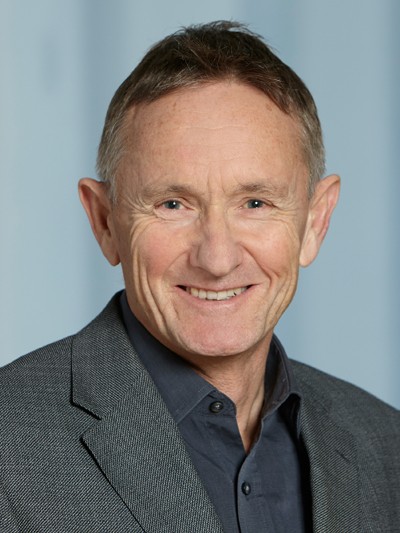 Jürg Dual合作论文数Department of Mechanical and Process Engineering, Eidgenössische Technische Hochschule Zürich15
 Adrian Neild合作论文数Department of Mechanical and Aerospace Engineering, Faculty of Engineering, Monash University5
 Stefano Oberti合作论文数5
 Schwarz Thomas合作论文数4
 Jingtao Wang合作论文数Google4
 Leibacher Ivo合作论文数Institute of Mechanical Systems (IMES),, Swiss Federal Institute of Technology (ETH Zurich),3
 Philipp Hahn合作论文数3
 P. Molitor合作论文数 Institut f?r Informatik;Martin-Luther-Universit?t Halle-Wittenberg2Michael Weber合作论文数1Janett Mohnke合作论文数1
 Sascha Gutmann合作论文数Paul Scherrer Inst, Swiss Light Source, CH-5232 Villigen, Switzerland1
 Andreas Lamprecht合作论文数1
 Eberhardt Sebastian合作论文数1
 Rolf Drechsler合作论文数Institute of Computer Science, University of Bremen;Department of Cyber-Physical Systems, German Research Center for Artificial Intelligence1
 Kai Knoerzer合作论文数Food and Nutritional Sciences, Commonwealth Scientific and Industrial Research Organisation1
 Francisco J. Trujillo合作论文数School of Chemical Engineering, Faculty of Engineering, The University of New South Wales1




