Incubation is a period during which a subject temporarily makes no conscious attempts to solve a problem but eventually arrives at a solution. Henri Poincaré described cases where insights came after a break from working on complex mathematical problems. This article proposes a hypothesis called the «Poincaré effect»: the higher a person's creativity, the more pronounced the effect of incubation in their creative process. An experimental study was conducted with 525 participants divided into a control group (without incubation) and an experimental group (with an incubation break). Participants performed the «Alternate Uses» test, inventing non-standard ways to use a matchstick. Creativity was assessed based on fluency (the number of ideas) and originality. The results showed that the incubation break led to a significant increase in the fluency of responses in the experimental group. Moreover, among participants with a high level of creativity, incubation contributed to an increase in the originality of responses, confirming the Poincaré effect. These findings align with the awareness model, according to which incubation helps restructure the problem representation and recognize previously found unconscious solutions. The study's conclusions confirm the presence of the Poincaré effect in the phenomenon of incubation and highlight the importance of individual creative abilities in the problem-solving process.
Traditionally, modern museums have cultural, educational and interactive functions, creating a link between the expositions and the visitors by forming a concrete idea about the presented items for the latter. Often state museums act as a venue for representing a state ideology, which is displayed in exhibition halls creating a worldview of the country's citizens. The presented article studies examples of several museum expositions in Mongolia: four regional, two state and the National Museum of Mongolia, which is perhaps the main museum of the country. The purpose of this work is to identify the modern Mongolian state ideology represented in the museum projects. The research materials are based on the authors' personal observations. Provincial museums present historical, cultural and natural details of a particular area. In this manner, museums located in the west of Mongolia, in a region known for its ethnocultural uniqueness, are of particular interest. Here the demonstrations of local specificity is carried out in various ways: exhibiting unique clothing of different ethnic groups, presenting local history with its key heroes, and etc. These features disappear at the national level, in the main museum of the country. In this museum, the expositions clearly trace the state concept of the Mongolian historical development, which starts from the Hunnu state. The museum gives a priority to the exposition materials representing the Mongol Empire and its founder, the legendary Genghis Khan. It also noticeably signifies a change in political course: the transition from socialism to democracy. When the construction of the Genghis Khan Museum is completed, the unofficial status of the "main museum of the country" will pass to it most likely. It is symbolic that the museum is located on the site of the demolished Museum of Natural History, the former State Historical - the first museum in the country. A specific state ideology is manifested in this museum project, which includes not only elements of extra-ethnic nomadic culture, imperial symbols and images of Genghis Khan, but also unique local components: local history, ethnic culture and nature. Summing up, some minor conclusions must be noted, according to which the policy of designing and building new museums instead of renovating, restoring and reconstructing old objects is a general trend in modern world practice. In addition to this, there is one more feature in Mongolia - the refusal to preserve religious and architectural objects both in the province and in the capital, again due to the logic of the state ideology formation.
The study aims to develop an agent-based model that reflects the interaction of economic agents with the system of economic institutions of society. The interaction of agents with institutions is considered a two-way process of establishing social norms corresponding to the mentality of agents and changing the value -psychological structure of the mentality of agents under existing institutions. It is assumed that each agent finds himself in various situations of choice during his life activity in which he can adhere to one or another line (pattern) of behavior. On the one hand, his behavior is influenced by the initial value attitudes, and on the other hand, by the institutional norms that apply in this situation. Economic utility (benefit) plays an essential role in this process, influencing the agent's decision regarding following the dominant institutions in society and forcing him to risk his own reputation. The proposed system of coordinates "mentality - institutions" gives us a new description of the development of civil society in the country. In a developed society, the mentality of people and formal institutions do not contradict each other and are in balance (harmonious state). At the other extreme, there is a situation where each agent pursues only his interests. Various intermediate (transitional) configurations are also possible, where there is a struggle between formal and informal institutions and individual, group, and public interests. The result of the study is an agent-based model implemented on experimental data, which makes it possible to assess the degree of mutual influence of the mentality and civil society institutions and formulate conditional recommendations for bodies developing the country's social and economic policies.
The focus of this article is the reflection of intelligence as ability in social media texts. The authors have developed a model of communicative environments according to which the manifestation of intelligence in a message depends on the communicative situation in which the information is transmitted. Thus, the cognitive complexity of texts is a consequence not only of the author's intellectual capacity, but also of his willingness and ability to adapt the complexity of messages to the characteristics of the recipient. This paper analyses data from individual social media profiles in relation to user intelligence test scores, as well as similar data obtained at a regional level. The study involved 438 subjects who took an intelligence test and provided access to their social media profiles. Facebook users were found to be, on average, more intelligent than VKontakte users, posting more posts containing text, posting less often overall. No significant differences in post characteristics were found between the two social networks. However, differences in the nature of the relationship between intelligence and cognitive complexity of messages were demonstrated for different social networks and for male and female subsamples of users. Correlations were found to be higher at the regional level compared to the individual level, higher for Facebook compared to VKontakte and higher for men compared to women. It is concluded that indicators of texts’ cognitive complexity from social media do reflect the intelligence of their authors, but the extent of this reflection depends on the characteristics of the communicative situation
The state of the problem of abilities in the modern history of Russian psychological science is discussed. It is argued that despite the recognition by the psychological community of the high functional significance of abilities as a factor of achievement in various types of activity, as a factor in human development, the real productivity of research in the field of the psychology of abilities remains quite low. It is shown that in the recent history of Russian psychology there is a decline in the interest of the scientific community in the development of this problem. This is a consequence of a longer process of low-intensity research of abilities in Soviet psychology. Based on the analysis of publications in leading psychological journals for the period 1991–2022, an attempt has been made to systematize research in the field of psychology of abilities. Two approaches to research analysis were used: methodological analysis (characterization of research by type, subject, method, object), functional analysis (characterization based on the use of abilities as an object of research and as an object of formation). The author substantiates the statement that the decrease in the intensity of research in the field of psychology of abilities is a consequence of the lack of a “working” theory of abilities in psychological science, which allows solving the problems of determining the structure of abilities and their interaction, their development, functioning and formation.
This article creates and analyzes an agent-based simulation model that reflects the interaction between economic agents and the institutional environment surrounding them. Special attention is paid to changing the agents’ mentality under the influence of the institutional structure of society and the transformation of the institutional environment under the influence of agents’ mental values. Computational experiments are carried out with the model, and the possibilities of achieving equilibrium by the system are calculated depending on the minimum labor productivity in society. An equilibrium state of the system is one in which the agents’ mentality and public institutions are in harmony and do not contradict each other. It has been revealed that agents’ mentality significantly influences their attitude to public institutions and their behavior in situations of economic choice. It has been established that the higher the labor productivity of agents and the more developed and prosperous the society is, the faster the system goes into harmony.
PsyCh JournalVolume 12, Issue 4 p. 477-478 EDITORIAL Temporal processes, temporal perspectives: Logistics and semantics of human time Ernst Pöppel, Corresponding Author Ernst Pöppel [email protected] Institute of Medical Psychology, Ludwig Maximilian University, Munich, Germany Correspondence Ernst Pöppel, Institute of Medical Psychology, Ludwig Maximilian University Munich, Goethestrasse 31, 80366, Munich, Germany. Email: [email protected]Search for more papers by this authorYan Bao, Yan Bao Institute of Medical Psychology, Ludwig Maximilian University, Munich, Germany School of Psychological and Cognitive Sciences, Peking University, Beijing, ChinaSearch for more papers by this authorAnne Giersch, Anne Giersch Department of Psychiatry, University of Strasbourg, Strasbourg, FranceSearch for more papers by this authorDmitry Ushakov, Dmitry Ushakov Institute of Psychology, Russian Academy of Sciences, Moscow, RussiaSearch for more papers by this author Ernst Pöppel, Corresponding Author Ernst Pöppel [email protected] Institute of Medical Psychology, Ludwig Maximilian University, Munich, Germany Correspondence Ernst Pöppel, Institute of Medical Psychology, Ludwig Maximilian University Munich, Goethestrasse 31, 80366, Munich, Germany. Email: [email protected]Search for more papers by this authorYan Bao, Yan Bao Institute of Medical Psychology, Ludwig Maximilian University, Munich, Germany School of Psychological and Cognitive Sciences, Peking University, Beijing, ChinaSearch for more papers by this authorAnne Giersch, Anne Giersch Department of Psychiatry, University of Strasbourg, Strasbourg, FranceSearch for more papers by this authorDmitry Ushakov, Dmitry Ushakov Institute of Psychology, Russian Academy of Sciences, Moscow, RussiaSearch for more papers by this author First published: 10 August 2023 https://doi.org/10.1002/pchj.674Read the full textAboutPDF ToolsRequest permissionExport citationAdd to favoritesTrack citation ShareShare Give accessShare full text accessShare full-text accessPlease review our Terms and Conditions of Use and check box below to share full-text version of article.I have read and accept the Wiley Online Library Terms and Conditions of UseShareable LinkUse the link below to share a full-text version of this article with your friends and colleagues. Learn more.Copy URL Share a linkShare onEmailFacebookTwitterLinkedInRedditWechat No abstract is available for this article. REFERENCES Aschoff, J. (1965). Circadian rhythms in man: A self-sustained oscillator with an inherent frequency underlies human 24-hour periodicity. Science, 148, 1427–1432. https://doi.org/10.1126/science.148.3676.1427 Augustinus, A. (397/8). Confessiones. Klostermann. Bao, Y., Pöppel, E., Wang, L., Lin, X., Yang, T., Avram, M., Blautzik, J., Paolini, M., Silveira, S., Vedder, A., Zaytseva, Y., & Zhou, B. (2015). Synchronization as a biological, psychological and social mechanism to create common time: A theoretical frame and a single case study. PsyCh J, 4(4), 243–254. https://doi.org/10.1002/pchj.119 Bao, Y., Yang, T., Lin, X., & Pöppel, E. (2016). Donders revisited: Discrete or continuous temporal processing underlying reaction time distributions? PsyCh J, 5(3), 177–179. https://doi.org/10.1002/pchj.142 Donders, F. C. (1969). On the speed of mental processes. Acta Psychologica, 30, 412–431. https://doi.org/10.1016/0001-6918(69)90065-1 Fechner, G. T. (1860). Elemente der Psychophysik (elements of psychophysics). Breitkopf und Härtel. Kant, I. (1781). Kritik der reinen Vernunft [critique of pure reason]. Hartknoch. Mach, E. (1865). Untersuchungen über den Zeitsinn des Ohres. Sitzungsberichte der Mathematisch-Naturwissenschaftlichen Classe der Kaiserlichen Wissenschaften, 51(2), 133–150. Newton, I. (1687). Philosophiae Naturalis principia Mathematica. Josephi Streater. Pöppel, E. (1988). Mindworks. Time and conscious experience. Harcourt Brace Jovanovich. Pöppel, E. (2009). Pre-semantically defined time windows for cognitive processing. Philos Trans R Soc Lond B Biol Sci, 364, 1887–1896. https://doi.org/10.1098/rstb.2009.0015 Ruhnau, E. (1994). The now—the missing link between matter and mind. In M. Bitbol & E. Ruhnau (Eds.), The now, time and the quantum (pp. 101–130). Editions Frontières. Ruhnau, E. (1997). The deconstruction of time and the emergence of temporality. In H. Atmanspacher & E. Ruhnau (Eds.), Time, temporality, now (pp. 53–69). Berlin. Vierordt, K. (1868). Der Zeitsinn nach Versuchen. Laupp. von Baer, K. E. (1860/1864). Welche Auffassung der lebenden Natur ist die richtige? Und wie ist diese Auffassung auf die Entomologie anzuwenden? In H. Schmitzdorff (Ed.), Speech delivered in St. Petersburg 1860 (pp. 237–284). Verlag der kaiserlichen Hofbuchhandlung. Zhao, C., Enriquez, P., Izadifar, M., Pöppel, E., Bao, Y., & Zabotkina, V. (2022). Complementarity of mental content and logistic algorithms in a taxonomy of cognitive functions. Psych J, 11(6), 973–979. https://doi.org/10.1002/pchj.602 Volume12, Issue4Special Issue: Special Collection: Temporal Processes, Temporal Perspectives (Part 1)August 2023Pages 477-478 ReferencesRelatedInformation
The article deals with an generalized agent-based model which describes the system "mentality of economic agents - social institutions". A complex of features that qualitatively characterize the mentality of the agent is proposed. The dominance of one of these features determines the agents' mentality type. Social institutions are classified depending on the support of a particular agents' mental group. In the tradition of agent-based modeling, the model's space is represented as a lattice (a set of cells) located in a limited plane's domain. Each cell represents one of the market niches for agents to conduct business activities. The agents' state in each time step is characterized by parameters of performance and satisfaction. While functioning, agents move from one niche to another, striving to achieve maximum performance and satisfaction with their position, depending on the institutional environment. The results of experiments are analyzed based on scenario approach and conditional synthetic data, which make it possible to estimate the process of achieving an equilibrium state by the system "mentality of economic agents - public institutions". Research findings confirm the following. First, the higher the minimum labor productivity in society, the faster the system reaches an equilibrium state. Second, fewer agents are forced to leave the system, not finding a suitable niche to conduct activities.
Insight is an abrupt understanding by solver the gist of the solving task, which is accompanied by the feeling of illumination or "Aha!-experience". A study of insight in laboratory conditions is connected with challenging difficulties. This is why the available data are rather contradictory. In the current paper, we aimed at clarification of brain activity dynamics before and during the insightful solution of a creative task. We used the Remote Association Test (RAT) and electroencephalography (EEG) analysis on the level of relevant frequencies, their sources and connectivity. The comparison of solutions variants, which were classified by subjects as insightful or as analytical showed a number of differences in behavior and in brain activity. Insightful solutions have been discovered on average faster and were in the most of trials correct. Brain activity in analytical task solutions only minimally differentiated from those in tasks which were not solved. This allows us to suppose that analytical strategy also prevailed in unsuccessful trials. Brain activity in insightful solutions was substantially different from activity in unsuccessful trials and in successful trials where analytical strategy was used. On the early stages of solution, these differences were found mostly in the delta diapason of EEG and in region of the cortical regions belonging to Default Mode System and networks of executive attention. According to connectivity analysis, the sources of these early activities were located in the right hemisphere. Brain activity presumably connected to insight as a consciousness phenomenon was elucidated in. EEG beta and gamma diapasons with source localizations in the structures of left hemisphere known for their involvement in semantic processing and emotional reaction. As a whole, experimental effects described in our works clearly showed a number of differences in brain activity dynamics in the cases of insightful and analytical strategies of task solutions. This gives us an optimistic feeling on further perspectives of brain imaging methodology in domain of creative problem solving.
In December 2010, exactly 10 years ago, the first issue of the journal "Social Psychology and Society" was published. We are opening the last issue of 2020 with congratulatory letters from our readers sent to the editorial office, and we thank you for the warm words of gratitude and support.
According to the author of this paper, when forming a state’s economic and social policy, it is necessary to take into account the peculiarities of the mentality of the population since, as studies show, values shared by people and their motivation and intelligence affect the socioeconomic achievements of countries. It is argued that the correspondence of social institutions to the national mentality is a necessary condition for their successful functioning and provides productive solutions to social and economic problems facing the society. It is crucial that the populational mentality is a sufficiently stable formation, transmitted from generation to generation.
Researches support by competitive funding mechanisms realized through scientific foundations is a common global practice. At the same time, decisions on support or refusal of a scientific project financing are made because of results of a multistage examination, which is a primary part of the competitive funding system and is conducted by the scientific community itself (peer review). It is important to take into account that the decisions of each expert in a situation of choice are influenced by his individual economic and psychological characteristics. Usually, these characteristics are neglected, but in our opinion, they should not be underestimated. This article presents an agent-based model of professional expertise and decision-making on financial support for research projects by scientific foundations, considering the economic and psychological characteristics of agents-experts and the reputational consequences of their decisions. The model takes into account such individual economic and psychological characteristics of scientists as "individualism - collectivism", "satisfaction - dissatisfaction" and others. The quality of projects, the qualifications of scientists, their propensity for subjectivity and objectivity in the process of project evaluation, depending on the economic and psychological characteristics are also considered. Feedbacks in the model are implemented by changing the reputation of scientists, depending on the degree of objectivity of projects evaluations including by comparing the reputation of the researcher with the average reputation of his immediate surrounding. Conclusions about changes in the structure of researcher's groups within the scientific community are made on the basis of changes in the reputation of scientists, depending on their belonging to the class of dependent (pursuing the interests of individual groups and communities) or the class of independent (conducting a fair evaluation of research projects). Recommendations for the further development of the model and for using it to predict the outcomes of local situations in autonomous socio-economic systems are formulated.
A huge amount of the issues in the realm of scientific endeavor are decided by member of expert communities in various fields. Decisions that sanction the funding of project proposals are based on a voting process. Such decision-making is particularly applied in the evaluation of applications to publicly-funded initiatives, which include the awarding of higher academic degrees and titles, in competitions to fill personnel vacancies, and other similar areas. In such situations, experts (electors) individually decide in favor of a particular applicant based on specific objective criteria, as well by subjective consideration of their decision’s repercussion in the profession field and the impact of the decisions on the experts’ reputation. The result of such choices may depend on the psychological qualities and the current mood of the expert. The selection of the experts and their assignation to particular evaluation projects is often random. As a result, the collective adjudication on such projects is comprised of the interweaving of several objective and subjective factors. In this paper, the authors examine the competitive selection process for scientific projects in applications for funding from scientific foundations. A simulated “peer review” model is utilized, designed to analyze a number of experts’ economic and psychological characteristics and their group affiliation in the form of scientific schools. The authors use qualitative analysis concerning the impact of changes reputations of experts on their decisions in the scientific community. Thus, the research results herein show the dynamics of the scientific and expert community structure. The model is agent-oriented and is a convenient tool for modeling the process of competitive selection in project funding applications.
Presented is the method of patterns to diagnose subjects basing on testing paths which represent results of completion of tasks in the order of their appearance. This method allows solving diagnostics tasks having limited observation results, building diagnostics conclusions only relying on the analysis of accumulated empirical data and changing adaptively both the number of presented testing tasks and their content to attain the given level of diagnostic assessment reliability.
For the analysis of psychological factors of economic behavior the article suggests applying the system approach that allows to overcome the fragmentation of the study of the man and the society inherent in the various branches of science and become closer to the creation of a single coherent picture of the relationship of human behavior and the dynamics of the society.System models of the interaction of economic agent and market (in a broad sense. the society) that reflect variants of dominance of one of the members of the "agent - market" pair are developed. It is shown that consideration of both the agent and the society in the form of complex socio-economic systems is the most productive approach. So the system structure of the agent as a set of four interacting subsystems. intentional (reflects agent's intentions), expectational (reflects agent's expectations), cognitive (reflects agent's perception of the environment) and functional (reflects the agent's behavior) is represented in the study. The concept of "soul" as a unique individual principle coordinating the four aspects of life activity of an economic agent is formulated.Characteristic features of the agent's mind influence on their decision-making in the situation of socio-economic choice are analyzed. As an example, the agent's behavior in two situations is considered. in the situation of the agent as a producer (product selection for production) and in the situation of the agent as a consumer (selection of a new vehicle for purchase). According to the scheme underlying the concept of rationality, the agent forms goals and a set of acceptable alternatives of choice upon which to choose the best possible solution based on a certain criterion of optimality.The structural pattern-model of interaction between the man and the society is developed, the system structures of which are considered as isomorphic and consist of the following seven layers: mental, cultural, institutional, cognitive, organizational-technological, imitative and behavioral. The features of interaction between the same layers of these systems in the context of institutional changes are revealed.
СЕМЬЯ КАК ИНСТИТУТ ВОСПРОИЗВОДСТВА ЭТНИЧНОСТИ (НА ПРИМЕРЕ МОНГОЛИИ
The authors thank all the participants of the discussion, answer to the questions and make the conclusion of the polemics that took place on the journal's pages. The authors examine the concept of mentality. They discuss the problem of fit between mentality and social institutions in the society. They highlight conceptual and practical potential of the model of "homo psychosocialis".
 E. A. Valueva合作论文数15
 Anatoly Zhuravlev合作论文数7
 Ekaterina Lapteva合作论文数6
 Maxim Rybachuk合作论文数Central Economics and Mathematics Institute, Financial University Under the Government of the Russian Federation6Vitaly Telerman合作论文数5A. V. Yurevich合作论文数4
 Yan Bao (包燕)合作论文数School of Psychological and Cognitive Sciences, Faculty of Sciences, Peking University;Academy for Advanced Interdisciplinary Studies, Peking University4George B. Kleiner合作论文数3y zinchenko合作论文数3
 Alexey A. Sozinov合作论文数3Chernorizov Alexander M合作论文数3Vladimir Sidorov合作论文数3
 Evgeny Gutyrchik合作论文数3
 Galina Menshikova合作论文数3Andrey V. Bocharov合作论文数3
 Shihui Han (韩世辉)合作论文数School of Psychology and Cognitive Sciences, Peking University3
 Gennady G. Knyazev合作论文数Russian Academy of Medical Sciences, State Research Institute of Physiology3A. A. Grigoriev合作论文数2
 Artem Kovalev合作论文数2A. Yurevich合作论文数2
 Vera Zabotkina合作论文数2
 Sofya S. Belova合作论文数Institute of Psychology, Russian Academy of Sciences2
 Anastasia Panfilova合作论文数2Telerman, V.合作论文数2
 Yuliya Zaytseva合作论文数2
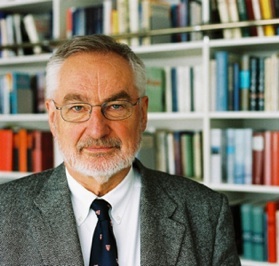 Ernst Pöppel合作论文数Institute of Medical Psychology, Ludwig-Maximilians-University Munich2г б клейнер合作论文数2George Kleiner合作论文数1Yu. N. Slepko合作论文数1A.V. Iurevich合作论文数1
 Tatiana Yurievna Marinova合作论文数1
 Andrei Grigoriev合作论文数1
 Lev S Kuravsky合作论文数1Ludmila G. Pochebut合作论文数1
 Vladimir A. Mazilov合作论文数Ярославский государственный педагогический университет им. К.Д.Ушинского1E. V. Gavrilova合作论文数1M.S. Zirenko合作论文数1
 Dmitry Vorontsov合作论文数1N.N. Tolstykh合作论文数1V. M. Allakhverdov合作论文数1
 V.A. Chiker合作论文数1
 Grigory Yuryev合作论文数1
 Arkadiy Margolis合作论文数1
 Todd Lubart合作论文数Laboratoire Cognition et Developpement, Institut de Psychologie, Universite Paris Descartes1Liudmila V. Pylkova合作论文数1Eugene Rukoleev合作论文数1
 Elena L. Grigorenko合作论文数Department of Psychology, College of Liberal Arts and Social Sciences, University of Houston1




