Many approaches have been proposed to use diffusion models to augment training datasets for downstream tasks, such as classification. However, diffusion models are themselves trained on large datasets, often with noisy annotations, and it remains an open question to which extent these models contribute to downstream classification performance. In particular, it remains unclear if they generalize enough to improve over directly using the additional data of their pre-training process for augmentation. We systematically evaluate a range of existing methods to generate images from diffusion models and study new extensions to assess their benefit for data augmentation. Personalizing diffusion models towards the target data outperforms simpler prompting strategies. However, using the pre-training data of the diffusion model alone, via a simple nearest-neighbor retrieval procedure, leads to even stronger downstream performance. Our study explores the potential of diffusion models in generating new training data, and surprisingly finds that these sophisticated models are not yet able to beat a simple and strong image retrieval baseline on simple downstream vision tasks.
In this paper, we show that recent advances in video representation learning and pre-trained vision-language models allow for substantial improvements in self-supervised video object localization. We propose a method that first localizes objects in videos via a slot attention approach and then assigns text to the obtained slots. The latter is achieved by an unsupervised way to read localized semantic information from the pre-trained CLIP model. The resulting video object localization is entirely unsupervised apart from the implicit annotation contained in CLIP, and it is effectively the first unsupervised approach that yields good results on regular video benchmarks.
Unsupervised object-centric learning methods allow the partitioning of scenes into entities without additional localization information and are excellent candidates for reducing the annotation burden of multiple-object tracking (MOT) pipelines. Unfortunately, they lack two key properties: objects are often split into parts and are not consistently tracked over time. In fact, state-of-the-art models achieve pixel-level accuracy and temporal consistency by relying on supervised object detection with additional ID labels for the association through time. This paper proposes a video object-centric model for MOT. It consists of an index-merge module that adapts the object-centric slots into detection outputs and an object memory module that builds complete object prototypes to handle occlusions. Benefited from object-centric learning, we only require sparse detection labels (0%-6.25%) for object localization and feature binding. Relying on our self-supervised Expectation-Maximization-inspired loss for object association, our approach requires no ID labels. Our experiments significantly narrow the gap between the existing object-centric model and the fully supervised state-of-the-art and outperform several unsupervised trackers. Code is available at https://github.com/amazon-science/object-centric-multiple-object-tracking.
Recent years have seen a surge of interest in learning high-level causal representations from low-level image pairs under interventions. Yet, existing efforts are largely limited to simple synthetic settings that are far away from real-world problems. In this paper, we present Causal Triplet, a causal representation learning benchmark featuring not only visually more complex scenes, but also two crucial desiderata commonly overlooked in previous works: (i) an actionable counterfactual setting, where only certain object-level variables allow for counterfactual observations whereas others do not; (ii) an interventional downstream task with an emphasis on out-of-distribution robustness from the independent causal mechanisms principle. Through extensive experiments, we find that models built with the knowledge of disentangled or object-centric representations significantly outperform their distributed counterparts. However, recent causal representation learning methods still struggle to identify such latent structures, indicating substantial challenges and opportunities for future work. Our code and datasets will be available at https://sites.google.com/view/causaltriplet.
Humans naturally decompose their environment into entities at the appropriate level of abstraction to act in the world. Allowing machine learning algorithms to derive this decomposition in an unsupervised way has become an important line of research. However, current methods are restricted to simulated data or require additional information in the form of motion or depth in order to successfully discover objects. In this work, we overcome this limitation by showing that reconstructing features from models trained in a self-supervised manner is a sufficient training signal for object-centric representations to arise in a fully unsupervised way. Our approach, DINOSAUR, significantly out-performs existing image-based object-centric learning models on simulated data and is the first unsupervised object-centric model that scales to real-world datasets such as COCO and PASCAL VOC. DINOSAUR is conceptually simple and shows competitive performance compared to more involved pipelines from the computer vision literature.
Generation of photo-realistic images, semantic editing and representation learning are only a few of many applications of high-resolution generative models. Recent progress in GANs have established them as an excellent choice for such tasks. However, since they do not provide an inference model, downstream tasks such as classification cannot be easily applied on real images using the GAN latent space. Despite numerous efforts to train an inference model or design an iterative method to invert a pre-trained generator, previous methods are dataset (e.g. human face images) and architecture (e.g. StyleGAN) specific. These methods are nontrivial to extend to novel datasets or architectures. We propose a general framework that is agnostic to architecture and datasets. Our key insight is that, by training the inference and the generative model together, we allow them to adapt to each other and to converge to a better quality model. Our InvGAN , short for Invertible GAN, successfully embeds real images in the latent space of a high quality generative model. This allows us to perform image inpainting, merging, interpolation and online data augmentation. We demonstrate this with extensive qualitative and quantitative experiments.
Full information about a many-body quantum system is usually out-of-reach due to the exponential growth -- with the size of the system -- of the number of parameters needed to encode its state. Nonetheless, in order to understand the complex phenomenology that can be observed in these systems, it is often sufficient to consider dynamical or stationary properties of local observables or, at most, of few-body correlation functions. These quantities are typically studied by singling out a specific subsystem of interest and regarding the remainder of the many-body system as an effective bath. In the simplest scenario, the subsystem dynamics, which is in fact an open quantum dynamics, can be approximated through Markovian quantum master equations. Here, we formulate the problem of finding the generator of the subsystem dynamics as a variational problem, which we solve using the standard toolbox of machine learning for optimization. This dynamical or ``Lindblad" generator provides the relevant dynamical parameters for the subsystem of interest. Importantly, the algorithm we develop is constructed such that the learned generator implements a physically consistent open quantum time-evolution. We exploit this to learn the generator of the dynamics of a subsystem of a many-body system subject to a unitary quantum dynamics. We explore the capability of our method to recover the time-evolution of a two-body subsystem and exploit the physical consistency of the generator to make predictions on the stationary state of the subsystem dynamics.
Since out-of-distribution generalization is a generally ill-posed problem, various proxy targets (e.g., calibration, adversarial robustness, algorithmic corruptions, invariance across shifts) were studied across different research programs resulting in different recommendations. While sharing the same aspirational goal, these approaches have never been tested under the same experimental conditions on real data. In this paper, we take a unified view of previous work, highlighting message discrepancies that we address empirically, and providing recommendations on how to measure the robustness of a model and how to improve it. To this end, we collect 172 publicly available dataset pairs for training and out-of-distribution evaluation of accuracy, calibration error, adversarial attacks, environment invariance, and synthetic corruptions. We fine-tune over 31k networks, from nine different architectures in the many- and few-shot setting. Our findings confirm that in- and out-of-distribution accuracies tend to increase jointly, but show that their relation is largely dataset-dependent, and in general more nuanced and more complex than posited by previous, smaller scale studies.
Variational autoencoders (VAEs) are a popular framework for modeling complex data distributions; they can be efficiently trained via variational inference by maximizing the evidence lower bound (ELBO), at the expense of a gap to the exact (log-)marginal likelihood. While VAEs are commonly used for representation learning, it is unclear why ELBO maximization would yield useful representations, since unregularized maximum likelihood estimation cannot invert the data-generating process. Yet, VAEs often succeed at this task. We seek to elucidate this apparent paradox by studying nonlinear VAEs in the limit of near-deterministic decoders. We first prove that, in this regime, the optimal encoder approximately inverts the decoder -- a commonly used but unproven conjecture -- which we refer to as {\em self-consistency}. Leveraging self-consistency, we show that the ELBO converges to a regularized log-likelihood. This allows VAEs to perform what has recently been termed independent mechanism analysis (IMA): it adds an inductive bias towards decoders with column-orthogonal Jacobians, which helps recovering the true latent factors. The gap between ELBO and log-likelihood is therefore welcome, since it bears unanticipated benefits for nonlinear representation learning. In experiments on synthetic and image data, we show that VAEs uncover the true latent factors when the data generating process satisfies the IMA assumption.
Algorithmic fairness is frequently motivated in terms of a trade-off in which overall performance is decreased so as to improve performance on disadvantaged groups where the algorithm would otherwise be less accurate. Contrary to this, we find that applying existing fairness approaches to computer vision improve fairness by degrading the performance of classifiers across all groups (with increased degradation on the best performing groups). Extending the bias-variance decomposition for classification to fairness, we theoretically explain why the majority of fairness methods designed for low capacity models should not be used in settings involving high-capacity models, a scenario common to computer vision. We corroborate this analysis with extensive experimental support that shows that many of the fairness heuristics used in computer vision also degrade performance on the most disadvantaged groups. Building on these insights, we propose an adaptive augmentation strategy that, uniquely, of all methods tested, improves performance for the disadvantaged groups.
Humans naturally decompose their environment into entities at the appropriate level of abstraction to act in the world. Allowing machine learning algorithms to derive this decomposition in an unsupervised way has become an important line of research. However, current methods are restricted to simulated data or require additional information in the form of motion or depth in order to successfully discover objects. In this work, we overcome this limitation by showing that reconstructing features from models trained in a self-supervised manner is a sufficient training signal for object-centric representations to arise in a fully unsupervised way. Our approach, DINOSAUR, significantly out-performs existing object-centric learning models on simulated data and is the first unsupervised object-centric model that scales to real world-datasets such as COCO and PASCAL VOC. DINOSAUR is conceptually simple and shows competitive performance compared to more involved pipelines from the computer vision literature.
In the study of closed many-body quantum systems, one is often interested in the evolution of a subset of degrees of freedom. On many occasions it is possible to approach the problem by performing an appropriate decomposition into a bath and a system. In the simplest case the evolution of the reduced state of the system is governed by a quantum master equation with a time-independent, i.e., Markovian, generator. Such evolution is typically emerging under the assumption of a weak coupling between the system and an infinitely large bath. Here we are interested in understanding to which extent a neural network function approximator can predict open quantum dynamics—described by time-local generators—from an underlying unitary dynamics. We investigate this question using a class of spin models, which is inspired by recent experimental setups. We find that indeed time-local generators can be learned. In certain situations they are even time independent and allow to extrapolate the dynamics to unseen times. This might be useful for situations in which experiments or numerical simulations do not allow to capture long-time dynamics and for exploring thermalization occurring in closed quantum systems.
The cloud evolved into an attractive execution environment for parallel applications, which make use of compute resources to speed up the computation of large problems in science and industry. Whereas Infrastructure as a Service (IaaS) offerings have been commonly employed, more recently, serverless computing emerged as a novel cloud computing paradigm with the goal of freeing developers from resource management issues. However, as of today, serverless computing platforms are mainly used to process computations triggered by events or user requests that can be executed independently of each other and benefit from on-demand and elastic compute resources as well as per-function billing. In this work, we discuss how to employ serverless computing platforms to operate parallel applications. We specifically focus on the class of parallel task farming applications and introduce a novel approach to free developers from both parallelism and resource management issues. Our approach includes a proactive elasticity controller that adapts the physical parallelism per application run according to user-defined goals. Specifically, we show how to consider a user-defined execution time limit after which the result of the computation needs to be present while minimizing the associated monetary costs. To evaluate our concepts, we present a prototypical elastic parallel system architecture for self-tuning serverless task farming and implement two applications based on our framework. Moreover, we report on performance measurements for both applications as well as the prediction accuracy of the proposed proactive elasticity control mechanism and discuss our key findings.
The performance of $\beta$-Variational-Autoencoders ($\beta$-VAEs) and their variants on learning semantically meaningful, disentangled representations is unparalleled. On the other hand, there are theoretical arguments suggesting the impossibility of unsupervised disentanglement. In this work, we shed light on the inductive bias responsible for the success of VAE-based architectures. We show that in classical datasets the structure of variance, induced by the generating factors, is conveniently aligned with the latent directions fostered by the VAE objective. This builds the pivotal bias on which the disentangling abilities of VAEs rely. By small, elaborate perturbations of existing datasets, we hide the convenient correlation structure that is easily exploited by a variety of architectures. To demonstrate this, we construct modified versions of standard datasets in which (i) the generative factors are perfectly preserved; (ii) each image undergoes a mild transformation causing a small change of variance; (iii) the leading \textbf{VAE-based disentanglement architectures fail to produce disentangled representations whilst the performance of a non-variational method remains unchanged}. The construction of our modifications is nontrivial and relies on recent progress on mechanistic understanding of $\beta$-VAEs and their connection to PCA. We strengthen that connection by providing additional insights that are of stand-alone interest.
The performance of $\beta$-Variational-Autoencoders ($\beta$-VAEs) and their variants on learning semantically meaningful, disentangled representations is unparalleled. On the other hand, there are theoretical arguments suggesting impossibility of unsupervised disentanglement. In this work, we show that small perturbations of existing datasets hide the convenient correlation structure that is easily exploited by VAE-based architectures. To demonstrate this, we construct modified versions of the standard datasets on which (i) the generative factors are perfectly preserved; (ii) each image undergoes a transformation barely visible to the human eye; (iii) the leading disentanglement architectures fail to produce disentangled representations. We intend for these datasets to play a role in separating correlation-based models from those that discover the true causal structure. The construction of the modifications is non-trivial and relies on recent progress on mechanistic understanding of $\beta$-VAEs and their connection to PCA, while also providing additional insights that might be of stand-alone interest.
We study carrier-envelope phase (CEP) -dependent photoelectron momentum distributions (PEMDs) generated by strong-field ionization of Xe atoms with linearly polarized sub-two-cycle near-infrared laser pulses. The PEMDs in the polarization direction end with a cutoff structure whose position and shape are analyzed using the adiabatic theory of rescattering [T. Morishita and O. I. Tolstikhin, Phys. Rev. A 96, 053416 (2017)]. This theory predicts that the cutoff, wherein the PEMD begins to exponentially decay, is located at a quantum caustic that is shifted towards higher energies with respect to the corresponding classical caustic at which long and short backward rescattering trajectories coalesce. The observed position of the cutoff in the PEMDs agrees well with the adiabatic theory, confirming the quantum shift of the caustic. This result paves the way to a more accurate procedure for extracting electron-ion elastic scattering differential cross sections from CEP-dependent cutoffs in strong-field PEMDs.
Building on recent progress at the intersection of combinatorial optimization and deep learning, we propose an end-to-end trainable architecture for deep graph matching that contains unmodified combinatorial solvers. Using the presence of heavily optimized combinatorial solvers together with some improvements in architecture design, we advance state-of-the-art on deep graph matching benchmarks for keypoint correspondence. In addition, we highlight the conceptual advantages of incorporating solvers into deep learning architectures, such as the possibility of post-processing with a strong multi-graph matching solver or the indifference to changes in the training setting. Finally, we propose two new challenging experimental setups.
Field localization by nanostructures illuminated with laser pulses of well-defined waveform enables spatio-temporal tailoring of the near-fields for sub-cycle control of electron dynamics at the nanoscale. Here, we apply intense linearly-polarized two-color laser pulses for all-optical control of the highest energy electron emission from SiO 2 nanoparticles. For the size regime where light propagation effects become important, we demonstrate the possibility to control the preferential emission angle of a considerable fraction of the fastest electrons by varying the relative phase of the two-color field. Trajectory based semi-classical simulations show that for the investigated nanoparticle size range the directional steering can be attributed to the two-color effect on the electron trajectories, while the accompanied modification of the spatial distribution of the ionization rate on the nanoparticle surface has only a minor effect.
The Variational Autoencoder (VAE) is a powerful architecture capable of representation learning and generative modeling. When it comes to learning interpretable (disentangled) representations, VAE and its variants show unparalleled performance. However, the reasons for this are unclear, since a very particular alignment of the latent embedding is needed but the design of the VAE does not encourage it in any explicit way. We address this matter and offer the following explanation: the diagonal approximation in the encoder together with the inherent stochasticity force local orthogonality of the decoder. The local behavior of promoting both reconstruction and orthogonality matches closely how the PCA embedding is chosen. Alongside providing an intuitive understanding, we justify the statement with full theoretical analysis as well as with experiments.
 Francesco Locatello合作论文数Causal Learning and Artificial Intelligence Lab, Institute of Science and Technology Austria8
 Georg Martius合作论文数University of Tübingen7
 Max Horn合作论文数GSK6
 Carl Johann Simon Gabriel合作论文数ETH Zurich5
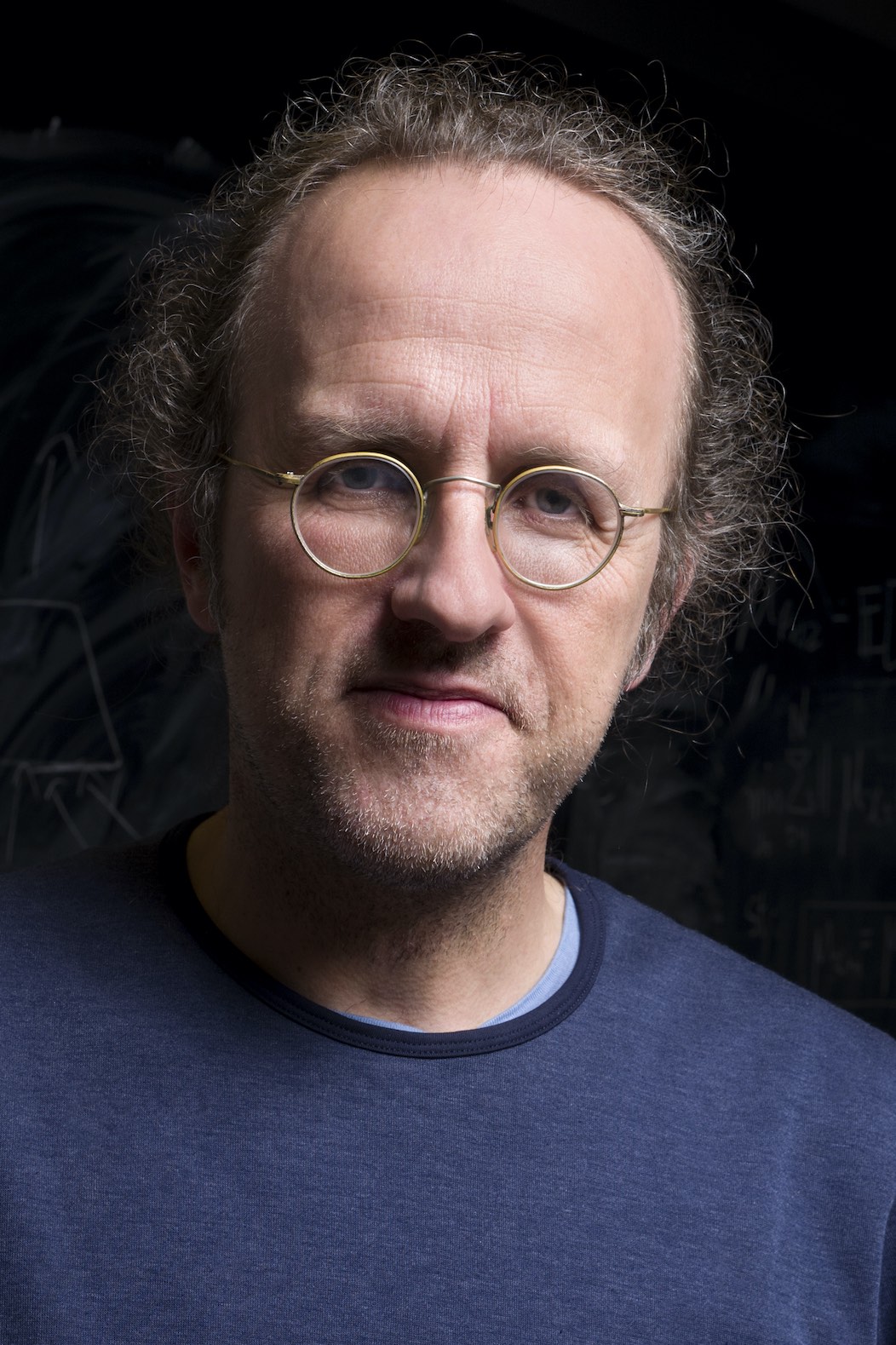 Bernhard Schölkopf合作论文数Department of Computer Science, Eidgenössische Technische Hochschule Zürich;Max Planck Institute for Intelligent Systems;ELLIS Institute Tubingen5
 Zheng Zhang合作论文数Center for Data Science and Artificial Intelligence, New York University Shanghai;Department of Computer Science, Courant Institute of Mathematical Sciences;Center for Data Science, New York University4
 Tianjun Xiao合作论文数NVIDIA4
 Michal Rolinek合作论文数Max Planck Institute for Intelligent Systems;G-Research4
 Tong He (何通)合作论文数Shanghai AI Lab, Amazon Web Services4
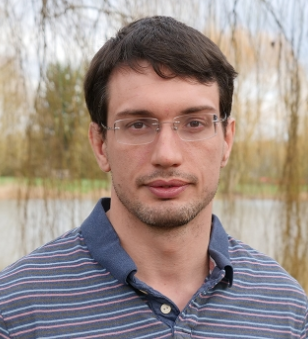 Chris Russell合作论文数Oxford Internet Institute, University of Oxford4
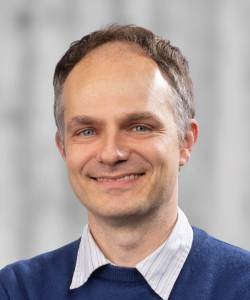 Thomas Brox合作论文数Department of Computer Science, Faculty of Engineering, University of Freiburg4
 Bernt Schiele合作论文数Max Planck Institute for Informatics;Saarland University3
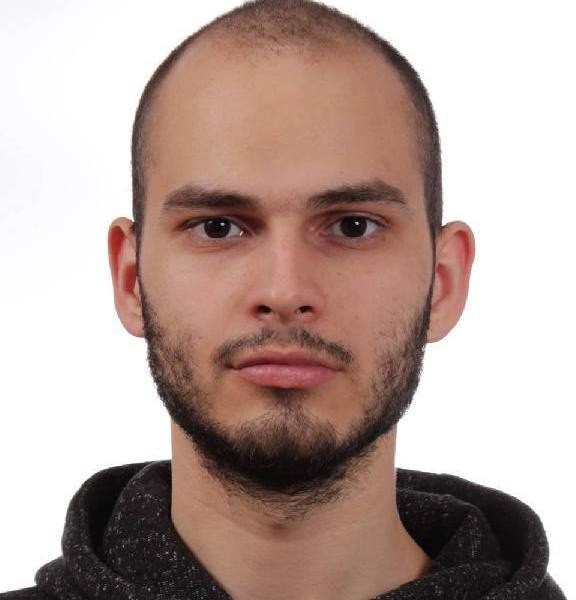 Andrii Zadaianchuk合作论文数Max Planck ETH Center for Learning Systems, ETH Zürich2
 Federico Carollo合作论文数Institut für Theoretische Physik, Universität Tübingen2
 Zechen Bai (白泽琛)合作论文数Show Lab, National University of Singapore2
 Zixu Zhao合作论文数Amazon Web Service2
 Florian Wenzel合作论文数Amazon AWS AI2
 Yanwei Fu (付彦伟)合作论文数School of Date Science, Fudan University2Sabine Andergassen合作论文数Institut2
 Igor Lesanovsky合作论文数School of Physics & Astronomy, University of Nottingham;Institute for Theoretical Physics, University of Tübingen2
 Matthias Kling合作论文数Department of Energy Sciences, Stanford University;SLAC National Accelerator Laboratory2Yizhuo Ding合作论文数1
 Anselm Paulus合作论文数Department of Computer Science, Faculty of Science, University of Tuebingen;Max-Planck-Institute for Intelligent Systems1Xiaochen Hu合作论文数1Ke Fan合作论文数Fudan University;Institute of Atmospheric Physics1Seongjin Ahn合作论文数1
 Mike Z. Shou合作论文数Show Lab, Department of Electrical & Computer Engineering, National University of Singapore1Francesco Carnazza合作论文数1
 Jack Henry Brady合作论文数Max Planck Institute for Intelligent Systems1Jochen Scheffold合作论文数1
 Paolo P. Mazza合作论文数Inst Theoret Phys, Eberhard Karls Univ Tubingen1
 Max F. Burg合作论文数Max Planck Research School for Intelligent Systems;Georg-August-Universität Göttingen1
 Patrik Reizinger合作论文数University of Tübingen;International Max Planck Research School for Intelligent Systems1David Kernert合作论文数Germany/Technische Universität Dresden, resden University of Technology1
 Lennart Seiffert合作论文数Institut für Physik, Universität Rostock1Annika Schlander合作论文数1Michael Lohaus合作论文数1
 Philipp Rupp合作论文数Ludwig Maximilians Univ Munchen, Phys Dept, D-85748 Garching, Germany1
 Jiaze Wang合作论文数Dept Comp Sci & Engn, Chinese Univ Hong Kong1Philipp Rosenberger合作论文数Ludwig Maximilians Univ Munchen, Dept Phys, D-85748 Garching, Germany1
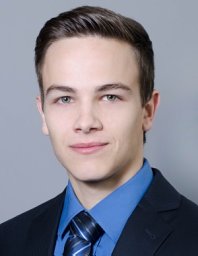 Stefan Kehrer合作论文数Reutlingen University1
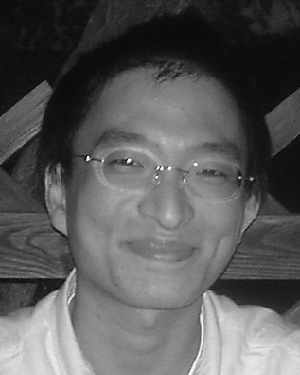 Nobuhisa Ishii合作论文数1
 Paul Swoboda合作论文数Math.-Nat. Fakultät, Heinrich-Heine Universität Düsseldorf1
 Luigi Gresele合作论文数Copenhagen Causality Lab, Department of Mathematical Sciences, Faculty of Science, University of Copenhagen1Alexander Kessel合作论文数1
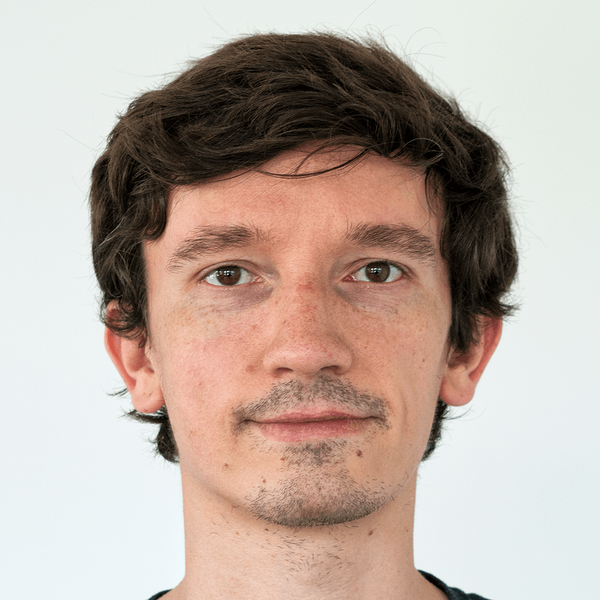 Wieland Brendel合作论文数Max-Planck-Institut für Intelligente Systeme;Layer7 AI;University Tübingen1
 Bing Shuai合作论文数Amazon Web Services1
 Partha Pratim Ghosh合作论文数Teachers Training Res Mech Engn Dept, Natl Inst Tech1
 Markus Gallei合作论文数Ernst Berl Inst Tech & Makromol Chem, Tech Univ Darmstadt1




