Objective Mannitol-poly(D,L-lactide-co-glycolide) (M-PLGA),a star-shaped biodegradable polymer,was synthesized with the intent in this research,to provide novel nanoformulation for cervical cancer chemotherapy.Methods The novel star-shaped copolymer was prepared by ring-opening polymerization,and characterized by NMR.The docetaxel-loaded M-PLGA nanoparticles,prepared by modified nano-precipitation method,were observed to be near-spherical shape with narrow size distribution.Results The CLSM results showed the uptake level of M-PLGA NPs was higher than PLGA NPs in Hela cells.A significantly higher level of cytotoxicity was achieved by docetaxel-loaded M-PLGA NPs than that of commercial Taxotere and docetaxel-loaded PLGA NPs,indicating that the star-shaped biodegradable polymer M-PLGA could be superior to the linear polymer PLGA as a drug carrier.The study on drug loading and encapsulation efficiency also proved that star-shaped M-PLGA could carry higher level of drug than linear polymer,therefore could be more efficient for cancer treatment.Conclusions In conclusion,the star-shaped M-PLGA copolymer may be used as a potential and promising drug-loaded biomaterial applied in developing novel nanoformulations for cervical cancer therapy.
旨在制作TGF-β二型受体结合蛋白TRIP-1的抗体,以便推进对该蛋白在TGF-β信号通路以及癌症发生发展中的功能研究。首先克隆出人的TRIP-1基因,构建其原核重组表达载体pET-His-TRIP-1,将其转化至大肠杆菌BL21(DE3)中,诱导获得TRIP-1蛋白,纯化后将其分别免疫新西兰大耳兔和昆明小鼠(KM),免疫4次后取血清,并对抗血清进行效价和亲和力测定。通过Western blot和免疫荧光试验鉴定抗血清特异性。最后,利用proteinG初步纯化抗血清。结果表明,通过重组表达获得抗原蛋白,纯化后免疫新西兰大耳兔和昆明鼠可得到效价较高的抗TRIP-1的多克隆抗体,在稀释倍数较高的情况下仍可以用于Westernblot和免疫荧光试验,且有非常好的特异性。
Nanoparticles of biodegradable polymers (NPs) have been widely used for drug delivery. However, there has been little research on their fate after internalized into the cells. We show in this research by using docetaxel as a model anticancer drug, which is formulated in the cholic acid conjugated nanoparticles of poly(lactic-co-glycolic acid (PLGA NPs) that the NPs induce autophagy of the cancer cells and thus may hinder the advantages of the nanomedicine. Moreover, we show both in vitro and in vivo that co-administration of autophagy inhibitors such as 3-methyladenine (3-MA) and Chloroquine (CQ) could greatly enhance the therapeutic effects of the nanoparticle formulation. The IC50 values of the drug formulated in the PLGA NPs after 24 h treatment with no autophagy inhibitor or in combination with 10 mm 3-MA or 30 μm CQ are 38.27 ± 1.23, 6.7 ± 1.05, 4.78 ± 1.75 μg/mL, which implie 5.7 or 8,0 fold efficient by the autophagy inhibition respectively. Moreover, both the volume and the weight of the shrunk tumor of the mice after 20 day treatment with the PLGA NPs formulation combined with 3-MA or CQ are found to be only about a half in comparison with the treatment with the PLGA NPs formulation alone. In this research, we reported such a new mechanism of cancer cells to have PLGA NPs captured and degraded by auto-lysosomes. The findings provide advanced knowledge for development of nanomedicine for clinical application.
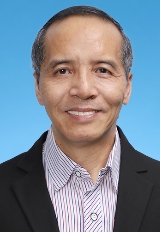 Laiqiang Huang (黄来强)合作论文数Tsinghua Shenzhen Intemational Graduate School2
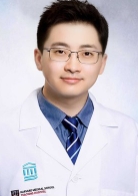 Wei Tao合作论文数Gillian Reny Stepping Strong Center for Trauma Innovation, Brigham and Women’s Hospital, Harvard Medical School;Center for Nanomedicine, Brigham and Women’s Hospital;Department of Anesthesiology, Perioperative, and Pain Medicine, Faculty of Medicine, Harvard University1
 Jinxie Zhang合作论文数1xinsheng zhang (张新胜)合作论文数1Yongfeng Gao (高永峰)合作论文数1
 Xiaoming Li (李晓明)合作论文数School of Materials Science and Engineering, Nanjing University of Science and Technology1HongLing Zhang (张宏玲)合作论文数1
 Jun Wan合作论文数Department of Cell and Regenerative Biology, University of Wisconsin;Physiology Training Program, University of Wisconsin;University of Wisconsin, University of Wisconsin1
 Cao Wei合作论文数Key Lab of Organic Optoelectronics and Molecular Engineering, Tsinghua University1
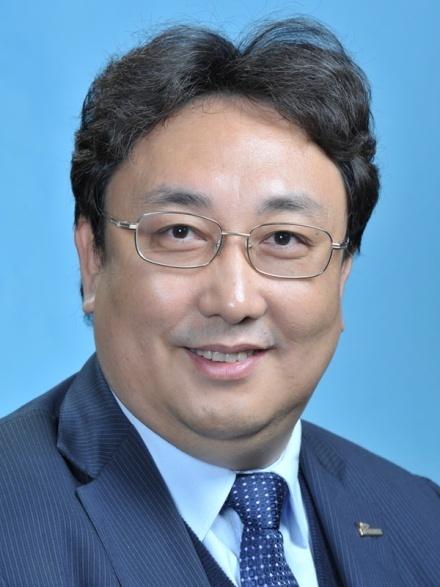 Yuyang Jiang (蒋宇扬)合作论文数School of Pharmaceutical Sciences, Tsinghua University;Department of Chemistry, Tsinghua University;School of Medicine, Tsinghua University;Tsinghua Shenzhen International Graduate School1
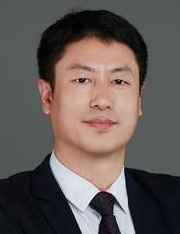 Hongbo Chen (陈红波)合作论文数School of Pharmaceutical Sciences (Shenzhen), Sun Yat-sen University1
 Xin Liang (梁欣)合作论文数School of Basic Medical Sciences of Guangdong Medical University1
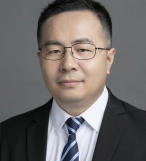 Xudong Zhang (张旭东)合作论文数School of Medicine, Sun Yat-sen University1
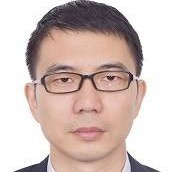 Lin Mei (梅林)合作论文数School of Pharmaceutical Sciences (Shenzhen), Sun Yat-sen University1
 Sishen Feng (冯思慎)合作论文数Department of Chemical and Biomolecular Engineering, College of Design and Engineering, National University of Singapore1
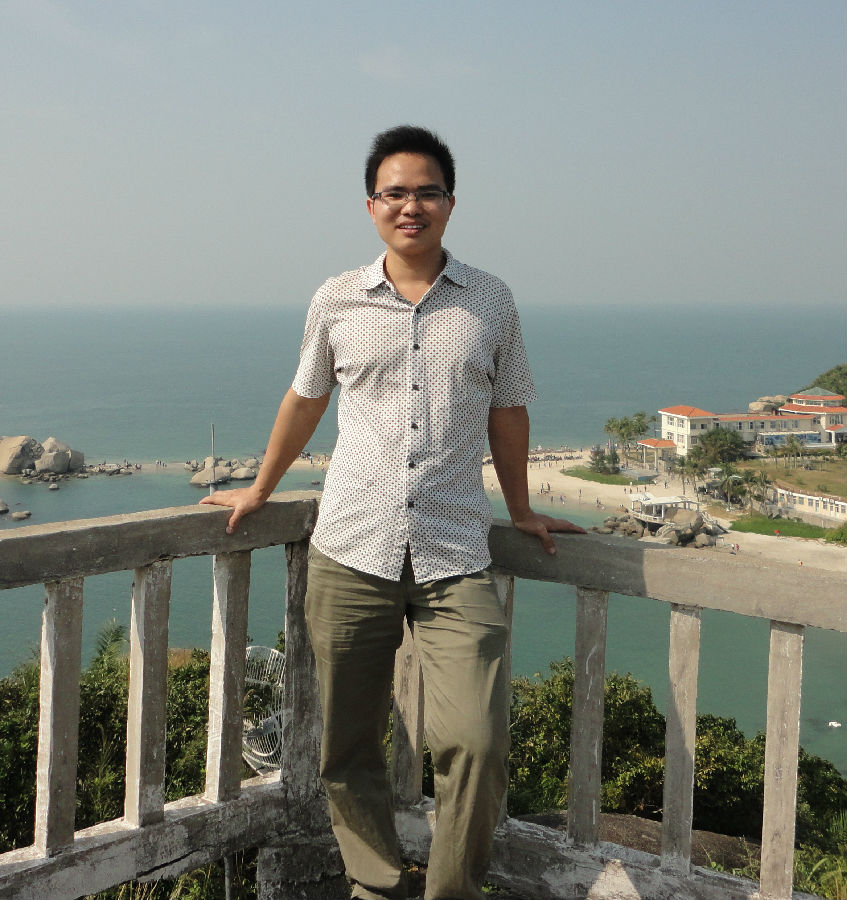 Xiaowei Zeng (曾小伟)合作论文数清华大学深圳研究生院1




