Diffusion models can feel like a jungle of acronyms, but the core idea is simple: start from noise and gradually move a cloud of samples until it looks like real data. This post gives an intuition-first tour showing that DDPMs, score-based models, and flow matching are the same recipe with different prediction targets, all rooted in the change-of-variable rule from calculus and powered by one shared “conditional trick” that turns learning into supervised regression. Finally, we zoom out to the speed problem and show how flow map models aim to replace many tiny denoising steps with a few big, accurate jumps toward real-time generation.
Controllable generation through Stable Diffusion (SD) fine-tuning aims to improve fidelity, safety, and alignment with human guidance. Existing reinforcement learning from human feedback methods usually rely on predefined heuristic reward functions or pretrained reward models built on large-scale datasets, limiting their applicability to scenarios where collecting such data is costly or difficult. To effectively and efficiently utilize human feedback, we develop a framework, HERO, which leverages online human feedback collected on the fly during model learning. Specifically, HERO features two key mechanisms: (1) Feedback-Aligned Representation Learning, an online training method that captures human feedback and provides informative learning signals for fine-tuning, and (2) Feedback-Guided Image Generation, which involves generating images from SD's refined initialization samples, enabling faster convergence towards the evaluator's intent. We demonstrate that HERO is 4x more efficient in online feedback for body part anomaly correction compared to the best existing method. Additionally, experiments show that HERO can effectively handle tasks like reasoning, counting, personalization, and reducing NSFW content with only 0.5K online feedback. The code and project page are available at [https://hero-dm.github.io/](https://hero-dm.github.io/).
Sound content creation, essential for multimedia works such as video games and films, often involves extensive trial-and-error, enabling creators to semantically reflect their artistic ideas and inspirations, which evolve throughout the creation process, into the sound. Recent high-quality diffusion-based Text-to-Sound (T2S) generative models provide valuable tools for creators. However, these models often suffer from slow inference speeds, imposing an undesirable burden that hinders the trial-and-error process. While existing T2S distillation models address this limitation through 1-step generation, the sample quality of 1-step generation remains insufficient for production use. Additionally, while multi-step sampling in those distillation models improves sample quality itself, the semantic content changes due to their lack of deterministic sampling capabilities. To address these issues, we introduce Sound Consistency Trajectory Models (SoundCTM), which allow flexible transitions between high-quality 1-step sound generation and superior sound quality through multi-step deterministic sampling. This allows creators to efficiently conduct trial-and-error with 1-step generation to semantically align samples with their intention, and subsequently refine sample quality with preserving semantic content through deterministic multi-step sampling. To develop SoundCTM, we reframe the CTM training framework, originally proposed in computer vision, and introduce a novel feature distance using the teacher network for a distillation loss. For production-level generation, we scale up our model to 1B trainable parameters, making SoundCTM-DiT-1B the first large-scale distillation model in the sound community to achieve both promising high-quality 1-step and multi-step full-band (44.1kHz) generation.
Our understanding of the temporal dynamics of the Earth's surface has been significantly advanced by deep vision models, which often require a massive amount of labeled multi-temporal images for training. However, collecting, preprocessing, and annotating multi-temporal remote sensing images at scale is non-trivial since it is expensive and knowledge-intensive. In this paper, we present scalable multi-temporal change data generators based on generative models, which are cheap and automatic, alleviating these data problems. Our main idea is to simulate a stochastic change process over time. We describe the stochastic change process as a probabilistic graphical model, namely the generative probabilistic change model (GPCM), which factorizes the complex simulation problem into two more tractable sub-problems, i.e., condition-level change event simulation and image-level semantic change synthesis. To solve these two problems, we present Changen2, a GPCM implemented with a resolution-scalable diffusion transformer which can generate time series of remote sensing images and corresponding semantic and change labels from labeled and even unlabeled single-temporal images. Changen2 is a "generative change foundation model" that can be trained at scale via self-supervision, and is capable of producing change supervisory signals from unlabeled single-temporal images. Unlike existing "foundation models", our generative change foundation model synthesizes change data to train task-specific foundation models for change detection. The resulting model possesses inherent zero-shot change detection capabilities and excellent transferability. Comprehensive experiments suggest Changen2 has superior spatiotemporal scalability in data generation, e.g., Changen2 model trained on 256 pixel single-temporal images can yield time series of any length and resolutions of 1,024 pixels. Changen2 pre-trained models exhibit superior zero-shot performance (narrowing the performance gap to 3% on LEVIR-CD and approximately 10% on both S2Looking and SECOND, compared to fully supervised counterpart) and transferability across multiple types of change tasks, including ordinary and off-nadir building change, land-use/land-cover change, and disaster assessment.
Designing model architectures requires decisions such as selecting operators (e.g., attention, convolution) and configurations (e.g., depth, width). However, evaluating the impact of these decisions on model quality requires costly pretraining, limiting architectural investigation. Inspired by how new software is built on existing code, we ask: can new architecture designs be studied using pretrained models? To this end, we present *grafting*, a simple approach for editing pretrained diffusion transformers (DiTs) to materialize new architectures under small compute budgets. Informed by our analysis of activation behavior and attention locality, we construct a testbed based on the DiT-XL/2 design to study the impact of grafting on model quality. Using this testbed, we develop a family of hybrid designs via grafting: replacing softmax attention with gated convolution, local attention, and linear attention, and replacing MLPs with variable expansion ratio and convolutional variants. Notably, many hybrid designs achieve good quality (FID: 2.38–2.64 vs. 2.27 for DiT-XL/2) using $<2$% pretraining compute. We then graft a text-to-image model (PixArt-$\Sigma$), achieving a 1.43$\times$ speedup with less than a 2% drop in GenEval score. Finally, we present a case study that restructures DiT-XL/2 by converting every pair of sequential transformer blocks into parallel blocks via grafting. This reduces model depth by 2$\times$ and yields better quality (FID: 2.77) than other models of comparable depth. Together, we show that new diffusion model designs can be explored by grafting pretrained DiTs, with edits ranging from operator replacement to architecture restructuring. Code and grafted models: https://grafting.stanford.edu.
This paper presents a novel approach to posterior inference on simulation input parameters that can effectively address the challenge of multi-modality. As simulations become more complex, accounting for the possibility of a multi-modal posterior distribution is crucial. However, traditional posterior inference methods often fall short; their loss functions are structured such that once the simulation outcome approximates the real-world observation, further exploration ceases, leading to a local optimum and a mode-collapsed posterior distribution. To overcome this challenge, we propose a new approach, namely Sequential Neural Joint Estimation, which integrates two significant research directions to enforce further model exploration by maximizing the newly added mutual information loss. Experimental results demonstrate that the proposed approach performs better in multi-modal posteriors, making it a promising method for handling complex simulations that require accurate posterior inference.
This monograph presents the core principles that have guided the development of diffusion models, tracing their origins and showing how diverse formulations arise from shared mathematical ideas. Diffusion modeling starts by defining a forward process that gradually corrupts data into noise, linking the data distribution to a simple prior through a continuum of intermediate distributions. The goal is to learn a reverse process that transforms noise back into data while recovering the same intermediates. We describe three complementary views. The variational view, inspired by variational autoencoders, sees diffusion as learning to remove noise step by step. The score-based view, rooted in energy-based modeling, learns the gradient of the evolving data distribution, indicating how to nudge samples toward more likely regions. The flow-based view, related to normalizing flows, treats generation as following a smooth path that moves samples from noise to data under a learned velocity field. These perspectives share a common backbone: a time-dependent velocity field whose flow transports a simple prior to the data. Sampling then amounts to solving a differential equation that evolves noise into data along a continuous trajectory. On this foundation, the monograph discusses guidance for controllable generation, efficient numerical solvers, and diffusion-motivated flow-map models that learn direct mappings between arbitrary times. It provides a conceptual and mathematically grounded understanding of diffusion models for readers with basic deep-learning knowledge.
There is growing concern over the safety of powerful diffusion models, as they are often misused to produce inappropriate, not-safe-for-work content or generate copyrighted material or data of individuals who wish to be forgotten. Many existing methods tackle these issues by heavily relying on text-based negative prompts or retraining the model to eliminate certain features or samples. In this paper, we take a radically different approach, directly modifying the sampling trajectory by leveraging a negation set (e.g., unsafe images, copyrighted data, or private data) to avoid specific regions of data distribution, without needing to retrain or fine-tune the model. We formally derive the relationship between the expected denoised samples that are safe and those that are unsafe, leading to our *safe* denoiser, which ensures its final samples are away from the area to be negated. We achieve state-of-the-art safety performance in large-scale datasets such as the CoPro dataset while also enabling significantly more cost-effective sampling than existing methodologies.
Despite the recent advancements, conditional image generation still faces challenges of cost, generalizability, and the need for task-specific training. In this paper, we propose Manifold Preserving Guided Diffusion (MPGD), a training-free conditional generation framework that leverages pretrained diffusion models and off-the-shelf neural networks with minimal additional inference cost for a broad range of tasks. Specifically, we leverage the manifold hypothesis to refine the guided diffusion steps and introduce a shortcut algorithm in the process. We then propose two methods for on-manifold training-free guidance using pre-trained autoencoders and demonstrate that our shortcut inherently preserves the manifolds when applied to latent diffusion models. Our experiments show that MPGD is efficient and effective for solving a variety of conditional generation applications in low-compute settings, and can consistently offer up to 3.8x speed-ups with the same number of diffusion steps while maintaining high sample quality compared to the baselines.
Consistency Models (CM) (Song et al., 2023) accelerate score-based diffusion model sampling at the cost of sample quality but lack a natural way to trade-off quality for speed. To address this limitation, we propose Consistency Trajectory Model (CTM), a generalization encompassing CM and score-based models as special cases. CTM trains a single neural network that can -- in a single forward pass -- output scores (i.e., gradients of log-density) and enables unrestricted traversal between any initial and final time along the Probability Flow Ordinary Differential Equation (ODE) in a diffusion process. CTM enables the efficient combination of adversarial training and denoising score matching loss to enhance performance and achieves new state-of-the-art FIDs for single-step diffusion model sampling on CIFAR-10 (FID 1.73) and ImageNet at 64x64 resolution (FID 1.92). CTM also enables a new family of sampling schemes, both deterministic and stochastic, involving long jumps along the ODE solution trajectories. It consistently improves sample quality as computational budgets increase, avoiding the degradation seen in CM. Furthermore, unlike CM, CTM's access to the score function can streamline the adoption of established controllable/conditional generation methods from the diffusion community. This access also enables the computation of likelihood. The code is available at https://github.com/sony/ctm.
With significant advancements in diffusion models, addressing the potential risks of dataset bias becomes increasingly important. Since generated outputs directly suffer from dataset bias, mitigating latent bias becomes a key factor in improving sample quality and proportion. This paper proposes time-dependent importance reweighting to mitigate the bias for the diffusion models. We demonstrate that the time-dependent density ratio becomes more precise than previous approaches, thereby minimizing error propagation in generative learning. While directly applying it to score-matching is intractable, we discover that using the time-dependent density ratio both for reweighting and score correction can lead to a tractable form of the objective function to regenerate the unbiased data density. Furthermore, we theoretically establish a connection with traditional score-matching, and we demonstrate its convergence to an unbiased distribution. The experimental evidence supports the usefulness of the proposed method, which outperforms baselines including time-independent importance reweighting on CIFAR-10, CIFAR-100, FFHQ, and CelebA with various bias settings. Our code is available at https://github.com/alsdudrla10/TIW-DSM.
In this paper, we introduce a new class of score-based generative models (SGMs) designed to handle high-cardinality data distributions by leveraging concepts from mean-field theory. We present mean-field chaos diffusion models (MF-CDMs), which address the curse of dimensionality inherent in high-cardinality data by utilizing the propagation of chaos property of interacting particles. By treating high-cardinality data as a large stochastic system of interacting particles, we develop a novel score-matching method for infinite-dimensional chaotic particle systems and propose an approximation scheme that employs a subdivision strategy for efficient training. Our theoretical and empirical results demonstrate the scalability and effectiveness of MF-CDMs for managing large high-cardinality data structures, such as 3D point clouds.
The diffusion model performs remarkable in generating high-dimensional content but is computationally intensive, especially during training. We propose Progressive Growing of Diffusion Autoencoder (PaGoDA), a novel pipeline that reduces the training costs through three stages: training diffusion on downsampled data, distilling the pretrained diffusion, and progressive super-resolution. With the proposed pipeline, PaGoDA achieves a $64\times$ reduced cost in training its diffusion model on $8\times$ downsampled data; while at the inference, with the single-step, it performs state-of-the-art on ImageNet across all resolutions from $64\times64$ to $512\times512$, and text-to-image. PaGoDA's pipeline can be applied directly in the latent space, adding compression alongside the pre-trained autoencoder in Latent Diffusion Models (e.g., Stable Diffusion). The code is available at https://github.com/sony/pagoda.
The proposed method, Discriminator Guidance , aims to improve sample generation of pre-trained diffusion models. The approach introduces a discriminator that gives explicit supervision to a denoising sample path whether it is realistic or not. Unlike GANs, our approach does not require joint training of score and discriminator networks. Instead, we train the discriminator after score training, making discriminator training stable and fast to converge. In sample generation, we add an auxiliary term to the pre-trained score to deceive the discriminator. This term corrects the model score to the data score at the optimal discriminator, which implies that the discriminator helps better score estimation in a complementary way. Using our algorithm, we achive state-of-the-art results on ImageNet 256x256 with FID 1.83 and recall 0.64, similar to the validation data's FID (1.68) and recall (0.66). We release the code at https://github.com/alsdudrla10/DG.
Bayesian inference without the likelihood evaluation, or likelihood-free inference, has been a key research topic in simulation studies for gaining quantitatively validated simulation models on real-world datasets. As the likelihood evaluation is inaccessible, previous papers train the amortized neural network to estimate the ground-truth posterior for the simulation of interest. Training the network and accumulating the dataset alternatively in a sequential manner could save the total simulation budget by orders of magnitude. In the data accumulation phase, the new simulation inputs are chosen within a portion of the total simulation budget to accumulate upon the collected dataset. This newly accumulated data degenerates because the set of simulation inputs is hardly mixed, and this degenerated data collection process ruins the posterior inference. This paper introduces a new sampling approach, called Neural Proposal (NP), of the simulation input that resolves the biased data collection as it guarantees the i.i.d. sampling. The experiments show the improved performance of our sampler, especially for the simulations with multi-modal posteriors.
Recent advances in diffusion models bring the state-of-the art performance on image generation tasks. However, the image generation is still an arduous task in high resolution, both theoretically and practically. From the theory side, the difficulty arises in estimating the high precision diffusion because the data score goes to $\infty$ as $t \rightarrow 0$ of the diffusion time. This paper resolves this difficulty by improving the previous diffusion models from three aspects. First, we propose an alternative parameterization for such unbounded data score, which theoretically enables the unbounded score estimation. Second, we provide a practical soft truncation method (ST-trick) to handle the extreme variation of the score scales. Third, we design a reciprocal variance exploding stochastic differential equation (RVESDE) to enable the sampling at the high precision of $t$. These three improvements are applicable to the variations of both NCSN and DDPM, and our improved versions are named as HNCSN and HDDPM, respectively. The experiments show that the improvements result in the state-of-the-art performances in the high resolution image generation, i.e. CelebA-HQ. Also, our ablation study empirically illustrates that all of alternative parameterization, ST-trick, and RVESDE contributes to the performance enhancement.
Whereas diverse variations of diffusion models exist, extending the linear diffusion into a nonlinear diffusion process is investigated by very few works. The nonlinearity effect has been hardly understood, but intuitively, there would be promising diffusion patterns to efficiently train the generative distribution towards the data distribution. This paper introduces a data-adaptive nonlinear diffusion process for score-based diffusion models. The proposed Implicit Nonlinear Diffusion Model (INDM) learns by combining a normalizing flow and a diffusion process. Specifically, INDM implicitly constructs a nonlinear diffusion on the data space by leveraging a linear diffusion on the latent space through a flow network. This flow network is key to forming a nonlinear diffusion, as the nonlinearity depends on the flow network. This flexible nonlinearity improves the learning curve of INDM to nearly Maximum Likelihood Estimation (MLE) against the non-MLE curve of DDPM++, which turns out to be an inflexible version of INDM with the flow fixed as an identity mapping. Also, the discretization of INDM shows the sampling robustness. In experiments, INDM achieves the state-of-the-art FID of 1.75 on CelebA. We release our code at https://github.com/byeonghu-na/INDM.
Recent advances in diffusion models bring state-of-the-art performance on image generation tasks. However, empirical results from previous research in diffusion models imply an inverse correlation between density estimation and sample generation performances. This paper investigates with sufficient empirical evidence that such inverse correlation happens because density estimation is significantly contributed by small diffusion time, whereas sample generation mainly depends on large diffusion time. However, training a score network well across the entire diffusion time is demanding because the loss scale is significantly imbalanced at each diffusion time. For successful training, therefore, we introduce Soft Truncation, a universally applicable training technique for diffusion models, that softens the fixed and static truncation hyperparameter into a random variable. In experiments, Soft Truncation achieves state-of-the-art performance on CIFAR-10, CelebA, CelebA-HQ 256x256, and STL-10 datasets.
From the viewpoint of urban administration, simulation is regarded as a policy tool that provides administrators with information about the current urban situation and enables them to verify the effectiveness of urban policies. This study proposes a traffic simulation model for a real city named Sejong in South Korea. Our proposed model employs agent-based simulation with the city-level real data, which mainly focuses on describing the movement behavior of individuals using urban traffics in the real city. By aggregating the agents' decisions and interactions during the movement, the proposed model can discover a demand for the city's transportation system. To do this, this study validated the proposed model so that the modeled traffic system was similar to the real one, and then we conducted a case study to compare and analyze the effects of traffic dispersion led by the upcoming bridge construction in the real city. The case study showed that the proposed model can provide policy evaluation on the optimal location of the bridge construction considering the city traffic flow. Furthermore, the case study presented that the agent-based modeling enables micro-level analysis on the city traffic flow to understand on the policy implications.
 Il-Chul Moon合作论文数Department of Aerospace Engineering, College of Engineering, Korea Advanced Institute of Science and Technology18
 Wanmo Kang合作论文数Department of Mathematical Sciences, Korea Advanced Institute of Science and Technology12
 Kyungwoo Song合作论文数9
 Seungjae Shin合作论文数Applied Artificial Intelligence Lab, Department of Industrial and Systems Engineering, Korea Advanced Institute of Science and Technology8
 Stefano Ermon合作论文数Department of Computer Science, Stanford University;Woods Institute for the Environment, Stanford University;Inception7
 Yuki Mitsufuji合作论文数Sony Corporation7
 Chieh-Hsin (Jesse) Lai (賴杰昕)合作论文数SonyAI6
 Weonyoung Joo合作论文数KAIST5
 Yon-Do Chun合作论文数5
 Pil-Wan Han合作论文数5
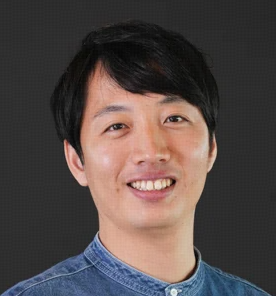 Naoki Murata合作论文数Tokyo Laboratory 20, Sony Group Corporation4
 Byeonghu Na合作论文数Institute for Robotics, Korea Advanced Institute of Science and Technology4Jae-Hak Choi合作论文数4
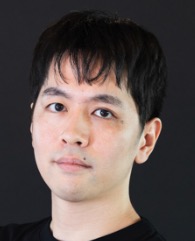 Yuhta Takida合作论文数Sony AI4
 Jang Won Bae合作论文数Korea Advanced Institute of Science of Technology4
 Se Jung Kwon合作论文数NAVER Cloud4Wei-Hsiang Liao合作论文数3Tae-Sub Yun合作论文数Korea Adv Inst Sci & Technol3Toshimitsu Uesaka合作论文数Sony Group Corporation1-7-1 KōnanMinato-kuTokyo108-0075Japan3
 Dae-Hyun Koo合作论文数3
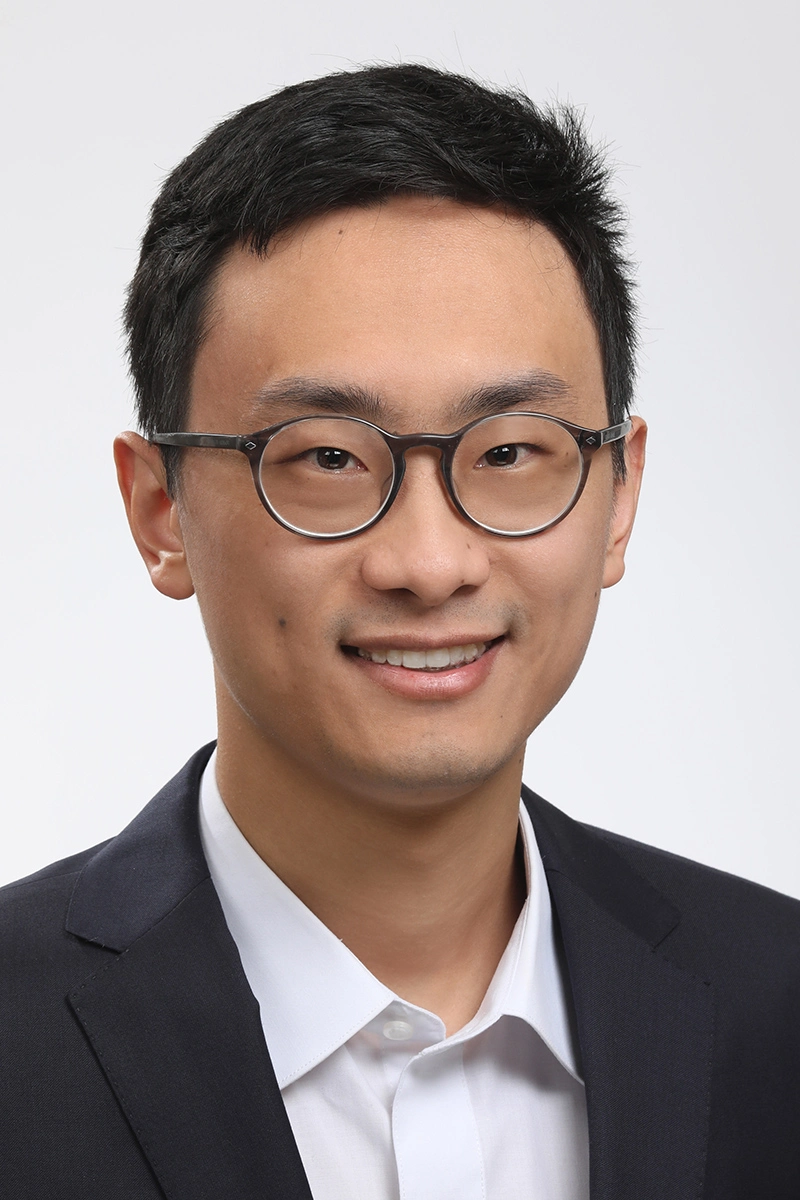 Yang Song (宋飏)合作论文数2
 Yeongmin Kim合作论文数2
 Un-Jae Seo合作论文数Elect Motor Res Ctr, Korea Electrotechnol Res Inst2
 Takashi Shibuya合作论文数The University of Tokyo2
 Yutong (Kelly) He (何雨桐)合作论文数Machine Learning Department, School of Computer Science, Carnegie Mellon University2
 Dongsoo Lee合作论文数Naver Cloud2Yohan Jung合作论文数1Amman Yusuf合作论文数1Li Fei-Fei合作论文数1Juan Carlos Niebles合作论文数1Azalia Mirhoseini合作论文数1Stefano Massaroli合作论文数1Manling Li合作论文数1Lea M. Hadzic合作论文数1Daniel Y Fu合作论文数1
 Ayano Hiranaka合作论文数University of Southern California1shi uk chung合作论文数1Yongjin Shin合作论文数1
 Minsang Park合作论文数Applied Artificial Intelligence Laboratory, Department of Industrial and Systems Engineering, Korea Advanced Institute of Science and Technology1
 Hyon Seok Song合作论文数1jeongwoo sohn合作论文数1
 Jonghyun Lee合作论文数1
 Seung-Hyun Kim合作论文数1
 JoonHo Jang合作论文数Applied Artificial Intelligence Laboratory, Department of Industrial and Systems Engineering, Korea Advanced Institute of Science and Technology1
 Seok-Hwan Moon合作论文数1Koichi Saito合作论文数1
 Yoon-Yeong Kim合作论文数Applied Artificial Intelligence Laboratory, Department of Industrial and Systems Engineering, Korea Advanced Institute of Science and Technology1




