The BaBar detector operated successfully at the PEP-II asymmetric e+e− collider at the SLAC National Accelerator Laboratory from 1999 to 2008. This report covers upgrades, operation, and performance of the collider and the detector systems, as well as the trigger, online and offline computing, and aspects of event reconstruction since the beginning of data taking.
Using a data sample corresponding to an integrated luminosity of 342 fb(-1) collected with the BABAR detector at the SLAC PEP-II electron-positron storage ring operating at a center-of-mass energy near 10.58 GeV, we measure B(tau(-)--> pi(-)pi(-)pi+nu(tau)(ex.K(S0))=(8.83+/-0.01+/-0.13)%, B(tau(-) -->K(-)pi(-)pi+nu tau(ex.K(S0))=(0.273+/-0.002+/-0.009)%, B(tau(-) -->K(-)pi(-)K+nu tau)=(0.1346+/-0.0010+/-0.0036)%, and B(tau(-) -->K(-)K(-)K+nu tau)=(1.58+/-0.13+/-0.12)x10;{-5}, where the uncertainties are statistical and systematic, respectively. These include significant improvements over previous measurements and a first measurement of B(tau(-) -->K(-)K(-)K+nu tau) in which no resonance structure is assumed. We also report a first measurement of B(tau(-) -->var phi(-)nu tau)=(3.42+/-0.55+/-0.25)x10(-5), a new measurement of B(tau(-) -->var phi K(-)nu tau)=(3.39+/-0.20+/-0.28)x10(-5) and a first upper limit on B(tau(-) -->K(-)K(-)K+nu tau(ex.var phi)).
Using a data sample corresponding to an integrated luminosity of 342 fb−1 collected with the BABAR detector at the SLAC PEP-II electron-positron storage ring operating at a center-of-mass energy near 10.58 GeV, we measure B(τ−→π−π−π+ντ(ex.KS0))=(8.83±0.01±0.13)%, B(τ−→K−π−π+ντ(ex.KS0))=(0.273±0.002±0.009)%, B(τ−→K−π−K+ντ)=(0.1346±0.0010±0.0036)%, and B(τ−→K−K−K+ντ)=(1.58±0.13±0.12)×10−5, where the uncertainties are statistical and systematic, respectively. These include significant improvements over previous measurements and a first measurement of B(τ−→K−K−K+ντ) in which no resonance structure is assumed. We also report a first measurement of B(τ−→ϕπ−ντ)=(3.42±0.55±0.25)×10−5, a new measurement of B(τ−→ϕK−ντ)=(3.39±0.20±0.28)×10−5 and a first upper limit on B(τ−→K−K−K+ντ(ex.ϕ)).Received 19 July 2007DOI:https://doi.org/10.1103/PhysRevLett.100.011801©2008 American Physical Society
The CLEO detector at the CESR collider has used 13.7 fb to search for the production of Ω0c (css-ground state) in e e collisions at √ s ≃ 10.6 GeV. The modes used to study the Ω0c are Ω π, Ωππ, ΞKππ, ΞKπ, and Ωπππ. We observe 40.4 ± 9.0(stat) combined events at a mass of 2694.6 ± 2.6(stat) ± 2.4(syst) MeV/c. We have also measured the σ · Br of the above modes for scaled momentum xp > 0.5 to be 11.3 ± 3.9 ± 2.3 fb, 47.6 ± 18.0 ± 2.8 fb, 45.1 ± 23.2 ± 4.1 fb, 18.2 ± 10.6 ± 3.8 fb, and < 5.1 fb @ 90 % CL, respectively. The results described here are all preliminary. . . . . . . . . . . . . . . . . . . . . . . . . . . . . . . . . . . . . . . . . . . . . . . . . . . . . . . . . . . . . . . . . . . . . . . . . . . . . . . . . . . . . . . . . . . . Submitted to XXXth International Conference on High Energy Physics, July 2000, Osaka, Japan
We present measurements of the time-dependent CP -violation parameters S and C in B 0 ! (cid:1) 0 K 0 decays. The data sample corresponds to 384 (cid:1) 10 6 B (cid:1) B pairs produced by e (cid:2) e (cid:3) annihilation at the (cid:2) (cid:4) 4 S (cid:5) . The results are S (cid:6) 0 : 58 (cid:7) 0 : 10 (cid:7) 0 : 03 and C (cid:6) (cid:3) 0 : 16 (cid:7) 0 : 07 (cid:7) 0 : 03 . We observe mixing-induced CP violation with a significance of 5.5 standard deviations in this b ! s penguin dominated mode.
We present a measurement of the time-dependent CP asymmetry for the neutral B-meson decay into the CP = +1 final state K-S(0)pi(0)pi(0), with K-S(0)->pi(+)pi(-). We use a sample of approximately 227 million B-meson pairs recorded at the Upsilon(4S) resonance with the BABAR detector at the PEP-II B-Factory at SLAC. From an unbinned maximum likelihood fit, we extract the mixing-induced CP-violation parameter S=0.72 +/- 0.71 +/- 0.08 and the direct CP-violation parameter C=0.23 +/- 0.52 +/- 0.13, where the first uncertainty is statistical and the second systematic.
We search for the decays ${B}^{0}\ensuremath{\rightarrow}{\ensuremath{\rho}}^{0}{\ensuremath{\rho}}^{0}$, ${B}^{0}\ensuremath{\rightarrow}{\ensuremath{\rho}}^{0}{f}_{0}(980)$, and ${B}^{0}\ensuremath{\rightarrow}{f}_{0}(980){f}_{0}(980)$ in a sample of about $384\ifmmode\times\else\texttimes\fi{}{10}^{6}$ $\ensuremath{\Upsilon}(4S)\ensuremath{\rightarrow}B\overline{B}$ decays collected with the BABAR detector at the PEP-II asymmetric-energy ${e}^{+}{e}^{\ensuremath{-}}$ collider at Stanford Linear Accelerator Center. We find evidence for ${B}^{0}\ensuremath{\rightarrow}{\ensuremath{\rho}}^{0}{\ensuremath{\rho}}^{0}$ with $3.5\ensuremath{\sigma}$ significance and measure the branching fraction $\mathcal{B}=(1.07\ifmmode\pm\else\textpm\fi{}0.33\ifmmode\pm\else\textpm\fi{}0.19)\ifmmode\times\else\texttimes\fi{}{10}^{\ensuremath{-}6}$ and longitudinal polarization fraction ${f}_{L}=0.87\ifmmode\pm\else\textpm\fi{}0.13\ifmmode\pm\else\textpm\fi{}0.04$, where the first uncertainty is statistical, and the second is systematic. The uncertainty on the Cabibbo-Kobayashi-Maskawa quark-mixing matrix unitarity angle $\ensuremath{\alpha}$ due to penguin contributions in $B\ensuremath{\rightarrow}\ensuremath{\rho}\ensuremath{\rho}$ decays is 18\ifmmode^\circ\else\textdegree\fi{} at the $1\ensuremath{\sigma}$ level. We also set upper limits on the ${B}^{0}\ensuremath{\rightarrow}{\ensuremath{\rho}}^{0}{f}_{0}(980)$ and ${B}^{0}\ensuremath{\rightarrow}{f}_{0}(980){f}_{0}(980)$ decay rates.
We report a measurement of the time-dependent CP-asymmetry parameters S and C in color-suppressed B 0 → D (*)0 h 0 decays, where h° is a π 0 , η, or ω meson, and the decays to one of the CP eigenstates K + K - , K 0 S π 0 , or K 0 S ω. The data sample consists of 383 × 10 6 Υ(4S) → BB decays collected with the BABAR detector at the PEP-II asymmetric-energy B factory at SLAC. The results are S = -0.56 ± 0.23 ± 0.05 and C = -0.23 ± 0.16 ± 0.04, where the first error is statistical and the second is systematic.
We present an observation of $B\ensuremath{\rightarrow}{\ensuremath{\eta}}^{\ensuremath{'}}{K}^{*}$. The data sample corresponds to $232\ifmmode\times\else\texttimes\fi{}{10}^{6}$ $B\overline{B}$ pairs collected with the BABAR detector at the PEP-II asymmetric-energy $B$ factory at the Stanford Linear Accelerator Center. We measure the branching fractions (in units of ${10}^{\ensuremath{-}6}$) $\mathcal{B}({B}^{0}\ensuremath{\rightarrow}{\ensuremath{\eta}}^{\ensuremath{'}}{K}^{*0})=3.8\ifmmode\pm\else\textpm\fi{}1.1\ifmmode\pm\else\textpm\fi{}0.5$ and $\mathcal{B}({B}^{+}\ensuremath{\rightarrow}{\ensuremath{\eta}}^{\ensuremath{'}}{K}^{*+})={4.9}_{\ensuremath{-}1.7}^{+1.9}\ifmmode\pm\else\textpm\fi{}0.8$, where the first error is statistical and the second systematic. A simultaneous fit results in the observation of $B\ensuremath{\rightarrow}{\ensuremath{\eta}}^{\ensuremath{'}}{K}^{*}$ with $\mathcal{B}(B\ensuremath{\rightarrow}{\ensuremath{\eta}}^{\ensuremath{'}}{K}^{*})={4.1}_{\ensuremath{-}0.9}^{+1.0}\ifmmode\pm\else\textpm\fi{}0.5$. We also search for $B\ensuremath{\rightarrow}{\ensuremath{\eta}}^{\ensuremath{'}}\ensuremath{\rho}$ and ${\ensuremath{\eta}}^{\ensuremath{'}}{f}_{0}(980)({f}_{0}\ensuremath{\rightarrow}{\ensuremath{\pi}}^{+}{\ensuremath{\pi}}^{\ensuremath{-}})$ with results and 90% confidence level upper limits $\mathcal{B}({B}^{+}\ensuremath{\rightarrow}{\ensuremath{\eta}}^{\ensuremath{'}}{\ensuremath{\rho}}^{+})={8.7}_{\ensuremath{-}2.8\ensuremath{-}1.3}^{+3.1+2.3}$ ($<14$), $\mathcal{B}({B}^{0}\ensuremath{\rightarrow}{\ensuremath{\eta}}^{\ensuremath{'}}{\ensuremath{\rho}}^{0})<3.7$, and $\mathcal{B}\mathbf{(}{B}^{0}\ensuremath{\rightarrow}{\ensuremath{\eta}}^{\ensuremath{'}}{f}_{0}(980)({f}_{0}\ensuremath{\rightarrow}{\ensuremath{\pi}}^{+}{\ensuremath{\pi}}^{\ensuremath{-}})\mathbf{)}<1.5$. Charge asymmetries in the channels with significant yields are consistent with zero.
We search for the decays B-->phi K-gamma and (B) over bar (0)->phi(K) over bar (0)gamma in a data sample of 228x10(6) B (B) over bar pairs collected at the Upsilon(4S) resonance with the BABAR detector. We measure the branching fraction B(B-->phi K-gamma)=(3.5 +/- 0.6 +/- 0.4)x10(-6) and set an upper limit B((B) over bar (0)->phi($) over bar (0)gamma)< 2.7x10(-6) at the 90% confidence level. We also measure the direct CP asymmetry in B-->phi K-gamma, A(CP)=(-26 +/- 14 +/- 5)%. The uncertainties are statistical and systematic, respectively.
We present a measurement of the time-dependent CP asymmetry for the neutral B-meson decay into the CP = +1 final state Ks pi0 pi0, with Ks -> pi+ pi-. We use a sample of approximately 227 million B-meson pairs recorded at the Upsilon(4S) resonance with the BABAR detector at the PEP-II B-Factory at SLAC. From an unbinned maximum likelihood fit we extract the mixing-induced CP-violation parameter S = 0.72 +/- 0.71 +/- 0.08 and the direct CP-violation parameter C = 0.23 +/- 0.52 +/- 0.13, where the first uncertainty is statistical and the second systematic.
We have searched for the rare decay B+→D+sπ0. The analysis is based on a sample of 232×106 Υ(4S)→B¯¯¯B decays collected with the BABAR detector at the SLAC PEP-II e+e− storage ring. We find 19.6 signal events, corresponding to a significance of 4.7σ. The extracted signal yield including statistical and systematic uncertainties is 20.1+6.8+0.4−6.0−1.5, and we measure B(B+→D+sπ0)=(1.5+0.5−0.4±0.1±0.2)×10−5, where the first uncertainty is statistical, the second is systematic, and the last is due to the uncertainty on the D+s decay and its daughter decay branching fractions.Received 16 November 2006DOI:https://doi.org/10.1103/PhysRevLett.98.171801©2007 American Physical Society
We present improved measurements of the branching fraction and CP asymmetry for the process B-+/-->rho(+/-)pi(0). The data sample corresponding to 211 fb(-1) comprises 232x10(6) Upsilon(4S)-> B (B) over bar decays collected with the BABAR detector at the PEP-II asymmetric B Factory at SLAC. The yield and CP asymmetry are measured using an extended maximum likelihood fitting method. The branching fraction and CP asymmetry are found to be B(B-+/-->rho(+/-)pi(0))=[10.2 +/- 1.4(stat)+/- 0.9(syst)]x10(-6) and A(CP)(B-+/-->rho(+/-)pi(0))=-0.01 +/- 0.13(stat)+/- 0.02(syst).
We report on a search for the process B+ -> (K) over bar*(0)(892)K+ using 232 X 10(6) Y(4S) -> B (B) over bar B decays collected with the BABAR detector at the PEP-II asymmetric-energy B factory at SLAC. From a signal yield of 25 +/- 13[stat] +/- 7[syst] B+ -> (K) over bar*(0)(892)(-> K-pi(+))K+ events, we place an upper limit on the branching fraction B(B+ -> (K) over bar*(0)(892)K+) of 1.1 X 10(-6), at the 90% confidence level.
We report the results of a $CP$ violation analysis of the decay ${B}^{\ifmmode\pm\else\textpm\fi{}}\ensuremath{\rightarrow}{D}_{{\ensuremath{\pi}}^{+}{\ensuremath{\pi}}^{\ensuremath{-}}{\ensuremath{\pi}}^{0}}{K}^{\ifmmode\pm\else\textpm\fi{}}$, where ${D}_{{\ensuremath{\pi}}^{+}{\ensuremath{\pi}}^{\ensuremath{-}}{\ensuremath{\pi}}^{0}}$ indicates a neutral $D$ meson detected in the final state ${\ensuremath{\pi}}^{+}{\ensuremath{\pi}}^{\ensuremath{-}}{\ensuremath{\pi}}^{0}$, excluding ${K}_{S}^{0}{\ensuremath{\pi}}^{0}$. The analysis makes use of $324\ifmmode\times\else\texttimes\fi{}{10}^{6}$ ${e}^{+}{e}^{\ensuremath{-}}\ensuremath{\rightarrow}B\overline{B}$ events recorded by the BABAR experiment at the PEP-II ${e}^{+}{e}^{\ensuremath{-}}$ storage ring. Analyzing the ${\ensuremath{\pi}}^{+}{\ensuremath{\pi}}^{\ensuremath{-}}{\ensuremath{\pi}}^{0}$ Dalitz plot distribution and the ${B}^{\ifmmode\pm\else\textpm\fi{}}\ensuremath{\rightarrow}{D}_{{\ensuremath{\pi}}^{+}{\ensuremath{\pi}}^{\ensuremath{-}}{\ensuremath{\pi}}^{0}}{K}^{\ifmmode\pm\else\textpm\fi{}}$ branching fraction and decay rate asymmetry, we find the following one-standard-deviation constraints on the amplitude ratio and on the weak and strong phases: $0.06<{r}_{B}<0.78$, $\ensuremath{-}30\ifmmode^\circ\else\textdegree\fi{}<\ensuremath{\gamma}<76\ifmmode^\circ\else\textdegree\fi{}$, $\ensuremath{-}27\ifmmode^\circ\else\textdegree\fi{}<\ensuremath{\delta}<78\ifmmode^\circ\else\textdegree\fi{}$. We also measure the magnitudes and phases of the components of the ${D}^{0}\ensuremath{\rightarrow}{\ensuremath{\pi}}^{+}{\ensuremath{\pi}}^{\ensuremath{-}}{\ensuremath{\pi}}^{0}$ decay amplitude.
Using 230.2 fb-1 of e+e- annihilation data collected with the BABAR detector at and near the peak of the Upsilon(4S) resonance, 489+/-55 events containing the pure leptonic decay Ds+-->micro;+numicro have been isolated in charm-tagged events. The ratio of partial widths Gamma(D+-->micro+numicro)/Gamma(Ds+-->phipi+) is measured to be 0.143+/-0.018+/-0.006 allowing a determination of the pseudoscalar decay constant fDs=(283+/-17+/-7+/-14) MeV. The errors are statistical, systematic, and from the Ds+-->phipi+ branching ratio, respectively.
We present measurements of the time-dependent CP-violation parameters S and C in B(0) --> eta(')K(0) decays. The data sample corresponds to 384 x 10(6) BB pairs produced by e(+)e(-) annihilation at the Upsilon(4S). The results are S=0.58+/-0.10+/-0.03 and C=-0.16+/-0.07+/-0.03. We observe mixing-induced CP violation with a significance of 5.5 standard deviations in this b --> s penguin dominated mode.
 Klaus Honscheid合作论文数Department of Physics, College of Arts and Sciences, The Ohio State University226
 Hp Paar合作论文数218D. Hufnagel合作论文数214
 Frédéric Blanc合作论文数Institute of Physics, School of Basic Sciences, Ecole Polytechnique Fédérale De Lausanne210
 Romulus Godang合作论文数Department of Physics, College of Arts and Sciences, University of South Alabama;University of Mississippi202Ilya V. Narsky合作论文数MathWorks, Natick201
 A. V. Gritsan合作论文数Johns Hopkins University195P. M. Patel合作论文数189
 Muhammad Saleem合作论文数Department of Physics, College of Arts and Sciences, Bellarmine University186
 K. K. Gan合作论文数Department of Physics, College of Arts and Sciences, The Ohio State University182
 Rolf Dubitzky合作论文数CARIAD181J. E. Sundermann合作论文数180
 Enrico Feltresi合作论文数Pietro Fiorentini Spa180Dp Stoker合作论文数180Am Eisner合作论文数180Serednyakov Sergey Ivanovich合作论文数Budker Institute of Nuclear Physics, Siberian Division, Russian Academy of Sciences180A. Dvoretskii合作论文数180J.W. Gary合作论文数180Ap Onuchin合作论文数179
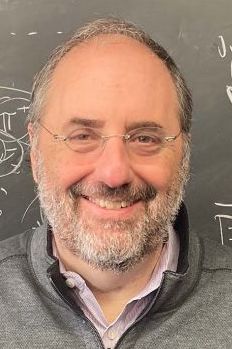 Claudio Campagnari合作论文数Physics Department, University of California Santa Barbara;CERN179
 Frank C. Porter合作论文数The Division of Physics, Mathematics and Astronomy, California Institute of Technology179
 David Kirkby合作论文数Dept Phys & Astron, Univ Calif Irvine179M. Steinke合作论文数178Mt Ronan合作论文数178
 Gr Bonneaud合作论文数University of Paris178
 j a mckenna合作论文数University of British Columbia178
 David Hitlin合作论文数Division of Physics Mathematics and Astronomy, California Institute of Technology178
 Andreas Petzold合作论文数Scientific Data Management Department, Scientific Computing Center, Karlsruhe Institute of Technology178Marc Pelizäus合作论文数University of Hawaii178T. W. Beck合作论文数178B. Dahmes合作论文数177
 Dmytro Kovalskyi合作论文数Massachusetts Institute of Technology177Gs Abrams合作论文数177S. D. Foulkes合作论文数177T. Held合作论文数177
 Richard D. Kass合作论文数Department of Physics, College of Arts and Sciences, The Ohio State University177
 George W. Brandenburg合作论文数High-Energy Physics Laboratory, Harvard University177T. R. McMahon合作论文数177
 Francesca Di Lodovico合作论文数Department of Physics, Faculty of Natural, Mathematical & Engineering Sciences, King’s College London177W. N. Cottingham合作论文数177L. Piemontese合作论文数177
 Ingrid Ofte合作论文数Anello Photonics177Evgeny Solodov合作论文数177F. Salvatore合作论文数University of Pavia and INFN, Pavia, Italy177
 Dominique Boutigny合作论文数Institut National de Physique Nucleaire et de Physique des Particules176Tb Moore合作论文数176
 Natalie Roe合作论文数Lawrence Berkeley National Laboratory176
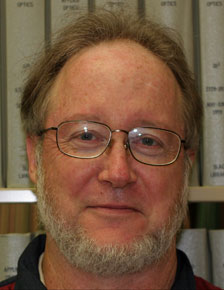 Bill Lockman合作论文数Santa Cruz Institute for Particle Physics, Department of Physics, University of California, Santa Cruz176
 Gerald Eigen合作论文数Department of Physics and Technology, University of Bergen176




