This change does not have any impact on the measured helicity fractions, but it changes the obtained limits on the anomalous couplings.
Article history: Received 16 February 2017 Received in revised form 2 June 2017 Accepted 21 August 2017 Available online 30 August 2017 Editor: M. Doser The production of opposite-charge W -boson pairs in proton–proton collisions at √ s = 13 TeV is measured using data corresponding to 3.16 fb−1 of integrated luminosity collected by the ATLAS detector at the CERN Large Hadron Collider in 2015. Candidate W -boson pairs are selected by identifying their leptonic decays into an electron, a muon and neutrinos. Events with reconstructed jets are not included in the candidate event sample. The cross-section measurement is performed in a fiducial phase space close to the experimental acceptance and is compared to theoretical predictions. Agreement is found between the measurement and the most accurate calculations available. © 2017 The Author. Published by Elsevier B.V. This is an open access article under the CC BY license (http://creativecommons.org/licenses/by/4.0/). Funded by SCOAP3.
The top-quark mass is measured in the all-hadronic top-antitop quark decay channel using proton-proton collisions at a centre-of-mass energy of √(s)=8 TeV with the ATLAS detector at the CERN Large Hadron Collider. The data set used in the analysis corresponds to an integrated luminosity of 20 . 2 fb −1 . The large multi-jet background is modelled using a data-driven method. The top-quark mass is obtained from template fits to the ratio of the three-jet to the dijet mass. The three-jet mass is obtained from the three jets assigned to the top quark decay. From these three jets the dijet mass is obtained using the two jets assigned to the W boson decay. The top-quark mass is measured to be 173 . 72 ± 0 . 55 (stat . ) ± 1 . 01 (syst . ) GeV.
bstract To probe the W tb vertex structure, top-quark and W -boson polarisation observables are measured from t -channel single-top-quark events produced in proton-proton collisions at a centre-of-mass energy of 8 TeV. The dataset corresponds to an integrated luminosity of 20.2 fb −1 , recorded with the ATLAS detector at the LHC. Selected events contain one isolated electron or muon, large missing transverse momentum and exactly two jets, with one of them identified as likely to contain a b -hadron. Stringent selection requirements are applied to discriminate t -channel single-top-quark events from background. The polarisation observables are extracted from asymmetries in angular distributions measured with respect to spin quantisation axes appropriately chosen for the top quark and the W boson. The asymmetry measurements are performed at parton level by correcting the observed angular distributions for detector effects and hadronisation after subtracting the background contributions. The measured top-quark and W -boson polarisation values are in agreement with the Standard Model predictions. Limits on the imaginary part of the anomalous coupling g R are also set from model-independent measurements.
The W boson angular distribution in events with high transverse momentum jets is measured using data collected by the ATLAS experiment from proton–proton collisions at a centre-of-mass energy √ s = 8 TeV at the Large Hadron Collider, corresponding to an integrated luminosity of 20 . 3 fb − 1 . The focus is on the contributions to W + jets processes from real W emission, which is achieved by studying events where a muon is observed close to a high transverse momentum jet. At small angular separations, these contributions are expected to be large. Various theoretical models of this process are compared to the data in terms of the absolute cross-section and the angular distributions of the muon from the leptonic W decay.
The dynamics of isolated-photon plus one-, two- and three-jet production in pp collisions at a centre-of-mass energy of 8 TeV are studied with the ATLAS detector at the LHC using a data set with an integrated luminosity of 20.2 fb$^{-1}$. Measurements of isolated-photon plus jets cross sections are presented as functions of the photon and jet transverse momenta. The cross sections as functions of the azimuthal angle between the photon and the jets, the azimuthal angle between the jets, the photon--jet invariant mass and the scattering angle in the photon--jet centre-of-mass system are presented. The pattern of QCD radiation around the photon and the leading jet is investigated by measuring jet production in an annular region centred on each object; enhancements are observed around the leading jet with respect to the photon in the directions towards the beams. The experimental measurements are compared to several different theoretical calculations, and overall a good description of the data is found
The centrality dependence of the mean charged-particle multiplicity as a function of pseudorapidity is measured in approximately 1 mu b(-1) of proton-lead collisions at a nucleon-nucleon centre-of-mass energy of root s(NN) = 5.02 TeV using the ATLAS detector at the Large Hadron Collider. Charged particles with absolute pseudorapidity less than 2.7 are reconstructed using the ATLAS pixel detector. The p + Pb collision centrality is characterised by the total transverse energy measured in the Pb-going direction of the forward calorimeter. The charged-particle pseudorapidity distributions are found to vary strongly with centrality, with an increasing asymmetry between the proton-going and Pb-going directions as the collisions become more central. Three different estimations of the number of nucleons participating in the p + Pb collision have been carried out using the Glauber model as well as two Glauber-Gribov inspired extensions to the Glauber model. Charged-particle multiplicities per participant pair are found to vary differently for these three models, highlighting the importance of including colour fluctuations in nucleon-nucleon collisions in the modelling of the initial state of p + Pb collisions.
A search is presented for a high-mass Higgs boson in the H → Z Z → + − + −, H → Z Z → + −νν̄, H → Z Z → + −qq̄ , and H → Z Z → νν̄qq̄ decay modes using the ATLAS detector at the CERN Large Hadron Collider. The search uses proton–proton collision data at a centre-of-mass energy of 8 TeV corresponding to an integrated luminosity of 20.3 fb−1. The results of the search are interpreted in the scenario of a heavy Higgs boson with a width that is small compared with the experimental mass resolution. The Higgs boson mass range considered extends up to 1 TeV for all four decay modes and down to as low as 140 GeV, depending on the decay mode. No significant excess of events over the Standard Model prediction is found. A simultaneous fit to the four decay modes yields upper limits on the production cross-section of a heavy Higgs boson times the branching ratio to Z boson pairs. 95 % confidence level upper limits range from 0.53 pb at mH = 195 GeV to 0.008 pb at mH = 950 GeV for the gluon-fusion production mode and from 0.31 pb at mH = 195 GeV to 0.009 pb at mH = 950 GeV for the vector-boson-fusion production mode. The results are also interpreted in the context of TypeI and Type-II two-Higgs-doublet models.
Measurements of the total and differential cross sections of Higgs boson production are performed using 20.3 fb$^{-1}$ of $pp$ collisions produced by the Large Hadron Collider at a center-of-mass energy of $\sqrt{s} = 8$ TeV and recorded by the ATLAS detector. Cross sections are obtained from measured $H \rightarrow \gamma \gamma$ and $H \rightarrow ZZ ^{*}\rightarrow 4\ell$ event yields, which are combined accounting for detector efficiencies, fiducial acceptances and branching fractions. Differential cross sections are reported as a function of Higgs boson transverse momentum, Higgs boson rapidity, number of jets in the event, and transverse momentum of the leading jet. The total production cross section is determined to be $\sigma_{pp \to H} = 33.0 \pm 5.3 \, ({\rm stat}) \pm 1.6 \, ({\rm sys}) \mathrm{pb}$. The measurements are compared to state-of-the-art predictions.
Citation Aad, G., B. Abbott, J. Abdallah, S. Abdel Khalek, O. Abdinov, R. Aben, B. Abi, et al. 2015. “Erratum to: Search for production of WW / WZ resonances decaying to a lepton, neutrino and jets in pp collisions at documentclass[12pt]{minimal} usepackage{amsmath} usepackage{wasysym} usepackage{amsfonts} usepackage{amssymb} usepackage{amsbsy} usepackage{mathrsfs} usepackage{upgreek} setlength{oddsidemargin}{-69pt} begin{document}$$sqrt{s}=8$$end{document}s=8 TeV with the ATLAS detector.” The European Physical Journal. C, Particles and Fields 75 (8): 370. doi:10.1140/epjc/s10052-0153593-4. http://dx.doi.org/10.1140/epjc/s10052-015-3593-4.
 Ingrid Ofte合作论文数Anello Photonics470
 Carlo Dallapiccola合作论文数Department of Physics, College of Natural Sciences, University of Massachusetts Amherst468
 Masahiro Morii合作论文数Department of Physics, Harvard University465
 F. Salvatore合作论文数University of Pavia and INFN, Pavia, Italy459
 Blair Ratcliff合作论文数SLAC National Accelerator Laboratory;Stanford University458
 James Cochran合作论文数Department of Physics and Astronomy, College of Liberal Arts and Sciences, Iowa State University453
 Bill Lockman合作论文数Santa Cruz Institute for Particle Physics, Department of Physics, University of California, Santa Cruz450
 Gerald Eigen合作论文数Department of Physics and Technology, University of Bergen450
 David Leith合作论文数Stanford Linear Accelerator Center447
 Rolf Dubitzky合作论文数CARIAD443
 Paul Jackson合作论文数School of Physics, Chemistry and Earth Sciences, University of Adelaide;Faculty of Sciences, Engineering and Technology, University of Adelaide440
 Bruce Schumm合作论文数Physical & Biological Sciences Division, Physics Department, University of California, Santa Cruz;Santa Cruz Institute for Particle Physics, University of California, Santa Cruz434
 Roger Barlow合作论文数School of Computing and Engineering, University of Huddersfield434
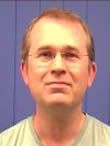 Alan Watson合作论文数School of Physics and Astronomy, College of Engineering and Physical Sciences, University of Birmingham433
 Heiko Lacker合作论文数Institut für Physik, Mathematisch-Naturwissenschaftliche Fakultät, Humboldt-Universität zu Berlin;Department of Physics, Humboldt-Universität zu Berlin433
 Philip J Clark合作论文数Institute for Particle and Nuclear Physics, School of Physics and Astronomy, The University of Edinburgh429
 Bjarne Sandvik Stugu合作论文数Department of Physics and Technology University of Bergen429N. B. Sinev合作论文数428
 Abraham Seiden合作论文数Santa Cruz Institute for Particle Physics, University of California, Santa Cruz;Department of Physics, University of California, Santa Cruz421
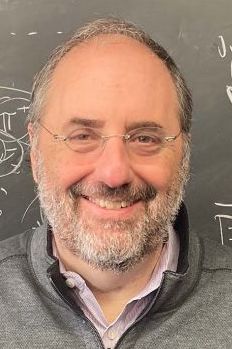 Claudio Campagnari合作论文数Physics Department, University of California Santa Barbara;CERN416
 Dmytro Kovalskyi合作论文数Massachusetts Institute of Technology415Ap Onuchin合作论文数415
 Enrico Feltresi合作论文数Pietro Fiorentini Spa415
 j a mckenna合作论文数University of British Columbia415J. Ocariz合作论文数414
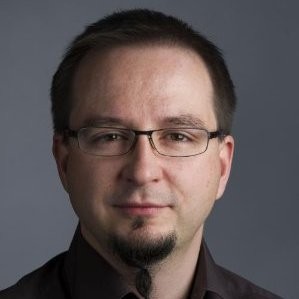 Andreas Petzold合作论文数Scientific Data Management Department, Scientific Computing Center, Karlsruhe Institute of Technology413Evgeny Solodov合作论文数413Serednyakov Sergey Ivanovich合作论文数Budker Institute of Nuclear Physics, Siberian Division, Russian Academy of Sciences412T. W. Beck合作论文数412
 Gr Bonneaud合作论文数University of Paris411Mt Ronan合作论文数410
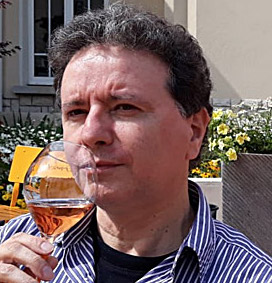 Fabio Anulli合作论文数Istituto Nazionale di Fisica Nucleare410Am Eisner合作论文数410R.Gamet合作论文数Department of Physics, Oliver Lodge Laboratory, University of Liverpool410S. Saremi合作论文数409H. B. Crawley合作论文数409Gs Abrams合作论文数408S. Brunet合作论文数408S. Prell合作论文数408
 Chris Hawkes合作论文数School of Physics and Astronomy, University of Birmingham408J.W. Gary合作论文数408Amedeo Buzzo合作论文数407H. Nicholson合作论文数406
 Lucien Cremaldi合作论文数Department of Physics and Astronomy, University of Mississippi405
 David Kirkby合作论文数Dept Phys & Astron, Univ Calif Irvine405L. Piemontese合作论文数405
 Francesca Di Lodovico合作论文数Department of Physics, Faculty of Natural, Mathematical & Engineering Sciences, King’s College London404
 Robert Kroeger合作论文数Department of Physics and Astronomy, University of Mississippi403
 Terry L. Schalk合作论文数Division of Physical & Biological Sciences, Department of Physics, University of California, Santa Cruz;Santa Cruz Institute for Particle Physics, University of California, Santa Cruz402




