The explicit breaking of the axial symmetry by quantum fluctuations gives rise to the so-called axial anomaly. This phenomenon is solely responsible for the decay of the neutral pion π0 into two photons (γγ), leading to its unusually short lifetime. We precisely measured the decay width Γ of the [Formula: see text] process. The differential cross sections for π0 photoproduction at forward angles were measured on two targets, carbon-12 and silicon-28, yielding [Formula: see text], where stat. denotes the statistical uncertainty and syst. the systematic uncertainty. We combined the results of this and an earlier experiment to generate a weighted average of [Formula: see text] Our final result has a total uncertainty of 1.50% and confirms the prediction based on the chiral anomaly in quantum chromodynamics.
The cross section of atomic electron Compton scattering gamma + e -> gamma' + e' was measured in the 4.400-5.475 GeV photon beam energy region by the PrimEx collaboration at Jefferson Lab with an accuracy of 2.6% and less. The results are consistent with theoretical predictions that include next-to-leading order radiative corrections. The measurements provide the first high precision test of this elementary QED process at beam energies greater than 0.1 GeV. (C) 2019 The Author(s). Published by Elsevier B.V.
The Jefferson Laboratory PrimEx Collaboration has developed and implemented a method to control the tagged photon flux in photoprocluction experiments at the 1% level over the photon energy range from 4.9 to 5.5 GeV. This method has been successfully implemented in a high precision measurement of the neutral pion lifetime. Here, we outline the experimental equipment and the analysis techniques used to accomplish this. These include the use of a total absorption counter for absolute flux calibration, a pair spectrometer for online relative flux monitoring, and a new method for post-bremsstrahlung electron counting. (C) 2014 Elsevier B.V. All rights reserved.
High precision measurements of the differential cross sections for π0 photoproduction at forward angles for two nuclei, 12C and 208Pb, have been performed for incident photon energies of 4.9-5.5 GeV to extract the π0→γγ decay width. The experiment was done at Jefferson Lab using the Hall B photon tagger and a high-resolution multichannel calorimeter. The π0→γγ decay width was extracted by fitting the measured cross sections using recently updated theoretical models for the process. The resulting value for the decay width is Γ(π0→γγ)=7.82±0.14(stat)±0.17(syst) eV. With the 2.8% total uncertainty, this result is a factor of 2.5 more precise than the current Particle Data Group average of this fundamental quantity, and it is consistent with current theoretical predictions.
We report on the results of the first measurement of exclusive f_{0}(980) meson photoproduction on protons for E_{gamma}=3.0-3.8 GeV and -t=0.4-1.0 GeV2. Data were collected with the CLAS detector at the Thomas Jefferson National Accelerator Facility. The resonance was detected via its decay in the pi;{+}pi;{-} channel by performing a partial wave analysis of the reaction gammap-->ppi;{+}pi;{-}. Clear evidence of the f_{0}(980) meson was found in the interference between P and S waves at M_{pi;{+}pi;{-}} approximately 1 GeV. The S-wave differential cross section integrated in the mass range of the f_{0}(980) was found to be a factor of about 50 smaller than the cross section for the rho meson. This is the first time the f_{0}(980) meson has been measured in a photoproduction experiment.
A technique is presented for precision measurements of the area densities, ρT, of approximately 5% radiation length carbon and 208Pb targets used in an experiment at Jefferson Laboratory to measure the neutral pion radiative width. The precision obtained in the area density for the carbon target is ±0.050%, and that obtained for the lead target through an X-ray attenuation technique is ±0.43%.
M. Battaglieri, R. De Vita, A. P. Szczepaniak, K. P. Adhikari, M. Aghasyan, M. J. Amaryan, P. Ambrozewicz, M. Anghinolfi, G. Asryan, H. Avakian, H. Bagdasaryan, N. Baillie, J. P. Ball, N. A. Baltzell, V. Batourine, I. Bedlinskiy, M. Bellis, N. Benmouna, B. L. Berman, L. Bibrzycki, A. S. Biselli, C. Bookwalter, S. Bouchigny, S. Boiarinov, R. Bradford, D. Branford, W. J. Briscoe, W.K. Brooks, S. Bultmann, V.D. Burkert, J. R. Calarco, S. L. Careccia, D. S. Carman, L. Casey, S. Chen, L. Cheng, E. Clinton, P. L. Cole, P. Collins, D. Crabb, H. Crannell, V. Crede, J. P. Cummings, D. Dale, A. Daniel, N. Dashyan, R. De Masi, E. De Sanctis, P. V. Degtyarenko, A. Deur, S. Dhamija, K.V. Dharmawardane, R. Dickson, C. Djalali, G. E. Dodge, J. Donnelly, D. Doughty, M. Dugger, O. P. Dzyubak, H. Egiyan, K. S. Egiyan, L. El Fassi, L. Elouadrhiri, P. Eugenio, G. Fedotov, R. Fersch, T. A. Forest, A. Fradi, M.Y. Gabrielyan, L. Gan, M. Garcon, A. Gasparian, G. Gavalian, N. Gevorgyan, G. P. Gilfoyle, K. L. Giovanetti, F. X. Girod, O. Glamazdin, J. Goett, J. T. Goetz, W. Gohn, E. Golovatch, C. I. O. Gordon, R.W. Gothe, L. Graham, K.A. Griffioen, M. Guidal, N. Guler, L. Guo, V. Gyurjyan, C. Hadjidakis, K. Hafidi, H. Hakobyan, R. S. Hakobyan, C. Hanretty, J. Hardie, N. Hassall, D. Heddle, F.W. Hersman, K. Hicks, I. Hleiqawi, M. Holtrop, C. E. Hyde, Y. Ilieva, D.G. Ireland, B. S. Ishkhanov, E. L. Isupov, M.M. Ito, D. Jenkins, H. S. Jo, J. R. Johnstone, K. Joo, H. G. Juengst, T. Kageya, N. Kalantarians, D. Keller, J. D. Kellie, M. Khandaker, P. Khetarpal, W. Kim, A. Klein, F. J. Klein, A.V. Klimenko, P. Konczykowski, M. Kossov, Z. Krahn, L. H. Kramer, V. Kubarovsky, J. Kuhn, S. E. Kuhn, S. V. Kuleshov, V. Kuznetsov, J. Lachniet, J.M. Laget, J. Langheinrich, D. Lawrence, T. Lee, L. Lesniak, Ji Li, K. Livingston, M. Lowry, H. Y. Lu, M.MacCormick, S. Malace, N.Markov, P. Mattione, M. E. McCracken, B. McKinnon, B. A. Mecking, J. J. Melone, M.D. Mestayer, C. A. Meyer, T. Mibe, K. Mikhailov, T Mineeva, R. Minehart, M. Mirazita, R. Miskimen, V. Mochalov, V. Mokeev, B. Moreno, K. Moriya, S. A. Morrow, M. Moteabbed, E. Munevar, G. S. Mutchler, P. Nadel-Turonski, I. Nakagawa, R. Nasseripour, S. Niccolai, G. Niculescu, I. Niculescu, B. B. Niczyporuk, M.R. Niroula, R.A. Niyazov, M. Nozar, M. Osipenko, A. I. Ostrovidov, K. Park, S. Park, E. Pasyuk, M. Paris, C. Paterson, S. Anefalos Pereira, J. Pierce, N. Pivnyuk, D. Pocanic, O. Pogorelko, S. Pozdniakov, J.W. Price, Y. Prok, D. Protopopescu, B. A. Raue, G. Riccardi, G. Ricco, M. Ripani, B.G. Ritchie, G. Rosner, P. Rossi, F. Sabatie, M. S. Saini, J. Salamanca, C. Salgado, A. Sandorfi, J. P. Santoro, V. Sapunenko, D. Schott, R.A. Schumacher, V. S. Serov, Y.G. Sharabian, D. Sharov, N.V. Shvedunov, E. S. Smith, L. C. Smith, D. I. Sober, D. Sokhan, A. Starostin, A. Stavinsky, S. Stepanyan, S. S. Stepanyan, B. E. Stokes, P. Stoler, K.A. Stopani, I. I. Strakovsky, S. Strauch, M. Taiuti, D. J. Tedeschi, A. Teymurazyan, A. Tkabladze, S. Tkachenko, L. Todor, C. Tur, M. Ungaro, M. F. Vineyard, A. V. Vlassov, D. P. Watts, X. Wei, L. B. Weinstein, D. P. Weygand, M. Williams, E. Wolin, M.H. Wood, A. Yegneswaran, M. Yurov, L. Zana, J. Zhang, B. Zhao, and Z.W. Zhao
The exclusive reaction γ p → p π^+ π^- was studied in the photon energy range 3.0 - 3.8 GeV and momentum transfer range 0.4<-t<1.0 GeV^2. Data were collected with the CLAS detector at the Thomas Jefferson National Accelerator Facility. In this kinematic range the integrated luminosity was about 20 pb^-1. The reaction was isolated by detecting the π^+ and proton in CLAS, and reconstructing the π^- via the missing-mass technique. Moments of the di-pion decay angular distributions were derived from the experimental data. Differential cross sections for the S, P, and D-waves in the M_π^+π^- mass range 0.4-1.4 GeV were derived performing a partial wave expansion of the extracted moments. Besides the dominant contribution of the ρ(770) meson in the P-wave, evidence for the f_0(980) and the f_2(1270) mesons was found in the S and D-waves, respectively. The differential production cross sections dσ/dt for individual waves in the mass range of the above-mentioned mesons were extracted. This is the first time the f_0(980) has been measured in a photoproduction experiment.
The exclusive reaction gammap-->K0K+n was studied in the photon energy range between 1.6 and 3.8 GeV searching for evidence of the exotic baryon Theta+ (1540)-->nK+. The decay to nK+requires the assignment of strangeness S=+1 to any observed resonance. Data were collected with the CLAS detector at the Thomas Jefferson National Accelerator Facility corresponding to an integrated luminosity of 70 pb-1. No evidence for the Theta+ pentaquark was found. Upper limits were set on the production cross section as function of center-of-mass angle and nK+ mass. The 95% C.L. upper limit on the total cross section for a narrow resonance at 1540 MeV was found to be 0.8 nb.
V. Kubarovsky, M. Battaglieri, R. De Vita, J. Goett, L. Guo, G. S. Mutchler, P. Stoler, D. P. Weygand, P. Ambrozewicz, M. Anghinolfi, G. Asryan, H. Avakian, H. Bagdasaryan, N. Baillie, J. P. Ball, N. A. Baltzell, V. Batourine, I. Bedlinskiy, M. Bellis, N. Benmouna, B. L. Berman, A. S. Biselli, S. Bouchigny, S. Boiarinov, R. Bradford, D. Branford, W. J. Briscoe, W. K. Brooks, S. Bültmann, V. D. Burkert, C. Butuceanu, J. R. Calarco, S. L. Careccia, D. S. Carman, S. Chen, E. Clinton, P. L. Cole, P. Collins, P. Coltharp, D. Crabb, H. Crannell, V. Crede, J. P. Cummings, R. De Masi, D. Dale, E. De Sanctis, P. V. Degtyarenko, A. Deur, K. V. Dharmawardane, C. Djalali, G. E. Dodge, J. Donnelly, D. Doughty, M. Dugger, O. P. Dzyubak, H. Egiyan,* K. S. Egiyan, L. Elouadrhiri, P. Eugenio, G. Fedotov, H. Funsten, M. Y. Gabrielyan, L. Gan, M. Garçon, A. Gasparian, G. Gavalian, G. P. Gilfoyle, K. L. Giovanetti, F. X. Girod, O. Glamazdin, J. T. Goetz, E. Golovach, A. Gonenc, C. I. O. Gordon, R. W. Gothe, K. A. Griffioen, M. Guidal, N. Guler, V. Gyurjyan, C. Hadjidakis, K. Hafidi, R. S. Hakobyan, J. Hardie, F. W. Hersman, K. Hicks, I. Hleiqawi, M. Holtrop, C. E. Hyde-Wright, Y. Ilieva, D. G. Ireland, B. S. Ishkhanov, E. L. Isupov, M. M. Ito, D. Jenkins, H. S. Jo, K. Joo, H. G. Juengst, J. D. Kellie, M. Khandaker, W. Kim, A. Klein, F. J. Klein, A. V. Klimenko, M. Kossov, L. H. Kramer, J. Kuhn, S. E. Kuhn, S. V. Kuleshov, J. Lachniet, J. M. Laget, J. Langheinrich, D. Lawrence, T. Lee, Ji Li, K. Livingston, H. Lu, M. MacCormick, N. Markov, B. McKinnon, B. A. Mecking, J. J. Melone, M. D. Mestayer, C. A. Meyer, T. Mibe, K. Mikhailov, R. Minehart, M. Mirazita, R. Miskimen, V. Mochalov, V. Mokeev, L. Morand, S. A. Morrow, M. Moteabbed, P. Nadel-Turonski, I. Nakagawa, R. Nasseripour, S. Niccolai, G. Niculescu, I. Niculescu, B. B. Niczyporuk, M. R. Niroula, R. A. Niyazov, M. Nozar, M. Osipenko, A. I. Ostrovidov, K. Park, E. Pasyuk, C. Paterson, J. Pierce, N. Pivnyuk, D. Pocanic, O. Pogorelko, S. Pozdniakov, J. W. Price, Y. Prok, D. Protopopescu, B. A. Raue, G. Riccardi, G. Ricco, M. Ripani, B. G. Ritchie, F. Ronchetti, G. Rosner, P. Rossi, F. Sabatié, C. Salgado, J. P. Santoro, V. Sapunenko, R. A. Schumacher, V. S. Serov, Y. G. Sharabian, N. V. Shvedunov, E. S. Smith, L. C. Smith, D. I. Sober, A. Stavinsky, S. S. Stepanyan, S. Stepanyan, B. E. Stokes, I. I. Strakovsky, S. Strauch,18,x M. Taiuti, D. J. Tedeschi, A. Teymurazyan, U. Thoma,2,k A. Tkabladze, S. Tkachenko, L. Todor, C. Tur, M. Ungaro, M. F. Vineyard, A. V. Vlassov, L. B. Weinstein, M. Williams, E. Wolin, M. H. Wood,4,{ A. Yegneswaran, L. Zana, J. Zhang, and B. Zhao
The reaction gamma p -> pK(+)K(-) was studied at Jefferson Lab with photon energies from 1.8 to 3.8 GeV using a tagged photon beam. The goal was to search for a Theta(++) pentaquark, a narrow, doubly charged baryon state having strangeness S=+1 and isospin I=1, in the pK(+) invariant mass spectrum. No statistically significant evidence of a Theta(++) was found. Upper limits on the total and differential cross section for the reaction gamma p -> K-Theta(++) were obtained in the mass range from 1.5 to 2.0 GeV/c(2), with an upper limit for a narrow resonance with a mass M-Theta(++)=1.54 GeV/c(2) of about 0.15 nb, 95% C.L.. This result places a stringent upper limit on the Theta(++) width Gamma(++)(Theta)< 0.1 MeV/c(2).
 D. S. Dale合作论文数15
 Valery Kubarovsky合作论文数Institute for High Energy Physics15
 Alexandre Deur合作论文数Thomas Jefferson National Accelerator Facility15P. Ambrozewicz合作论文数14
 Aram Teymurazyan合作论文数Physics Department, University of Notre Dame14Gan Lin合作论文数14Alexander Gasparian合作论文数Hampton University14E. Pasyuk合作论文数Arizona State University14M. Khandaker合作论文数13
 Rory Miskimen合作论文数Department of Physics, College of Natural Sciences, University of Massachusetts Ambherst13M. Y. Gabrielyan合作论文数13
 Carlos Alberto Salgado Lopez合作论文数Department of Particle Physics, Universidade de Santiago de Compostela;Galician Institute of High Energy Physics, Universidade de Santiago de Compostela13R Minehart合作论文数12D. Lawrence合作论文数12
 Volker Burkert合作论文数Jefferson Lab12
 Vardan Gyurjyan合作论文数Thomas Jefferson National Accelerator Facility12G. Fedotov合作论文数11I. Nakagawa合作论文数11
 Philip L Cole合作论文数11M. Wood合作论文数University of Pennsylvania11V. Mochalov合作论文数10B. Ritchie合作论文数10
 Dan Protopopescu合作论文数Glasgow U10
 D. Branford合作论文数School of Physics|University of Edinburgh10
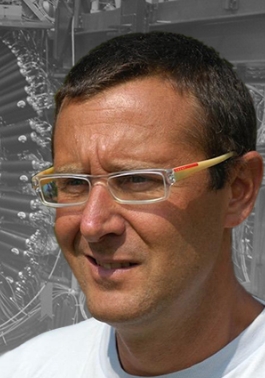 Marco Battaglieri合作论文数Istituto Nazionale di Fisica Nucleare10N. Baillie合作论文数9
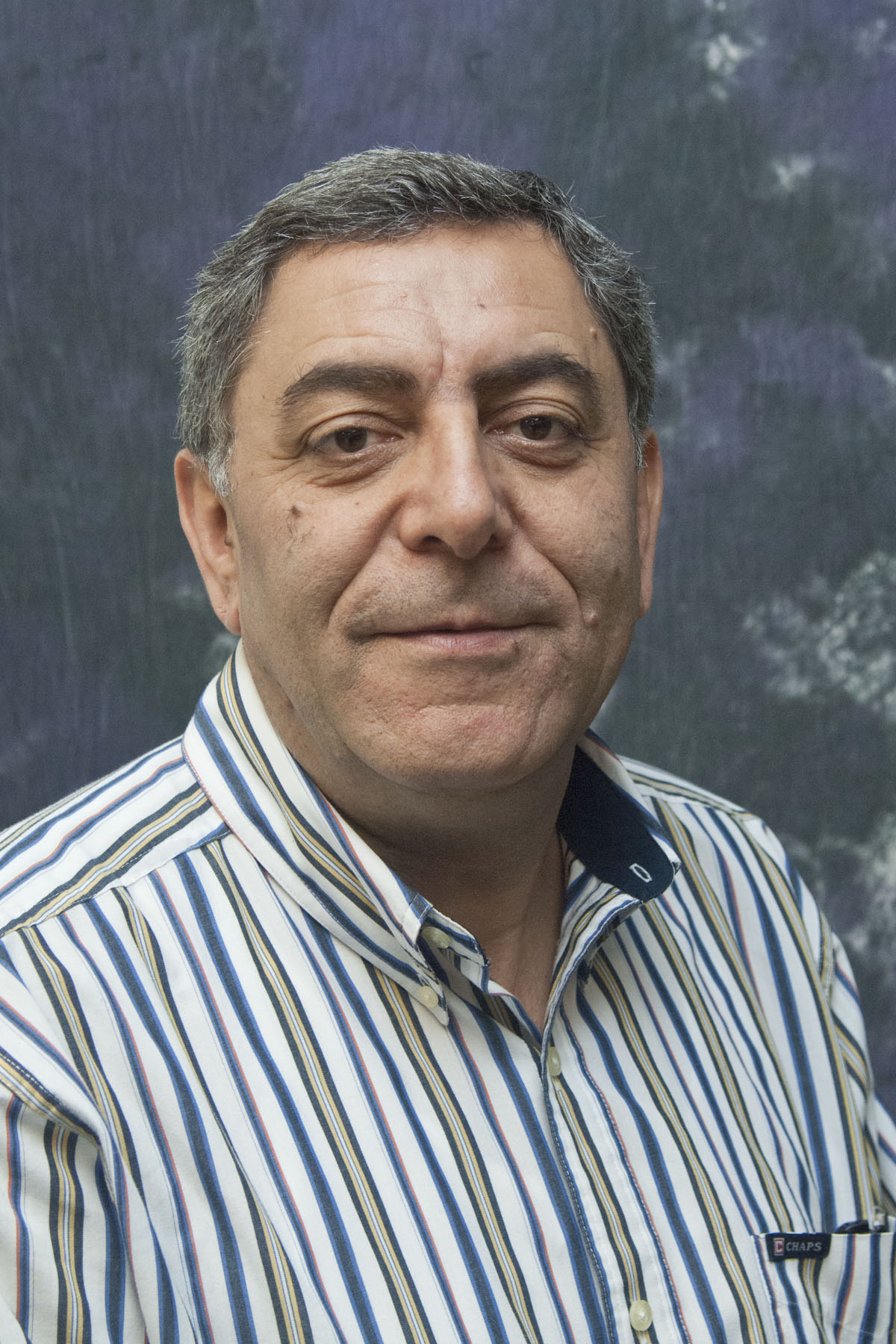 Stepan Stepanyan合作论文数Department of Physics, Old Dominion University;Jefferson Lab9D. Doughty合作论文数9K. Park合作论文数9L. Guo合作论文数9M Ripani合作论文数9
 Johnny Goett合作论文数Rensselaer Polytechnic Institute, Rensselaer Polytechnic Institute9Gianni Ricco合作论文数9H. Bagdasaryan合作论文数9
 Harut Avagyan合作论文数Jefferson Lab;Department of Physics, Columbian College of Arts & Sciences, The George Washington University9Yelena Prok合作论文数9R. Bradford合作论文数9
 Mikhail Osipenko合作论文数9Hovanes Egiyan合作论文数9
 Paula Collins合作论文数9C. Djalali合作论文数9Nawal Benmouna合作论文数9G. Asryan合作论文数9Paul Eugenio合作论文数Florida State University9S. Boiarinov合作论文数8N. Pivnyuk合作论文数8K. Joo合作论文数8J. Goetz合作论文数8E. Wolin合作论文数8




