In this paper we review the physics opportunities at linear e^+e^- colliders with a special focus on high centre-of-mass energies and beam polarisation, take a fresh look at the various accelerator technologies available or under development and, for the first time, discuss how a facility first equipped with a technology that is mature today could be upgraded with technologies of tomorrow to reach much higher energies and/or luminosities. In addition, we discuss detectors, alternative collider modes, as well as opportunities for beyond-collider experiments and R D facilities as part of a linear collider facility (LCF). The material of this paper supports all plans for e^+e^- linear colliders and the additional opportunities they offer, independently of technology choice or proposed site, as well as R D for advanced accelerator technologies. This joint perspective on the physics goals, early technologies and upgrade strategies has been developed by the LCVision team based on an initial discussion at LCWS2024 in Tokyo and a follow-up at the LCVision Community Event at CERN in January 2025. It heavily builds on decades of achievements of the global linear collider community, in particular in the context of CLIC and ILC.
In this paper we outline a proposal for a Linear Collider Facility as the next flagship project for CERN. It offers the opportunity for a timely, cost-effective and staged construction of a new collider that will be able to comprehensively map the Higgs boson's properties, including the Higgs field potential, thanks to a large span in centre-of-mass energies and polarised beams. A comprehensive programme to study the Higgs boson and its closest relatives with high precision requires data at centre-of-mass energies from the Z pole to at least 1 TeV. It should include measurements of the Higgs boson in both major production mechanisms, ee -> ZH and ee -> vvH, precision measurements of gauge boson interactions as well as of the W boson, Higgs boson and top-quark masses, measurement of the top-quark Yukawa coupling through ee ->ttH, measurement of the Higgs boson self-coupling through HH production, and precision measurements of the electroweak couplings of the top quark. In addition, ee collisions offer discovery potential for new particles complementary to HL-LHC.
WPHACT 2.0 is the new fully massive version of a MC program and unweighted event generator which computes all Standard Model processes with four fermions in the final state at ee colliders. The program can now generate unweighted events for any subset of all four fermion final states in a single run, by making use of dedicated pre-samples which can cover the entire phase space. Improvements with respect to WPHACT 1.0 include the Imaginary Fermion Loop gauge restoring scheme, new phase space mappings, a new input system, the possibility to compute subsets of Feynman diagrams and options for including ISR via QEDPS, running αQED, CKM mixing, resonances in qq̄ channels. 1) Work supported by the European Union under contract HPRN-CT-2000-00149, by Ministero dell’ Università e della Ricerca Scientifica and by the Swiss Bundesamt für Bildung und Wissenschaft. e-mail: ballestrero@to.infn.it,maina@to.infn.it,Elena.Accomando@psi.ch
We provide a general method to construct local infrared subtraction counterterms for unresolved radiative contributions to differential cross sections, to any order in perturbation theory. We start from the factorised structure of virtual corrections to scattering amplitudes, where soft and collinear divergences are organised in gauge-invariant matrix elements of fields and Wilson lines, and we define radiative eikonal form factors and jet functions which are fully differential in the radiation phase space, and can be shown to cancel virtual poles upon integration by using completeness relations and general theorems on the cancellation of infrared singularities. Our method reproduces known results at NLO and NNLO, and yields substantial simplifications in the organisation of the subtraction procedure, which will help in the construction of efficient subtraction algorithms at higher orders.
We present a new method for the local subtraction of infrared divergences at next-to-next-to-leading order (NNLO) in QCD, for generic infrared-safe observables. Our method attempts to conjugate the minimal local counterterm structure arising from a sector partition of the radiation phase space with the simplifications following from analytic integration of the counterterms. In this first implementation, the method applies to final-state massless particles. We show how our method compactly organises infrared subtraction at NLO, we deduce in detail the general structure of the subtraction terms at NNLO, and we provide a proof of principle with a complete application to a simple process at NNLO.
This Report summarizes the results of the activities of the LHC Higgs Cross Section Working Group in the period 2014-2016. The main goal of the working group was to present the state-of-the-art of Higgs physics at the LHC, integrating all new results that have appeared in the last few years. The first part compiles the most up-to-date predictions of Higgs boson production cross sections and decay branching ratios, parton distribution functions, and off-shell Higgs boson production and interference effects. The second part discusses the recent progress in Higgs effective field theory predictions, followed by the third part on pseudo-observables, simplified template cross section and fiducial cross section measurements, which give the baseline framework for Higgs boson property measurements. The fourth part deals with the beyond the Standard Model predictions of various benchmark scenarios of Minimal Supersymmetric Standard Model, extended scalar sector, Next-to-Minimal Supersymmetric Standard Model and exotic Higgs boson decays. This report follows three previous working-group reports: Handbook of LHC Higgs Cross Sections: 1. Inclusive Observables (CERN-2011-002), Handbook of LHC Higgs Cross Sections: 2. Differential Distributions (CERN-2012-002), and Handbook of LHC Higgs Cross Sections: 3. Higgs properties (CERN-2013-004). The current report serves as the baseline reference for Higgs physics in LHC Run 2 and beyond.
This is the summary and introduction to the proceedings contributions for the Les Houches 2009 “Tools and Monte Carlo” working group.
This is the summary and introduction to the proceedings contributions for the Les Houches 2009 "Tools and Monte Carlo" working group.
Higgs production in association with a W boson and two energetic tag jets at the LHC is studied for MH = 120 GeV, with the Higgs decaying to b and the W to lν (l = e, μ), guaranteeing high trigger efficiency. All parton level backgrounds are analyzed, including the effect of fake b-tagging. We discuss two detection strategies: in the first, more traditional, one, two jets are required to be b-tagged while in the second, which has not been previously examined in detail, only one tag is required. After all selection cuts about 80 and 200 events are foreseen in the two cases for a standard luminosity of 100 fb−1 with a S/B ratio of 1/25 and 1/60 respectively. The corresponding statistical significancies, S/B1/2 are 1.81 and 1.82.
We present a collection of signatures for physics beyond the standard model that need to be explored at the LHC. The signatures are organized according to the experimental objects that appear in the final state, and in particular the number of high p{sub T} leptons. Our report, which includes brief experimental and theoretical reviews as well as original results, summarizes the activities of the 'New Physics' working group for the 'Physics at TeV Colliders' workshop (Les Houches, France, 11-29 June, 2007).
A standard file format is proposed to store process and event information, primarily output from parton-level event generators for further use by general-purpose ones. The information content is identical with what was already defined by the Les Houches Accord five years ago, but then in terms of Fortran commonblocks. This information is embedded in a minimal XML-style structure, for clarity and to simplify parsing.
CMS is a general purpose experiment, designed to study the physics of pp collisions at 14 TeV at the Large Hadron Collider ( LHC). It currently involves more than 2000 physicists from more than 150 institutes and 37 countries. The LHC will provide extraordinary opportunities for particle physics based on its unprecedented collision energy and luminosity when it begins operation in 2007. The principal aim of this report is to present the strategy of CMS to explore the rich physics programme offered by the LHC. This volume demonstrates the physics capability of the CMS experiment. The prime goals of CMS are to explore physics at the TeV scale and to study the mechanism of electroweak symmetry breaking - through the discovery of the Higgs particle or otherwise. To carry out this task, CMS must be prepared to search for new particles, such as the Higgs boson or supersymmetric partners of the Standard Model particles, from the start- up of the LHC since new physics at the TeV scale may manifest itself with modest data samples of the order of a few fb(-1) or less. The analysis tools that have been developed are applied to study in great detail and with all the methodology of performing an analysis on CMS data specific benchmark processes upon which to gauge the performance of CMS. These processes cover several Higgs boson decay channels, the production and decay of new particles such as Z' and supersymmetric particles, B-s production and processes in heavy ion collisions. The simulation of these benchmark processes includes subtle effects such as possible detector miscalibration and misalignment. Besides these benchmark processes, the physics reach of CMS is studied for a large number of signatures arising in the Standard Model and also in theories beyond the Standard Model for integrated luminosities ranging from 1 fb(-1) to 30 fb(-1). The Standard Model processes include QCD, B-physics, diffraction, detailed studies of the top quark properties, and electroweak physics topics such as the W and Z(0) boson properties. The production and decay of the Higgs particle is studied for many observable decays, and the precision with which the Higgs boson properties can be derived is determined. About ten different supersymmetry benchmark points are analysed using full simulation. The CMS discovery reach is evaluated in the SUSY parameter space covering a large variety of decay signatures. Furthermore, the discovery reach for a plethora of alternative models for new physics is explored, notably extra dimensions, new vector boson high mass states, little Higgs models, technicolour and others. Methods to discriminate between models have been investigated. This report is organized as follows. Chapter 1, the Introduction, describes the context of this document. Chapters 2-6 describe examples of full analyses, with photons, electrons, muons, jets, missing E-T, B-mesons and tau's, and for quarkonia in heavy ion collisions. Chapters 7-15 describe the physics reach for Standard Model processes, Higgs discovery and searches for new physics beyond the Standard Model.
There are many possibilities for new physics beyond the Standard Model that feature non-standard Higgs sectors. These may introduce new sources of CP violation, and there may be mixing between multiple Higgs bosons or other new scalar bosons. Alternatively, the Higgs may be a composite state, or there may even be no Higgs at all. These non-standard Higgs scenarios have important implications for collider physics as well as for cosmology, and understanding their phenomenology is essential for a full comprehension of electroweak symmetry breaking. This report discusses the most relevant theories which go beyond the Standard Model and its minimal, CP-conserving supersymmetric extension: two-Higgs-doublet models and minimal supersymmetric models with CP violation, supersymmetric models with an extra singlet, models with extra gauge groups or Higgs triplets, Little Higgs models, models in extra dimensions, and models with technicolour or other new strong dynamics. For each of these scenarios, this report presents an introduction to the phenomenology, followed by contributions on more detailed theoretical aspects and studies of possible experimental signatures at the LHC and other colliders.
This Report summarises the activities of the "SM and Higgs" working group for the Workshop "Physics at TeV Colliders", Les Houches, France, 2-20 May, 2005. On the one hand, we performed a variety of experimental and theoretical studies on standard candles (such as W, Z, and ttbar production), treating them either as proper signals of known physics, or as backgrounds to unknown physics; we also addressed issues relevant to those non-perturbative or semi-perturbative ingredients, such as Parton Density Functions and Underlying Events, whose understanding will be crucial for a proper simulation of the actual events taking place in the detectors. On the other hand, several channels for the production of the Higgs, or involving the Higgs, have been considered in some detail. The report is structured into four main parts. The first one deals with Standard Model physics, except the Higgs. A variety of arguments are treated here, from full simulation of processes constituting a background to Higgs production, to studies of uncertainties due to PDFs and to extrapolations of models for underlying events, from small-$x$ issues to electroweak corrections which may play a role in vector boson physics. The second part of the report treats Higgs physics from the point of view of the signal. In the third part, reviews are presented on the current status of multi-leg, next-to-leading order and of next-to-next-to-leading order QCD computations. Finally, the fourth part deals with the use of Monte Carlos for simulation of LHC physics.
Boson-boson scattering and Higgs production in boson-boson fusion hold the key to electroweak symmetry breaking. In order to analyze these essential features of the Standard Model we have performed a partonic level study of all processes q(1)q(2) -> q(3)q(4)q(5)q(6)l nu at the LHC using the exact matrix elements at O(alpha(em)(6)) provided by PHASE, a new MC generator. These processes include also three boson production and the purely electroweak contribution to t (t) over bar production as well as all irreducible backgrounds. Kinematical cuts have been studied in order to enhance the VV scattering signal over background. PHASE has been compared with different Monte Carlo's showing that a complete calculation is necessary for a correct description of the process.
Work on electroweak precision calculations and event generators for electroweak physics studies at current and future colliders is summarized.
We briefly illustrate the impact of the genuinely weak one-loop virtual terms of the {\cal O}(\alpha_{\rm S}\alpha_{\rm EW}^3) factorisable corrections to the three-jet cross section at \sqrt s=M_Z. Their importance for the measurement of \alpha_{\rm S} at GigaZ luminosities is emphasised.
This report documents the results obtained by the Working Group on Quantum Chromodynamics and the Standard Model for the Workshop `Physics at TeV Colliders”, Les Houches, France, 26 May - 6 June 2003. After a Monte Guide description, the first contributions report on progress in describing multiple interactions, important for the LHC, and underlying events. An announcement of a Monte Carlo database, under construction, is then followed by a number of contributions improving parton shower descriptions. Subsequently, a large number of contributions address resummations in various forms, after which follow studies of QCD effects in pion pair, top quark pair and photon pair plus jet production. After a study of electroweak corrections to hadronic precision observables, the report ends by presenting recent progress in methods to compute finite order corrections at one-loop with many legs, and at two-loop.
We illustrate one-loop weak corrections to three-jet production in $e^+e^-$ at $\sqrt{s}=M_Z$, to the production of a $Z$ or $\gamma$ in association with a hard jet at hadron colliders and to the production cross section of two $b$-jets at Tevatron and Large Hadron Collider (LHC).
 A. Ballestrero合作论文数29
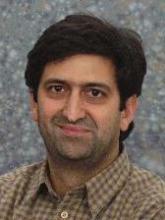 Stefano Moretti合作论文数School of Physics and Astronomy, University of Southampton10Elena Accomando合作论文数Sezione di Torino;Dipartimento di Fisica Teorica;Universita di Torino9
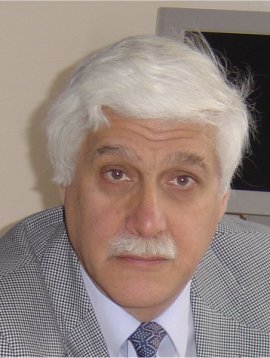 Douglas Ross合作论文数school of Physics and Astronomy ,University of Southampton8
 Roberto Pittau合作论文数Theory Division8Marco Pizzio合作论文数6
 A. Sherstnev合作论文数Skobeltsyn Institute of Nuclear Physics;Moscow State University;Skobeltsyn Institute of Nuclear Physics, Moscow State University6L. Dudko合作论文数Skobeltsyn Inst Nucl Phys, Lomonosov Moscow State Univ5
 Peter Zeiler Skands合作论文数School of Physics and Astronomys, Monash University5
 Fabio Maltoni合作论文数Centre for Cosmology, Particle Physics and Phenomenology, Universite Catholique de Louvain5
 Joey W Huston合作论文数Department of Physics & Astronomy, College of Natural Science, Michigan State University5
 Lorenzo Magnea合作论文数Dipartimento di Fisica;Universita di Torino;Sezione di Torino;Sezione di Torino, Universita di Torino5r dauria合作论文数4C. Mariotti合作论文数4
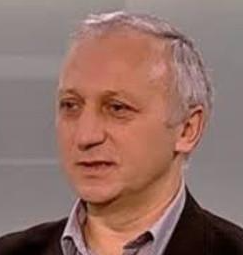 Boos Eduard Ernstovich合作论文数Department of Expiremental High Energy Physics, Skobeltsyn Institute of Nuclear Physics, Lomonosov Moscow State University4Stefano Frixione合作论文数4
 Pietro Fre合作论文数Dipartimento di Fisica Teorica, University of Torino4M. R. Nolten合作论文数4
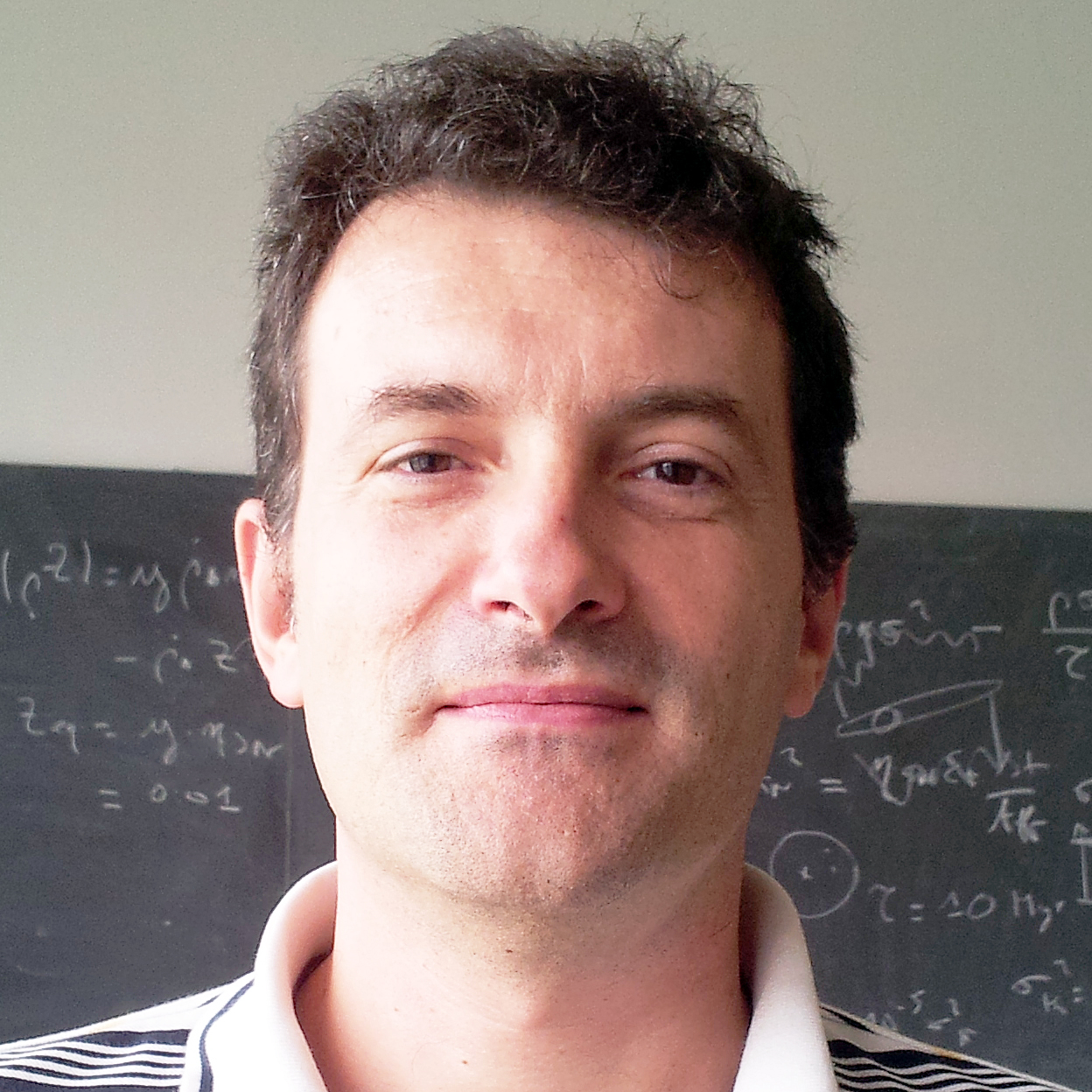 Massimiliano Grazzini合作论文数Department of Physics, University of Zurich/Physik-Institut-Group of Massimiliano Grazzini, University of Zurich4
 Torbjorn Sjostrand合作论文数Department of Astronomy and Theoretical Physics, University of Lund4K. Mazumdar合作论文数3S. Bolognesi合作论文数3P. Miné合作论文数3S. Belov合作论文数Laboratory of cloud technologies and Big Data Analysis, Plekhanov Russian University of Economics3
 Georg Weiglein合作论文数Theory Group, Deutsches Elektronen-Synchrotron;Durham University3
 Gudrid Moortgat-Pick合作论文数3Fulvio Piccinini合作论文数Sezione di Pavia3Alexander Nikitenko合作论文数Imperial College, London, United Kingdom3Farvah Mahmoudi合作论文数Université Claude Bernard Lyon3
 Jonathan Butterworth合作论文数Department of Physics and Astronomy, Faculty of Mathematical & Physical Sciences, University College London;CERN3
 Jürgen Reuter合作论文数Deutsches Elektronen-Synchrotron DESY3Paolo Torrielli合作论文数3
 Gudrun Heinrich合作论文数Institute for Theoretical Physics, Karlsruher Institut für Technologie3
 María Moreno Llácer合作论文数Universidad de Valencia3Michael Spira合作论文数3
 Alexander Pukhov合作论文数Virtual Laser Plasma Laboratory;Institut für Theoretische Physik I, Heinrich Heine Universität Düsseldorf3
 Doreen Wackeroth合作论文数Department of Physics, College of Arts and Sciences, University at Buffalo3Nikolas Kauer合作论文数Department of Physics;University of Wisconsin;Department of Physics, University of Wisconsin3Guido Montagna合作论文数Dipartimento di Fisica;Nucleare e Teorica;Universita di Pavia;Dipartimento di Fisica|Nucleare e Teorica, Universita di Pavia3Oreste Nicrosini合作论文数Sezione di Pavia3
 Margarete Mühlleitner合作论文数Institute for Theoretical Physics, Karlsruhe Institute of Technology3Sandro Uccirati合作论文数3
 Sabine Kraml合作论文数Laboratoire de Physique Subatomique et de Cosmologie3
 Ansgar Denner合作论文数Institut fur Theoretische Physik und Astrophysik, Julius-Maximilians-Universitat Wurzburg3Volker Drollinger合作论文数3Johan Alwall合作论文数3
 Piergiulio Lenzi合作论文数Dipartimento di Fisica e Astronomia, Università degli Studi di Firenze3
 Leif Lönnblad合作论文数Department of Astronomy and Theoretical Physics, Faculty of Science, Lund University3Stefano Pozzorini合作论文数3




