A search for the rare decays B(s)(0) → μ+ μ- and B(0) → μ+ μ- is performed in pp collisions at sqrt[s] = 7 TeV, with a data sample corresponding to an integrated luminosity of 1.14 fb(-1), collected by the CMS experiment at the LHC. In both cases, the number of events observed after all selection requirements is consistent with expectations from background and standard-model signal predictions. The resulting upper limits on the branching fractions are B(B(s)(0) → μ+ μ-) < 1.9 × 10(-8) and B(B(0) → μ+ μ-)<4.6 × 10(-9), at 95% confidence level.
We review the prospects for studies of the top quark at the LHC.
We present the energy distribution of b-flavoured hadrons in top quark decay using the PYTHIA and HERWIG event generators, which we tune to LEP and SLD data. We find that fitting the string and cluster models is essential to reproduce the e+e- data and to reliably predict B-hadron production in top decay. We also compare the PYTHIA and HERWIG results with the ones yielded by resummed calculations based on the fragmentation function formalism.
Search for the Higgs Boson is one of the prime goals of the LHC. Higgs bosons lighter than 130 GeV /c 2 decay mainly to a b-quark pair. While the detection of a directly produced Higgs boson in the b ¯ b channel is impossible because of the huge QCD background, the channel t ¯ tH 0 → l ± νq ¯ qb ¯ bb ¯ b is very promising in the Standard Model and the MSSM. We discuss an event reconstruction and selection method based on likelihood functions. The CMS detector response is performed with parametrisations obtained from detailed simulations. Various physics and detector performance scenarios are investigated and the results are presented. It turns out that excellent b-tagging performance and good mass resolution are essential for this channel.
This report presents the capabilities of the CMS experiment to explore the rich heavy-ion physics programme offered by the CERN Large Hadron Collider (LHC). The collisions of lead nuclei at energies , will probe quark and gluon matter at unprecedented values of energy density. The prime goal of this research is to study the fundamental theory of the strong interaction ? Quantum Chromodynamics (QCD) ? in extreme conditions of temperature, density and parton momentum fraction (low-x).This report covers in detail the potential of CMS to carry out a series of representative Pb-Pb measurements. These include bulk observables, (charged hadron multiplicity, low pT inclusive hadron identified spectra and elliptic flow) which provide information on the collective properties of the system, as well as perturbative probes such as quarkonia, heavy-quarks, jets and high pT hadrons which yield tomographic information of the hottest and densest phases of the reaction.
CMS is a general purpose experiment, designed to study the physics of pp collisions at 14 TeV at the Large Hadron Collider ( LHC). It currently involves more than 2000 physicists from more than 150 institutes and 37 countries. The LHC will provide extraordinary opportunities for particle physics based on its unprecedented collision energy and luminosity when it begins operation in 2007. The principal aim of this report is to present the strategy of CMS to explore the rich physics programme offered by the LHC. This volume demonstrates the physics capability of the CMS experiment. The prime goals of CMS are to explore physics at the TeV scale and to study the mechanism of electroweak symmetry breaking - through the discovery of the Higgs particle or otherwise. To carry out this task, CMS must be prepared to search for new particles, such as the Higgs boson or supersymmetric partners of the Standard Model particles, from the start- up of the LHC since new physics at the TeV scale may manifest itself with modest data samples of the order of a few fb(-1) or less. The analysis tools that have been developed are applied to study in great detail and with all the methodology of performing an analysis on CMS data specific benchmark processes upon which to gauge the performance of CMS. These processes cover several Higgs boson decay channels, the production and decay of new particles such as Z' and supersymmetric particles, B-s production and processes in heavy ion collisions. The simulation of these benchmark processes includes subtle effects such as possible detector miscalibration and misalignment. Besides these benchmark processes, the physics reach of CMS is studied for a large number of signatures arising in the Standard Model and also in theories beyond the Standard Model for integrated luminosities ranging from 1 fb(-1) to 30 fb(-1). The Standard Model processes include QCD, B-physics, diffraction, detailed studies of the top quark properties, and electroweak physics topics such as the W and Z(0) boson properties. The production and decay of the Higgs particle is studied for many observable decays, and the precision with which the Higgs boson properties can be derived is determined. About ten different supersymmetry benchmark points are analysed using full simulation. The CMS discovery reach is evaluated in the SUSY parameter space covering a large variety of decay signatures. Furthermore, the discovery reach for a plethora of alternative models for new physics is explored, notably extra dimensions, new vector boson high mass states, little Higgs models, technicolour and others. Methods to discriminate between models have been investigated. This report is organized as follows. Chapter 1, the Introduction, describes the context of this document. Chapters 2-6 describe examples of full analyses, with photons, electrons, muons, jets, missing E-T, B-mesons and tau's, and for quarkonia in heavy ion collisions. Chapters 7-15 describe the physics reach for Standard Model processes, Higgs discovery and searches for new physics beyond the Standard Model.
We present the energy distribution of b-flavoured hadrons in top quark decay using the PYTHIA and HERWIG event generators, which we tune to LEP and SLD data . We find that fitting the string and cluster models is essential to reproduce the e data and to reliably predict B-hadron production in top decay. We also compare the PYTHIA and HERWI G results with the ones yielded by resummed calculations based on the fragmentatio function formalism.
In order to get ready for physics at the LHC, the CMS experiment has to be set up for data taking. The data have to be well understood before new physics can be investigated. On the other hand, there are standard processes, well known from previous experiments and from simulation, which will help to understand the data of the detector in the early days of the LHC.
This Report summarises the activities of the "SM and Higgs" working group for the Workshop "Physics at TeV Colliders", Les Houches, France, 2-20 May, 2005. On the one hand, we performed a variety of experimental and theoretical studies on standard candles (such as W, Z, and ttbar production), treating them either as proper signals of known physics, or as backgrounds to unknown physics; we also addressed issues relevant to those non-perturbative or semi-perturbative ingredients, such as Parton Density Functions and Underlying Events, whose understanding will be crucial for a proper simulation of the actual events taking place in the detectors. On the other hand, several channels for the production of the Higgs, or involving the Higgs, have been considered in some detail. The report is structured into four main parts. The first one deals with Standard Model physics, except the Higgs. A variety of arguments are treated here, from full simulation of processes constituting a background to Higgs production, to studies of uncertainties due to PDFs and to extrapolations of models for underlying events, from small-$x$ issues to electroweak corrections which may play a role in vector boson physics. The second part of the report treats Higgs physics from the point of view of the signal. In the third part, reviews are presented on the current status of multi-leg, next-to-leading order and of next-to-next-to-leading order QCD computations. Finally, the fourth part deals with the use of Monte Carlos for simulation of LHC physics.
We present a search for excited and exotic electrons (e(*)) decaying to an electron and a photon, both with high transverse momentum. We use 202 pb(-1) of data collected in pp collisions at sqrt[s] = 1.96 TeV with the Collider Detector at Fermilab II detector. No signal above standard model expectation is seen for associated ee(*) production. We discuss the e(*) sensitivity in the parameter space of the excited electron mass M(e(*)) and the compositeness energy scale Lambda. In the contact interaction model, we exclude 132 GeV/c(2)<M(e(*))<879 GeV/c(2) for Lambda = M(e(*)) at 95% confidence level (C.L.). In the gauge-mediated model, we exclude 126 GeV/c(2) < M(e(*)) < 430 GeV/c(2) at 95% C.L. for the phenomenological coupling f/Lambda approximately 10(-2) GeV-1.
We present a measurement of the W(+)W(-) production cross section using 184 pb(-1) of p(p) collisions at a center-of-mass energy of 1.96 TeV collected with the Collider Detector at Fermilab. Using the dilepton decay channel W(+)W(-)-->l(+)nul(-), where the charged leptons can be either electrons or muons, we find 17 candidate events compared to an expected background of 5.0(+2.2)(-0.8) events. The resulting W(+)W(-) production cross-section measurement of sigma(pp-->W(+)W(-))=14.6(+5.8)(-5.1)(stat)(+1.8)(-3.0)(syst) +/- 0.9(lum) pb agrees well with the standard model expectation.
We report on a search for standard model t-channel and s-channel single-top quark production in p (p) over bar collisions at a center of mass energy of 1.96 TeV. We use a data sample corresponding to 162 pb(-1) recorded by the upgraded collider detector at Fermilab. We find no significant evidence for electroweak top quark production and set upper limits at the 95% confidence level on the production cross section, consistent with the standard model: 10.1 pb for the t-channel, 13.6 pb for the s-channel and 17.8 pb for the combined cross section of t- and s-channel.
We present a measurement of the mass dependence of the forward-backward charge asymmetry (A_FB) for electron-positron pairs produced via an intermediate Z/gamma with mass Mee > 40 GeV/c**(2). We study the constraints on the Z-quark couplings imposed by our measurement. We analyze an integrated luminosity of 72 pb-1 collected by the CDF II detector in proton anti-proton collisions at s**(1/2) = 1.96 TeV at the Fermilab Tevatron. A comparison of the uncorrected A_FB between data and Standard Model Monte Carlo gives good agreement with a chi^2/DOF of 15.7/15. The couplings measurements are also consistent with Standard Model predictions.
We present a measurement of relative partial widths and decay rate $CP$ asymmetries in ${K}^{\ensuremath{-}}{K}^{+}$ and ${\ensuremath{\pi}}^{\ensuremath{-}}{\ensuremath{\pi}}^{+}$ decays of ${D}^{0}$ mesons produced in $p\overline{p}$ collisions at $\sqrt{s}=1.96\text{ }\text{ }\mathrm{TeV}$. We use a sample of $2\ifmmode\times\else\texttimes\fi{}{10}^{5}$ ${D}^{*+}\ensuremath{\rightarrow}{D}^{0}{\ensuremath{\pi}}^{+}$ (and charge conjugate) decays with the ${D}^{0}$ decaying to ${K}^{\ensuremath{-}}{\ensuremath{\pi}}^{+}$, ${K}^{\ensuremath{-}}{K}^{+}$, and ${\ensuremath{\pi}}^{\ensuremath{-}}{\ensuremath{\pi}}^{+}$, corresponding to $123\text{ }\text{ }{\mathrm{pb}}^{\ensuremath{-}1}$ of data collected by the Collider Detector at Fermilab II experiment at the Fermilab Tevatron collider. No significant direct $CP$ violation is observed. We measure $\ensuremath{\Gamma}({D}^{0}\ensuremath{\rightarrow}{K}^{\ensuremath{-}}{K}^{+})/\ensuremath{\Gamma}({D}^{0}\ensuremath{\rightarrow}{K}^{\ensuremath{-}}{\ensuremath{\pi}}^{+})=0.0992\ifmmode\pm\else\textpm\fi{}0.0011\ifmmode\pm\else\textpm\fi{}0.0012$, $\ensuremath{\Gamma}({D}^{0}\ensuremath{\rightarrow}{\ensuremath{\pi}}^{\ensuremath{-}}{\ensuremath{\pi}}^{+})/\ensuremath{\Gamma}({D}^{0}\ensuremath{\rightarrow}{K}^{\ensuremath{-}}{\ensuremath{\pi}}^{+})=0.035\text{ }94\ifmmode\pm\else\textpm\fi{}0.000\text{ }54\ifmmode\pm\else\textpm\fi{}0.000\text{ }40$, ${A}_{CP}({K}^{\ensuremath{-}}{K}^{+})=(2.0\ifmmode\pm\else\textpm\fi{}1.2\ifmmode\pm\else\textpm\fi{}0.6)%$, and ${A}_{CP}({\ensuremath{\pi}}^{\ensuremath{-}}{\ensuremath{\pi}}^{+})=(1.0\ifmmode\pm\else\textpm\fi{}1.3\ifmmode\pm\else\textpm\fi{}0.6)%$, where, in all cases, the first uncertainty is statistical and the second is systematic.
The access to the magnetic field has a large impact on both CPU performance and accuracy of simulation, reconstruction and analysis software. An approach to the magnetic field access based on a volume geometry is described. The volumes are constructed in such a way that their boundaries correspond to field discontinuities, which are due to changes in magnetic permeability of the materials. The field in each volume is continuous. The value of the field at a given point of a volume is obtained by interpolation from a regular grid of values resulting from a TOSCA calculation or, when it is available, from a parameterization. To allow global access to the magnetic field, a volume finding algorithm that exploits explicitly the layout and the symmetries of the detector is used. The main clients of the magnetic field, which are the simulation (GEANT) and the propagation of track parameters and errors in the reconstruction, can be made aware of the magnetic field volumes by connecting the per-volume magnetic field providers to the corresponding volume in the respective geometries. In this way the global volume search is by-passed and the access to the field is sped up significantly.
We report a measurement of the forward-backward charge asymmetry of electrons from W boson decays in p anti-p collisions at s**(1/2) = 1.96 TeV using a data sample of 170 pb-1 collected by the Collider Detector at Fermilab. The asymmetry is measured as a function of electron rapidity and transverse energy and provides new input on the momentum fraction dependence of the u and d quark parton distribution within the proton.
We present the results of a search for anomalous production of diphoton events with large missing transverse energy using the Collider Detector at Fermilab. In 202 pb(-1) of p (p) over bar collisions at s=1.96 TeV we observe no candidate events, with an expected standard model background of 0.27+/-0.07(stat)+/-0.10(syst) events. The results exclude a lightest chargino of mass less than 167 GeV/c(2), and lightest neutralino of mass less than 93 GeV/c(2) at 95% C.L. in a gauge-mediated supersymmetry-breaking model with a light gravitino.
The standard model predictions for Wgamma and Zgamma production are tested using an integrated luminosity of 200 pb(-1) of p (p) over bar collision data collected at the Collider Detector at Fermilab. The cross sections are measured by selecting leptonic decays of the W and Z bosons, and photons with transverse energy E-T>7 GeV that are well separated from leptons. The production cross sections and kinematic distributions for the Wgamma and Zgamma data are compared to SM predictions.
 Andrea Bocci合作论文数CERN33E. Heider合作论文数33P. Doksus合作论文数33Sandro De Cecco合作论文数32
 Nicola Bacchetta合作论文数Fermi National Accelerator Laboratory;European Organization for Nuclear Research32
 Joey W Huston合作论文数Department of Physics & Astronomy, College of Natural Science, Michigan State University31
 Martin Erdmann合作论文数Physics Institute III A, RWTH Aachen University31
 Daniela Bortoletto合作论文数Department of Physics, University of Oxford31A. Gresele合作论文数30K. Goulianos合作论文数30A. Anastassov合作论文数30Y. Gotra合作论文数30E. Gerchtein合作论文数30
 Heather Kay Gerberich合作论文数On Point Technology, LLC30Frank Hartmann合作论文数Institute for Experimental Particle Physics, Karlsruher Institut für Technologie;Karlsruhe School of Elementary Particle and Astroparticle Physics, Karlsruher Institut für Technologie30
 Dario Bisello合作论文数Department of Physics and Astronomy "Galileo Galilei", University of Padova30E. Brubaker合作论文数30
 Matthew Herndon合作论文数Department of Physics, University of Wisconsin–Madison30D. Jang合作论文数30
 Sebastian Carron Montero合作论文数California Lutheran University30G. Flanagan合作论文数30
 Mario Paolo Giordani合作论文数Dipartimento Politecnico di Ingegneria e Architettura, Università degli Studi di Udine30
 Massimo Casarsa合作论文数Istituto Nazionale di Fisica Nucleare30
 Melissa Franklin合作论文数Department of Physics, Harvard University30P. Giannetti合作论文数INFN Sezione di Pisa30S. Belforte合作论文数30
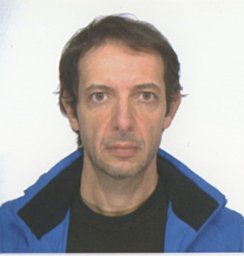 S. Giagu合作论文数INFN Sezione di Roma, Sapienza University30I. Gorelov合作论文数30
 Giorgio Chiarelli合作论文数Istituto Nazionale di Fisica Nucleare30
 Julian Budagov合作论文数Joint Institute for Nuclear Research30Carl Haber合作论文数Physics Division, Lawrence Berkeley National Laboratory30C. Blocker合作论文数30
 Morris Binkley合作论文数Collider Detector Facility Department, Fermi National Accelerator Laboratory30
 Ray Culbertson合作论文数Fermi National Accelerator Laboratory30
 Davit Chokheli合作论文数Georgian Technical University;Joint Institute for Nuclear Research30C. Grosso-Pilcher合作论文数30
 Ben Kilminster合作论文数Physik-Institut, University of Zurich30
 Jack Cranshaw合作论文数30S. Baroiant合作论文数30
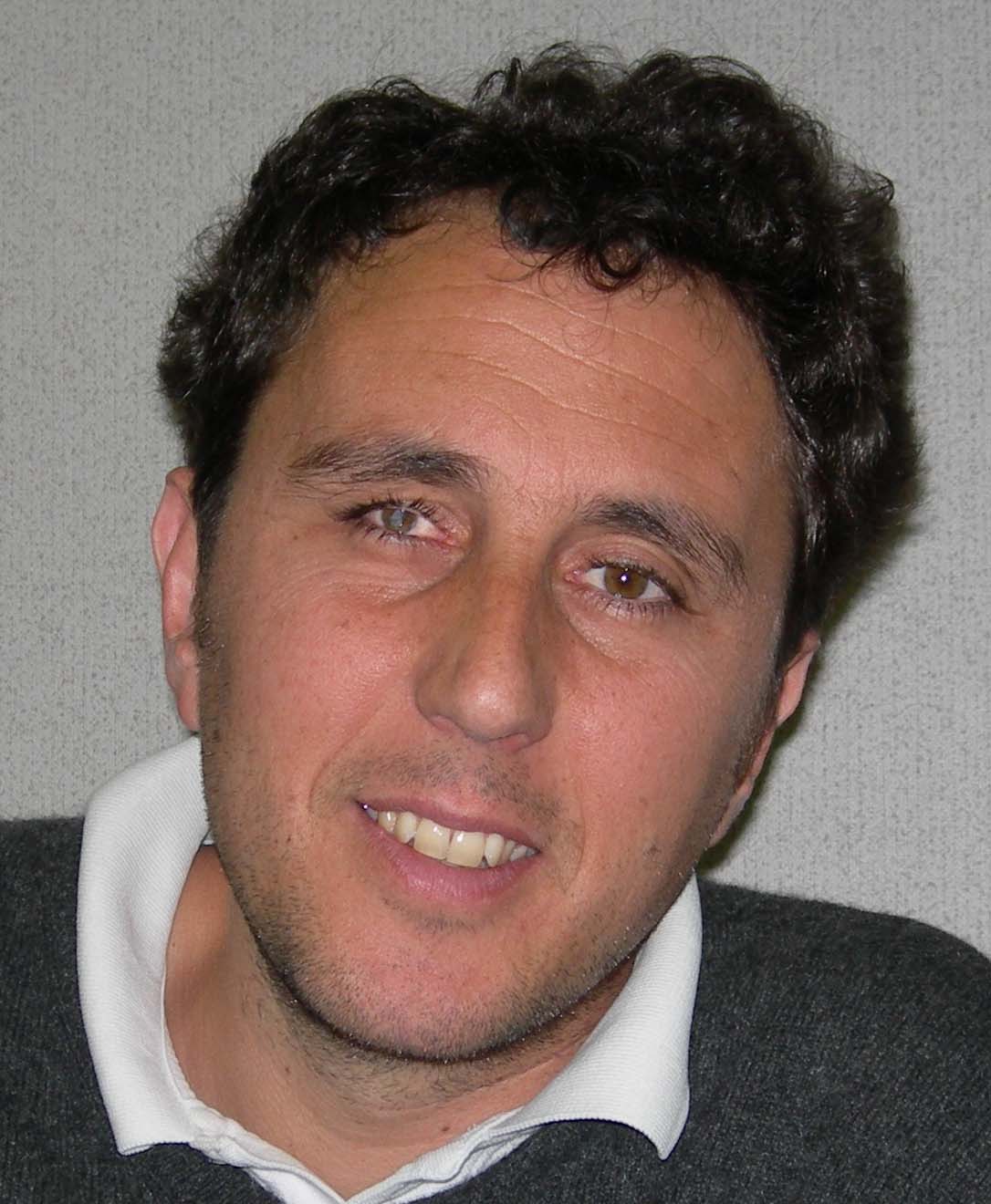 Fabio Happacher合作论文数Istituto Nazionale di Fisica Nucleare30
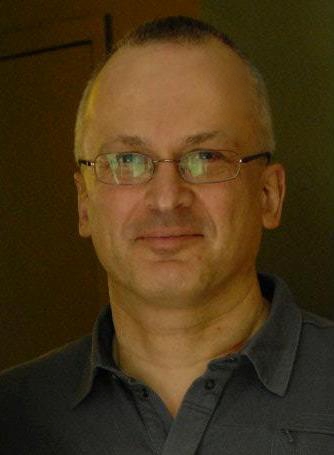 Luc Demortier合作论文数Laboratory of Experimental High Energy Physics, The Rockefeller University30
 Alberto Annovi合作论文数INFN30
 Doug Glenzinski合作论文数Fermi National Accelerator Laboratory30
 Andrey Korytov合作论文数Institute for High Energy Physics and Astrophysics, Department of Physics, College of Liberal Arts and Sciences, University of Florida;European Center for Nuclear Research;Fermilab30
 Arie Bodek合作论文数Department of Physics and Astronomy, School of Arts & Sciences, University of Rochester30
 Ken Bloom合作论文数Department of Physics and Astronomy, College of Arts and Sciences, University of Nebraska-Lincoln30
 Robert Kephart合作论文数Fermi National Accelerator Laboratory30
 Nathan Goldschmidt合作论文数Rowan University30A. Artikov合作论文数30




