Deep inelastic scattering and its diffractive component, ep -> e'gamma*p ->e'XN, have been studied at HERA with the ZEUS detector using an integrated luminosity of 4.2 pb-1. The measurement covers a wide range in the gamma*p c.m. energy W (37 - 245 GeV), photon virtuality Q2 (2.2 - 80 GeV2) and mass Mx. The diffractive cross section for Mx > 2 GeV rises strongly with W; the rise is steeper with increasing Q2. The latter observation excludes the description of diffractive deep inelastic scattering in terms of the exchange of a single Pomeron. The ratio of diffractive to total cross section is constant as a function of W, in contradiction to the expectation of Regge phenomenology combined with a naive extension of the optical theorem to gamma*p scattering. Above Mx of 8 GeV, the ratio is flat with Q2, indicating a leading-twist behaviour of the diffractive cross section. The data are also presented in terms of the diffractive structure function, F2D(3)(beta,xpom,Q2), of the proton. For fixed beta, the Q2 dependence of xpom F2D(3) changes with xpom in violation of Regge factorisation. For fixed xpom, xpom F2D(3) rises as beta -> 0, the rise accelerating with increasing Q2. These positive scaling violations suggest substantial contributions of perturbative effects in the diffractive DIS cross section.
A search for events containing isolated tau leptons and large missing transverse momentum, not originating from the tau decay, has been performed with the ZEUS detector at the electron-proton collider HERA, using 130 pb^-1 of integrated luminosity. A search was made for isolated tracks coming from hadronic tau decays. Observables based on the internal jet structure were exploited to discriminate between tau decays and quark- or gluon-induced jets. Three tau candidates were found, while 0.40 +0.12 -0.13 were expected from Standard Model processes, such as charged current deep inelastic scattering and single W-boson production. To search for heavy-particle decays, a more restrictive selection was applied to isolate tau leptons produced together with a hadronic final state with high transverse momentum. Two candidate events survive, while 0.20 +-0.05 events are expected from Standard Model processes.
First measurements of cross sections for isolated prompt photon production in deep inelastic ep scattering have been made using the ZEUS detector at the HERA electron-proton collider using an integrated luminosity of 121 pb(-1). A signal for isolated photons in the transverse energy and rapidity ranges 5 < E-T(y) < 10 GeV and -0.7 < eta(gamma) < 0.9 was observed for virtualities of T the exchanged photon of Q(2) > 35 GeV2. Cross sections are presented for inclusive prompt photons and for those accompanied by a single jet in the range E-jet(T) greater than or equal to 6 GeV and 1.5 less than or equal to eta(jet) < 1.8. Calculations at order alpha(3)alpha(s), describe the data reasonably well. (C) 2004 Elsevier B.V. All rights reserved.
The subjet multiplicity has been measured in neutral current e(+) p interactions at Q(2) > 125 GeV2 with the ZEUS detector at HERA using an integrated luminosity of 38.6 pb(-1). Jets were identified in the laboratory frame using the longitudinally invariant k(T) cluster algorithm. The number of jet-like substructures within jets, known as the subjet multiplicity, is defined as the number of clusters resolved in a jet by reapplying the jet algorithm at a smaller resolution scale y(cut). Measurements of the mean subjet multiplicity, , for jets with transverse energies E-T,E-jet > 15 GeV are presented. Next-to-leading-order perturbative QCD calculations describe the measurements well. The value of alpha(s) (M-Z), determined from at y(cut) = 10(-2) for jets with 25 < E-T,E-jet < 71 GeV, is alpha(s) (M-Z) = 0.1187 +/- 0.0017(stat.)(-0.0009)(+0.0024)(syst.)(-0.0076)(+0.0093)(th.). (C) 2003 Published by Elsevier Science B.V.
 Oleg Kuprash合作论文数Institute of Physics, Albert-Ludwigs-Universität Freiburg10S. A. Zotkin合作论文数6N. Coppola合作论文数5
 Andrea Contin合作论文数5c collinstooth合作论文数5
 Peter J. Bussey合作论文数School of Physics & Astronomy, University of Glasgow5S. Yamada合作论文数5n n vlasov合作论文数5
 Luis Labarga Echeverria合作论文数Departamento de Física Teórica, Universidad Autónoma de Madrid5B. Löhr合作论文数5
 Marek Adamus合作论文数5Jc Hart合作论文数5EA Heaphy合作论文数5DS Bailey合作论文数5
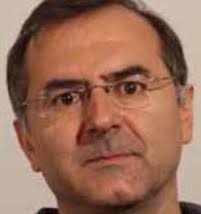 Enrico Tassi合作论文数Department of Physics, Università della Calabria5
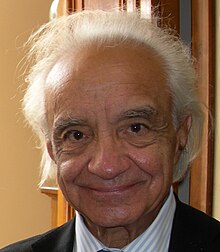 Antonino Zichichi合作论文数University of Bologna5pawel plucinski合作论文数Dept Phys, Stockholm Univ5D. H. Saxon合作论文数5E. Koffeman合作论文数5H. Salehi合作论文数5
 Dongchul Son合作论文数5O. González合作论文数5
 Roberto Carlin合作论文数Dipartimento di Fisica e Astronomia, University of Padua;DESY5J. E. Cole合作论文数5M. Bell合作论文数5
 L. Stanley Durkin合作论文数Department of Physics, College of Arts and Sciences, The Ohio State University5C. D. Catterall合作论文数5Jm Pawlak合作论文数5A. Margotti合作论文数5A Bertolin合作论文数5Dg Stairs合作论文数5s schagen合作论文数5W. H. Smith合作论文数5A. Bamberger合作论文数5A. Kreisel合作论文数5W. B. Schmidke合作论文数5P. Göttlicher合作论文数5A. Savin合作论文数5
 B.B. Levchenko合作论文数5
 Tony Doyle合作论文数School of Physics and Astronomy, University of Glasgow5
 Masahiro Kuze (久世正弘)合作论文数Tokyo Institute of Technology5Claudia Glasman合作论文数Universidad Autónoma de Madrid5Mariusz Przybycien合作论文数Department of Particle Interactions and Detection Techniques, Faculty of Physics and Applied Computer Science, AGH University of Science and Technology5Davide Boscherini合作论文数Sezione di Bologna, Istituto Nazionale di Fisica Nucleare5
 Brian Foster合作论文数Department of Physics, University of Oxford5
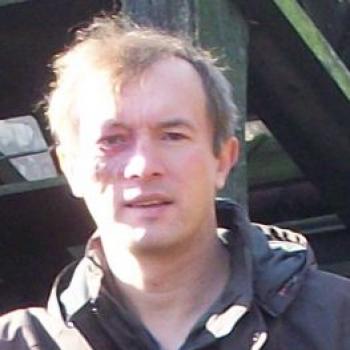 Sergei Chekanov合作论文数High Energy Physics Division, Argonne National Laboratory5Leszek Adamczyk合作论文数AGH University of Science and Technology5Tobias M. Haas合作论文数5D. Hochman合作论文数5




