En este artículo se describe la historia del pensamiento económico como un flujo dialéctico de tesis, síntesis y antítesis, en el que lo individual y lo comunitario pugnan por su reconocimiento en un proceso en el que la síntesis araña mayores grados de libertad a una realidad en que ambos están imbricados uno en el otro. Primero describiremos ese flujo de teorías. La ortodoxia, como poder establecido sobre las ideas económicas, intenta sobrevivir, y encuentra una forma de adaptarse sin modificar sus supuestos. Sin embargo, demostraremos de manera cuantitativa y comparativa, usando un modelo multivariante, que la comunidad es una realidad más allá de la suma de las partes y que alimenta a las partes para hacer la suma. Se presentará el Índice del sumak kawsay construido con 4 dimensiones que son Comunidad, Familia, Chakra (tierra) y Biodiversidad.
Este artículo detalla de manera esquemática las diferencias entre las teorías de David Hume y Adam Smith en los diversos temas que tratan. Para ello, se abren cuadros de doble entrada que dan muestra de la contraposición de ambas teorías, y que demuestran que Adam Smith quiso rebatir en sus distintas obras las teorías de David Hume.
Reviewed by: David Hume and Adam Smith: A Japanese Perspective by Tatsuya Sakamoto Estrella Trincado Tatsuya Sakamoto. David Hume and Adam Smith: A Japanese Perspective. London and New York: Routledge, 2021. Pp. 297. ISBN 9780367683023. Hardback. £130. This book is a collection of essays and articles by the Japanese scholar Tatsuya Sakamoto. In the foreword, Ryu Susato, professor of the Faculty of Economics at Keio University, Tokyo, notes that in Japanese society Marxism has been the dogma of the history of social and economic thought. As a consequence, Japanese society has been labelled as "collectivist." In this context, only a privileged intellectual background allowed Sakamoto to find his own way, as he graduated from Keio University and was part of its faculty. The Faculty of Economics of Keio University has spread the academic culture of liberalism that descended from Yukichi Fukuzawa (1834–1901), a reformer and founder of Keio and one of the most influential liberal thinkers in Meiji Japan (1868–1930). In addition, the family background of Sakamoto and the interest of his mother in the English language left a mark on him. Sakamoto was one of the rare Japanese scholars to study abroad in the 1980s, in particular at the University of Glasgow for two years (1984–1986) under the academic guidance of Andrew Skinner. There, he took interest in biographical and bibliographical studies. During his initial research, he found on a note by George Chalmers some evidence for David Hume's authorship of an anonymous review of Smith's Theory of Moral Sentiments, published in the Critical Review of May 1759.1 Then, along with David D. Raphael, Sakamoto transcribed the material with a commentary in the Journal of the History of Philosophy2 (Chapter 6 of the reviewed book) and he published "Hume's Early Memoranda and the Making of His Political Economy" in Hume Studies3 (Chapter 4). There, Sakamoto gives interesting insights on Hume's Early [End Page 163] Memoranda of manuscripts published by Mossner.4 This manuscript compilation shows the desire of Hume to pursue a systematic discourse on political economy. These efforts resulted in a large number of works published by Hume from 1748 to 1757 and even after his death, in Essays, Moral and Political, in The Natural History of Religion, and in Political Discourses. Later, Sakamoto published various articles on Hume's economic thought in English (Chapters 1 and 5). In addition, he published his first monograph in Japanese.5 He argued that the "civilized society"—an idealization of Western societies—which was thought to be a prerequisite in Japan for the socialist revolution, concealed the different eighteenth-century historical realities of European countries in which Hume and Smith lived. Sakamoto received for this monograph the Suntory Academic Prize for Social Sciences and Humanities in 1996 and the Japan Academy Prize in 2001. In his Japanese monographs, Sakamoto interprets Hume as a firm defender of modernity and civilization, using his empiricist theory to inspire the spirit of serving the public good of a civilized society. Hume is a main character of the historiographical odyssey of the conflict between order and liberty.6 Hume tried to bridge the gap between the practical empiricism of mercantilist literature7 and the normative rationalism of natural jurisprudence,8 developing the science of economics on a philosophical foundation. After a brief leave spent at Boston University under the care of Knud Haakonssen, Sakamoto coedited a collection of essays written by Japanese scholars9 (Sakamoto's contribution is included in Chapter 3). Another of Sakamoto's important contributions is Chapter 9 of this book, originally published in The Adam Smith Review in 2017.10 There, we learn of Yoshihiko Uchida (1913–1983), a Japanese historian of social thought who specialized in Smith and Marx, and paid much early attention to the Smith-Rousseau connection in his The Birth of Economic Science (never published in English). As Sakamoto says, Uchida's original view of this great Scottish philosopher, Adam Smith, proves that scholars infuse new life into classical texts, no matter how distant they may be from the object of their study in space and time. Besides, by discussing in English previous Japanese scholars' contributions, Sakamoto is...
The selection of a certain location for the placement of a solar facility depends on the solar resource availability, which is generally assessed though exceedance probabilities. However, the choice of the specific exceedance probability is arbitrary and the assessment will be different depending on the choice taken. Furthermore, exceedance probabilities do not reflect seasonal variability, which affects radiation availability. Therefore, in this work we present a new index, the suitability index based on Theil (SIT), which allows us to assess with a single value the degree of suitability of a site for installing a solar plant. Obtained from the Theil index, it considers the availability of the resource and its seasonal variability, based as it is on the proportion of the given radiation in each month. As we will see, the new index is clearly more sensitive to the amount of radiation expressed in terms of the 50th percentile than to the variability, as given by the interquartile range. This is a quality to be pondered since scarcity of radiation will always be a greater disadvantage for a solar installation than high variability. The results obtained in the study, grounded in the application of satellite images, show that the index adequately reflects the radiation characteristics in the study area. The territory is broken into areas associated with such characteristics through a cluster analysis, so that geographical and economic elements can be considered when choosing the final location for a solar installation. Furthermore, the new index may include the effects of energy storage during the months in which a certain demand is exceeded.
In this paper, a claim for transdisciplinary in economics is put forward, pleading for a change of paradigm in economics and the introduction of a new area of study, physiconomics. William Stanley Jevons is presented as a forerunner of this transdisciplinary view. He introduced an emphasis on the importance of the relationship between economics and other social sciences. However, the article is not a historical re-evaluation but an intellectual discussion encouraging the emancipation of economics from engineering in favour of physics, sociology, law and psychology.
An insufficient amount of solar resource collected and the variability of this resource can compromise the viability of solar plant projects. For this reason, feasibility studies are usually accompanied by seasonal radiation data, which provides evidence of changes throughout the year. However, there is not a single index to quantify at the same time both elements - the amount available and the variability of the resource - which would provide a measure of the viability in a certain place to set up a solar plant. In this work, a new viability index based on the Gini coefficient (VIG) is proposed and its value is estimated for a wide region of the planet. The VIG calculates the binomial return-risk represented by the average-variance relationship. It clearly improves the results for high latitudes provided by the Sharpe index, which describes the ratio between the difference of the average return and a risk-free return and the risk in general. Finally, the article considers the storage option, drawing the value of the risk improvement index (RI) from the temporal series of the cumulated direct-normal irradiance (DNI) and an ample spectrum of constant demands. RI shows the risk improvement associated to storage of solar energy.
This is a critical-hermeneutical and historical-comparative study on Political Economy, Economic History and Social Thought, applied to the American utopias in the 19th century and its role in the colonisation of the United States (US) west. This review is based on a heterodox economic approach, used in the disciplines of Religion and Economics. It gives a general view of religious and ideological utopias, as cooperative enterprises of intentional life in farms and workshop, making a comparative analysis of efficiency and sustainability. This study attempts to explain the colonial paradox of American utopias because the last established, with more inversion, they were the first to fall. This study shapes the development of the western territories, from the Quaker’s Holy Experiment framework and its support for the utopias experiments in the expansion to Ohio, Indiana and Illinois.Contribution: This review offers a descriptive and explanatory study on the colonisation of the US west, under the hermeneutical turn from heterodox economic approaches, to deal with some current contradictions and anachronism in the mainstream view. Also, there is a systematisation of the American utopias, divided into religious and ideological experiments, with a comparison.
Este artículo pone en evidencia una de las derivas que una sociedad anarquista, defendida por algunos ecofeministas, puede tener: el sometimiento de las mujeres. En particular, desde la sociología de la economía, la cultura y el arte, muestra cómo el pintor anarquista francés Gustave Courbet (1819-1877), amigo íntimo del pensador Pierre Joseph Proudhon (1809-1865), manipuló sus pinturas para anular el papel de la mujer en la sociedad, tal vez incluso sin ser muy consciente. Proudhon y Courbet, aunque apelaban a la libertad radical y procuraron mantener su independencia del poder, se movían por la arrogancia más que por el sueño de una sociedad inclusiva y libre para todos.
La innovación fue el problema económico clave del Siglo XVIII, una época privilegiada donde empiezan a resonar unos discursos exaltados, enaltecedores de la necesidad de innovación constante, pero en la que muchos señalaban también los riesgos de esta innovación. En este artículo se presentan las visiones de la innovación que surgieron en el siglo dieciocho de la mano de tres autores prototípicos, David Hume (1711-1776), Adam Smith (1723-1790) y Jeremy Bentham (1748-1832). Sus tres teorías arrojan luz sobre las consecuencias de la innovación, al estar basadas en sus distintas definiciones del agente económico, del tipo de interés, del empresario y del desarrollo económico.
This chapter relates the work of the pioneers of the study of innovation who were part of the Scottish Enlightenment with current theorists. All of them search for a non-individualistic concept of innovation. The individualistic innovation paradigm is based on the seminal work by the british author Jeremy Bentham, Defence of Usury (1787). Bentham claimed that innovation is the driving force of development and it must go hand in hand with credit. Then, rates of interest must be determined in the free-market. But previous authors from the Scottish Enlightenment had another definition of growth and innovation which was more preventive of uncertainty. David Hume had a historical perspective, making innovation a consequence, not a cause, of growth. Although change is desirable, it should not be at the expense of the past, as this past is the matter and substance for learning by doing. Adam Smith also pointed out limits to innovation advocating for usury laws and claiming that it is not the greatest individual inventiveness what increases the amount of capital, but the skill with which work is customarily done. In the period of the Scottish Enlightenment, other economists put forward a non-individualistic vision of innovation, as is the case with John Rae, who talked about an expansion of capacities. All these elements have entered into the recent developments of institutionalism at the hands of Institutional Political Economy. The idea of institutional innovation rejects the concept of equilibrium in favour of the process and shows that the market and the state are nothing more than the face of the same coin where limitations and skills are intertwined.
In this chapter, the Jevons paradox is studied in the context of the debate on the limits to Growth. This “Jevons paradox” is part of a more general criticism of William Stanley Jevons to classical economics. For Jevons, when the cost of production declines due to resource efficiency, the marginal utility of commodities that use the given resource declines, increasing directly the consumption of those commodities and indirectly the consumption of other commodities with which they are exchanged. Then, scientific progress and resource efficiency is not a good path to the lesser use of resources. Actually, as coal is a non-renewable energy resource, it may be depleted. Jevons’ line of thought led to new areas in economics that imply that economics cannot be fully split from other sciences. The chapter assesses the current importance of the Jevons paradox in the macroeconomic and the microeconomic level, looking at the relationship between economic growth and energy efficiency. Finally, the chapter comments on the energy policies proposed to avoid the rebound effect, with some concluding remarks on the evolution of the concept.
The aim of this paper is to shed light on the effects of the only privatisation that existed in the street cleaning service in Madrid. Framed within the international processes of privatisation since the 1970s and through a search in historical archives, it analyses the political-administrative and social factors that influenced this privatisation and its consequences on labour relations in the sector. Finally, the hypothesis of the planning of the privatisation of the service, the existence of differences with the political parties in the municipal government of Madrid and the effects of privatisation on the dualisation of working conditions affecting the further development of the service in the different districts of Madrid are tested.JEL Code: H75, I18, N9.
Este artículo estudia la evolución de la doctrina de la usura desde la escolástica hasta el siglo dieciocho. Se estudian los antecedentes en la economía Antigua que llevaron a plantear los principios escolásticos y el concepto de precio justo y usura, en que tiempo y espacio se consideraba un “bien común”. En el salto al siglo dieciocho desaparece esa sensación espacio-temporal común, planteándose los bienes públicos como una suma de intereses privados. Sin embargo, esa visión moderna cierra la vía del reconocimiento mutuo que los escolásticos atisbaron.
This excellent book brings together the major contributions to the study of David Hume, Adam Smith, and the Scottish Enlightenment by Tatsuya Sakamoto, a leading Japanese scholar of the history of social and economic thought. Sakamoto has studied the connections between the intellectual history of the East and the West, and, in the final section of this book, he explores how Smith's ideas have influenced Japanese intellectuals since the early Meiji period.Many historians of economic thought have stressed the importance of the study of different economic contexts, as they “express the common intellectual heritage of a society and describe the economic image of the social group as a whole” (Lluch 2000: 462). According to Colander and Coats (1989), the circulation of ideas can be described as an “infectious disease”: the propagandist's function weakens individuals and groups, and thus it increases their possibility of being infected by new theories.We must not forget that the Scottish Enlightenment itself was at first national economics. In the eighteenth century, the field of moral philosophy was one of the favorites of the Scottish philosophers, and it is also the one that Sakamoto stresses the most in his book. Sakamoto also emphasizes the connection between Hume's philosophy and economics, the same as recent books by Schabas and Wennerlind (2020) and Trincado (2019). Sakamoto shows that Hume's economics was clearly distinct from the two other Scottish lines of thought close to Hume's theory: Steuart (contemporary mercantilist literature) and Smith (academic jurisprudence). Hume tried to bridge the gap between the practical empiricism of the mercantilist literature of the former and the normative rationalism of natural jurisprudence of the latter, developing the science of economics on the philosophical foundation of an empiricist theory of causality as well as inspired by the spirit of serving the public good of civilized society. But, paradoxically, according to the Japanese Smith scholar Yoshihiko Uchida (1913–89), it was Hume's theory of justice that provided a “Whig totalitarianism” with its most sophisticated justification of the fundamental principle of justice, based on the concept of public utility. According to Uchida, Smith became the father of economics precisely because of the profoundly antiliberal and quasi-feudal nature of eighteenth-century Britain, where the administration implemented a Whig totalitarianism. Uchida recalls the sentence by Smith that most mercantilist laws “may be said to be all written in blood” (Smith 1981: bk. 4, chap. 8, p. 648). For sure, Smith was presenting an alternative system to Hume. According to Hume, fanaticism encourages an inordinate love for freedom, and superstition a predisposition to slavery. For Hume, both of these—freedom and slavery—are real dangers to society, as they are an excessive conviction with respect to undemonstrated and unprovable principles. Then, he recommends not freedom but political moderation and the establishment of governments of laws, not of men. Hume endeavored to serve as the propagandist—a virus popularizer—acting as a self-appointed “Ambassador from the Dominions of Learning to those of Conversation” (Hume 1987: 535), bringing the fruits of philosophy, literature, and history to a wider audience.In the book, Sakamoto also writes extensively about Yukichi Fukuzawa, influenced by the Scottish Enlightenment and champion of Japan's civilization in the form of Westernization from a historical perspective. Fukuzawa presents a theory of morality and civilization very close to that of Smith, embodying the economic approach of free competition and individualism. Here he makes an interesting point about translation and confusions in the circulation of ideas due to the constraints of language that, however, are caused by a real moral dilemma, “Das Adam Smith problem.” Sakamoto narrates an event at which Fukuzawa was talking to a certain high official in the treasury bureau. He noticed that there was no translation for the word competition in Japanese, so he invented a word, kyoso, literally, race-fight. The official considered that this was a very unpleasant word, as it was not conducive to peace, and so he could not transcribe the conversation with that word to the chancellor. The word kyoso was extensively used and understood in Japan and China as a ruthless and harsh society. The point is that Fukuzawa was a member of the lower Samurai caste, and of the central virtues of the Samurai, only two were self-regarding (rectitude or justice and courage); the other five were other-regarding (benevolence, politeness, veracity, honor, and loyalty), and all seven were part of the feudal system. In Adam Smith's theory of morals, Sakamoto alleges, all virtues could be understood in a self-regarding way (prudence, justice, beneficence, and self-command). But in Japan, the country's traditional ethics as a whole had been saturated with an individualistic collectivism or alter egoism, something still present in the popular truism that “the nail that sticks out gets hammered in,” which, however, for Fukuzawa is the basis for oppression and the tyranny of the majority.Although Smith influenced Japan after the Meiji Restoration of 1868, a Japanese translation of The Wealth of Nations was not published until 1884–85, and Smith's Theory of Moral Sentiments was entirely unknown until the 1920s. Apart from Yoshihiko Uchida, Noboru Kobayashi and Hiroshi Mizuta are also leading postwar Smith scholars in Japan. But in the history of Japanese translations of Smith's word sympathy, there is an interpretation division over the egoistic or altruistic nature of sympathy. At first, it was translated as dojo or kyokan, but Mizuta translates sympathy as dokan, emphasizing the sense of agreement with both pleasure and pain. He wanted to focus not on the emotional but on the self-distancing nature of sympathy, moving away from the feudal nature of the prewar Japanese mentality. This translation has dominated ever since; however, recent translators have come back to the word kyokan to emphasize the altruistic character of sympathetic sentiment. Especially after the burst of the dot-com economy in the early 1990s, Sakamoto argues, the neoliberal economic policies created a social and economic divide between rich and poor. Mizuta's one-sided emphasis on the individualistic aspect of Smith's idea of sympathy, which was once received positively, now faces a danger of being misunderstood as a symbol of egoistic individualism. Japanese people are turning in a nationalist and protectionist direction with a rise in political tensions, and thus the nonegoistic meaning of the translation of the word was felt convenient. Once more, Das Adam Smith problem is showing up.Here, other national cases are comparable. For instance, Spanish translations of The Wealth of Nations date back to the late eighteenth century (Perdices 2000), but the translation of The Theory of Moral Sentiments has suffered from similar drawbacks as in Japan, being fully translated into Spanish for the first time in 1997. As the translator, Rodríguez Braun, points out in the preface, this asymmetry reflects the mistaken perception among Spaniards that Smith was an extreme liberal championing ruthless capitalism (Smith 1997: 7). As in Japan, this interpretation has been the cause and consequence of errors in the translation of Smith's Wealth of Nations into Spanish, with Gabriel Franco translating self-love as egoísmo (selfishness) instead of amor propio in 1958 (Smith 1992: 17), which is the correct translation. Actually, The Theory of Moral Sentiments was translated into Spanish in a decade when liberal policies were being introduced, and there may also be something of a moral justification for the liberal economic system added to the translation (see Trincado 2014). Latin American countries have seen a similar evolution, with the acceptance of liberalism being even more recent.
In this work, a viability study of algal wastewater treatment projects under outdoor conditions is proposed. The viability analysis of solar plant projects based on annual exceedance probability, which is the probability that a certain energy value will be exceeded, is applied. The two outputs used (algal productivity and ammonium uptake rate) are obtained from literature models under different scenarios. The first scenario studies algal productivity of the microalgae Chlorella vulgaris cultivation in an open pond system. The second scenario considers the ammonium uptake rate of the microalgae Scenedesmus sp. Cultivation in a flat-plate photobioreactor. Both scenarios are set out under outdoor conditions in two stations with different climates. The work also aims at including in the viability study an analysis of the intermittency of productivity/ammonium uptake rate to take into account intra-annual variability. The study of variability is usually limited to the estimation of statistics during each season. The methodology proposed, based on exceedance probabilities of variation, evaluates discontinuities in the production and/or nutrient removal processes. Finally, the work aims at evaluating the effects of storage on the discontinuities that can compromise project viability defining the Risk Factor Improvement Index. This index assesses the degree of improvement in viability due to discontinuity in productivity and ammonium removal processes provided by storage. According to this index, improvements of up to 31% for the productivity and up to 20% for the ammonium uptake rate can be reached. By including storage, the discontinuity effect and thus the intermittency analysis may be disregarded.
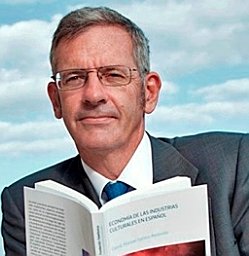 Manuel Santos Redondo合作论文数10
 Jose María Vindel合作论文数Departamento de Energía, Centro Investigaciones Energéticas, Medioambientales y Tecnológicas7
 Antonio Sanchez-Bayon合作论文数Univ Rey Juan Carlos Espana6José Luis Ramos Gorostiza合作论文数6Elena Gallego Abaroa合作论文数5j m vindel合作论文数4
 Luis Perdices Blas合作论文数3
 José Luis García Ruiz合作论文数Universidad Complutense de Madrid2
 Carlos Rodriguez Braun合作论文数2Inés Pérez-Soba Aguilar合作论文数Universidad de Zaragoza;Universidad Complutense de Madrid2Fernando Méndez Ibisate合作论文数2
 Elena Marquez De La Cruz合作论文数Universidad Complutense de Madrid2julio revuelta lopez合作论文数1Lorena Remuzgo Pérez合作论文数1
 Simone Fari合作论文数1luis manuel santos redondo合作论文数1ana rosa martinez canete合作论文数1carmen trueba salas合作论文数1cristina castillo perez合作论文数1
 Miguel A Bringas-Gutierrez合作论文数1
 Alfonso Palacio-Vera合作论文数1Juan Hernandez Andreu合作论文数1Mercedes Fernández Paradas合作论文数1
 Begona Perez Calle合作论文数1
 Francisco Cayon合作论文数autonomous university of madrid1
 Fernando Castellano合作论文数University of Granada1
 Elena Catalan合作论文数1
 manuel gonzalez mariscal合作论文数Dept Econ & Hist Econ, Univ Seville1
 Leonardo Caruana合作论文数Univ Granada1
 Alexander Urrego-Mesa合作论文数Faculty of Economics and Business Sciences, University of Granada1Ismael Hernández Adell合作论文数Univ Pompeu Fabra1Miguel Artola Blanco合作论文数1
 mauro hernandez benitez合作论文数1
 Rafael castro balaguer合作论文数Dept Econ Anal Econ Theory & Econ Hist, Autonomous Univ Madrid1
 Mariano Castro-Valdivia合作论文数1
 Gloria Aparicio合作论文数Fac Econ Empresa, Univ Basque Country UPV EHU1
 Jose Joaquin Garcia Gomez合作论文数Univ Almeria1
 Pablo Gutierrez Gonzalez合作论文数Univ Seville1
 Sara Torregrosa-Hetland合作论文数Department of Economic History, Lund University1
 Nadia Fernandez de Pinedo合作论文数Dept Econ Hist, Univ Autonoma Madrid1
 Manuel Diaz-Ordonez合作论文数Univ Seville1
 Marcos Fernandez-Gutierrez合作论文数Univ Cantabria, Santander, Spain1
 Juan-Manuel Mates-Barco合作论文数1
 Javier Silvestre合作论文数Fac Econ & Empresa, Univ Zaragoza1
 Marc Badia-Miro合作论文数Ctr Estudis Antoni de Capmany, Univ Barcelona1
 Daniel Diaz Fuentes合作论文数Department of Economics, University of Cantabria;Department of Policy Analysis and Management, Cornell University;University of Cantabria, Cornell University1
 Judith Clifton合作论文数Department of Economics, University of Cantabria;Department of City and Regional Planning, Cornell University;University of Cantabria, Cornell University1
 Alonso José M合作论文数Department of Economics, University of Cantabria1
 Mauricio Matus-Lopez合作论文数Métodos Cuantitativos e Historia Económica, Universidad Pablo de Olavide1




