Personnel PsychologyVolume 26, Issue 4 p. 461-477 THE VALIDITY OF APTITUDE TESTS IN PERSONNEL SELECTION EDWIN E. GHISELLI, EDWIN E. GHISELLI University of California, BerkeleySearch for more papers by this author EDWIN E. GHISELLI, EDWIN E. GHISELLI University of California, BerkeleySearch for more papers by this author First published: December 1973 https://doi.org/10.1111/j.1744-6570.1973.tb01150.xCitations: 177AboutPDF ToolsRequest permissionExport citationAdd to favoritesTrack citation ShareShare Give accessShare full text accessShare full-text accessPlease review our Terms and Conditions of Use and check box below to share full-text version of article.I have read and accept the Wiley Online Library Terms and Conditions of UseShareable LinkUse the link below to share a full-text version of this article with your friends and colleagues. Learn more.Copy URL Share a linkShare onEmailFacebookTwitterLinkedInRedditWechat REFERENCE Ghiselli, E. E. The validity of occupational aptitude tests. Wiley, 1966. Google Scholar Citing Literature Volume26, Issue4December 1973Pages 461-477 ReferencesRelatedInformation
Personnel PsychologyVolume 25, Issue 2 p. 185-199 THE MIXED STANDARD SCALE: A NEW RATING SYSTEM1 FRIEDRICH BLANZ, FRIEDRICH BLANZ University of Helsinki and Institute of Occupational Health, FinlandSearch for more papers by this authorEDWIN E. GHISELLI, EDWIN E. GHISELLI University of California, BerkeleySearch for more papers by this author FRIEDRICH BLANZ, FRIEDRICH BLANZ University of Helsinki and Institute of Occupational Health, FinlandSearch for more papers by this authorEDWIN E. GHISELLI, EDWIN E. GHISELLI University of California, BerkeleySearch for more papers by this author First published: June 1972 https://doi.org/10.1111/j.1744-6570.1972.tb01098.xCitations: 68 1 The authors would like to thank Dr. Lewis E. Albright of the Kaiser Aluminum and Chemical Company for providing facilities for collection of the data. AboutPDF ToolsRequest permissionExport citationAdd to favoritesTrack citation ShareShare Give accessShare full text accessShare full-text accessPlease review our Terms and Conditions of Use and check box below to share full-text version of article.I have read and accept the Wiley Online Library Terms and Conditions of UseShareable LinkUse the link below to share a full-text version of this article with your friends and colleagues. Learn more.Copy URL REFERENCES Bass, B. M. Reducing leniency in merit ratings. Personnel Psychology, 1956, 9, 359– 369. Blanz, F. A new merit rating method. Helsinki: Doctoral Dissertation, 1965. Edwards, A. Techniques of attitude scale construction New York : Appleton Century-Crofts, 1957. Ewart, A., Seashore, S., and Tiffin, J. A factor analysis of an industrial merit rating scale. Journal of Applied Psychology, 1941, 25, 481– 486. Sisson, D. E. Forced choice—The new army rating. Personnel Psychology, 1948, 1, 365– 381. Torgerson, W. Theory and methods of scaling New York : Wiley, 1958. Citing Literature Volume25, Issue2June 1972Pages 185-199 ReferencesRelatedInformation
Personnel PsychologyVolume 25, Issue 3 p. 413-420 NEED SATISFACTION, MANAGERIAL SUCCESS, AND ATTITUDES TOWARD LEADERSHIP EDWIN E. GHISELLI And, EDWIN E. GHISELLI And University of California, BerkeleySearch for more papers by this authorTHOMAS A. WYATT, THOMAS A. WYATT University of California, BerkeleySearch for more papers by this author EDWIN E. GHISELLI And, EDWIN E. GHISELLI And University of California, BerkeleySearch for more papers by this authorTHOMAS A. WYATT, THOMAS A. WYATT University of California, BerkeleySearch for more papers by this author First published: September 1972 https://doi.org/10.1111/j.1744-6570.1972.tb00826.xCitations: 1AboutPDF ToolsRequest permissionExport citationAdd to favoritesTrack citation ShareShare Give accessShare full text accessShare full-text accessPlease review our Terms and Conditions of Use and check box below to share full-text version of article.I have read and accept the Wiley Online Library Terms and Conditions of UseShareable LinkUse the link below to share a full-text version of this article with your friends and colleagues. Learn more.Copy URL Share a linkShare onFacebookTwitterLinked InRedditWechat Citing Literature Volume25, Issue3September 1972Pages 413-420 RelatedInformation
Personnel PsychologyVolume 25, Issue 4 p. 617-624 LEADERSHIP AND MANAGERIAL SUCCESS IN TALL AND FLAT ORGANIZATION STRUCTURES EDWIN E. GHISELLI, EDWIN E. GHISELLI University of California, BerkeleySearch for more papers by this authorJACOB P. SIEGEL, JACOB P. SIEGEL School of Business, University of TorontoSearch for more papers by this author EDWIN E. GHISELLI, EDWIN E. GHISELLI University of California, BerkeleySearch for more papers by this authorJACOB P. SIEGEL, JACOB P. SIEGEL School of Business, University of TorontoSearch for more papers by this author First published: December 1972 https://doi.org/10.1111/j.1744-6570.1972.tb02304.xCitations: 23AboutPDF ToolsRequest permissionExport citationAdd to favoritesTrack citation ShareShare Give accessShare full text accessShare full-text accessPlease review our Terms and Conditions of Use and check box below to share full-text version of article.I have read and accept the Wiley Online Library Terms and Conditions of UseShareable LinkUse the link below to share a full-text version of this article with your friends and colleagues. Learn more.Copy URL Share a linkShare onFacebookTwitterLinkedInRedditWechat Citing Literature Volume25, Issue4December 1972Pages 617-624 RelatedInformation
The present investigation examines the types of traits managers manifest which firms reward with higher pay, and whether age moderates the relationship between managerial talent and pay. Two hundred ninety-three middle managers, drawn from five large corporations, were assessed on the traits of intelligence, supervisory ability, initiative, self-assurance, and achievement. It was found that all five of the managerial traits were differentially rewarded depending on the age of the managers. The relationships between pay and measures of managerial talent were generally positive for younger managers, and gradually became lower and finally turned negative for older managers. The results are discussed in terms of organizational reward structures.
Personnel PsychologyVolume 23, Issue 4 p. 569-576 NEED SATISFACTION, MANAGERIAL SUCCESS, AND ORGANIZATIONAL STRUCTURE EDWIN E. GHISELLI, EDWIN E. GHISELLI University of California, BerkeleySearch for more papers by this authorDOUGLAS A. JOHNSON, DOUGLAS A. JOHNSON University of California, BerkeleySearch for more papers by this author EDWIN E. GHISELLI, EDWIN E. GHISELLI University of California, BerkeleySearch for more papers by this authorDOUGLAS A. JOHNSON, DOUGLAS A. JOHNSON University of California, BerkeleySearch for more papers by this author First published: December 1970 https://doi.org/10.1111/j.1744-6570.1970.tb01373.xCitations: 13AboutPDF ToolsRequest permissionExport citationAdd to favoritesTrack citation ShareShare Give accessShare full text accessShare full-text accessPlease review our Terms and Conditions of Use and check box below to share full-text version of article.I have read and accept the Wiley Online Library Terms and Conditions of UseShareable LinkUse the link below to share a full-text version of this article with your friends and colleagues. Learn more.Copy URL Share a linkShare onFacebookTwitterLinked InRedditWechat Citing Literature Volume23, Issue4December 1970Pages 569-576 RelatedInformation
Personnel PsychologyVolume 22, Issue 2 p. 125-130 PREDICTION OF SUCCESS OF STOCKBROKERS EDWIN E. GHISELLI, EDWIN E. GHISELLI University of California, BerkeleySearch for more papers by this author EDWIN E. GHISELLI, EDWIN E. GHISELLI University of California, BerkeleySearch for more papers by this author First published: June 1969 https://doi.org/10.1111/j.1744-6570.1969.tb02295.xCitations: 10AboutPDF ToolsRequest permissionExport citationAdd to favoritesTrack citation ShareShare Give accessShare full text accessShare full-text accessPlease review our Terms and Conditions of Use and check box below to share full-text version of article.I have read and accept the Wiley Online Library Terms and Conditions of UseShareable LinkUse the link below to share a full-text version of this article with your friends and colleagues. Learn more.Copy URL Share a linkShare onFacebookTwitterLinked InRedditWechat Citing Literature Volume22, Issue2June 1969Pages 125-130 RelatedInformation
Merit, defined as goodness of performance on jobs at a given level in an organization, often is used as a basis for the selection of persons for advancement so as to fill vacant positions at higher levels. By means of a simple mathematical model it was shown that structural properties of organizations bear upon the efficacy of merit as a basis for filling vacant positions. In general, advancement on the basis of merit is found to be most effective in organizations which have large spans of control, are homogeneous, and are flat in shape.
Personnel PsychologyVolume 21, Issue 4 p. 431-440 SOME MOTIVATIONAL FACTORS IN THE SUCCESS OF MANAGERS EDWIN E. GHISELLI, EDWIN E. GHISELLI University of California, BerkeleySearch for more papers by this author EDWIN E. GHISELLI, EDWIN E. GHISELLI University of California, BerkeleySearch for more papers by this author First published: December 1968 https://doi.org/10.1111/j.1744-6570.1968.tb02043.xCitations: 4AboutPDF ToolsRequest permissionExport citationAdd to favoritesTrack citation ShareShare Give accessShare full text accessShare full-text accessPlease review our Terms and Conditions of Use and check box below to share full-text version of article.I have read and accept the Wiley Online Library Terms and Conditions of UseShareable LinkUse the link below to share a full-text version of this article with your friends and colleagues. Learn more.Copy URL Share a linkShare onFacebookTwitterLinked InRedditWechat Citing Literature Volume21, Issue4December 1968Pages 431-440 RelatedInformation
for all individuals. This is held to be true whether reliability or validity of measurement is being considered. In the case of reliability, on any one given administration of a test the error scores are taken to vary in magnitude from one individual to another. For some individuals on this administration of the test the error of measurement is large, whereas for others it is small. However, over many parallel tests the standard deviation of error scores is taken to be precisely the same size for all individuals. More exactly, it would be said that as the number of parallel tests increases without limit the standard deviation of every individual’s error scores, the standard error of measurement, approaches the same value for all individuals. Consequently a given test is considered as measuring all individuals with the same degree of reliability. In a similar fashion the errors of prediction are taken to be of the same magnitude for all individuals. On any one administration of a given predictor and criterion, the error with which the former predicts the latter varies in magnitude from one individual to another. Consequently on a particular administration of the test and the criterion, for some individuals the error of prediction is large whereas for others it is small. However, over
The International ExecutiveVolume 9, Issue 2 p. 1-4 Research Roundup Managerial thinking Mason Haire, Mason Haire Faculty, University of California, BerkeleySearch for more papers by this authorEdwin E. Ghiselli, Edwin E. Ghiselli Faculty, University of California, BerkeleySearch for more papers by this authorLyman W. Porter, Lyman W. Porter Faculty, University of California, BerkeleySearch for more papers by this author Mason Haire, Mason Haire Faculty, University of California, BerkeleySearch for more papers by this authorEdwin E. Ghiselli, Edwin E. Ghiselli Faculty, University of California, BerkeleySearch for more papers by this authorLyman W. Porter, Lyman W. Porter Faculty, University of California, BerkeleySearch for more papers by this author First published: Spring 1967 https://doi.org/10.1002/tie.5060090201Citations: 1AboutPDF ToolsRequest permissionExport citationAdd to favoritesTrack citation ShareShare Give accessShare full text accessShare full-text accessPlease review our Terms and Conditions of Use and check box below to share full-text version of article.I have read and accept the Wiley Online Library Terms and Conditions of UseShareable LinkUse the link below to share a full-text version of this article with your friends and colleagues. Learn more.Copy URL Share a linkShare onFacebookTwitterLinked InRedditWechat Citing Literature Volume9, Issue2Spring 1967Pages 1-4 RelatedInformation
Personnel PsychologyVolume 19, Issue 4 p. 389-394 The Validity of a Personnel Interview Edwin E. Ghiselli, Edwin E. Ghiselli University of California, BerkeleySearch for more papers by this author Edwin E. Ghiselli, Edwin E. Ghiselli University of California, BerkeleySearch for more papers by this author First published: December 1966 https://doi.org/10.1111/j.1744-6570.1966.tb00313.xCitations: 22AboutPDF ToolsRequest permissionExport citationAdd to favoritesTrack citation ShareShare Give accessShare full text accessShare full-text accessPlease review our Terms and Conditions of Use and check box below to share full-text version of article.I have read and accept the Wiley Online Library Terms and Conditions of UseShareable LinkUse the link below to share a full-text version of this article with your friends and colleagues. Learn more.Copy URL Share a linkShare onFacebookTwitterLinked InRedditWechat Citing Literature Volume19, Issue4December 1966Pages 389-394 RelatedInformation
SummaryUsing a forced‐choice adjective check list, a scale measuring maturity of self‐perception was developed. Contrary to expectation, a positive relationship between maturity and success in managerial positions was not found. Rather those individuals whose self‐perceptions were like those of their own age were most likely to be successful managers and to achieve higher management positions.
 Clarence W. Brown合作论文数13
 Lyman W. Porter合作论文数Paul Merage School of Business, University of California, Irvine8Mason Haire合作论文数5Jp Siegel合作论文数2Thomas M. Lodahl合作论文数2Robert R. Sears合作论文数1Curt P. Richter合作论文数1roger w brown合作论文数1David Krech合作论文数1r duncan luce合作论文数1Wendell R. Garner合作论文数1Edward S. Jones合作论文数1james olds合作论文数1donald b lindsley合作论文数1richard l solomon合作论文数1paul thomas young合作论文数1fritz heider合作论文数1henry a murray合作论文数1j p guilford合作论文数1s s stevens合作论文数1
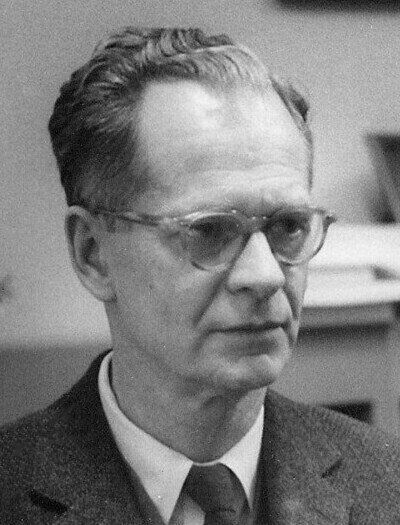 B. F. Skinner合作论文数Harvard University1Frank A. Beach合作论文数1David Shakow合作论文数1carl pfaffmann合作论文数1harry helson合作论文数1clarence h graham合作论文数1KW Spence合作论文数1nancy bayley合作论文数1
 Harry F. Harlow合作论文数University of Arizona1wolfgang kohler合作论文数1
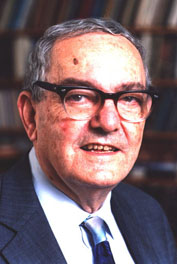 Herbert A. Simon (司马贺)合作论文数School of Computer Science, Carnegie Mellon University1
 Roger N. Shepard合作论文数Stanford University1
 Daniel Kahneman合作论文数School of Public and International Affairs, Princeton University1Donald T. Campbell合作论文数1
 Richard Chatham Atkinson合作论文数University of California, San Diego1Carl R. Rogers合作论文数1Neal E. Miller合作论文数1Charles E. Osgood合作论文数1Benton J. Underwood合作论文数University of Missouri1
 James Jerome Gibson合作论文数Smith College, Cornell University1Gordon W Allport合作论文数1
 George A. Miller合作论文数Department of Psychology, Princeton University1Floyd H. Allport合作论文数1Donald O. Hebb合作论文数1Leon Festinger合作论文数1Theodore M. Newcomb合作论文数1
 Eleanor Jack Gibson合作论文数Department of Psychology, Cornell University1Roger G. Barker合作论文数1Dorothea Jameson合作论文数1




