The integration of sustainable development into biology education has been a growing area of interest. Biology education for sustainability is considered through competencies and skills, taking different dimensions of knowledge into account. Solving problems requires not only knowledge but also communicative and strategic activity. Thus, biology education must emphasize the main visions of scientific literacy proposed in the literature, supporting students to understand society and everyday socioscientific challenges at the local as well as at the global level, and to deal with differing scientific results and uncertain information. However, there are very few studies from a holistic didactic viewpoint on the implementation of sustainable education (SE) in biology education in the context of teacher education and school education for promoting a sustainable future. This study addresses this gap via a bibliometric and content analysis of the literature (n = 165 and 131, respectively) based on the categories of the sustainable development goals (SDGs), subject aims, learning objectives, content knowledge, teaching methods, competencies and skills, and assessment methods. The literature analyzed emphasizes the environmental and social SDGs, the development of students’ factual and conceptual knowledge and learning, interactive teaching and learning methods, critical thinking and reflection, and summative and formative assessment methods. There is much less attention on economic and institutional SDGs, scientific skills, environmental attitudes, knowledge creation, strategic thinking and empathy, and diagnostic assessment methods. Compared to earlier studies performed in the 2010s, teaching and learning methods have become more diverse in contrast to the earlier focus on teacher-centered methods. Overall, the conclusion is that biology education must evolve beyond content mastery to integrate ethical, technological, and transdisciplinary dimensions—empowering learners not only to understand life but to sustain it—aligned with quality education (SDG 4), good health and well-being (SDG 3), and life on land (SDG 15). The findings also suggest that powerful knowledge needs to be emphasized for providing essential insights into ecosystems, biodiversity, and the processes that sustain life on Earth. They also highlight the importance of regular evaluations of teaching and learning for detecting how pedagogical and didactic approaches and strategies have supported students’ learning focused on sustainable development.
This quantitative study evaluated basic histology knowledge among 302 first-year Moroccan university students through a questionnaire based on the Bloom’s taxonomy on knowledge, comprehension, and application levels across four tissues (epithelium, connective, muscle, and nervous), assessing curriculum achievement and misconceptions. Students achieved partial descriptive competence in epithelium classification but exhibited also systemic relational failures—worst in connective tissue (78-100% failure rates, 70.2% average partial/incorrect responses)—revealing three prevalent misconception clusters (15-94%): extracellular matrix/matrix confusion (epithelium composition 67% and bone hydroxyapatite 94%), fiber/gland morphology errors (82-87%), and neuron/muscle structural conflations (45% axon misclassification). These kinds of knowledge gaps hinder the development of students’ biological and biomedical laboratory skills in accordance with secondary and university curricula. Student-centered, active learning strategies integrated with virtual microscopy platforms can prevent infrastructure constraints and visualization deficits, and support students’ meaningful tissue identification. Effective pedagogical practices are needed to achieve the learning objectives of the curricula, to strengthen students’ motivation and correct their misconceptions, and to harmonize histology teaching in secondary education and higher education.
Geography education plays an important role for promoting sustainability by integrating a variety of educational strategies and subject content that promote understanding of sustainable development practices. There are very few studies from a holistic didactic and pedagogical viewpoint on the implementation of sustainability education in geography in the context of teacher education and school education for promoting a sustainable future. This study addresses this gap via a bibliometric and content analysis of literature (n = 127 and 114, respectively), based on the categories of sustainable development goals (SDGs), learning objectives, content knowledge, teaching methods, competencies and skills, and assessment methods. Compared to earlier studies performed in the 2010s, teaching and learning methods have become more diverse in contrast to an earlier focus on teacher-centered methods. The most frequently mentioned from the dimensions of SDGs are environmental and social dimensions, and from the learning objectives cognitive learning. Factual and conceptual knowledge, interactive teaching and learning methods, critical thinking, problem solving and dealing with complexity, and formative assessment methods are also emphasized. Institutional dimensions of SDGs, affective learning objectives, metacognitive knowledge, and transdisciplinary skills, alongside diagnostic assessment methods are least mentioned. The findings suggest that pedagogical content knowledge and powerful knowledge need to be emphasized more for moving geography education, from subject matter content knowledge -focused approaches, to applying knowledge in different contexts, and to attitudes that support action outside specific contexts or cases. The conclusion is that aligning with Quality education (SDG 4), geography educators must stress action competence and integrate ethical, technological, and transdisciplinary dimensions, empowering students not only to understand life but to sustain it.
Subject content knowledge (SCK) and pedagogical content knowledge (PCK) are key components of teacher competence that affect teaching and students’ learning and thinking about the future. In this study, SCK and PCK were analyzed from Finnish and Spanish (n = 360) primary school student teachers’ (PSTs) answers using a questionnaire that included environmental problems and teaching sustainability. The answers were analyzed with theoretically guided deductive and inductive content analyses. The PSTs considered it important to teach factual, conceptual, methodological and metacognitive knowledge and skills for solving local, regional and global environmental problems. Critical and evaluative knowledge also appeared, but in rather few answers. The results are discussed regarding the meaning of SCK and PCK and a powerful knowledge of science disciplines, such as biology and the geosciences.
This study explores the pivotal role of theories of economics in shaping the multifaceted concept of sustainable development and integrates economic, social, and environmental dimensions. It traces the intellectual trajectory of classical, neoclassical, and contemporary economic paradigms, analysing their contributions to sustainability-oriented policies and practices. The study critically analyses key concepts, including equitable income redistribution, resource stewardship, and ecological preservation. It contrasts liberal and dependency theories while also comparing insights from environmental and ecological economics. Employing a rigorous literature review and comparative analytical methodology, the study bridges the theoretical foundations with real-world applications, illustrating the dynamic interplay between theories of economics and sustainability imperatives. The findings elucidate the dichotomy between weak and strong sustainability frameworks, advocating for ethical and interdisciplinary approaches to policymaking. By offering a comprehensive synthesis of the most influential theories of economics and sustainable development practices, this study provides profound insights for policymakers, academics, and practitioners seeking to address pressing global challenges through informed and integrative strategies.
In the contest of UNESCO’s eight teacher competencies for sustainable development, this survey study aimed to investigate Finnish (n = 190) and Spanish (n = 170) primary school student teachers’ views on competencies related to sustainability education and the ability to act as sustainability educators. The student teachers’ answers to a questionnaire were investigated using qualitative content analysis. The most common competencies that appeared in the answers were strategic thinking, collaboration and integrated problem-solving. Most often, strategic thinking was reflected in responses related to global, regional and local problems. Normative, critical and systems thinking were the rarest competencies, and self-awareness competency was not detected in the student teachers’ answers. In general, only one or two competencies were found in each answer, and no competency at all was found in the majority of the student teachers’ answers. The educational implications of these results and the implications for initial teacher education are discussed.
Pyrkimykset ratkaista kestävyysongelmia haastavat eri oppiaineiden opetuksen ja opetuksen tutkimuksen ottamaan huomioon kestävän kehityksen tavoitteet. Tässä kirjassa käsitellään biologian opetusta. Oleellinen kysymys on selvittää, miltä perustalta nousevat tavoitteet ja sisällöt opetukseen, jonka päämääränä on monipuolinen luonnontieteellinen sivistys ja kestävyyttä edistävä toimintakompetenssi. Kirjassa biologian opetuksen tutkijat tarkastelevat biologian tieteenalan, opetuksen sekä luonnontiedekasvatuksen ja kestävyyskasvatuksen välisiä yhteyksiä. Painopiste on biologian opetuksen ja kestävyyskasvatuksen teoreettisissa kysymyksissä ja empiirisessä tutkimuksessa. Kirjoittajat tarkastelevat myös biologian ja kestävyyden käsitteellistä ymmärtämistä sekä kiistanalaisia ja sensitiivisiä aiheita opetuksessa. Tutkimuksellista lähestymistapaa, ongelmanratkaisutaitoja sekä koulun ulkopuolella toteutettavaa biologian opetusta tarkastellaan luonnontieteellisen sivistyksen ja kestävyysosaamisen vahvistajina.
This article explores how global citizenship can be seen in the practices of science education in the context of international education policy and Finnish school and teacher education, with a focus on scientific literacy and sustainability education for promoting a sustainable future. Possibilities of science education to promote sustainability are discussed through teaching examples based on socio-scientific approaches. In addition, transformative science education for sustainability is regarded through competence development taking into account different knowledge dimensions. Solving problems however requires not only knowledge but also communicative and strategic and speculative activity. Thus, education must emphasize the main visions of scientific literacy and transdisciplinary perspectives proposed in the literature, supporting students to understand society and everyday socio-scientific challenges from the local to global level and to deal with differing scientific results and uncertain information. Our article presents findings and conclusions that provide opportunities for further work and provide insights into science and educational sustainability practice.
Systems thinking is considered an important skill when teaching biology and sustainable development in the 21st century. The key to understanding biodiversity and thus sustainability in biology is understanding reproduction as a phenomenon. The aim of this study is to analyse student teachers’ systems thinking levels regarding sustainability in connection with reproduction, biodiversity and sustainable development. Second-year primary school student teachers from one Finnish university (N = 174) participated in a questionnaire, and their open-ended answers were categorized using content analysis. The results indicate that most of the student teachers had a relatively low level of systems thinking concerning sustainable development and its relation to the concepts of biodiversity and reproduction. The study also showed that student teachers with higher interest towards biology had a more sophisticated level of systems thinking. For developing sustainability understanding, teaching focusing on the specific systems thinking skills concerning processing and understanding of wholes is crucial.
Teachers play a crucial role in supporting the development of students’ environmental knowledge and skills for responding to environmental change, but previous research has not sufficiently explored teachers’ perceptions of this matter. The article reports on a survey aimed at studying subject student teachers’ (SSTs, n = 113) perceptions of environmental problems, their interest in sustainable development (SD) and their own role as environmental problem solvers. The material was gathered using a questionnaire and analysis by quantitative methods. Urban environment and infrastructure problems were the most frequently mentioned. Problems of ecosystems and indifference and a lack of information were also mentioned often, while the least noted were problems of human wellbeing. The majority of SSTs were interested in SD, but interest in SD was dependent on the discipline studied and gender. Two-thirds of women and one-third of men were very interested, and more than half of biology and geography SSTs were very interested. Over half of SSTs reported that environmental problems had to be solved by someone else; only about one-seventh perceived themselves to be solvers. The SSTs felt that they could influence the solutions to environmental problems more often on a local than on a regional or global level.
The purpose of this study is to develop a theoretical framework by integrating the value-belief-norm (VBN) theory with environmental awareness in measuring Chinese university students’ environmentally sustainable behavior toward tourism destinations. University students tend to engage in sustainability efforts since their values and beliefs are still being formed. The participants were 301 university students from a university in eastern China. The empirical findings demonstrate that: (1) environmental awareness has positive influences on biospheric value, altruistic value and egoistic value; (2) biospheric value positively predicts the new ecological paradigm (NEP), whereas altruistic and egoistic values do not; (3) the NEP, awareness of consequence and personal norms play an important mediating role. Results indicate that extended VBN can explain students’ environmentally sustainable behavior. This research supports the growth of sustainable tourism and has a number of practical implications for universities and the relevant environmental departments to promote university students’ involvement in sustainable tourism.
 eija yli panula合作论文数16
 Eija Yli-Panula合作论文数14
 Irmeli Palmberg合作论文数12
 Pia Smeds合作论文数11Christel Persson合作论文数Dept Environm Sci & Biosci, Kristianstad Univ11Sirpa Kärkkäinen合作论文数10Ida Berg合作论文数5pia norrgardsillanpaa合作论文数5
 Anna Uitto合作论文数University of Helsinki, University of Helsinki5Raimo Hissa合作论文数5
 Sirpa Kurppa合作论文数MTT Agrifood Research Finland5Meiai Chen合作论文数4
 Mika Huuhtanen合作论文数Department of Process and Environmental Engineering, University of Oulu4Helmi Risku-Norja合作论文数4
 Juha Jeronen合作论文数4
 Jenni Ylä-Mella合作论文数University of Oulu;Department of Process and Environmental Engineering;Heat Transfer Process Laboratory4
 Bouchta El Batri合作论文数3
 Jamal Ksiksou合作论文数3Sofia Vesterkvist合作论文数3Marjatta Kaikkonen合作论文数3
 Maskour Lhoussaine合作论文数Regional Center for Education and Training Professions (CRMEF), Dakhala Oued Eddahab, Morocco.3Riitta L. Keiski合作论文数3
 Sanna Maki合作论文数3Boujemaa Agorram合作论文数3Esa Turpeinen合作论文数3Minna Mikkola合作论文数3Rytis Vilkonis合作论文数National Institute for Research and Development3
 Gunnhildur Oskarsdottir合作论文数2
 Anouar Alami合作论文数2
 Janis Gedrovics合作论文数2Rahma Bouali合作论文数2Piia Lemmetty合作论文数2ane fleischer合作论文数2Lihua Xu合作论文数2
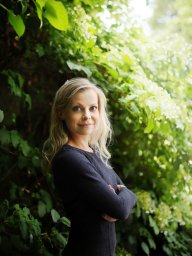 Ilona Sodervik合作论文数Ctr Univ Teaching & Learning HYPE, Univ Helsinki2
 Isabel Banos-Gonzalez合作论文数Faculty of Education, University of Murcia;Faculty of Education, University of Murcia2
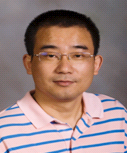 Anming Wang (王安明)合作论文数School of Pharmacy, Hangzhou Normal University2Birgitte Stougaard合作论文数2Ahti Pyornila合作论文数2Roar Kråkenes合作论文数1
 Maria Hofman合作论文数1Varpu Eloranta合作论文数1
 Mikaela Hermans合作论文数1Merja Karjalainen合作论文数1
 Eila Annikki Matikainen合作论文数1alison hudson合作论文数1Merike Kesler合作论文数1anja lindh合作论文数1




