The main idea behind the Open Source model of software development is to promote open collaboration in a decentralized process of coding. Varied endeavors have taken place in order to encourage, support and maintain the Open Source initiative, always focusing on the programming part of software development. Little to none has been said regarding decentralized, open collaboration in the system design process as a whole. Aiming at understanding what an OpenDesign initiative for information systems design would be, this article further explores the SAwD tool in a case study that considers the context of designing IoT solutions for airports. Organisational Semiotics and the Socially Aware Design constitute the theoretical basis of this work.
One of the challenges faced by designers when creating technology is to be aware of social responsibilities when proposing a new digital artefact. With the popularization of computational technology among children, the challenge gains new proportions. Varied digital solutions have been presented for children at hospitals to lessen anxiety, stress and loneliness caused by hospitalization. If designers do not consider the broader view of the context, the social consequences of the use of their solutions might worsen users’ initial situation. In order to better understand the context and obtain a more comprehensive view from the state of the art in this subject, we used a Semiotic Framework and the Principles for Affectibility to analyze artefact solutions proposed for hospitalized children. As a result, we identified gaps that represent new opportunities for research. The results are discussed towards more social awareness towards new, contemporary interfaces that defy traditional interaction forms.
The ubiquitous presence of digital technology in daily activities and our bodily immersion in such activities present new and interesting opportunities for research in Human-computer interaction. Immersive and interactive solutions for art exhibitions and museums can enhance visitors' experiences, providing for richer affective and cognitive experiences. However, most of the existing solutions are not suitable for all people, especially visitors with physical impairment. Many museums in Brazil do not even offer possibilities for visitors with visual disabilities to enter and locate themselves. This paper informs norms and solutions for accessibility in museums and starts a discussion on new opportunities for investigation in HCI, especially in accessible information visualization and socio-enactive systems.
Este artigo apresenta e discute o processo de criação do conteúdo programático de um curso de extensão que foi oferecido dentro do Programa [nome omitido para Blind Review]. O programa tem como público alvo pessoas da meia idade e terceira idade e oferece programação variada com diversos cursos, workshops e palestras. Com o objetivo de aproximar essas pessoas das formas de comunicação atuais, o curso "Letramento em Tecnologias Móveis"; buscou fornecer recursos para que os participantes pudessem explorar e aprender por si próprios como usar a sempre mutante tecnologia contemporânea. Avaliação de respostas afetivas mostram resultados positivos em relação a prazer, empolgação e domínio/conforto, sugerindo a efetividade da proposta de conteúdo e metodologia deste curso, desenhado especificamente para as atividades, habilidades e necessidades específicas deste grupo de pessoas.
Lang and Bradley's Self-Assessment Manikin (SAM) is an assessment tool that has been successfully used in different areas to elicit the affective responses in the three levels of valence, excitement and dominance. The pictographic format of this instrument makes it accessible for those with low literacy skills, including children and the elderly. In this article, we report and discuss our experiences using SAM and we present the adaptations made to SAM along a process that originated new formats of SAM, used in design practices with children.
Atualmente estima-se que 15% da população mundial tenham algum tipo de deficiência física ou sensorial e que mais de 20% tenham baixos níveis de letramento, inclusive digital. Numa época marcada pela informatização dos serviços, por novos aplicativos e dispositivos computacionais cada vez mais rápidos, a inclusão desse público em ambientes digitais ainda enfrenta muitas barreiras, e grande desse público ainda se encontra fora da sociedade informacional. Muitas iniciativas vêm sendo empreendidas para solucionar ou atenuar esse problema. Nesse âmbito, a criação de uma agência de atendimento automatizado acessível a todos os perfis de consumidor foi iniciada pela *** com vistas a tornar-se um ambiente que favoreça interações otimizadas com dispositivos computacionais e possibilitar a solicitação de serviços e informações, com pouco ou nenhum auxílio de humanos. Isso exigiu estudos envolvendo boas práticas de design de interação, de forma a efetivamente atender esse público-alvo. O presente trabalho descreve a solução iconográfica concebida para tornar as interfaces multimodais da nova agência mais eficazes e inclusivas. Essa eficácia foi mensurada tendo como referência os ícones atualmente utilizados na agência virtual da concessionária e aferida em dinâmicas com usuários.
In spite of some divergence on interpretations of the concept of “affordance”, the term is fundamental in HCI and interaction design. More recently, the recognition of the affective quality of systems is becoming increasingly important as well. As an emerging subject, there is a lack of discussion on related concepts and, ultimately, on their practical implications. The objective of this paper is to bring into discussion the concept of affect under the perspective of affordance. From a socio-cultural view, this paper articulates affective affordances within the theoretical references of Organizational Semiotics and the Socially Aware Design; and concludes with prospections on potential applications for the design of technology.
As tecnologias digitais cada vez mais fazem parte do nosso cotidiano, estando presentes em todos os lugares. As abordagens tradicionais de design faziam sentido quando a computacao era direcionada e centrada em atividades bem especificas. As bases que designers antes seguiam para direcionar seus esforcos tinham por referencia os conceitos de usabilidade e acessibilidade. Mais recentemente, esses conceitos passaram a ser reforcados, abrindo espaco para a exploracao de outras abordagens, como a relacionada a aspectos afetivos da interacao. Sendo um tema relativamente novo, modelos e frameworks que associem a qualidade afetiva da interacao com o design de sistemas ainda sao escassos, principalmente quando o publico alvo sao criancas em contexto de aprendizado.
In analogy to the concept of usability, learnability and playability, the concept of Affectibility was conceived to inform the design process – in this case with affective aspects of interaction. In this paper we present a revised set of the Principles for the Design for Affectibility, together with practical examples of use and application. The objective is to support designers in the process of creating educational systems for children, considering aspects of affect.
The objective of the design principles for Affectibility is to help designers to reason about and consider affect in the design process. The principles were proposed thinking about the context of children's education. Previous studies suggest that the use of the principles results in software that children have rather positive responses when interacting with them. In this paper we explored the principles for Affectibility in a context outside children's education. The principles were introduced to a group of prospective designers (undergraduate students), who had to create mobile applications for the World Cup. Students elicited the main concepts (using participatory techniques) for the new applications; and then developed and evaluated each other's applications. The objective of this work is to evaluate the viability of the use of the principles outside educational contexts and to understand the use designers make of the principles.
As stated by the Brazilian Computer Society, the 'participative and universal access to knowledge' is one of the grand challenges in computer science research. In this work we describe our attempt to address this challenge of designing automated digital solutions in the environment of a public agency of an electric energy utility company. The potential users include the blind, deaf, low vision, low literate, elderly, young, and digital experts or not. The main contribution of this paper is the proposal of a participatory practice that anticipates the communication problems that might occur when this diversity of users are gathered to interact collaboratively in a same activity. We point out the lessons learned from this experience, which might guide other practitioners and designers.
This paper reports on our experience as Participant Observers in a Project introducing the XO laptop at an elementary school in Brazil. Working together with all members of the school community, we experienced their daily activities with and without technology. Our objective was to build a better understanding of the affective and emotional relationships developed among the community. Moreover, we wanted to understand how users made use and sense of technology. In this article we investigate the presence of affect in our study scenario using the method of Participant Observation. This study was one of the initial steps towards the design of an educational system to be used at elementary schools.
New ways to interact with technology are gaining ground over the familiar Graphical User Interfaces (GUI). The Tangible User Interfaces (TUI) are one example of this. However, while it may seem intuitive that such interfaces should evoke rather positive responses from users – e.g. feelings associated with pleasure – little has been studied in this sense. In this challenge of understanding the feelings that GUI and TUI have the potential to evoke, we present our findings from a research that involved more than a hundred people. The research question that guided our endeavors was: What are the relations between the feelings of joy, motivation and comfort when using TUI and GUI? We analyze the results and discuss some hypotheses to explain the behavior observed.
Designing universal solutions for touchscreen interfaces that are accessible to the greatest extent of the population as possible constitute a challenge for most designers. In this paper we discuss an interaction model that addresses this challenge in a universal and participatory way. In the context of public self-service kiosks, we combined two successful solutions -- CPqD Alcance and STID -- into one to make touchscreens accessible in the universal design.
Enormous changes in the computing field are being experienced, altering the way we relate ourselves with computational technology. If computers had at first limited function and presence in our lives, they are now being used everywhere, all the time, for a multitude of purposes and interaction means for interactivity, supporting even our social relations. This shift calls for new ways of evaluating systems, demanding attention not only to usability and accessibility issues but also to the emotional and affective ones. This paper presents a brief review on theory and methods for affective evaluation of computer systems, as a preliminary discussion on the suitability of existing methods for social software applications. The discussion is instantiated in inclusive social software - Vila na Rede, a system developed under a participatory design approach with the purpose of fostering a digital culture among the less favoured segment in the Brazilian society.
The research communities in HCI and Informatics in Education have been showing a crescent interest in the investigati on and discussion of social and affective aspects in educational technology. In this article we promote a discussion where affect is taken as a value and, fo r that, we articulate two conceptual frameworks: Value Pie and the Framework for the Design for Affectibility, which support and inform the design focusing on values and affect, respectively. This discussion innovates in the articulation of these two frameworks and it contributes with theoretical and practical suggestions for designers. Moreover, it provides base to construct a new perspective in the way we handle affective issues in the design of com putational systems. Resumo. As comunidades de pesquisa em IHC e Informatica na Educacao vem mostrando crescente interesse em investigar e d iscutir aspectos sociais e afetivos em tecnologias educacionais. Entendendo Af eto como Valor, promovemos neste artigo uma discussao que articula as contribuicoes de dois frameworks conceituais: o Value Pie e o Framework p ara Design para Afetibilidade — frameworks que apoiam e informam o design com foco em valores e afeto, respectivamente. Esta discussao in ova ao articular esses dois frameworks e contribui ao oferecer sugestoes de car ater teorico e pratico para designers, alem de servir como base para uma nperspectiva na forma de tratar questoes afetivas no design de sist emas computacionais. 1. Introducao
Digital artifacts have the potential for augmenting the interest of students and the quality of learning environments. However, it is still common to find technology being inserted in learning settings without a closer connection to the learners' contemporary world. In this paper we report on results of a qualitative research conducted to address questions such as: How could a new technology be introduced in schools in a way that it makes sense to the users? Could it contribute to more integrated learning scenarios? The study took place at an elementary public school in the city of Campinas, in Sao Paulo, Brazil, and involved more than 500 people. Data were collected from participatory Workshops, informal interviews and pictographic questionnaire. The results suggest that it is possible to combine school's formal and informal practices into meaningful learning by using the XO educational laptop. The activities helped teachers and students realize that the use of technology can be recreated, influenced by their own feelings, values and culture. A discussion is conducted towards new perspectives on understanding learning practices mediated by technology and the role of the concept of 'Affectibility' in the design of educational systems.
The school context offers many opportunities to explore the use of digital technologies. When designing for schools, systems designers usually tend to consider only the students or, at most, teachers and students. However, schools are complex social organizations that are composed by many other interested parties. When aiming at solutions that make sense to the users, the entire school, as an organization, should be considered. This paper, presents the activities we conducted at an elementary public school in Brazil, facing the challenge of constructing meaning for a new digital artifact. For the analysis of organization and context we used adapted practices from Organizational Semiotics (OS) and Participatory Design (PD). Our results suggest that both OS and PD are suitable for educational projects and they can anticipate problems and propose solutions for prospective use of technology in such contexts.
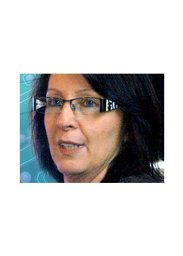 Maria Cecília Calani Baranauskas合作论文数University of Campinas37
 Vânia Paula De Almeida Néris合作论文数Advanced Interaction Laboratory – LIA, UFSCar6
 Sergio Roberto Pereira da Silva合作论文数Universidade Federal do Paraná (UFPR),5
 Maria Cecília Martins合作论文数5
 Leonardo Cunha De Miranda合作论文数Universidade Federal do Rio Grande do Norte (UFRN),5
 Leonelo Dell Anhol Almeida合作论文数Universidade Tecnológica Federal do Paraná5
 Julián Esteban Gutiérrez Posada合作论文数Syst Engn & Comp, Univ Quindio UNIQUINDIO4
 Jose Valderlei da Silva合作论文数3
 Fabiani de Souza合作论文数2Sergio H. Mourthé Duarte合作论文数2Robson Eudes Duarte合作论文数2
 Heiko Horst Hornung合作论文数Departamento de Sistemas de Informação, Instituto de Computação;Universidade Estadual de Campinas2
 Julio C. dos Reis合作论文数Institute of Computing, State University of Campinas2Bruna Zanetti Panaggio合作论文数1
 Paula Dornhofer Paro Costa合作论文数School of Electrical and Computer Engineering, University of Campinas1
 Lara S. G. Piccolo合作论文数Knowledge Media Institute, The Open University Milton Keynes1
 Alessandro Arpetti合作论文数University of Campinas, Marche Polytechnic University1
 Vanessa Regina Margareth Lima Maike合作论文数Universidade Estadual de Campinas UNICAMP1Henrique M. Costa合作论文数1
 Claudinei Martins合作论文数Fundação Centro de Pesquisa e Desenvolvimento em Telecomunicações (CPqD)1Ewerton M. Martins合作论文数Fundação Centro de Pesquisa e Desenvolvimento em Telecomunicações (CPqD)1
 Tiago Cinto合作论文数1
 Jose Mario De Martino合作论文数1Maria Elisabette合作论文数1Ewerton M. Menezes合作论文数1
 Samuel B Buchdid合作论文数UNICAMP, State University of Campinas1B. B. Prado合作论文数1Cristiane M. Ogushi合作论文数1Lara Schibelsky G. Piccolo合作论文数1




