Many cognitive processes involve transformations of distributed representations in neural populations, creating a need for population-level models. Recurrent neural network models fulfill this need, but there are many open questions about how their connectivity gives rise to dynamics that solve a task. Here, we present a method for finding the connectivity of networks for which the dynamics are specified to solve a task in an interpretable way. We apply our method to a working memory task by synthesizing a network that implements a drift-diffusion process over a ring-shaped manifold. We also use our method to demonstrate how inputs can be used to control network dynamics for cognitive flexibility and explore the relationship between representation geometry and network capacity. Our work fits within the broader context of understanding neural computations as dynamics over relatively low-dimensional manifolds formed by correlated patterns of neurons. Author summary Neurons in the brain form intricate networks that can produce a vast array of activity patterns. To support goal-directed behavior, the brain must adjust the connections between neurons so that network dynamics can perform desirable computations on behaviorally relevant variables. A fundamental goal in computational neuroscience is to provide an understanding of how network connectivity aligns the dynamics in the brain to the dynamics needed to track those variables. Here, we develop a mathematical framework for creating recurrent neural network models that can address this problem. Specifically, we derive a set of linear equations that constrain the connectivity to afford a direct mapping of task-relevant dynamics onto network activity. We demonstrate the utility of this technique by creating and analyzing a set of network models that can perform a simple working memory task. We then extend the approach to show how additional constraints can furnish networks whose dynamics are controlled flexibly by external inputs. Finally, we exploit the flexibility of this technique to explore the robustness and capacity limitations of recurrent networks. This network synthesis method provides a powerful means for generating and validating hypotheses about how task-relevant computations can emerge from network dynamics.
Representation and computation are the best tools we have for explaining intelligent behavior. In our program, we explore the space of representations present in the mind by constraining them to explain data at multiple levels of analysis, from behavioral patterns to neural activity. We argue that this integrated program assuages Brette's worries about the study of the neural code.
Grid cells in the entorhinal cortex are believed to establish their regular, spatially correlated firing patterns by path integration of the animal’s motion. Mechanisms for path integration, e.g. in attractor network models, predict stochastic drift of grid responses, which is not observed experimentally. We demonstrate a biologically plausible mechanism of dynamic self-organization by which border cells, which fire at environmental boundaries, can correct such drift in grid cells. In our model, experience-dependent Hebbian plasticity during exploration allows border cells to learn connectivity to grid cells. Border cells in this learned network reset the phase of drifting grids. This error-correction mechanism is robust to environmental shape and complexity, including enclosures with interior barriers, and makes distinctive predictions for environmental deformation experiments. Our work demonstrates how diverse cell types in the entorhinal cortex could interact dynamically and adaptively to achieve robust path integration.
As the human brain develops, it increasingly supports coordinated control of neural activity. The mechanism by which white matter evolves to support this coordination is not well understood. Here we use a network representation of diffusion imaging data from 882 youth ages 8-22 to show that white matter connectivity becomes increasingly optimized for a diverse range of predicted dynamics in development. Notably, stable controllers in subcortical areas are negatively related to cognitive performance. Investigating structural mechanisms supporting these changes, we simulate network evolution with a set of growth rules. We find that all brain networks are structured in a manner highly optimized for network control, with distinct control mechanisms predicted in child vs. older youth. We demonstrate that our results cannot be explained by changes in network modularity. This work reveals a possible mechanism of human brain development that preferentially optimizes dynamic network control over static network architecture.
As the human brain develops, it increasingly supports the coordinated synchronization and control of neural activity. The mechanism by which white matter evolves to support this coordination is not well understood. We use a network representation of diffusion imaging data to show that white matter connectivity becomes increasingly optimized for a diverse range of predicted dynamics in development. Such optimized topologies emerge across 882 youth from ages 8 to 22 evidencing increasing local specialization. Notably, stable controllers in subcortical areas are negatively related to cognitive performance. Seeking to investigate structural mechanisms that support these changes, we simulate network evolution with a set of growth rules, to find that all brain networks -- from child to adult -- are structured in a manner highly optimized for network control. We further observe differences in the predicted control mechanisms of the child and adult brains, suggesting that the white matter architecture in children has a greater potential to increasingly support brain state transitions, potentially underlying cognitive switching. This work suggests mechanisms for the propagation and stabilization of brain activity at various spatial scales, revealing a possible mechanism of human brain development that preferentially optimizes dynamic network control over static features of network architecture.
 Ari E Kahn合作论文数Univ Penn, Dept Neurosci, Philadelphia, PA 19104 USA3
 Evelyn Tang合作论文数3
 Dani S. Bassett合作论文数Department of Bioengineering, University of Pennsylvania;Departments of Physics & Astronomy, School of Arts & Sciences, University of Pennsylvania;Santa Fe Institute3
 David Roalf合作论文数Brain Behavior Laboratory, Department of Psychiatry, Perelman School of Medicine, University of Pennsylvania3
 Shi Gu (顾实)合作论文数College of Computer Science and Technology, Zhejiang University3
 Graham Baum合作论文数Spring Health3
 Raquel Gur合作论文数Department of Psychiatry, Perelman School of Medicine, University of Pennsylvania3
 Ruben C. Gur合作论文数Neuropsychology and the Brain Behavior Laboratory, Department of Psychiatry, Perelman School of Medicine, University of Pennsylvania3
 Tyler Moore合作论文数Cyber Security and Information Assurance
Tandy School of Computer Science, The University of Tulsa3Kosha Ruparel合作论文数Department of Psychiatry, University of Pennsylvania3
Tyler Moore合作论文数Cyber Security and Information Assurance
Tandy School of Computer Science, The University of Tulsa3Kosha Ruparel合作论文数Department of Psychiatry, University of Pennsylvania3 Chad Giusti合作论文数Dept Math, Willamette Univ3
 Theodore D. Satterthwaite合作论文数Neurodevelopment and Psychosis Section, Perelman School of Medicine, University of Pennsylvania;Center for Biomedical Computing and Image Analysis, Perelman School of Medicine, University of Pennsylvania;Institute for Translational Medicine and Therapeutics, Perelman School of Medicine, University of Pennsylvania3
 Lio Wong合作论文数Computational Cognitive Science Group, Brain and Cognitive Sciences Department, Massachusetts Institute of Technology1Niral Desai合作论文数1
 João Loula合作论文数Massachusetts Institute of Technology Cambridge, jloula mit edu1
 Vijay Balasubramanian合作论文数Department of Physics and Astronomy, School of Arts & Sciences, University of Pennsylvania;David Rittenhouse Laboratories, University of Pennsylvania1
 Jon Gauthier合作论文数Department of Neurological Surgery, University of California, San Francisco1
 Mehrdad Jazayeri合作论文数MIT Department of Brain and Cognitive Sciences1
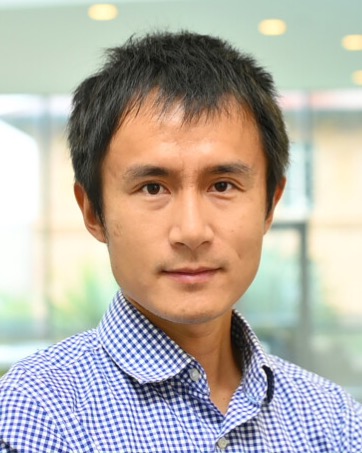 Xuexin Wei合作论文数Department of Neuroscience, College of Natural Science, The University of Texas at Austin1




