Numerous lineages of theropod dinosaurs display notable modification of the forelimb, particularly reduction in size and number of digits. Alvarezsauroids are one of the most striking examples of this, exhibiting extreme shortening and increased robusticity of forelimb elements, with a functionally monodactylous manus in late-diverging taxa. These features are generally interpreted as adaptations for digging, possibly as part of a myrmecophagous ecology. Here, we test this hypothesis, using computational range of motion analysis of the shoulder and elbow joints to demonstrate the feasibility of digging behaviours in Mononykus olecranus, a highly specialized alvarezsauroid, and the less specialized Bannykus wulatensis. We find that Bannykus has the capacity for various digging styles and generalized forelimb function, while Mononykus has more restricted motion and may have employed a highly specialized digging style. We also identify similarities in forelimb muscle moment arms between alvarezsaurs and specialized mammalian diggers, supporting adaptation for digging. These findings are consistent with interpretations of insectivory in alvarezsauroids, and suggest increasing specialization to myrmecophagy throughout their evolutionary history, shedding new light on the evolution of this enigmatic clade and the ecological diversity of non-avian theropod dinosaurs.
Abstract The radiation of tetrapods during the Devonian and Early Carboniferous was associated with a transition from aquatic to terrestrial environments, with attendant changes in feeding ecology. Despite this, evidence suggests that feeding morphology remained relatively static throughout this transition, until morphological disparity eventually rose later in the Carboniferous and Permian. Using a theoretical morphospace and functional optimality approach, we characterize the functional evolution of tetrapod mandibles, finding an antagonistic relationship between the strength, rotational efficiency, mechanical advantage and height of jaw morphologies. We further show that the regions of morphospace occupied by the jaws of aquatic and faunivorous terrestrial tetrapods are optimised within this trade-off. As terrestrial herbivores radiated, they explored broader regions of jaw morphospace characterised by deeper, stronger jaw shapes, driving the delayed spike in jaw disparity. We interpret this as a release of functional constraint on the jaw morphology by the evolution of herbivory, with new functional demands driving evolutionary innovation. While feeding in aquatic and terrestrial environments is fundamentally different, the criteria for functional optimality in the lower jaw did not change across this transition. Instead, access to terrestrial plant-based diets drove mandibular change.
The evolution of wings and flapping flight was integral to the radiation of Pterygota, but little is known about the factors underpinning the morphological disparity of insect wings. We use a theoretical morphospace approach to investigate forewing morphology across the four major clades in Hymenoptera (sawflies, wasps, bees and ants). Using elliptical Fourier analysis we quantified the outline of 298 forewings and generated 494 theoretical forms plotted within a morphospace. Theoretical forewing shapes were analysed across three metrics for flight performance that are antagonistic and ranked subsequently according to their functional optimization. The results show theoretical wings with larger, rounder apical tips were most optimized for a trade-off between reducing induced drag and increasing both lift production and breakage resistance. Empirical forewings cluster in a suboptimal region of theoretical morphospace exhibiting moderate flight performance. Phylomorphospace analysis reveals high levels of convergence in wing shapes across Hymenoptera, with a weak but significant phylogenetic signal. Regression analyses found significant allometric covariation but no significant relationship with environmental measures (temperature and precipitation) on forewing morphology. These findings demonstrate that hymenopteran wing morphologies are not optimized for flight function. Instead, function and allometry act in concert to constrain the variation of hymenopteran forewing morphologies.
Automated segmentation of three-dimensional micro-computed tomography (CT) scan data is a critical bottleneck in computational morphometrics and biomechanical modelling across musculoskeletal biology. Although advances in imaging have generated increasingly large and complex datasets, manual segmentation remains prohibitively time-consuming, while existing deep learning solutions are often application-specific and rarely validated for their impact on downstream analyses. Here we present a generalisable computational framework for automated segmentation and biomechanical validation of skeletal structures, implemented using an attention-augmented 3D U-Net architecture. Using the adult zebrafish (Danio rerio) mandible as a representative case study, the network was trained on 47 manually segmented specimens and evaluated using a combined Dice-Hausdorff metric that integrates both volumetric and surface accuracy to capture biologically relevant morphology better than Dice score alone. To assess performance in a downstream biomechanical context, we directly compared automated segmentations with those produced by three expert human annotators and constructed finite element models from each. Quantitative comparisons of segmentation accuracy and statistical analyses of finite element outputs demonstrate that automated segmentations perform within the range of expert human annotations, with no systematic bias in mechanical predictions. By explicitly linking geometric accuracy to biomechanical outcomes, this work establishes an end-to-end pipeline for validating automated segmentation in computational biology. The framework will be applicable to a wide range of musculoskeletal and palaeobiological contexts, including comparative anatomy, ageing and disease studies, and fossil or incomplete specimens, where scalable and mechanically faithful segmentation is essential.
Theropoda is one of the most extensively studied dinosaur clades, including iconic carnivores such as Tyrannosaurus rex and Spinosaurus aegyptiacus. The clade includes the largest terrestrial bipeds ever described, including three lineages that independently achieved giant size: Megalosauroidea, Allosauroidea, and Tyrannosauroidea. Here, we investigate how increasing size influenced feeding performance by quantifying feeding-induced mechanical performance across numerous large theropods using 3D finite element analysis. Unexpectedly, we discovered a divergence in functional strategy among the three lineages that led to gigantic top predators: in non-tyrannosauroid theropods, skull stress generally did not increase with size, in contrast to tyrannosauroids, which experienced greater stress due to increased muscle volume and bite forces. When skulls were scaled to equivalent size, smaller theropods, particularly basal taxa, experienced higher stresses. Despite similar scaling constraints, theropods adopted two distinct functional and likely ecological strategies: increased size with reduced stress or increased skull size, muscle volume, and bite force at the cost of higher stress. Giant tyrannosaurids uniquely maximized bite force despite elevated cranial stress, a strategy perhaps driven by the demands of subduing increasingly large and mobile prey in the Late Cretaceous. Alternatively-or additionally-this shift may reflect ecological displacement by coexisting predators such as smaller theropods and giant crocodyliforms. Whatever the cause, tyrannosaurids pursued a high-risk, high-reward feeding strategy unlike any seen in their Early Cretaceous counterparts, underscoring a profound shift in mega-carnivore evolution near the end of the Mesozoic.
“Saber teeth”—elongate, blade-like canines—are a classic example of convergence, having evolved repeatedly throughout mammalian history. Within canine teeth, there is a trade-off between the aspects of shape that improve food fracture and those that increase tooth strength. Optimal morphologies strike a balance between these antagonistic functional criteria. The extreme saber-tooth morphology is thought to confer functional advantage for more specialized predatory adaptations and optimization; however, the adaptive bases underpinning their evolution remain unclear. To determine whether saber-tooth shape reflects selection for functionally optimal morphologies, we generated a morphospace of the 3D shape of 70 non-saber and 25 saber-tooth species, a subset of which were used to quantify functional metrics of puncture performance and breakage resistance. These data were combined using a Pareto rank-ratio algorithm to evaluate optimality. We demonstrate that extreme saber-tooth morphologies are functionally optimal, occupying a localized peak in our optimality landscape. Unlike other optimal canine morphologies, extreme saber teeth optimize puncture performance at the expense of breakage resistance. This identifies functional optimality as a key driver underpinning the repeated evolution of this iconic tooth.
Crocodyliforms display a diverse range of skull morphologies through their evolutionary history. Extant crocodilians possess platyrostral (broad and flat) snouts, thought to be sub-optimal for resisting feeding loads due to the conflicting demands of feeding and hydrodynamic constraints. In contrast, numerous Mesozoic crocodyliforms possessed oreinirostral (dome-shaped) skulls, were terrestrial and hence free from hydrodynamic constraint. This study aims to examine the role of function in determining skull shape in crocodyliforms and assesses the difference in stress resistance between oreinirostral and platyrostral taxa. We hypothesize that in the absence of hydrodynamic constraints, oreinirostral taxa have skulls that are better suited for resisting feeding-induced loads. Using finite element analysis, we evaluated biomechanical performance in oreinirostral notosuchian taxa Baurusuchus salgadoensis, Montealtosuchus arrudacamposi and Caipirasuchus paulistanus, compared to the extant platyrostral Alligator mississippiensis, Crocodylus niloticus and Paleosuchus palpebrosus. Results show that oreinirostral morphologies are comparatively better suited for resisting forces generated during feeding, with increased muscular efficiency, supporting the hypothesis that hydrodynamic constraints influence crocodyliform skull evolution.
ABSTRACT The early tetrapod Eoherpeton watsoni is known from the mid- to late Carboniferous (late Viséan to Namurian, approximately 346–313 Ma) of Scotland. The holotype is made up of a nearly complete but crushed skull with postcranial fragments. The skull anatomy of Eoherpeton was first described over 40 years ago; however, many details are obscured due to deformation of the specimen, including internal bone surfaces, the palatal bones and dentition, and suture morphology. Most phylogenetic analyses place Eoherpeton as an embolomere/reptilomorph on the lineage leading to amniotes, making it a key taxon for understanding anatomical changes during the fish-tetrapod transition. In this paper, we scanned the holotype using micro-computed tomography and digitally prepared the specimen. Based on these data, we present a revised description of the skull, including sutural morphology, that supplements and amends previous descriptions. New anatomical findings include the presence of a previously unknown tooth-bearing vomer, additional information on the shape of the basipterygoid processes and jaw joint, the ability to visualise the full extent of the pterygoid, and confirmation of the arrangement of the coronoid series. We also note the size of the pterygoid flange, which is larger than previously described for Eoherpeton. The pterygoid flange is widely considered to be characteristic of amniotes and serves as the origin of the medial pterygoideus muscle. The differentiation of the adductor muscles and appearance of medial pterygoideus are thought to have permitted a static pressure bite in amniotes, potentially resulting in greater bite forces and increased dietary range. Thus, the presence and extent of the pterygoid flange in Eoherpeton suggests this feature (and associated changes in feeding mechanism) may have evolved earlier than previously thought. Finally, the skull was digitally repaired and retrodeformed to create a new, hypothetical three-dimensional reconstruction of the skull of Eoherpeton.
Modern birds possess highly encephalized brains that evolved from non-avian dinosaurs. Evolutionary shifts in developmental timing, namely juvenilization of adult phenotypes, have been proposed as a driver of head evolution along the dinosaur-bird transition, including brain morphology. Testing this hypothesis requires a sufficient developmental sampling of brain morphology in non-avian dinosaurs. In this study, we harness brain endocasts of a postnatal growth series of the ornithischian dinosaur Psittacosaurus and several other immature and mature non-avian dinosaurs to investigate how evolutionary changes to brain development are implicated in the origin of the avian brain. Using three-dimensional characterization of neuroanatomical shape across archosaurian reptiles, we demonstrate that (i) the brain of non-avian dinosaurs underwent a distinct developmental trajectory compared to alligators and crown birds; (ii) ornithischian and non-avialan theropod dinosaurs shared a similar developmental trajectory, suggesting that their derived trajectory evolved in their common ancestor; and (iii) the evolutionary shift in developmental trajectories is partly consistent with paedomorphosis underlying overall brain shape evolution along the dinosaur-bird transition; however, the heterochronic signal is not uniform across time and neuroanatomical region suggesting a highly mosaic acquisition of the avian brain form.
Abstract The wing is the key evolutionary innovation of pterygote insects and wing morphology is commonly envisaged as finely attuned to functional performance. Here, we use a theoretical morphospace approach to analyse the evolution of disparity and functional optimality in neuropteran wings, thus, investigating how wings are adapted for flight and how varied factors constrain wing shape. Analysing 738 neuropteran wings from the Permian to the present, we construct a theoretical morphospace with 1092 hypothetical shapes. These theoretical wings were subjected to functional analysis, creating performance landscapes for aerodynamic traits. We used a Pareto ranking scheme to create an optimality landscape for the trade-off between functional traits, which identifies wings with a convex leading edge as optimal. After projecting neuropteran wings onto this optimal landscape, we find that neuropterans do not occupy this optimal region. Aerodynamic constraint is evident solely in increasing aspect ratio, increasing the lift-to-drag ratio and therefore flight efficiency. Phylomorphospaces reveal a large overlap between different neuropteran clades, reflecting convergence on these same functionally sub-optimal wing shapes. Forewings and hindwings are subject to different evolutionary constraints with forewings more aerodynamically related and hindwings more phylogenetically related. The theoretical morphology approach facilitates morphological analyses without prior assumptions of adaptive optimality.
Take-off is a vital part of powered flight which likely constrains the size of birds, yet extinct pterosaurs are known to have reached far larger sizes. Three different hypothesised take-off motions (bipedal burst launching, bipedal countermotion launching, and quadrupedal launching) have been proposed as explanations for how pterosaurs became airborne and circumvented this proposed morphological limit. We have constructed a computational musculoskeletal model of a 5 m wingspan ornithocheiraean pterosaur, reconstructing thirty-four key muscles to estimate the muscle moment arms throughout the three hypothesised take-off motions. Range of motion constrained hypothetical kinematic sequences for bipedal and quadrupedal take-off motions were modelled after extant flying vertebrates. Across our simulations we did not find higher hindlimb moment arms for bipedal take-off motions or noticeably higher forelimb moment arms in the forelimb for quadrupedal take-off motions. Despite this, in all our models we found the muscles utilised in the quadrupedal take-off have the largest total launch applicable moment arms throughout the entire take-off sequences and for the take-off pose. This indicates the potential availability of higher leverage for a quadrupedal take-off than hypothesised bipedal motions in pterosaurs pending further examination of muscle forces.
The nasal cavity of living mammals is a unique structural complex among tetrapods, acquired along a series of major morphological transformations that occurred mainly during the Mesozoic Era, within the Synapsida clade. Particularly, non-mammaliaform cynodonts document several morphological changes in the skull, during the Triassic Period, that represent the first steps of the mammalian bauplan. We here explore the nasal cavity of five cynodont taxa, namely Thrinaxodon, Chiniquodon, Prozostrodon, Riograndia, and Brasilodon, in order to discuss the main changes within this skull region. We did not identify ossified turbinals in the nasal cavity of these taxa and if present, as non-ossified structures, they would not necessarily be associated with temperature control or the development of endothermy. We do, however, notice a complexification of the cartilage anchoring structures that divide the nasal cavity and separate it from the brain region in these forerunners of mammals.
Terrestrial ecosystems evolved substantially through the Palaeozoic, especially the Permian, gaining much new complexity, especially among predators. Key among these predators were non-mammalian synapsids. Predator ecomorphology reflect interactions with prey and competitors, which are key controls on carnivore diversity and ecology. Therefore, carnivorous synapsids may offer insight on wider ecological evolution as the first complex, tetrapod-dominated, terrestrial ecosystems formed through the late Palaeozoic. Using morphometric and phylogenetic comparative methods, we chart carnivorous synapsid trophic morphology from the latest Carboniferous to the earliest Triassic (307-251.2 Ma). We find a major morphofunctional shift in synapsid carnivory between the early and middle Permian, via the addition of new feeding modes increasingly specialised for greater biting power or speed that captures the growing antagonism and dynamism of terrestrial tetrapod predator-prey interactions. The further evolution of new hypo- and hypercarnivorous synapsids highlight the nascent intrinsic pressures and complexification of terrestrial ecosystems across the mid-late Permian.
Tyrannosauroids are a clade of theropod dinosaur taxa that varied greatly in their body size distribution. We investigated the feeding performance of six tyrannosaur genera of variable body size and skull morphology. We used 3D finite element analysis to test whether skull shape becomes more or less resistant to feeding-induced forces. Cranial and mandibular models were scaled by adult Tyrannosaurus's surface area to analyze the influence of shape on skull function. It was found that Tyrannosaurus experienced higher absolute stresses compared to small-bodied relatives. When surface area values were equalized across genera to account for the effect of size and test efficiency of skull shape, smaller individuals experience notably greater stresses than larger relatives due to the robust cranial osteology characterized in the allometry of tyrannosaurids. These results may indicate that the wide crania of tyrannosaurids convey a functional advantage that basal tyrannosauroids, juvenile tyrannosauroids, and alioramins lacked.
Extant crocodilian jaws are subject to functional demands induced by feeding and hydrodynamics. However, the morphological and ecological diversity of extinct crocodile-line archosaurs is far greater than that of living crocodilians, featuring repeated convergence towards disparate ecologies including armoured herbivores, terrestrial macropredators and fully marine forms. Crocodile-line archosaurs, therefore, present a fascinating case study for morphological and functional divergence and convergence within a clade across a wide range of ecological scenarios. Here, we build performance landscapes of two-dimensional theoretical jaw shapes to investigate the influence of strength, speed and hydrodynamics in the morphological evolution of crocodile-line archosaur jaws, and test whether ecologically convergent lineages evolved similarly optimal jaw function. Most of the 243 sampled jaw morphologies occupy optimized regions of theoretical morphospace for either rotational efficiency, resistance to Von Mises stress, hydrodynamic efficiency or a trade-off between multiple functions, though some seemingly viable shapes remain unrealized. Jaw speed is optimized only in a narrow region of morphospace whereas many shapes possess optimal jaw strength, which may act as a minimum boundary rather than a strong driver for most taxa. This study highlights the usefulness of theoretical morphology in assessing functional optimality, and for investigating form-function relationships in diverse clades.
Abstract The radiation of tetrapods during the Devonian and Carboniferous was associated with a transition from aquatic to terrestrial environments, with attendant changes in feeding ecology that are poorly characterized. Using a theoretical morphospace and functional optimality approach, we characterize the functional evolution of tetrapod mandibles, finding an antagonistic relationship between the strength, rotational efficiency and the height of jaw morphologies. We further show that the regions of morphospace occupied by the jaws of aquatic, semi-aquatic and early terrestrial tetrapods are optimised within this trade-off. As terrestrial amniotes radiated, they explored broader regions of jaw morphospace that are suboptimal with respect to the trade-off. We interpret this as a release of functional constraint on the jaw morphology of later branching terrestrial herbivores, with new functional demands driving evolutionary innovation. While feeding in aquatic and terrestrial environments is fundamentally different, the functional requirements of the lower jaw do not change. Instead, the jaws of aquatic species perform adequately on land.
 Michael J. Benton (Mike Benton)合作论文数Department of Geology|University of Bristol25
 Philip Donoghue合作论文数School of Earth Sciences, University of Bristol22
 Gill Pamela G合作论文数19
 Porro Laura B合作论文数Department of Organismal Biology and Anatomy, University of Chicago18
 Jen A Bright合作论文数School of Geosciences, University of South Florida17
 Stephan Lautenschlager合作论文数School of Geography, Earth and Environmental Sciences, College of Life and Environmental Sciences, University of Birmingham16
 Paul Barrett合作论文数Department of Earth Sciences, Natural History Museum, London15
 Philip S L Anderson合作论文数Department of Evolution, Ecology, and Behavior, School of Integrative Biology, College of Liberal Arts and Sciences, University of Illinois at Urbana-Champaign15
 Thomas L Stubbs合作论文数University of Bristol, Duke University12Lawrence M. Witmer合作论文数12
 Andrew Cuff合作论文数11
 Elizabeth G. Martin-Silverstone合作论文数School of Earth Sciences, University of Bristol9
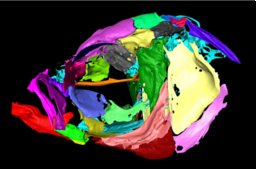 Chrissy L Hammond合作论文数9
 Jesus Marugan-Lobon合作论文数Natural History Museum of Los Angeles County, Dinosaur Institute8
 L.H. Brunt合作论文数Living Systems Institute, School of Biosciences, College of Life and Environmental Science,University of Exeter,Exeter,UK7Sandra Jasinoski合作论文数7
 Mark A. Purnell合作论文数Department of Geology;University of Leicester;Department of Geology, University of Leicester7
 Daniela Schmidt合作论文数Department of Earth Sciences,University of Bristol7Andre J Rowe合作论文数6
 Logan King合作论文数Sch Earth Sci, Univ Bristol6
 Antonio Ballell合作论文数Life Sci Bldg, Univ Bristol6
 Hugo Dutel合作论文数RIKEN Evolutionary Morphology Laboratory, Kobe Hyogo 650-0047, Japan.6
 Jennifer A. Clack合作论文数University Museum of Zoology, Cambridge6
 Anusuya Chinsamy-Turan合作论文数Department of Zoology, University of Cape Town6
 Stephanie E. Pierce合作论文数Department of Organismic & Evolutionary Biology, Harvard University6
 Christine Marie Janis合作论文数Department of Ecology and Evolutionary Biology, Brown University6James R. G. Rawson合作论文数5W. J. Deakin合作论文数5
 Zichuan Qin (秦子川)合作论文数Life Sci Bldg, Univ Bristol5
 David J. Button合作论文数Dept Earth Sci, Nat Hist Museum5
 Martinelli Agustín G合作论文数Dept Geociencias, Univ Fed Rio Grande do Sul5
 Akinobu Watanabe合作论文数Department of Biological Science, Florida State University5
 Carlos Martinez Perez合作论文数Departamento de Geologia, Universitat de Valencia5Perle Altangerel合作论文数5
 Marina Bento Soares合作论文数Instituto de Geociências, Universidade Federal do Rio Grande do Sul5
 Philip G. Cox合作论文数5
 Cesar Schultz合作论文数Departamento de Paleontologia e Estratigrafia, Instituto de Geociências, Universidade Federal do Rio Grande do Sul5
 Armin Elsler合作论文数Univ Bristol, Sch Earth Sci, Bristol, Avon, England4
 Guillermo Navalon合作论文数School of Earth Sciences, University of Bristol, Life Sciences Building, Bristol, UK4
 Cunningham John A合作论文数4
 Matt Friedman合作论文数Museum of Paleontology, College of Literature, Science, and the Arts, University of Michigan4Nathan Jeffery合作论文数4
 Xing Xu (徐星)合作论文数Institute of Vertebrate Paleontology and Paleoanthropology, Chinese Academy of Sciences;Institute of Palaeontology, Yunnan University4
 Anthony Herrel合作论文数Département Adaptations du Vivant, Museum National d'Histoire Naturelle;CNRS4
 Alistair Evans合作论文数School of Biological Sciences, Faculty of Science, Monash University4
 Kenneth D. Angielczyk合作论文数Department of Geology, The Field Museum4
 Michael Fagan合作论文数Medical Engineering;Department of Engineering;University of Hull;Department of Engineering, University of Hull4
 Qi Zhao (赵祺)合作论文数Institute of Vertebrate Paleontology and Paleoanthropology, Chinese Academy of Sciences;University of Chinese Academy of Sciences3M. J. Fagan合作论文数3




