Noise detrimentally affects quantum computations so that they not only become less accurate but also easier to simulate classically as systems scale up. We construct a classical simulation algorithm, lowesa (low weight efficient simulation algorithm), for estimating expectation values of noisy parameterised quantum circuits with a fixed observable. It combines previous results on spectral analysis of parameterised circuits with Pauli back-propagation and recent ideas for simulations of noisy random circuits. We show, under some conditions on the circuits and mild assumptions on noise, that lowesa gives an efficient, polynomial algorithm in the number of qubits (and depth), with approximation error that vanishes exponentially in the physical error rate and a controllable cutoff parameter. This is valid for any expectation value that may be efficiently evaluated on a quantum computer. We discuss the practical limitations of the method for circuit classes with correlated parameters and its scaling with decreasing error rates.
Solving the Anderson impurity model typically involves a two-step process, where one first calculates the ground state of the Hamiltonian and then computes its dynamical properties to obtain Green’s function. Here, we propose a hybrid classical/quantum algorithm where the first step is performed using a classical computer to obtain the tensor network ground state as well as its quantum circuit representation and the second step is executed on the quantum computer to obtain Green’s function. Our algorithm exploits the efficiency of tensor networks for preparing ground states on classical computers and takes advantage of quantum processors for the evaluation of the time evolution, which can become intractable on classical computers. We demonstrate the algorithm using 24 qubits on a quantum computing emulator for SrVO3 with a multi-orbital Anderson impurity model within the dynamical mean field theory. The tensor network based ground state quantum circuit preparation algorithm can also be performed for up to 60 qubits with our available computing resources, while the state vector emulation of the quantum algorithm for time evolution is beyond what is accessible with such resources. We show that, provided that the tensor network calculation is able to accurately obtain the ground state energy, this scheme does not require a perfect reproduction of the ground state wave function on the quantum circuit to give an accurate Green’s function. This hybrid approach may lead to quantum advantage in materials simulations where the ground state can be computed classically, but where the dynamical properties cannot.
A large amount of effort has recently been put into understanding the barren plateau phenomenon. In this perspective article, we face the increasingly loud elephant in the room and ask a question that has been hinted at by many but not explicitly addressed: Can the structure that allows one to avoid barren plateaus also be leveraged to efficiently simulate the loss classically? We collect evidence-on a case-by-case basis-that many commonly used models whose loss landscapes avoid barren plateaus can also admit classical simulation, provided that one can collect some classical data from quantum devices during an initial data acquisition phase. This follows from the observation that barren plateaus result from a curse of dimensionality, and that current approaches for solving them end up encoding the problem into some small, classically simulable, subspaces. Thus, while stressing that quantum computers can be essential for collecting data, our analysis sheds doubt on the information processing capabilities of many parametrized quantum circuits with provably barren plateau-free landscapes. We end by discussing the (many) caveats in our arguments including the limitations of average case arguments, the role of smart initializations, models that fall outside our assumptions, the potential for provably superpolynomial advantages and the possibility that, once larger devices become available, parametrized quantum circuits could heuristically outperform our analytic expectations.
Variational quantum algorithms, a popular heuristic for near-term quantum computers, utilize parameterized quantum circuits which naturally express Lie groups. It has been postulated that many properties of variational quantum algorithms can be understood by studying their corresponding groups, chief among them the presence of vanishing gradients or barren plateaus, but a theoretical derivation has been lacking. Using tools from the representation theory of compact Lie groups, we formulate a theory of barren plateaus for parameterized quantum circuits whose observables lie in their dynamical Lie algebra, covering a large variety of commonly used ansätze such as the Hamiltonian Variational Ansatz, Quantum Alternating Operator Ansatz, and many equivariant quantum neural networks. Our theory provides, for the first time, the ability to compute the exact variance of the gradient of the cost function of the quantum compound ansatz, under mixing conditions that we prove are commonplace.
In this paper, we aim to expand the understanding of the relationship between the composition of the Hamiltonian in the Quantum Approximate Optimization Algorithm (QAOA) and the corresponding cost landscape characteristics. QAOA is a prominent example of a Variational Quantum Algorithm (VQA), which is most commonly used for combinatorial optimization. The success of QAOA heavily relies on parameter optimization, which is a great challenge, especially on scarce noisy quantum hardware. Thus understanding the cost function landscape can aid in designing better optimization heuristics and therefore potentially provide eventual value. We consider the case of 1-layer QAOA for Hamiltonians with up to 5-local terms and up to 20 qubits. In addition to visualizing the cost landscapes, we calculate their Fourier transform to study the relationship with the structure of the Hamiltonians from a complementary perspective. Furthermore, we introduce metrics to quantify the roughness of the landscape, which provide valuable insights into the nature of high-dimensional parametrized landscapes. While these techniques allow us to elucidate the role of Hamiltonian structure, order of the terms and their coefficients on the roughness of the optimization landscape, we also find that predicting the intricate landscapes of VQAs from first principles is very challenging and unlikely to be feasible in general.
In this paper, a human-centered design methodology is proposed to support the interiors design of a Maritime Patrol Aircraft (MPA). The combined use of Immersive Virtual Reality (VR) tools and Digital Human Models (DHMs) are exploited to include both objective and subjective measurements in the ergonomic evaluation process. The main issue consisted in defining the optimal ergonomic design configuration for Operator Console Area and Observer Window Area of MPA’s digital mock-up, provided by Leonardo S.p.A. The methodology is based on a five-step iteration process: once having identified the requirements, required input data and the design variables, the ideated configuration is evaluated using DHMs in order to retrieve objective measurements (i.e., interferences, visibility, reachability); finally, a subjective assessment within immersive VR environment is conducted. A real-time RULA analysis is carried out on DHMs, calibrated on selected users representing specific percentages of target population, by means of a full-body tracking system. The subjective assessment in immersive VR allows to take into account also other human factors (i.e. human ability, dexterity and cognitive aspects) that have not been previously considered and may significatively influence the validation of the final design configuration of MPA interiors.
We introduce LOWESA as a classical algorithm for faithfully simulating quantum systems via a classically constructed surrogate expectation landscape. After an initial overhead to build the surrogate landscape, one can rapidly study entire families of Hamiltonians, initial states and target observables. As a case study, we simulate the 127-qubit transverse-field Ising quantum system on a heavy-hexagon lattice with up to 20 Trotter steps which was recently presented in Nature 618, 500-505 (2023). Specifically, we approximately reconstruct (in minutes to hours on a laptop) the entire expectation landscape spanned by the heavy-hex Ising model. The expectation of a given observable can then be evaluated at different parameter values, i.e. with different onsite magnetic fields and coupling strengths, in fractions of a second on a laptop. This highlights that LOWESA can attain state-of-the-art performance in quantum simulation tasks, with the potential to become the algorithm of choice for scanning a wide range of systems quickly.
Using tools from the representation theory of compact Lie groups, we formulate a theory of Barren Plateaus (BPs) for parameterized quantum circuits whose observables lie in their dynamical Lie algebra (DLA), a setting that we term Lie algebra Supported Ansatz (LASA). A large variety of commonly used ansätze such as the Hamiltonian Variational Ansatz, Quantum Alternating Operator Ansatz, and many equivariant quantum neural networks are LASAs. In particular, our theory provides, for the first time, the ability to compute the variance of the gradient of the cost function of the quantum compound ansatz. We rigorously prove that, for LASA, the variance of the gradient of the cost function, for a 2-design of the dynamical Lie group, scales inversely with the dimension of the DLA, which agrees with existing numerical observations. In addition, to motivate the applicability of our results for 2-designs to practical settings, we show that rapid mixing occurs for LASAs with polynomial DLA. Lastly, we include potential extensions for handling cases when the observable lies outside of the DLA and the implications of our results.
We investigate the effects of noise on parameterised quantum circuits using spectral analysis and classical signal processing tools. For different noise models, we quantify the additional, higher frequency modes in the output signal caused by device errors. We show that filtering these noise-induced modes effectively mitigates device errors. When combined with existing methods, this yields an improved reconstruction of the noiseless variational landscape. Moreover, we describe the classical and quantum resource requirements for these techniques and test their effectiveness for application motivated circuits on quantum hardware.
Very little is known about the cost landscape for Parametrized Quantum Circuits (PQCs). Nevertheless, PQCs are employed in Quan-tum Neural Networks and Variational Quan-tum Algorithms, which may allow for near-term quantum advantage. Such applications require good optimizers to train PQCs. Re-cent works have focused on quantum-aware op-timizers specifically tailored for PQCs. How-ever, ignorance of the cost landscape could hinder progress towards such optimizers. In this work, we analytically prove two results for PQCs: (1) We find an exponentially large symmetry in PQCs, yielding an exponentially large degeneracy of the minima in the cost landscape. Alternatively, this can be cast as an exponential reduction in the volume of rel-evant hyperparameter space. (2) We study the resilience of the symmetries under noise, and show that while it is conserved under uni-tal noise, non-unital channels can break these symmetries and lift the degeneracy of minima, leading to multiple new local minima. Based on these results, we introduce an optimization method called Symmetry-based Minima Hop-ping (SYMH), which exploits the underlying symmetries in PQCs. Our numerical simula-tions show that SYMH improves the overall optimizer performance in the presence of non-unital noise at a level comparable to current hardware. Overall, this work derives large-scale circuit symmetries from local gate trans-formations, and uses them to construct a noise-aware optimization method.
We employ spectral analysis and compressed sensing to identify settings where a variational algorithm's cost function can be recovered purely classically or with minimal quantum computer access. We present theoretical and numerical evidence supporting the viability of sparse recovery techniques. To demonstrate this approach, we use basis pursuit denoising to efficiently recover simulated Quantum Approximate Optimization Algorithm (QAOA) instances of large system size from very few samples. Our results indicate that sparse recovery can enable a more efficient use and distribution of quantum resources in the optimisation of variational algorithms.
We investigate fully self-consistent multiscale quantum-classical algorithms on current generation superconducting quantum computers, in a unified approach to tackle the correlated electronic structure of large systems in both quantum chemistry and condensed matter physics. In both of these contexts, a strongly correlated quantum region of the extended system is isolated and self-consistently coupled to its environment via the sampling of reduced density matrices. We analyze the viability of current generation quantum devices to provide the required fidelity of these objects for a robust and efficient optimization of this subspace. We show that with a simple error mitigation strategy and optimization of compact tensor product bases to minimize the number of terms to sample, these self-consistent algorithms are indeed highly robust, even in the presence of significant noises on quantum hardware. Furthermore, we demonstrate the use of these density matrices for the sampling of non-energetic properties, including dipole moments and Fermi liquid parameters in condensed phase systems, achieving a reliable accuracy with sparse sampling. It appears that uncertainties derived from the iterative optimization of these subspaces is smaller than variances in the energy for a single subspace optimization with current quantum hardware. This boosts the prospect for routine self-consistency to improve the choice of correlated subspaces in hybrid quantum-classical approaches to electronic structure for large systems in this multiscale fashion.
Variational Quantum Algorithms (VQAs) may be a path to quantum advantage on Noisy Intermediate-Scale Quantum (NISQ) computers. A natural question is whether noise on NISQ devices places fundamental limitations on VQA performance. We rigorously prove a serious limitation for noisy VQAs, in that the noise causes the training landscape to have a barren plateau (i.e., vanishing gradient). Specifically, for the local Pauli noise considered, we prove that the gradient vanishes exponentially in the number of qubits $n$ if the depth of the ansatz grows linearly with $n$. These noise-induced barren plateaus (NIBPs) are conceptually different from noise-free barren plateaus, which are linked to random parameter initialization. Our result is formulated for a generic ansatz that includes as special cases the Quantum Alternating Operator Ansatz and the Unitary Coupled Cluster Ansatz, among others. For the former, our numerical heuristics demonstrate the NIBP phenomenon for a realistic hardware noise model.
We simulate the effects of different types of noise in state preparation circuits of variational quantum algorithms. We first use a variational quantum eigensolver to find the ground state of a Hamiltonian in presence of noise, and adopt two quality measures in addition to the energy, namely fidelity and concurrence. We then extend the task to the one of constructing, with a layered quantum circuit ansatz, a set of general random target states. We determine the optimal circuit depth for different types and levels of noise, and observe that the variational algorithms mitigate the effects of noise by adapting the optimised parameters. We find that the inclusion of redundant parameterised gates makes the quantum circuits more resilient to noise. For such overparameterised circuits different sets of parameters can result in the same final state in the noiseless case, which we denote as parameter degeneracy. Numerically, we show that this degeneracy can be lifted in the presence of noise, with some states being significantly more resilient to noise than others. We also show that the average deviation from the target state is linear in the noise level, as long as this is small compared to a circuit-dependent threshold. In this region the deviation is well described by a stochastic model. Above the threshold, the optimisation can converge to states with largely different physical properties from the true target state, so that for practical applications it is critical to ensure that noise levels are below this threshold.
Very little is known about the cost landscape for parametrized Quantum Circuits (PQCs). Nevertheless, PQCs are employed in Quantum Neural Networks and Variational Quantum Algorithms, which may allow for near-term quantum advantage. Such applications require good optimizers to train PQCs. Recent works have focused on quantum-aware optimizers specifically tailored for PQCs. However, ignorance of the cost landscape could hinder progress towards such optimizers. In this work, we analytically prove two results for PQCs: (1) We find an exponentially large symmetry in PQCs, yielding an exponentially large degeneracy of the minima in the cost landscape. (2) We show that noise (specifically non-unital noise) can break these symmetries and lift the degeneracy of minima, making many of them local minima instead of global minima. Based on these results, we introduce an optimization method called Symmetry-based Minima Hopping (SYMH), which exploits the underlying symmetries in PQCs to hop between local minima in the cost landscape. The versatility of SYMH allows it to be combined with local optimizers (e.g., gradient descent) with minimal overhead. Our numerical simulations show that SYMH improves the overall optimizer performance.
A hybrid structure consisting of iron oxide nanoparticles decorated on titania (TiO2) nanotube arrays has been synthesized by a very rapid forced hydrolysis method, followed by post annealing treatment. The morphology and structure analysis of the hybrid TiO2/Fe2O3 composites indicated uniform, conformal coating of the hematite nanoparticles on the anatase titania nanotubes. Diffuse reflectance spectroscopy was used to investigate the absorption properties of the TiO2/Fe2O3 structures. An increase in the absorbance of visible light in the range 380 nm to 600 nm has been observed when compared with pristine nanotubes. This is similar to the visible light absorbance enhancement observed in Ru-dye sensitized titania nanotubes. Thus iron oxide decorated titania nanotube demonstrate immense potential for use as inexpensive and robust materials for improved solar energy harvesting for photovoltaic applications.
 Ivan Rungger合作论文数School of Physics;Trinity College;School of Physics, Trinity College7
 Manuel Rudolph合作论文数Laboratory of Quantum Information and Computation, École polytechnique fédérale de Lausanne4
 Ross Duncan合作论文数Computing Laboratory, Oxford University4Cristina Cirstoiu合作论文数Cambridge Quantum Ltd3
 Marco Cerezo合作论文数Los Alamos National Laboratory3Jamie Heredge合作论文数2Shree Hari Sureshbabu合作论文数Elmore Family Sch Elect & Comp Engn, Purdue Univ2
 Zoë Holmes合作论文数École Polytechnique Fédérale de Lausanne2
 Romina Yalovetzky合作论文数JPMorgan Chase, New York, NY 10154 USA2
 Dylan Herman合作论文数Future Lab for Applied Research and Engineering, N.A.2
 Niraj Kumar合作论文数Pasqal2
 Shouvanik Chakrabarti合作论文数University of Maryland College Park2
 Patrick Coles合作论文数Normal Computing2
 Marco Pistoia合作论文数IBM Thomas J. Watson Research Center2
 Lukasz Cincio合作论文数Theoretical Division, Los Alamos National Laboratory2François Jamet合作论文数1
 Abhishek Agarwal合作论文数1
 Edward Grant合作论文数1Wang Lili合作论文数1Baptiste Anselme Martin合作论文数1
 Pablo Bermejo合作论文数1Connor Lenihan合作论文数1
 Yannic Rath合作论文数1
 Supanut Thanasilp合作论文数Ctr Quantum Technol, Natl Univ Singapore1
 Nathan Fitzpatrick合作论文数Cambridge Quantum Comp Ltd1
 Stęchły Michał合作论文数1
 Farita Tasnim合作论文数Media Lab, MIT1
 Sara Buonocore合作论文数1Paolo Braccia合作论文数QSTAR1
 Leslie nayeli Diaz合作论文数1
 Diego García-Martín合作论文数Inst Ciencies Cosmos ICCUB, Univ Barcelona1
 Lachlan P. Lindoy合作论文数Department of Chemistry, Columbia University1
 Martin Larocca合作论文数Univ Buenos Aires1
 Samson Wang合作论文数Los Alamos National Laboratory1Andrew Arrasmith合作论文数LANL, Div Theory, T-4,MS B213, Los Alamos, NM 87545 USA1Kunal Sharma合作论文数1Jules Tilly合作论文数Dept Phys & Astron, UCL1
 Akira Sone合作论文数Los Alamos Natl Lab, Div Theoret, Los Alamos, NM 87545 USA1
 David Munoz Ramo合作论文数Quantinuum1
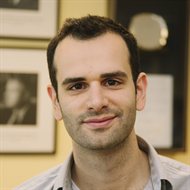 George Booth合作论文数Department of Physics, Faculty of Natural, Mathematical & Engineering Sciences, King's College London1
 Sriluckshmy P V合作论文数1Robert J. Anderson合作论文数1
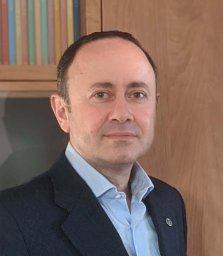 Stanislao Patalano合作论文数University of Naples Federico II P.le Tecchio1
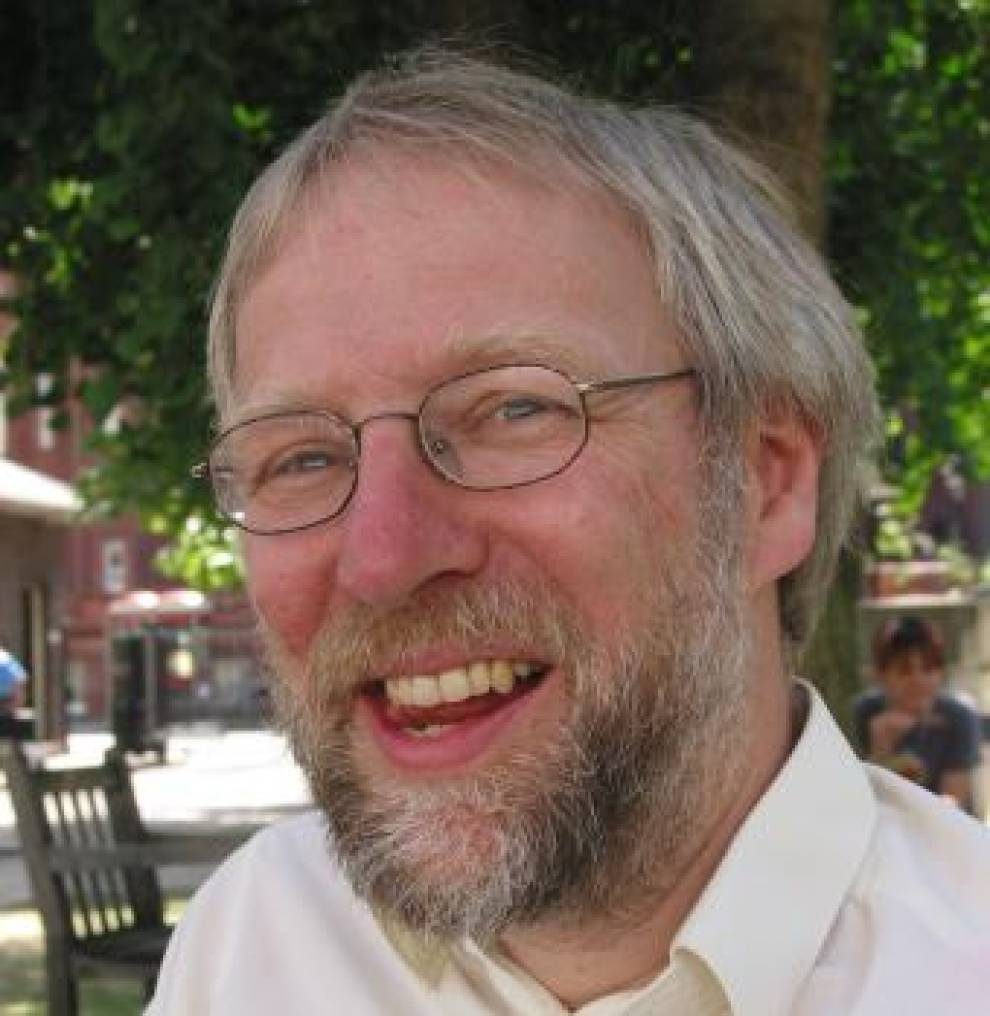 Jonathan Tennyson合作论文数Department of Physics and Astronomy, Faculty of Maths & Physical Sciences, University College London;Quantemol Ltd;Blue Skies Space Ltd1
 Latika Menon合作论文数Tata Institute of Fundamental Research1
 Eugen Panaitescu合作论文数1
 Eric R. Anschuetz合作论文数Division of Physics, Mathematics and Astronomy, California Institute of Technology1
 Giuseppe Di Gironimo合作论文数University of Naples Federico II P.le Tecchio1




