General governance frameworks and ecological models need to be complemented with concrete working processes to efficiently mitigate environmental problems caused by a large number of actors in society. This article, which focuses on marine environmental problems, presents a procedure in which relevant flows of goods and substances in society are linked to the behavior and activities of actors. The exploration of actors is more comprehensive than in currently used procedures which may expand the range of intervention options. Market actors that are normally overlooked in life cycle assessments are disclosed and actors primarily working with information flows are also explored. The implementation of the proposed procedure is strengthened by systematic use of performance indicators. The concrete examples in the present article refer to nutrient inputs into the sea. Management of marine litter and drug residues are two other areas in which a systematic exploration of substance flows and influential actors is likely to be fruitful.
Public participation in local water councils is one method to involve different actors in the implementation of the EU Water Framework Directive. In this study we investigate which beliefs explain why the public participate and also how motives to participate are related to willingness to comply with decisions related to the water management framework. In total 910 respondents answered a web survey regarding their participation in the council work. Structural equation modelling was conducted with willingness to comply and motives to participate as the main dependent latent constructs. Other included latent constructs were perceived need for change, fairness, trust, and social and personal norms. The results show that motives to participate did not have an effect on willingness to comply. Perceived need for change had indirect effects on nearly all latent constructs in the model, and personal norms and social norms (through personal norms) had an effect on willingness to comply. The results are discussed in the context of water management methods.
The Marine Strategy Framework Directive, adopted by the EU, and several other initiatives to improve marine environmental management emphasize the need to integrate environmental and social analyses. This article proposes and tests a general Behavior-Pressure-State-Impact-Response (BPSIR) framework for identifying and structuring environmentally relevant social data. The framework is compatible with the widely applied Driver-Pressure-State-Impact-Response (DPSIR) framework, but emphasizes actors and their behavior and defines ‘impact’ more specifically. In particular, it distinguishes between: (i) actors directly involved in activities causing physical, chemical, and biological disturbances, and (ii) actors who indirectly affect marine resource use and the pressures on marine ecosystems. Three case studies of chemical and biological disturbances in the Swedish parts of the North and Baltic seas demonstrate the need to balance current ecosystem monitoring with systematically collected and organized data on social factors, i.e., both direct and indirect actors and stakeholders, their adaptation to policy measures, and the role of general trends in consumption and production.
Atténuer le changement climatique exige des actions à différents niveaux, y compris que les gens changent leurs habitudes de consommation à même de provoquer des émissions de gaz à effet de serre. Des recherches récentes suggèrent que l’induction d’émotions telles que la peur et l’inquiétude peut avoir des effets positifs. Une étude a été réalisée afin de déterminer si le sentiment d’inquiétude couplé à un bilan individuel des émissions de dioxyde de carbone (CO2) pourrait être en mesure d’encourager les gens à changer leurs activités liées à la consommation personnelle à l’origine de ces émissions. Cent trente-cinq étudiants se sont vus fournir par leur municipalité un outil permettant de calculer leurs émissions annuelles de dioxyde de carbone. Après avoir été informés des conséquences négatives du changement climatique, ces derniers ont confirmé vouloir changer un certain nombre d’activités personnelles afin de réduire leurs émissions de dioxyde de carbone au cours des 12 mois suivants. Ils ont également évalué et hiérarchisé leurs inquiétudes concernant huit conséquences différentes du changement climatique. Les résultats montrent que la volonté de changer ses habitudes de déplacement, de consommation d’énergie à la maison, de consommation alimentaire, de participation aux organisations environnementales, ou encore de soutien aux politiques environnementales augmentent avec le sentiment d’inquiétude. Par ailleurs, les résultats observés démontrent qu’un individu générant une forte dose de gaz à effet de serre sera plus sensible au sentiment d’inquiétude qu’un individu générant une faible ou moyenne quantité, et sera donc plus à même d’investir dans des infrastructures « vertes ». Ainsi, dans la continuité de recherches récentes postulant que la sensibilisation augmente les actions de prévention, nous avons montré que l’intention de changer un mode de comportement personnel en vue de réduire ses émissions de dioxyde de carbone augmente avec le sentiment d’inquiétude des participants vis-à-vis des conséquences du changement climatique.
The Marine Environmental Ordinance (SFS 2010:1341) is part of a strategy to bring about ecosystem-based management and sustainable use of the marine environment in accordance with the EU’s the Marine Strategy Framework Directive (MSFD, 2008/56/EC). The ordinance is intended to maintain or achieve good environmental status in the marine environment. Under the Marine Environmental Ordinance, the Swedish Agency for Marine and Water Management (SwAM) must ensure that an initial assessment is carried out on the marine environment in the Swedish waters of the two regions, the North Sea and the Baltic Sea (Articles 13–16). The initial assessment, which is to be completed by 15 July 2012 and reported to the European Commission not later than 15 October of the same year, is to provide a basis for the establishment of good environmental status, environmental targets and environmental monitoring programmes, as well as the preparing of programmes of measures by which established targets may be achieved. The initial assessment will include conducting an economic and social analysis. The former can be divided into two parts, the first of which is designed to analyse the use of the marine region and the second to describe the cost of the degradation of the marine environment (Marine Environmental Ordinance, Article 13, para. 4, and the Marine Strategy Framework Directive, Article 8.1c). The primary purpose of the social analysis in the initial assessment is to create a picture of the underlying conditions of the upcoming work to achieve the aims of the directive, that is, good environmental status (GES, Article 9). The analysis is also intended to provide basic information for the establishment of environmental targets (Article 10) that will subsequently form the foundation of programmes of measures and administrative funding (Article 13). The assessment includes an analysis of how different groups in society can be affected by how the sea is used and by marine environmental problems and measures taken to address them. This study presents a method by which such an analysis can be conducted. The method includes a conceptual model that consists of the components 'Indirect driving forces, 'Direct driving forces , 'Environmental pressures, state and impact', 'Impact on society', and 'Response'. The model is used in combination with a question template to analyse actors, activities and driving forces. Case studies involving three environmental problems – selective overfishing of cod and the unwanted dispersion of mercury and phosphorous – show that a large number of actors are involved, directly and indirectly. In addition, these actors operate on several levels –local/regional, national and international. Every environmental problem requires its own analysis and has its own set of conditions. The study shows that the information needed for making decisions regarding the measures that should be taken is relatively extensive. The determination of the amount of information necessary and therefore how much should be systematically collected in future can have a great impact on the development of society and the environment. Finally, suggestions are given as to how future social analyses relating to the marine environment might be carried out.
Havsmiljoforordningen, SFS 2010:1341, (HMF) ingar i en strategi for en ekosystembaserad forvaltning och ett hallbart nyttjande av havsmiljon som avses i Havsmiljodirektivet (2008/56/EG). Forordningen syftar till att uppratthalla eller na en god miljostatus i havsmiljon. Enligt HMF ska Havs- och vattenmyndigheten se till att det gors en inledande bedomningen av havsmiljon i de svenska delarna av de tva forvaltningsomradena Nordsjon och Ostersjon (13 § - 16 §). Den inledande bedomningen, som ska vara avslutad den 15 juli 2012 och rapporteras till Europeiska kommissionen senast den 15 oktober samma ar, ska ligga till grund for faststallande av god miljostatus, miljomal och miljoovervakningsprogram samt utarbetande av atgardsprogram for att na uppsatta mal. I den inledande bedomningen ingar att utfora en ekonomisk och social analys, den forra kan delas in i tva delar dar den forsta syftar till att analysera nyttjandet av havsomradet och den andra delen att beskriva kostnaderna av att miljon i havsomradena forsamras (HMF, 13 §, p.4 samt Havsmiljodirektivet, Artikel 8.1c). Det primara syftet med den sociala analysen i den inledande bedomningen ar att skapa en bild av forutsattningarna for det kommande arbetet med att uppna direktivets syften, dvs. god miljostatus (GES, artikel 9). Analysen ska ocksa tjana som underlag vid utformningen av miljomal (artikel 10) som sedermera kommer att ligga till grund for atgardsprogram och styrmedel (artikel 13). Bedomningen inbegriper en analys av hur olika grupper i samhallet kan beroras av havets nyttjande, havsrelaterade miljoproblem och deras atgardande. I denna studie lanseras en metod att genomfora en sadan analys. Metoden inbegriper en tankemodell som bestar av komponenterna Indirekta drivkrafter, Direkta drivkrafter, Paverkan/tillstand/effekt i miljon, Effekt i samhallet och Respons med. Modellen anvands tillsammans med en fragemall for att kartlagga aktorer och drivkrafter. Fallstudier avseende tre miljoproblem - selektivt overfiske av torsk samt oonskad spridning av kvicksilver och fosfor - visar att ett stort antal aktorer ar inblandade saval indirekt som direkt. Dessutom verkar aktorerna pa olika nivaer: lokalt/regionalt, nationellt och internationellt. Varje miljoproblem behover sin egen analys och har egna forutsattningar. Studien visar att den information som behovs for att besluta om atgarder ar relativt omfattande. Avvagningen av vilken mangd information som ar tillracklig och som bor overvakas i framtiden kan ha stor paverkan pa utvecklingen i samhallet och i miljon. Slutligen lamnas forslag pa hur framtida havsmiljorelaterade samhallsanalyser kan genomforas.
Attitudes towards policy regulations of environmental reporting were examined in a survey of 15 portfolio managers of stock funds lacking an explicit environmental strategy. The managers’ evaluated three regulative measures. They were most positive toward requirements for companies to report their environmental impacts in a standardized way, a measure that also was perceived to have the largest impact on social responsible investment. They were less positive toward a requirement for the funds to display in which way they themselves take environmental criteria into account in their investments. They were least positive to announce the proportion of companies in their portfolios that in a standardized way reports environmental performance.
The personal assessments of the current and expected future state of the environment by 3232 community respondents in 18 nations were investigated at the local, national, and global spatial levels. These assessments were compared to a ranking of each country's environmental quality by an expert panel. Temporal pessimism (“things will get worse”) was found in the assessments at all three spatial levels. Spatial optimism bias (“things are better here than there”) was found in the assessments of current environmental conditions in 15 of 18 countries, but not in the assessments of the future. All countries except one exhibited temporal pessimism, but significant differences between them were common. Evaluations of current environmental conditions also differed by country. Citizens' assessments of current conditions, and the degree of comparative optimism, were strongly correlated with the expert panel's assessments of national environmental quality. Aside from the value of understanding global trends in environmental assessments, the results have important implications for environmental policy and risk management strategies.
Knowledge and confidence in one's own knowledge of climate change was investigated among experts, journalists, politicians, and laypersons. Subsamples of 65 experts, 72 environmental journalists, 145 politicians being chairs of environmental committees, and 621 laypersons in Sweden responded to survey questions concerning current climate state, causes, and consequences of climate change. Experts presented the highest level of knowledge, followed by journalists, politicians, and laypersons. In all the groups, knowledge of causes was greater than that of climate state and of future consequences, and among the latter knowledge was less of health consequences than that of weather and sea/glacier consequences. Also, experts expressed the highest level of confidence in their own knowledge, followed by journalists, politicians, and laypersons. Nevertheless, the adjustment of confidence in one's own knowledge to actual knowledge was somewhat higher among journalists than among experts.
Sundblad, E-L (2008). People’s knowledge about climate change: Uncertainty as a guide to future commitments. Department of Psychology, University of Gothenburg, Gothenburg, Sweden. Knowledge of climate change is provided by scientists to other groups in society who have to interact to establish sustainable development. Hence, the knowledge must reach people and the content must be evaluated as important and relevant. In Study 1, knowledge and confidence in one’s own knowledge was studied in a survey among four groups in society: experts, politicians, environmental journalists and laypersons. The study revealed gradually decreasing knowledge levels from experts to journalists, politicians and laypersons. The confidence levels showed a similar pattern. Both knowledge and confidence levels were higher for causes than state and consequences of climate change. All groups had less knowledge of health consequences as compared to weather and sea/glacier consequences. The realism of confidence in their own knowledge was somewhat higher among journalists than among experts, and relatively low among politicians and laypersons. Study II tested to what extent scientific knowledge of various domains was related to cognitive and affective risk judgements among laypersons. Subgroups divided by gender, being a parent or not, education, age and type of residence were analyzed. The results revealed that knowledge of both health consequences and causes of climate change was positively related to cognitive and affective risk judgements. Gender influenced affective but not cognitive risk judgements, as women were more worried than men. Study III revealed that information of scientific uncertainty of climate consequences influence risk perception. Study IV revealed that temporal distance to negative environmental consequences did not influence participants’ intention to mitigate CO2 emissions. Taken together, this research represents some steps towards a greater understanding of what facilitates and hinders the process toward a sustainable society. The studies show that scientific knowledge about climate change seems to be disseminated in an unbiased manner in society. Moreover, the results support the claim that both knowledge and confidence levels will increase when people learn more about climate change. In particular, risk awareness can be raised by increased knowledge of health consequences and of causes of climate change.
 anders grimvall合作论文数13
 Lena Gipperth合作论文数9Andrea Morf合作论文数7
 Anders Biel合作论文数Department of Psychology;Göteborg University;Department of Psychology, Göteborg University7
 Tommy Gärling合作论文数Department of Psychology, The University of Gothenburg6are wallin合作论文数3
 Ted Martin Hedesström合作论文数Department of Psychology, University of Gothenburg3
 Richard Emmerson合作论文数T.H. Huxley School of the Environment, Earth Sciences and Engineering, Imperial College of Science, Technology and Medicine2
 Sverker Molander合作论文数Technical Environmental Planning;Chalmers University of Technology;Technical Environmental Planning, Chalmers University of Technology2Toshihiko Sako合作论文数1victor corral合作论文数1
 Peter Schmuck合作论文数1Gabriel Moser合作论文数1Anders Carlander合作论文数1
 Robert Gifford合作论文数Department of Psychology, University of Victoria1
 P. Wesley Schultz合作论文数Department of Psychology, California State University1
 Magnus Jansson合作论文数1
 Elena Sautkina合作论文数Higher Institute of Business and Labour Sciences1
 Jose Q. Pinheiro合作论文数Universidade Federal do Rio Grande do Norte1
 Kazunori Hanyu合作论文数Department of Psychology, Nihon University1
 Stefan Boncu合作论文数University of Iaşi1
 Christine Kormos合作论文数Department of Psychology, University of Victoria1
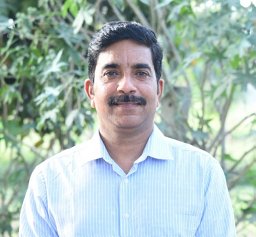 Sunil Saini合作论文数Himalayan Institute of Medical Sciences, HIHT University1
 Leila Scannell合作论文数Department of Psychology, University of Victoria1
 Paola Passafaro合作论文数Sapienza University of Rome1
 Ricardo Garcia-Mira合作论文数Universidade da Coruña1Lidia Smolova合作论文数1
 David Uzzell合作论文数School of Psychology, University of Surrey1
 Kalevi M. Korpela合作论文数Faculty of Social Sciences, Tampere University1
 Sverker Carlsson Jagers合作论文数Department of Political Science, University of Gothenburg1
 Maria Luisa Lima合作论文数1Yannick Savina合作论文数1
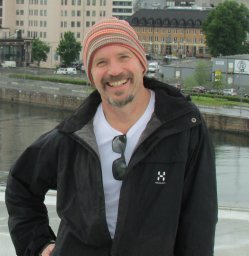 Donald W Hine合作论文数Department of Psychology, University of Victoria1
 Chris von Borgstede合作论文数1
 Angela G. Mertig合作论文数Department of Fisheries and Wildlife, Michigan State University1
 Maria E Andersson合作论文数Department of Chemistry, Göteborg University1




