Folgende Annahmen über unsere eigene psychische Natur sowie über die Gestaltung unseres Wirtschaftssystems und der Verteilungs‐ und Konsummuster haben nach Meinung des Autors die heute vorherrschenden Lebensmuster hervorgerufen, die derzeit nur wenig von der Gesellschaft und an den Hochschulen hinterfragt und diskutiert werden:
Looking at the brute fact that global carbon dioxide emissions have almost doubled since the UN Conference on Environment and Sustainable Development in Rio de Janeiro in 1992 – despite the ambitious Agenda 21 document – one may ask whether fundamentally new societal approaches are needed to solve the global problems. One new strategy within science is “sustainability science”, first formulated in 2001. Essentially five methodological principles of traditional science are replaced in this approach, because the solving of global problems – based on nonlinear, complex processes, and including long time lags between actions and their consequences – requires more than developing and testing hypotheses in laboratories. Instead of regarding scientific activities as valuefree endeavours that work in a mainly monodisciplinary, analytical and linear way, with basic research and a strict division between research and application as the ideal, sustainability science (1) acts explicitly to support sustainable development, (2) works in synthetic and parallel ways, (3) takes an interdisciplinary approach, (4) is transdisciplinary and (5) combines research and application in action-oriented research, during which scientists initiate sustainability changes in a society and simultaneously perform research (Sheldon et al., 2000). The main reason for this new orientation within science is not that the traditional approach of science is wrong, but that it is too slow in solving actual global problems. If scientists want to contribute substantially to the sustainability revolution ( McKenzie-Mohr, 2002), they have to act as citizens initiating changes toward sustainable development, in addition to their traditional role as scientific analysers.
20 bio-energy villages were analyzed with regard to different project implementation policies, energy plant configuration, participating stakeholders, economic efficiency, and heat pricing systems with the aim to identify successful implementation patterns for such villages.The major conclusion is that regarding project history and implementation of the project all bio-energy villages were developed in a different manner. In every village specific steps had been taken to find individual solutions for a successful implementation of the project. Important differences between villages were identified in the configuration of energy plants, especially in the number and kind of heat back-up systems used for improving security of heat supply.As different groups of local stakeholders are involved (farmers, citizens, local authorities, investors) energy plants are operated by different types of companies under different company forms. Heat price modalities were designed individually to specifically fit each village. On average, the full cost for local bio-energy-based heating supply in every village is 48 % below that of fossil-fuel heating systems based on fuel oil. Operating companies say that all bio-energy villages but one have reached economic efficiency.The following elements are important for successfully setting up a bio-energy village: a sufficient supply of agricultural resources, a compact village structure, a suitable location for energy plants community members have agreed on, as well as social factors such as a strong village community, stakeholders in whom citizens can trust and who spur the project on, and local authorities throwing their weight behind the project. Finally, a planning and implementation phase is required that is both transparent and flexible welcoming citizens' creative and financial participation.
Multi-Criteria Decision Analysis (MCDA) can assist local decision processes towards selecting renewable energy systems as it is able to manage qualitative data and offers opportunities to integrate knowledge from local stakeholders. However, little experience is available regarding practical applications of MCDA in real decision processes in communities on their path towards a renewable energy supply. Within the “Bioenergy-Region Ludwigsfelde” project, an MCDA evaluation has been applied to a small village on its way to becoming a “bioenergy village”. Here, MCDA has been combined with already established tools accompanying the process to becoming a “bioenergy village”, such as planning workshops, citizens’ meetings and best-practice trips. A comprehensive set of sustainability criteria was applied aimed at addressing the questions of local actors. An emphasis was placed on social criteria that comprise the perceived values of local impacts. In general, it was observed that MCDA provides many benefits for this application context. In particular, the group weighting using the SIMOS method demonstrated good results in the process. However, for real-world applications of MCDA, the challenge of data compilation in particular must be addressed.
Because of the serious problems related to an energy supply based mainly on fossil and nuclear fuels, the development of renewable energy sources is urgently needed. In Germany, many villages and communities take energy production into their own hands, following the principle of a community-related energy supply. Today, approximately 50 villages or communities in Germany have restructured their energy consumption patterns to rely primarily on locally available renewable energy sources for their electricity and heat. This article describes a qualitative interview study concerning the success factors for the implementation of bioenergy villages. The interviews were conducted with 25 individuals who initiated the restructuring of energy production in their villages toward bioenergy and other renewable energy sources, such as solar or wind energy.
The personal assessments of the current and expected future state of the environment by 3232 community respondents in 18 nations were investigated at the local, national, and global spatial levels. These assessments were compared to a ranking of each country's environmental quality by an expert panel. Temporal pessimism (“things will get worse”) was found in the assessments at all three spatial levels. Spatial optimism bias (“things are better here than there”) was found in the assessments of current environmental conditions in 15 of 18 countries, but not in the assessments of the future. All countries except one exhibited temporal pessimism, but significant differences between them were common. Evaluations of current environmental conditions also differed by country. Citizens' assessments of current conditions, and the degree of comparative optimism, were strongly correlated with the expert panel's assessments of national environmental quality. Aside from the value of understanding global trends in environmental assessments, the results have important implications for environmental policy and risk management strategies.
In the project described here the electricity and heat supply of an entire German village has been changed from conventional to biomass energy sources in 2005. This lighthouse project, the first "bioenergy village" in Germany, has been initiated by a scientist team from the Universities of Göttingen, Kassel, and Berlin and was realized by the active participation of the population of the village Juehnde in Southern Lower Saxony (800 inhabitants). The ongoing ecological, economical, and social changes are analyzed to enable the transfer of the model to other interested villages in Germany and worldwide. The technical concept consists of three components: (1) An anaerobic digestion plant (supplied by energy crops and liquid manure) with a combined heat and power generator (CHP) producing electricity and heat energy, (2) a central heating plant fired by locally produced wood chips for additional heat demand during the winter, and (3) a hot water pipeline distributing the heat energy to the connected households. The history of the project, the social implementation, and the first results of the ecological and social changes in the village are reported.
The authors investigated the structure of goal contents in a group of 1,854 undergraduates from 15 cultures around the world. Results suggested that the 11 types of goals the authors assessed were consistently organized in a circumplex fashion across the 15 cultures. The circumplex was well described by positioning 2 primary dimensions underlying the goals: intrinsic (e.g., self-acceptance, affiliation) versus extrinsic (e.g., financial success, image) and self-transcendent (e.g., spirituality) versus physical (e.g., hedonism). The circumplex model of goal contents was also quite similar in both wealthier and poorer nations, although there were some slight cross-cultural variations. The relevance of these results for several theories of motivation and personality are discussed.
 andre wuste合作论文数6Marianne Karpenstein-Machan合作论文数6
 Ken Sheldon合作论文数Department of Psychological Sciences, College of Arts and Science, University of Missouri4
 P. Wesley Schultz合作论文数Department of Psychology, California State University4
 Tim Kasser合作论文数Department of Psychology, Knox College.4
 Richard M. Ryan合作论文数Department of Psychology, School of Arts & Sciences, University of Rochester;Institute for Positive Psychology and Education, Australian Catholic University;College of Education, Ewha Womans University;motivationWorks;immersyve;Center for Self-Determination Theory3jose miguel fernandez dols合作论文数2Aaron Ahuvia合作论文数Penny W. Stamps School of Art & Design, University of Michigan-Ann Arbor2
 Youngmee Kim合作论文数Department of Psychology, University of Miami2
 Sing Lau合作论文数2Shaun Saunders合作论文数2Toshihiko Sako合作论文数1Nadine Dembski合作论文数1Swantje Eigner-Thiel合作论文数1victor corral合作论文数1
 Jens Pape合作论文数1swantje eigner合作论文数1p d dr marianne karpensteinmachan合作论文数1Benedikt Sauer合作论文数1Gabriel Moser合作论文数1
 Benjamin Nolting合作论文数1
 Charles Vlek合作论文数University of Groningen1
 Linda Cameron合作论文数Department of Psychological Sciences, School of Social Sciences, Humanities and Arts, University of California, Merced;The University of Auckland;Jockey Club School of Public Health and Primary Care, The Chinese University of Hong Kong1
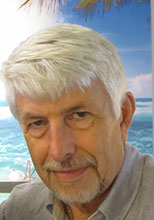 Robert Gifford合作论文数Department of Psychology, University of Victoria1
 Hans Ruppert合作论文数1
 Elena Sautkina合作论文数Higher Institute of Business and Labour Sciences1
 Marek Franěk合作论文数Institute of Musicology, Czechoslovak Academy of Sciences1
 Jose Q. Pinheiro合作论文数Universidade Federal do Rio Grande do Norte1
 Kazunori Hanyu合作论文数Department of Psychology, Nihon University1
 Stefan Boncu合作论文数University of Iaşi1
 Christine Kormos合作论文数Department of Psychology, University of Victoria1G. Tankha合作论文数1Frederick M. E. Grouzet合作论文数1
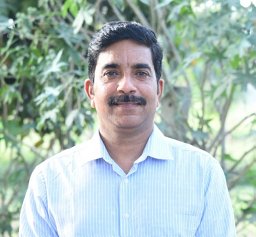 Sunil Saini合作论文数Himalayan Institute of Medical Sciences, HIHT University1
 Leila Scannell合作论文数Department of Psychology, University of Victoria1
 Eva-Lotta Sundblad合作论文数1
 Paola Passafaro合作论文数Sapienza University of Rome1
 Anders Biel合作论文数Department of Psychology;Göteborg University;Department of Psychology, Göteborg University1
 Ricardo Garcia-Mira合作论文数Universidade da Coruña1Lidia Smolova合作论文数1
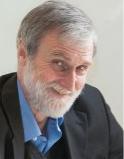 David Uzzell合作论文数School of Psychology, University of Surrey1
 Kalevi M. Korpela合作论文数Faculty of Social Sciences, Tampere University1
 Maria Luisa Lima合作论文数1Yannick Savina合作论文数1
 Donald W Hine合作论文数Department of Psychology, University of Victoria1
 Angela G. Mertig合作论文数Department of Fisheries and Wildlife, Michigan State University1
 Valdiney V. Gouveia合作论文数Universidade Federal da Paraíba1




