As part of a genomics strategy to characterize inducible defences against insect herbivory in poplar, we developed a comprehensive suite of functional genomics resources including cDNA libraries, expressed sequence tags (ESTs) and a cDNA microarray platform. These resources are designed to complement the existing poplar genome sequence and poplar (Populus spp.) ESTs by focusing on herbivore- and elicitor-treated tissues and incorporating normalization methods to capture rare transcripts. From a set of 15 standard, normalized or full-length cDNA libraries, we generated 139,007 3'- or 5'-end sequenced ESTs, representing more than one-third of the c. 385,000 publicly available Populus ESTs. Clustering and assembly of 107,519 3'-end ESTs resulted in 14,451 contigs and 20,560 singletons, altogether representing 35,011 putative unique transcripts, or potentially more than three-quarters of the predicted c. 45,000 genes in the poplar genome. Using this EST resource, we developed a cDNA microarray containing 15,496 unique genes, which was utilized to monitor gene expression in poplar leaves in response to herbivory by forest tent caterpillars (Malacosoma disstria). After 24 h of feeding, 1191 genes were classified as up-regulated, compared to only 537 down-regulated. Functional classification of this induced gene set revealed genes with roles in plant defence (e.g. endochitinases, Kunitz protease inhibitors), octadecanoid and ethylene signalling (e.g. lipoxygenase, allene oxide synthase, 1-aminocyclopropane-1-carboxylate oxidase), transport (e.g. ABC proteins, calreticulin), secondary metabolism [e.g. polyphenol oxidase, isoflavone reductase, (-)-germacrene D synthase] and transcriptional regulation [e.g. leucine-rich repeat transmembrane kinase, several transcription factor classes (zinc finger C3H type, AP2/EREBP, WRKY, bHLH)]. This study provides the first genome-scale approach to characterize insect-induced defences in a woody perennial providing a solid platform for functional investigation of plant-insect interactions in poplar.
This chapter contains sections titled: Introduction The Database High-Throughput DNA Synthesis Amplicon Generation Microarraying Probing and Scanning Microarrays Conclusion References
The ability of the pathogenic fungus Candida albicans to switch from a yeast to a hyphal morphology in response to external signals is implicated in its pathogenicity. We used glass DNA microarrays to investigate the transcription profiles of 6333 predicted ORFs in cells undergoing this transition and their responses to changes in temperature and culture medium. We have identified several genes whose transcriptional profiles are similar to those of known virulence factors that are modulated by the switch to hyphal growth caused by addition of serum and a 37 degrees C growth temperature. Time course analysis of this transition identified transcripts that are induced before germ tube initiation and shut off later in the developmental process. A strain deleted for the Efg1p and Cph1p transcription factors is defective in hyphae formation, and its response to serum and increased temperature is almost identical to the response of a wild-type strain grown at 37 degrees C in the absence of serum. Thus Efg1p and Cph1p are needed for the activation of the transcriptional program that is induced by the presence of serum.
 Tracey Rigby合作论文数3Herve Hogues合作论文数2
 Andre Nantel合作论文数CHUL - Québec, Centre de Toxicologie du Québec2D C Tessier合作论文数1Marco van het Hoog合作论文数1Steven G Ralph合作论文数1Elizabeth Chun合作论文数1Hesther Yueh合作论文数1
 Asim Siddiqui合作论文数1
 Kermit Ritland合作论文数Department of Forest & Conservation Sciences, Faculty of Forestry, The University of British Columbia1
 Malcolm Whiteway合作论文数Department of Biology, Faculty of Arts and Science, Concordia University1
 Carl Douglas合作论文数Department of Botany, Faculty of Science, The University of British Columbia1Palmquist Diana合作论文数1
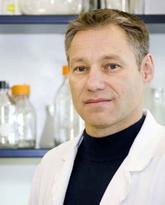 Paul Kubes合作论文数Snyder Institute for Chronic Diseases, Department of Physiology and Pharmacology, Cumming School of Medicine, University of Calgary1
 Marco Marra合作论文数Canada’s Michael Smith Genome Sciences Centre, BC Cancer Research Institute;Department of Medical Genetics, Faculty of Medicine, University of British Columbia;Michael Smith Laboratories, University of British Columbia1
 Christoph W. Sensen合作论文数Hungarian Centre of Excellence for Molecular Medicine1
 Richard White合作论文数1
 Steven Jones合作论文数Department of Medical Genetics, Faculty of Medicine, University of British Columbia;Genome Sciences Centre, BC Cancer1
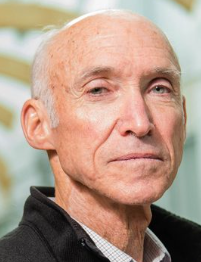 Brian Ellis合作论文数Ellis Laboratory, Michael Smith Laboratories, University of British Columbia;Department of Land and Food Systems, University of British Columbia;Department of Botany, University of British Columbia1Carol E. Ritland合作论文数1
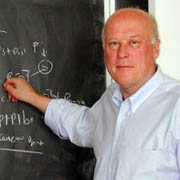 David Y. Thomas合作论文数Eukaryotic Genetics Group,Biotechnology Research Institute,McGill University1
 Ryan N. Philippe合作论文数Michael Smith Laboratories and Departments of Botany and Forest Sciences, University of British Columbia1
 Dezene P. W. Huber合作论文数Biotechnology Laboratory, University of British Columbia1
 Melanie Arbour合作论文数1Claire Oddy合作论文数1Yaron S. N. Butterfield合作论文数1Dana Aeschliman合作论文数1Anne Marcil合作论文数1Daniel Dignard合作论文数Eukaryotic Genetics Group;Biotechnology Research Institute;National Research Council;Eukaryotic Genetics Group, Biotechnology Research Institute1
 Jörg Bohlmann合作论文数Michael Smith Laboratories, The University of British Columbia1Jeff Stott合作论文数School of Veterinary Medicine, University of California1
 Robert M. Kirkpatrick合作论文数Department of Psychology, University of Minnesota1George P. Yang合作论文数1Natalia Kolosova合作论文数1Sharon Jancsik合作论文数Michael Smith Laboratories, University of British Columbia1Doreen Harcus合作论文数1Daniel C. Tessier合作论文数1B Wynhoven合作论文数1
 Robert Holt合作论文数Canada's Michael Smith Genome Sciences Centre, BC Cancer Research Institute;Simon Fraser University;University of British Columbia1Sarah Barber合作论文数1
 Jerry Liu合作论文数HP Labs, Palo Alto, CA, USA1Catherine Bachewich合作论文数1




