The Belle II experiment searches for beyond-the-standard-model physics using the Belle II detector and SuperKEKB collider. The silicon vertex detector (SVD) is crucial for particle tracking. After the 1.5-year shutdown from June 2022, Run 2 began in January 2024; Run 2 operation shows stable noise levels, high signal-to-noise ratios, and hit efficiency over 99%. To manage higher beam background from increased luminosity, new techniques such as hit-time selection and cluster grouping are being developed. These methods increase the acceptable level of occupancy by distinguishing hits from triggered collisions and other sources.
Cryogenic Observatory for SIgnatures seen in Next-generation Underground Searches (COSINUS) will use cryogenic sodium iodide (NaI) calorimeters to search for dark matter. Recently, the construction of an underground facility at Laboratori Nazionali del Gran Sasso (LNGS) for COSINUS has been completed. The features of the COSINUS facility allow for a low background environment for rare event searches. This facility will house a dry dilution refrigerator, which will sit in a drywell inside a water tank. The water tank will be instrumented with photomultiplier tubes and serve as an active muon veto as well as a passive shield.
Belle II is the next generation B Factory experiment operating at the SuperKEKB accelerator complex at KEK in Tsukuba, Japan. It is expected to collect 50 ab(-1) of data, with a target instantaneous luminosity of 6.5 x 10(35) cm(-2)s(-1), which is about 30 times larger than its predecessor, Belle. In view of the ever increasing Belle II data sample, accurate simulation of the detector is growing in importance. This poses a challenging task of compromising between the realistic modeling of the response of individual detector components and reasonable performance in terms of CPU time of the simulation. In this paper we describe the simulation of the silicon vertex detector, its performance against collision data and optimization.
The Silicon Vertex Detector (SVD), with its four double-sided silicon strip sensor layers, is one of the two vertex sub-detectors of Belle II operating at SuperKEKB collider (KEK, Japan). Since 2019 and the start of the data taking, the SVD has demonstrated a reliable and highly efficient operation, even running in an environment with harsh beam backgrounds that are induced by the world's highest instantaneous luminosity. In order to provide the best quality track reconstruction with an efficient pattern recognition and track fit, and to correctly propagate the uncertainty on the hit's position to the track parameters, it is crucial to precisely estimate the resolution of the cluster position measurement. Several methods for estimating the position resolution directly from the data will be discussed.
The Silicon Vertex Detector of Belle II is a state-of-the-art tracking and vertexing system based on double-sided silicon strip sensors, designed and fabricated by a large international collaboration in the period 2012–2018. Since 2019 it has been in operation providing high quality data with a small number of defective channels (<1%), a large hit-finding efficiency (>99%), a good signal-to-noise ratio (well in excess of 10 for all sensor configurations and tracks). Together with the good control over the alignment, these are all essential factors to achieve good tracking reconstruction and physics performance. In this extended paper we try to document all the aspects of the SVD challenges and achievements, in the spirit of providing information to the broader community and help the development of high quality detector systems, which are essential tools to carry out physics research.
The Silicon Vertex Detector (SVD) consists of four layers of double-sided silicon strip sensors. The SVD is one of the two vertex subdetectors within Belle II. Since the start of data taking in 2019 at the Super-KEKB collider (KEK, Japan), which has the highest peak-luminosity ever recorded, the SVD is operated reliably and with high efficiency, despite exposure to harsh beam background. Measurements using data show that the SVD has both high signal-to-noise ratio and hit efficiency, as well precise spatial resolution. Further these properties are stable over time. Recently the simulation has been tuned, using data, to improve the agrement between data and MC for cluster properties. The good hit-time resolution can be exploited to further improve the robustness against the higher levels of background expected as the instantaneous luminosity increases in the next years of running. First effects of radiation damage on strip noise, sensor currents and depletion voltage have been measured, although they do not have any detrimental effect on the performance of the detector.
L. Corona0,1,∗, K. Adamczyk, L. Aggarwal , H. Aihara, T. Aziz 5 , S. Bacher, S. Bahinipati, G. Batignani, J. Baudot, P. K. Behera, S. Bettarini, T. Bilka 9 , A. Bozek, F. Buchsteiner , G. Casarosa, T. Czank , S. B. Das, G. Dujany, F. Forti, M. Friedl , A. Gabrielli, E. Ganiev, B. Gobbo, S. Halder 5 , K. Hara, S. Hazra 5 , T. Higuchi , C. Irmler , A. Ishikawa, H. B. Jeon , Y. Jin, C. Joo , M. Kaleta, A. B. Kaliyar 5 , J. Kandra 9 , K. H. Kang , P. Kapusta, P. Kodyš 9 , T. Kohriki, M. Kumar, R. Kumar , C. La Licata , K. Lalwani, S. C. Lee , J. Libby, L. Massaccesi, S. N. Mayekar 5 , G. B. Mohanty 5 , T. Morii , K. R. Nakamura, Z. Natkaniec, Y. Onuki, W. Ostrowicz, A. Paladino, E. Paoloni, H. Park , G. Polat, K. K. Rao 5 , I. Ripp-Baudot, G. Rizzo, D. Sahoo 5 , C. Schwanda , J. Serrano, J. Suzuki, S. Tanaka, H. Tanigawa, R. Thalmeier , R. Tiwari 5 , T. Tsuboyama, Y. Uematsu, O. Verbycka, L. Vitale, K. Wan, Z. Wang, J. Webb , J. Wiechczynski, H. Yin and L. Zani (Belle II SVD Collaboration) Dipartimento di Fisica, Università di Pisa, I-56127 Pisa, Italy INFN Sezione di Pisa, I-56127 Pisa, Italy H. Niewodniczanski Institute of Nuclear Physics, Krakow 31-342, Poland Punjab Agricultural University, Ludhiana 141004, India Department of Physics, University of Tokyo, Tokyo 113-0033, Japan 5 Tata Institute of Fundamental Research, Mumbai 400005, India Indian Institute of Technology Bhubaneswar, Satya Nagar, India IPHC, UMR 7178, Universit4́ de Strasbourg, CNRS, 67037 Strasbourg, France Indian Institute of Technology Madras, Chennai 600036, India Faculty of Mathematics and Physics, Charles University, 121 16 Prague, Czech Republic
The Belle II silicon vertex detector is one of the vertex detectors in the Belle II experiment. The detector reads out the signals from the double-sided silicon strip sensors with the APV25 front-end readout ASIC, adopting the chip-on-sensor concept to minimize the strip noise. The detector has been operated in the experiment since the spring of 2019. Analyzing the acquired data during the beam collisions, the excellent performance of the detector is confirmed. Also, the radiation dose and 1-MeV equivalent neutron fluence of the detector are estimated using the measured dose rates of the diamond sensors installed on the beam pipe and are compared with the measured radiation effects in the strip noise, leakage current, and depletion voltage. This paper briefly introduces the main features of the silicon vertex detector, and then reports on the measured performance and radiation effects of the first two years of running experience of the detector.
Y. Jin,>,∗ K. Adamczyk, H. Aihara, T. Aziz, S. Bacher, S. Bahinipati, G. Batignani, J. Baudot, 5 P. K. Behera, S. Bettarini, T. Bilka, A. Bozek, F. Buchsteiner, G. Casarosa, D. Červenkov, Y. Q. Chen, L. Corona, T. Czank, S. B. Das, N. Dash, G. de MarinoA,,;,< Z. Doležal, G. Dujany, 5 F. Forti, M. Friedl, E. Ganiev, B. Gobbo, S. Halder, K. Hara, S. Hazra, T. Higuchi, C. Irmler, A. Ishikawa, H. B. Jeon, C. Joo, M. Kaleta, A. B. Kaliyar, J. Kandra, K. H. Kang, P. Kapusta, P. Kodyš, T. Kohriki, M. Kumar, R. Kumar, 9 P. Kvasnička, C. La Licata, K. Lalwani, S. C. Lee, Y. B. Li, J. Libby, S. Maity, S. N. Mayekar, G. B. Mohanty, J. A. Mora Grimaldo, T. Morii, K. R. Nakamura, Z. Natkaniec, Y. Onuki, W. Ostrowicz, A. Paladino, E. Paoloni, H. Park, K. K. Rao, I. Ripp-Baudot, 5 G. Rizzo, N. Rout, D. Sahoo, C. Schwanda, J. Suzuki, S. Tanaka, H. Tanigawa, R. Thalmeier, T. Tsuboyama, Y. Uematsu, O. Verbycka, L. Vitale, K. Wan, J. Webb, J. Wiechczynski, H. Yin, L. ZaniB,;,< and T. Zhang (Belle-II SVD Collaboration) School of Physics, University of Melbourne, Melbourne, Victoria 3010, Australia Institute of High Energy Physics, Austrian Academy of Sciences, 1050 Vienna, Austria Peking University, Department of Technical Physics, Beijing 100871, China University of Science and Technology of China, Department of Modern Physics, Hefei 230026, China Faculty of Mathematics and Physics, Charles University, 121 16 Prague, Czech Republic 5 IPHC, UMR 7178, Universit4́ de Strasbourg, CNRS, 67037 Strasbourg, France Indian Institute of Technology Bhubaneswar, Satya Nagar, India Indian Institute of Technology Madras, Chennai 600036, India Malaviya National Institute of Technology Jaipur, Jaipur 302017, India Punjab Agricultural University, Ludhiana 141004, India Tata Institute of Fundamental Research, Mumbai 400005, India Dipartimento di Fisica, Università di Pisa, I-56127 Pisa, Italy, presently at Universit4́ Paris-Saclay, CNRS/IN2P3, IJCLab, 91405 Orsay, France, presently at Aix Marseille Univ, CNRS/IN2P3, CPPM, 13288 Marseille, France INFN Sezione di Pisa, I-56127 Pisa, Italy Dipartimento di Fisica, Università di Trieste, I-34127 Trieste, Italy INFN Sezione di Trieste, I-34127 Trieste, Italy The Graduate University for Advanced Studies (SOKENDAI), Hayama 240-0193, Japan
The Belle II experiment features a substantial upgrade of the Belle detector and will operate at the SuperKEKB energy-asymmetric e + e − collider at KEK in Tsukuba, Japan. The accelerator completed its first phase of commissioning in 2016, and the Belle II detector saw its first electron-positron collisions in April 2018. Belle II features a newly designed silicon vertex detector based on double-sided strip layers and DEPFET pixel layers. A subset of the vertex detector was operated in 2018 to determine background conditions (Phase 2 operation). The collaboration completed full detector installation in January 2019, and the experiment started full data taking. This paper will report on the final arrangement of the silicon vertex detector part of Belle II with a focus on online monitoring of detector conditions and data quality, on the design and use of diagnostic and reference plots, and on integration with the software framework of Belle II. Data quality monitoring plots will be discussed with a focus on simulation and acquired cosmic and collision data.
On March 25th 2019, the Belle II detector recorded the first collisions delivered by the SuperKEKB accelerator. This marked the beginning of the physics run with vertex detector. The vertex detector was aligned initially with cosmic ray tracks without magnetic field simultaneously with the drift chamber. The alignment method is based on Millepede II and the General Broken Lines track model and includes also the muon system or primary vertex position alignment. To control weak modes, we employ sensitive validation tools and various track samples can be used as alignment input, from straight cosmic tracks to mass-constrained decays. With increasing luminosity and experience, the alignment is approaching the target performance, crucial for the first physics analyses in the era of Super-BFactories. We will present the software framework for the detector calibration and alignment, the results from the first physics run and the prospects in view of the experience with the first data.
The Belle II experiment at the SuperKEKB collider of KEK (Japan) started recording physics data in spring 2019 with all its subdetectors installed and with the goal of accumulating 50ab−1 of e+e− collision events at the unprecedented instantaneous luminosity of 8×1035cm−2s−1, about 40 times larger than its predecessor. The Belle II vertex detector plays a crucial role in the broad Belle II physics program, especially for time-dependent CP measurements. It consists of two layers of DEPFET-based pixels and four layers of double-sided silicon strip detectors (SVD).
This paper shows the hardware and the procedure utilized to test all components of the readout system (cables, FADC boards, junction boards) of the Belle II Silicon Vertex Detector after the series production. For the FADC board special testing hardware and firmware were designed and created to check all digital and analog inputs and outputs as well as all data interconnections on the board. The main FPGA on the FADC board generates digital signals which are converted to periodic analog differential alternating voltages up to 40 MHz on the FADC board tester, which then are fed into the analog inputs of the FADC board. Histograms and scans of the samples are recorded by using random equivalent-time sampling or sequential equivalent-time sampling, allowing to characterize the behavior of the system with a much higher bandwidth than the ADCs could do with conventional measurements. Small changes of parameters of the assembly (like using a cable of different length) lead to significant changes of the measured values, creating a sensitive testing instrument. The shapes of the distributions are analyzed and compared to references by software which then decides if a test is passed or not. The commissioning setup of the whole readout chain, with all the final components including the final detector, has been tested in three phases. The respective graphs of the signal-to-noise ratios of the strips of a detector module and histograms of the noise development of the whole detector show very high consistency of the SVD readout system.
The Belle II Silicon Vertex Detector (SVD) was installed recently and has been prepared for physics run at SuperKEKB factory, Tsukuba, Japan. For a reliable operation and data taking of the SVD, a sophisticated and robust run and slow control system has been implemented, which utilizes the Experimental Physics and Industrial Control System (EPICS) framework. EPICS uses client/server and publish/subscribe techniques to communicate between the various sub-systems and computers. The information exchange between the different pieces of software and computers is done by process variables (PVs). These PVs are provided by input/output controllers (IOCs), which communicate and interface with the hardware components. The Belle II SVD slow and run control comprises five groups of subsystems, which are SVD DAQ controller, Flash ADC controller, environmental monitors and interlocks, power supplies and EPICS infrastructure services. In this paper we describe the tasks and the implementation of the individual sub-systems, the interaction between them and the global Belle II run and slow control as well as the first experience from commissioning and initial operation of the SuperKEKB accelerator.
The Belle II experiment at the SuperKEKB collider of KEK (Japan) will accumulate 50 ab−1 of e+e- collision data at an unprecedented instantaneous luminosity of 8⋅ 1035 cm−2s−1, about 40 times larger than its predecessor. The Belle II vertex detector plays a crucial role in the rich Belle II physics program, especially for time-dependent measurements. It consists of two layers of DEPFET-based pixels and four layers of double sided silicon strip sensors (SVD detector). We report here results of the standalone commissioning of the SVD and highlights from the first cosmic runs acquired in Belle II. We also report on reconstruction performances of a reduced-scale version of the SVD operated during the accelerator commissioning in 2018.
T. Bilka∗†d , F. Abudinénn, K. Ackermannn, P. Ahlburge, H. Aiharaac, M. Albalawin, O. Alonsoai, L. Andriceko, R. Ayadah, T. Azizu, V. Babuh, S. Bacherag, S. Bahinipatip, Y. Baim, E. Barberioa, Ti. Baroncellia, To. Baroncellia, A. K. Basithq, G. Batignaniv,w, A. Bauerb, P. K. Beheraq, V. Bertacchiv,w, S. Bettariniv,w, B. Bhuyanr, R. Blanco j, F. Bosiw, M. Boronatak, L. Bosisiox,y, A. Bozekag, F. Buchsteinerb, C. Camienh, A. Caldwelln, G. Cariaa, G. Casarosav,w, M. Ceccantiw, D. Červenkovd , V. Chekeliann, T. Czankab, N. Dashp, M. De Nucciov,w, B. Deschampse, A. Dieguezai, J. Dingfeldere, Z. Doležald , D. Esperanteak, P. Fischeri, F. Fortiv,w, M. Frasn, A. Freyg, M. Friedlb, J. Fusterak, M. Gabrieln, K. Gadowh, U. Gebauerg, L. Germice, T. Gessler f , D. Getzkow f , L. Gioin, A. Glazovh, B. Gobboy, P. Gomisak, J. A. M. Grimaldoac, K. Haraad , M. Heck j, T. Hempereke, M. Henselo, T. Higuchiz, M. Hoekk, C. Irmlerb, A. Ishikawaab, I. Jaegleal,H. B. Jeonae, C. Jooz, M. Kaletaag, J. Kandrad , N. Kambaraad , K. H. Kangae, P. Kapustaag, C. Kieslingn, B. Kisielewskiag, D. Kittlingern, D. Kloseo, P. Kodyšd , C. Koffmaneo, T. Kohrikiad , S. KoikeC,ad , I. Komarovy, I. Konorovm, S. Krivokucao, H. Krügere, T. Kuhrl, W. Kühn f , M. Kumars, R. Kumart , P. Kvasničkad , C. La Licatax,y, C. Lacastaak, K. Lalwanis, L. Lancerix,y, J. S. Lange f , K. Lautenbach f , J. Y. Leea f , S. C. Leeae, U. Leisn, P. Leitln, D. Levitm, Y. Lian, J. Libbyq, G. Liemanno, Z. Liuc, T. Lueckv,w, F. Lüttickee, L. Macharskih, P. Mamminiw, C. Mariñase, A. Martiniv,w, S. N. Mayekaru, S. Mccarneyn, G. B. Mohantyu, T. Moriiz, H. G. Mosern, D. Moyaa j, F. J. Muellerh, F. Müllern, D. Münchow f , K. R. Nakamuraad , H. Nakayamaad ,Z. Natkaniecag, C. Niebuhrh, J. Ninkovico, Y. Onukiac, W. Ostrowiczag, U. Packheiserh, A. Paladinoz, E. Paoloniv,w, H. Parkae, B. Paschene, S. Paulm, I. Peric j, F. Poblotzkih, K. Prasanthu, C. Prazh, A. Profetiw, A. Rabusovm, I. RashevskayaA,y, K. K. Raou, S. P. Reiter f , Resmi P. K.q, R. Richtero, M. Ritterl, M. Ritzerti, G. Rizzov,w, M. Rozanskaag, S. Rummell, D. Sahoou, J. G. Sancheza j, L. Santeljam, J. Sasakiac, N. Satoad , B. Scavinok, G. Schallero, M. Schneckeo, F. Schoppero, H. Schreeckg, S. Schultschikb, C. Schwandab, B. Schwenkerg, R. Sedlmeyern, C. Sfientik, F. Simonn, S. Skambraksn, Y. Solovievh, B. Spruckk, R. Steverh, U. Stolzenbergg, J. Stypulaag, J. Suzukiad , E. Tafelmayero, M. Takahashih, S. Tanakaad , H. Tanigawaac, G. N. Taylora, R. Thalmeierb, T. Tsuboyamaad , P. Urquijoa, I. Vilaa j, A. L. Virtoa j, L. Vitalex,y, S. Vogtn, M. Vosak, K. Wanac, C. Wangc, S. Watanukiab, M. WatanabeC,aa, I. J. Watsonac, J. Webba, N. Wermese, C. Wessele, J. Wiechczynskiag, P. Wieduwiltg, S. Williamsa, H. Windeln, H. Yeh, H. Yinb, L. Zaniv,w, J. Zhaoc
The Belle II experiment aims to accumulate 50 ab(-1) of e(+)e(-) collision data at the SuperKEKB asymmetric energy collider (Tsukuba, Japan). The first physics data using all Belle II detectors were taken in spring 2019. In the vast physics program of the Belle II experiment, the vertex detector plays a crucial role for the determination of the B-meson decay vertices. It consists of two inner layers of pixelated silicon detectors and four outer layers of double-sided silicon strip detectors (SVD). To achieve a design luminosity of 8 x 10(35) cm(-2)s(-1), 40 times higher than the recorded luminosity of its predecessor, the SuperKEKB collider squeezes the beams to a vertical size of 50 nm ("nano-beam scheme") and doubles the beam currents. Therefore, the detectors are required to tolerate intense beam induced background due to the very high luminosity. During the 2019 spring run we measured the occupancy rate in the SVD to estimate the level of the beam induced background. With the low initial luminosity, the observed beam induced background mostly originated from Touschek processes and beam-gas scattering within individual beams. Since these different background contributions depend differently on accelerator conditions, such as the beam current, beam size and pressure, they can be disentangled. We estimate the background rate of each contribution and compare them with simulated ones. The results enable us to predict the background levels at increased beam currents and luminosity in the coming years. They also hint at background mitigation measures for running at higher luminosity. In this proceeding we present the results of our study of the beam induced background in the SVD and the prospects for future operation.
 G. Casarosa合作论文数Dipartimento di Fisica, Universitá di Pisa39
 Markus Friedl合作论文数Institute of High Energy Physics, Austrian Academy of Sciences39R. Thalmeier合作论文数38Andrzej Bożek合作论文数Department of Leptonic Interactions, Institute of Nuclear Physics38Stefano Bettarini合作论文数Dipartimento di Fisica, Università di Pisa38
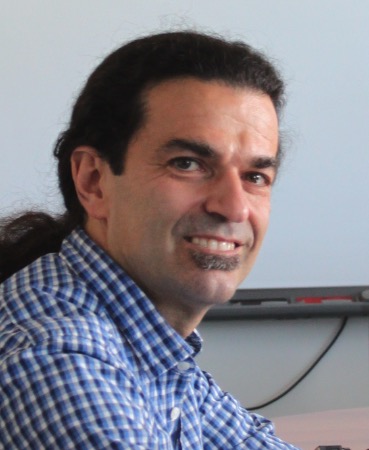 Lorenzo Vitale合作论文数Department of Engineering and Architecture, University of Trieste;Sezione di Trieste, INFN;Dipartimento di Fisica, University of Trieste37
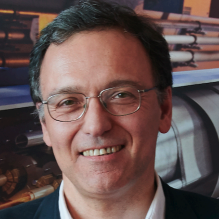 Francesco Forti合作论文数Department of Physics, University of Pisa;Istituto Nazionale di Fisica Nucleare37
 Hiroaki Aihara (相原博昭)合作论文数Kavli Institute for The Physics and Mathematics of the Universe, Department of Physics, School of Science, The University of Tokyo37Christoph Schwanda合作论文数37
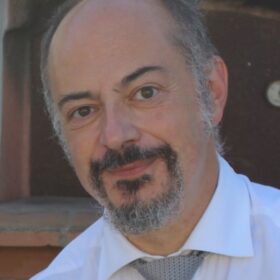 Eugenio Paoloni合作论文数Dipartimento di Fisica, Universitá di Pisa;INFN36
 Tariq Aziz合作论文数Department of High Energy Physics, Tata Institute of Fundamental Research36
 Prafulla Kumar Behera合作论文数Department of Physics, Indian Institute of Technology Madras36C. Irmler合作论文数36P. Kodys合作论文数35Bilka T.合作论文数35S. Bacher合作论文数34A. Paladino合作论文数34Z. Natkaniec合作论文数34Ostrowicz Clemens W合作论文数34T. Morii合作论文数33Y. Onuki合作论文数33T. Higuchi合作论文数33T. Kohriki合作论文数33T. Tsuboyama合作论文数33Jaroslaw Wiechczynski合作论文数33S. N. Mayekar合作论文数32
 Gagan Mohanty合作论文数Department of High Energy Physics, Tata Institute of Fundamental Research32J. Webb合作论文数31k k rao合作论文数31Kyunghun Kang合作论文数31G. Rizzo合作论文数31
 Nibedita Dash合作论文数30K. R. Nakamura合作论文数30
 Peter Kvasnicka合作论文数30
 Chirlmin Joo合作论文数Department of Bionanoscience, Faculty of Applied Sciences, Delft University of Technology30H Yin合作论文数29S. Bahinipati合作论文数29Červenkov D合作论文数29H. B. Jeon合作论文数28
 L. Zani合作论文数Center for Particle Physics of Marseilles28
 James Frederick Libby合作论文数Department of Physics, Indian Institute of Technology Madras28
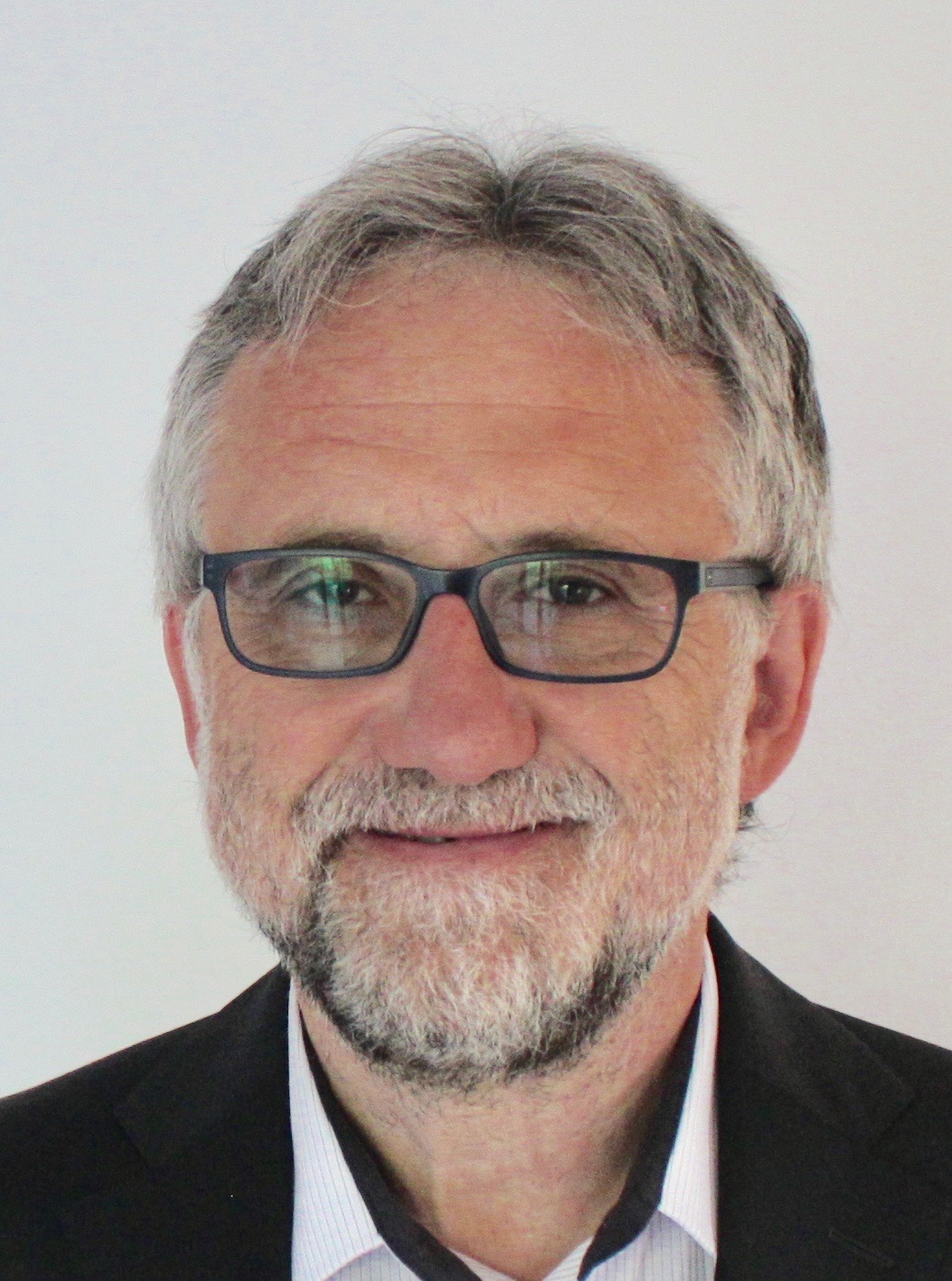 Zdenek Dolezal合作论文数Institute of Particle and Nuclear Physics, Faculty of Mathematics and Physics, Charles University28Park H合作论文数27G. Batignani合作论文数University of Cincinnati26S. Watanuki合作论文数25S. Tanaka合作论文数25
 Kavita Lalwani合作论文数25L. Lanceri合作论文数25F. Bosi合作论文数24




