A Large Ion Collider Experiment (ALICE) has been conceived and constructed as a heavy-ion experiment at the LHC. During LHC Runs 1 and 2, it has produced a wide range of physics results using all collision systems available at the LHC. In order to best exploit new physics opportunities opening up with the upgraded LHC and new detector technologies, the experiment has undergone a major upgrade during the LHC Long Shutdown 2 (2019–2022). This comprises the move to continuous readout, the complete overhaul of core detectors, as well as a new online event processing farm with a redesigned online-offline software framework. These improvements will allow to record Pb-Pb collisions at rates up to 50 kHz, while ensuring sensitivity for signals without a triggerable signature.
The performance of the electromagnetic calorimeter of the ALICE experiment during operation in 2010–2018 at the Large Hadron Collider is presented. After a short introduction into the design, readout, and trigger capabilities of the detector, the procedures for data taking, reconstruction, and validation are explained. The methods used for the calibration and various derived corrections are presented in detail. Subsequently, the capabilities of the calorimeter to reconstruct and measure photons, light mesons, electrons and jets are discussed. The performance of the calorimeter is illustrated mainly with data obtained with test beams at the Proton Synchrotron and Super Proton Synchrotron or in proton-proton collisions at √s = 13 TeV, and compared to simulations.
Electrical measurements on a graphene field effect transistor (GFET) are presented and discussed for its characterization in vacuum and in air. In this last environment three low output power continuous wave (CW) led lasers and a UV lamp have been used to study the illumination effects at wavelengths from the near infrared (NIR) to red, green up to near UV. In air the device is sensitive to visible and UV radiation. The visible light produces charge carriers increasing the source-drain current. Instead, the UV radiation induces the graphene oxidation decreasing the source-drain current in a permanent way. Small temperature increments, up to about 55 ∘ C, increase the electrical conduction. Larger temperatures and prolonged heating in air generate oxidation, decreasing the source-drain current. As far as the NIR radiation is concerned, no effect is observed. Therefore, these preliminary investigations indicate that the device can be employed as visible and UV radiation detector.
FARCOS is a novel Femtoscope Array for Correlation and Spectroscopy designed to perform studies of two- and multi-particle and Intermediate Mass Fragments (IMFs) correlations in heavy-ion collisions at Fermi energies with stable and radioactive beams. The FARCOS system is a modular assembly of up to 20 telescopes to be used in combination with 4π detectors like the CHIMERA multidetector. This contribution aims at presenting the results of the experimental qualification of the whole FARCOS system in its final configuration after some major upgrade of the frontend electronics.
KM3NeT is a research infrastructure located in the Mediterranean Sea, that will consist of two deep-sea Cherenkov neutrino detectors. With one detector (ARCA), the KM3NeT Collaboration aims at identifying and studying TeV–PeV astrophysical neutrino sources. With the other detector (ORCA), the neutrino mass ordering will be determined by studying GeV-scale atmospheric neutrino oscillations. The first KM3NeT detection units were deployed at the Italian and French sites between 2015 and 2017. In this paper, a description of the detector is presented, together with a summary of the procedures used to calibrate the detector in-situ. Finally, the measurement of the atmospheric muon flux between 2232–3386 m seawater depth is obtained.
FARCOS is a modular detection system intended to boost the capacity of 4π detectors towards correlation measurements. The final FARCOS system will be composed of 20 telescopes, each formed by two Si layers of 32-ch orthogonal Double Sided Silicon Strip Detectors and one calorimeter stage composed by 4 CsI(Tl) tronco-pyramidal scintillator crystals readout by a Si photodiode. The paper focuses on the first application of the FARCOS detection array in the present configuration of 10 telescopes in a real experiment, the CHIFAR experiment and discusses the main instrumental features relevant for the experiments.
Oxidation of amino acid side chains in protein structure can be induced by UV irradiation leading to critical changes in molecular structure possibly modifying protein stability and bioactivity. Here we show, by using a combination of multiple spectroscopic techniques and Fluorescence Lifetime Imaging, that UV-light exposure induces irreversible oxidation processes in Ubiquitin structure. In particular, the growth of a new autofluorescence peak in the blue region is detected, that we attribute to tyrosine oxidation products. Blue autofluorescence intensity is found to progressively increase also during aggregation processes leading to the formation of aggregates of non-amyloid nature. Significantly, analogous spectral modifications are found in amyloid fibrils from human insulin and Amyloid-β peptide grown under UV exposure. Experimental results reveal a substantial overlap between the fluorescence signal here attributed to tyrosine oxidation and the one referred in literature as "Amyloid autofluorescence". These findings clearly represent a caveat about the specificity of the blue fluorescence peak measured for amyloids, especially when grown in conditions in which tyrosine residues may be oxidized. Moreover, our results once again highlight the close link between the formation of amyloid aggregates and protein damage resulting from oxidative stress, as these neurotoxic aggregate species are found to contain damaged residues.
ABSTRACT A new Large-Acceptance Forward Angle Spectrometer [Super Bigbite Spectrometer (SBS)], is under development for the upcoming experiments in Hall A at the Thomas Jefferson National Accelerator Facility (Virginia, USA), where a longitudinally polarized (up to ) electron beam up to 12 GeV energy is now available. The excellent beam intensity (up to 100 A), combined with innovative polarized targets, will provide luminosity up to , opening interesting opportunities to investigate unexplored aspects of the inner structure of the nucleons. In one of the most demanding configuration, the new spectrometer will consist of a dipole magnet, one front charged particle tracker, two identical proton polarimeters with related back trackers and a segmented hadron calorimeter. The front tracker, placed just after the dipole magnet, consists of up to six layers of large area GEM (Gas Electron Multiplier) chambers (); each chamber is made by three adjacent GEM modules of active rectangular area (18 modules as a total). We have chosen the GEM technology in order to optimize spatial resolution (∼80 mm), high hit rate (), cost/performance and high radiation hardness. We present the main features of the SBS front tracker and its GEM detectors and, finally, we discuss the ongoing tracker commissioning at JLab and show some representative test results.
The FARCOS (Femtoscope ARray for Correlation and Spectroscopy) collaboration is finally going to instrument the first batch of 10-12 telescopes. They are capable of reconstructing the particle's momentum with a high degree of precision and of performing correlation measurements of Light Charged Particles (LCPs) and of LCPs and Intermediate Mass Fragments thanks to the very good energy and angular and resolution. Each telescope features a sensitive area of 6.4 × 6.4 cm 2 and is composed of three detection stages: two Si layers and a CsI(Tl) calorimeter. The FARCOS cluster modularity allows the arrangement in different configurations, depending on the physics case one wants to address. The final system will be a modular assembly of 20 telescopes. The total number of readout channels for the final FARCOS system is 2560 channels for the silicon layers and 80 channels for the scintillators. In this paper, we focus on the FARCOS basic module and system architecture and illustrate its performance as assessed in test beams in true experimental conditions.
A new front-end based on digital GET electronics has been adopted for the readout of the CsI(Tl) detectors of the CHIMERA 4π multi-detector and for the new modular Femtoscopy Array for Correlation and Spectroscopy (FARCOS). It is expected that the coupling of CHIMERA with the FARCOS array, featuring high angular and energy resolution, and the adoption of the new digital electronics will be well suited for improving specific future data analysis, with the full shape storage of the signals, in the field of heavy ion reactions with stable and exotic beams around the Fermi energies domain. Integration of the GET electronics with CHIMERA and FARCOS devices and with the local analog data acquisition will be briefly discussed. We present some results from previous experimental tests and from the first in-beam experiment (Hoyle-Gamma) with the coupled GET+CHIMERA data acquisition.
FARCOS (Femtoscope ARray for Correlation and Spectroscopy) is a novel modular detection system featuring high angular and energy resolution able to reconstruct the particle's momentum at high precision and capable of performing correlation measurements of Light Charged Particles (LCPs) and of LCPs and Intermediate Mass Fragments (IMFs). Given the unique feature of FARCOS of aiming at the identification in charge and mass even the fragments that are fully absorbed in the first Si layer, the frontend electronics must meet stringent requirements in terms of dynamic range and integral-nonlinearity. To this aim we designed and qualified a VLSI frontend able to readout signals of both polarities and suitable to be coupled with both the DSSSD and the photodiodes reading the scintillation light. During February 2017 for the first time the performance of a workhorse of the FARCOS telescope equipped with the designed VLSI frontend electronics has been experimentally qualified in a test beam at the Laboratori Nazionali del Sud (LNS) of INFN in Catania. The 16O beam at 88 MeV accelerated by the Tandem accelerator has been used impinging on different targets (LiF, Au, C, Ni). This contribution focuses on the results of the test beam, highlighting the performance of the designed frontend electronics when coupled with the different detection stages of the FARCOS telescopes.
Few years ago we proposed a novel detection system - named FARCOS (Femtoscopy ARray for COrrelations and Spectroscopy) - to target different open cases in nuclear physics. The basic cluster unit of the FARCOS array is a telescope structure with an active area of 6.4 × 6.4 cm 2 composed of three detection stages. The first two detection layers are DC-coupled Double-Sided Silicon Strip Detectors (DSSSDs), 300 μm thick and 1500 μm thick, featuring 32 × 32 orthogonal strips. The third stage, acting as calorimeter, is composed of four truncated pyramids of CsI(Tl) crystals with an active area of 3.2 × 3.2 cm 2 and an absorption length of 6 cm arranged in window configuration. The final system will be a modular assembly of 20 telescopes. A key feature of FARCOS is the identification of the particles stopping even in the first detection layer, relying on pulse shape analysis techniques. The FARCOS frontend electronics features a full scale energy range up to 2 GeV with 5 different selectable ranges and an energy resolution down to 10 keV FWHM with a power budget of about 10 mW/channel in the case of the lower full scale energy range. Its core is a custom multichannel charge preamplifier VLSI chip. The system performance has been extensively qualified on few workhorses in view of the assembly of the final telescopes foreseen for 2018.
Complex and more and more complete detector arrays have been developed in the last two decades, or are in advanced design stage, in different laboratories. Such arrays are necessary to fully characterize nuclear reactions induced by stable and exotic beams. The need for contemporary detection of charged particles, and/or gamma-rays, and/or neutrons, has been stressed in many fields of nuclear structure and reaction dynamics, with particular attention to the improvement of both high angular and energy resolution. Some examples of detection systems adapted to various energy ranges is discussed. Emphasis is given to the possible update of relatively old 4 pi detectors with new electronics and new detection methods.
A new Large-Acceptance Forward Angle Spectrometer (Super BigBite) is under development at JLab/Hall A for the upcoming experiments in Hall A at Jefferson Lab where a longitudinally polarized electron beam of 11 GeV is now available. This beam, combined with innovative polarized targets will provided luminosity up to 1039 /(s·cm 2 ) opening exciting opportunities to investigate unexplored aspects of the inner structure of the nucleon. The tracker of this new apparatus is based on the Gas Electron Multiplier (GEM) technology, which has been chosen to optimize cost/performance, position resolution and to meet the high hit rate (>1 MHz/cm 2 ). The first GEM detector modules, designed and built by the INFN Collaboration JLAB12, were tested at the DESY test beam facility in Hamburg, by using an electron beam with energy ranging from 2.0 to 6.0 GeV. In particular, three 40x50 cm 2 GEM chambers were equipped with a new implementation of the APV25 readout chip. Measurements were performed at different impact points and angles between the electron beam and the plane of the GEM chambers, with one large chamber in a solenoid magnetic field up to 500 Gauss. In this paper we present the technical features of the tracker and comment on the presently achieved performance.
 Francesco Riggi合作论文数Department of Physics and Astronomy "Ettore Majorana", University of Catania38
 G. S. Pappalardo合作论文数32A. Badalà合作论文数31
 Paola La Rocca合作论文数Department of Physics and Astronomy "Ettore Majorana", University of Catania22Rosario Turrisi合作论文数Istituto Nazionale di Fisica Nucleare21A. Pulvirenti合作论文数20Vittorio Manzari合作论文数19
 Federico Antinori合作论文数Padua Section, National Institute for Nuclear Physics18A. Pepato合作论文数17
 Alexander Kluge合作论文数CERN17
 Salvatore De Pasquale合作论文数Dipartimento di Fisica "E.R.Caianiello", Università degli Studi di Salerno;Istituto Nazionale di Fisica Nucleare;CERN17
 Fabio Fichera合作论文数16M. Caselle合作论文数16
 Antonino Zichichi合作论文数University of Bologna16
 Fernando Scarlassara合作论文数Department of Physics and Astronomy "Galileo Galilei", University of Padova16
 Drazen Fabris合作论文数Department of Mechanical Engineering, School of Engineering, Santa Clara University16
 Domenico Elia合作论文数Istituto Nazionale di Fisica Nucleare16Marian Krivda合作论文数16G. Sartorelli合作论文数15M. Morel合作论文数15
 Francesca Soramel合作论文数Dipartimento di Fisica e Astronomia, Università di Padova15G. Piragino合作论文数15Giulio G Stefanini合作论文数15V. Lenti合作论文数15G. Viesti合作论文数15P. Riedler合作论文数15F. Osmic合作论文数15R. Dima合作论文数14I. A. Cali合作论文数14R. A. Fini合作论文数14
 Vasco Chibante Barroso合作论文数Experimental Physics Department, European Organization for Nuclear Research14
 Sandra Moretto合作论文数Finapp;Dipartimento di Fisica e Astronomia, University of Padua14
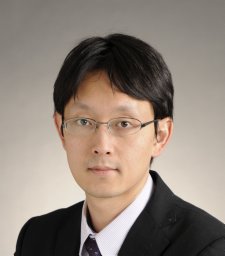 Tatsuya Chujo合作论文数Institute of Physics, University of Tsukuba;Division of Physics, Faculty of Pure and Applied Sciences, University of Tsukuba14S. Serci合作论文数14Gianfranco F. Segato合作论文数14
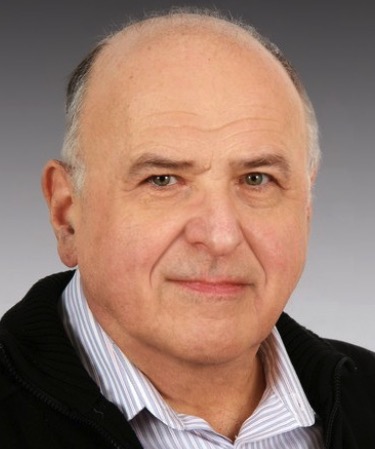 Ladislav Sandor合作论文数Nuclear Physics Department, Institute of Experimental Physics, Slovak Academy of Sciences14L. Vannucci合作论文数13
 Romualdo Santoro合作论文数13F. Blanco合作论文数Dept Estruct Mat Fis Term & Elect, Univ Complutense Madrid13Giovanni Anelli合作论文数13S. Kapusta合作论文数13
 Marcello Lunardon合作论文数Dipartimento di Fisica e Astronomia "Galileo Galilei", Università degli Studi di Padova13M. Burns合作论文数13N. Giudice合作论文数12S. Ceresa合作论文数12
 Giovanni Bencivenni合作论文数Laboratori Nazionali di Frascati, INFN12Fl Fabbri合作论文数12
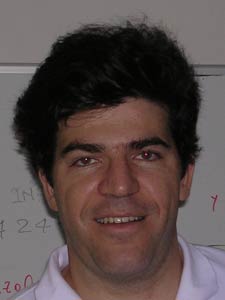 Giuseppe Bruno合作论文数Dipartimento Interateneo di Fisica "Michelangelo Merlin", Politecnico di Bari12S. Miozzi合作论文数12




