This paper is positioned within critical African heritage studies and looks into the process of storytelling with the Tonga artist community in Zimbabwe, for whom heritage has long been a contested space due to historical exclusion from self-narration. The research is based on participatory art research with eight Tonga women and four artists, aiming to strengthen local art skills and advocate for the recognition of Tonga heritage within broader creative economies, thereby fostering solidarity, strengthening affiliations, affirming ethnic identity, and connecting past with present. Employing the concept of narrative capability, we explore the intricate, cooperative relationship between heritage and storytelling in a postcolonial context where cultural narratives have been marginalised and co-opted. Our findings reveal that re-valuing one's own culture is foundational to forming narrative capability in contexts marked by silencing and colonial dominance over definitions of art. Additionally, the findings demonstrate how, for Tonga women artists, the ability to narrate their stories offers pathways to new meanings and artistic forms while reconnecting them to an evolving sense of heritage. We advocate for a rethinking of heritage-based narrative capability, recognising it as a medium for resilience, collective memory, and cultural transformation in Zimbabwe and beyond.
The ongoing influx of refugees and undocumented migrants has catalysed a more profound discourse on discrimination, stigmatisation, and social exclusion. Existing scholarship often delineates these challenges, yet it frequently characterises refugees as passive victims rather than active agents in shaping their own lives. This paper seeks to bridge this conceptual void through the lens of epistemic erasure - the systemic devaluation and exclusion of refugees' knowledge, narratives and professional identities - within host communities. Drawing on interviews from Syrian, Afghan and African refugees in Istanbul, we examine how these groups cultivate collective capabilities to subvert epistemic injustice and reclaim their agency and showcase how refugees foster collective strategies to safeguard their cultural heritage, preserve their skills and credentials and sustain their livelihoods. However, these collective capabilities, while essential for resilience and resistance, create a complex paradox: when confined to marginalised social and institutional spaces, there is a risk that they may inadvertently reinforce the very exclusions they seek to dismantle. By recognising these intricacies, we highlight the importance of fostering environments that validate the contributions of refugees and migrants, empowering them to redefine their identities and, reinforce their agency in the face of adversity.
This qualitative research study examines the concept of the capability to be educated within the context of Early Leaving from Education and Training (ELET) policy. We argue that existing policies often overlook the importance of early intervention during compulsory education and explore the socio-economic and structural factors contributing to ELET by analysing the Home School Community Liaison (HSCL) programme in Ireland, which seeks to build partnerships between parents and schools with the goal of reducing educational inequalities. Drawing on semi-structured interviews with parents, HSCL coordinators, and teachers, the extent to which the HSCL programme bolsters the 'capability to be educated' is showcased, highlighting that education must extend beyond mere access to schools to include meaningful engagement in the learning process. Employing Hart's Sen-Bourdieu Analytical Framework (SBAF), the research analyses the ways in which proactive parental engagement, beginning in the early years of schooling, can serve as a critical preventative measure against ELET. The findings demonstrate the relationality between absenteeism, academic achievement, and parental engagement and the need for targeted interventions, and specialised training, to empower students and families, and therefore reducing educational disparities; consequently contributing to the broader discourse on policy reform, prevention, and intervention strategies.
Policymakers often assume that interactions between host society members and immigrants will promote integration. However, scholars caution against such assumptions, considering both contact theory's optimism and group threat theory's concerns. In the present study, we examine a series of hypotheses pertaining to intergroup contact and group threat theories, utilising data collected from Istanbul, T & uuml;rkiye. Ordered logistic regression models are employed to examine how contact and threat dynamics affect integration perceptions. Findings indicate that the quality and site of intergroup contact, rather than its quantity, significantly influence host community members' perceptions of refugee integration and Syrians' self-perceptions of their integration. Furthermore, threat perceptions significantly affect integration perceptions while intergroup contact moderates the impact of threat perception.
This paper critically examines the use of the photostories method adapted from Photovoice in research with children, exploring its effectiveness in enabling decision-making and influencing change while addressing potential challenges. Specifically, it investigates the extent to which the photostories method enables children to make decisions and influence change while mitigating potential challenges, and how this contributes to a broader understanding of child participation in research. Using a reflective practice approach, the paper analyses researchers’ experiences alongside children’s accounts to assess how this participatory method enhances child agency. The research was conducted in collaboration with two United Kingdom-based organisations supporting underrepresented children. Data were drawn from three sources: evaluation interviews with children ( n = 18), researchers’ reflective diaries, and field notes recorded during the evaluation process. The analysis is grounded in reflective practice, considering both the implementation of photostories and the ethical complexities of working with children in research settings. Drawing on the frameworks of Lundy and Arnstein, the paper argues that power imbalances, ethical considerations, and safeguarding requirements mean that participation alone does not ensure full agency for children. This study critically examines who ultimately benefits from participatory methodologies that seek to amplify children’s voices, while also contributing to ongoing discussions about how the research process captures children’s lived experiences and shapes research outcomes.
This research engages in a methodological analysis of a participatory art project employing PhotoVoice with refugee and local community youths across two distinct sites: Istanbul and Johannesburg. The project aimed to facilitate inclusive deliberations among the youth, thereby promoting capacity building, reconciliation, and peacebuilding initiatives. Our focus is grounded in the concept of co-production as a practice and principle of inclusive deliberation within the research design, addressing a spectrum of issues from participant-driven research agenda setting, to the design and execution of the research, the selection and creation of photographs, and their dissemination. By offering a critical examination of how inclusive deliberation manifests in co-production research, we highlight the potentials, complexities, and tensions it generates. We argue that while co-produced action research embodies transversal politics, it does not necessarily disrupt the entrenched power dynamics and politically driven hierarchies within the public sphere.
In this paper, we transcend the boundaries of conventional academic writing and embrace the African philosophical concept of conversationalism to create an honest and decolonial space, albeit imperfect, in which we can talk about the messiness of participatory research. Engaging in a dialectical conversation with each other, we share our reflections on and respond to four lines of questioning related to: onto-epistemology; axiology; methodology; and temporality within participatory research. As we converse, we draw on lessons learnt from three different photovoice projects that involved working with marginalized youth or within marginalized neighborhoods and communities. As co-researchers and authors located across the Global South and North (two of us working in South Africa and the other two in the UK), we draw on our photovoice experiences to discuss the complexities and negotiations inherent in educational participatory projects. By doing so, we contribute to debates surrounding the unfulfilled promises of photovoice projects, whilst acknowledging the fluid spaces it creates for intercultural, more inclusive meaning-making. Our dialectic conversation shows that, despite being fraught with ideological tensions that are amplified by the fundamentally diverse and morally plural world we live and research in, photovoice projects can be worthwhile if we are critically reflexive before, during and long after the research is done.
This paper explores the concept of homeplace, examining how it serves as a nexus for learning, reproductive labour, and internationalisation while problematising the gendered and depoliticised nature of international distance education. Drawing on 60 interviews with international distance students at a South African university, the research employs Black and critical feminist perspectives to critique how the blurred boundaries between private and public spheres shape learning experiences. It addresses a gap in the international distance education literature by highlighting the insufficient consideration of the social reproduction responsibilities played out in homeplaces. Our findings reveal that homeplace is neither a gender-neutral nor an idealised study environment. Instead, it leads to unequal participation in learning spaces and internationalisation efforts. Digital platforms, crucial for connectivity and collaboration in international education at a distance, also perpetuate gendered power dynamics that marginalise women's voices and contributions, but women, however, reach out and support each other in these online spaces. The research teases out the tensions between homeplace as a site for learning, living, and social reproduction, emphasising the need for international distance education institutions to address the gendered dynamics in their design and delivery that disproportionately burden those with responsibilities for social reproduction.Practitioner notes What is already known about this topic International distance education focuses on distance education provided internationally. Internationalisation at a Distance (IaD) activities aim to reach a broader audience beyond local students, leveraging online and blended learning models. IaD activities depend on the home as one of the main spaces of study while seeing online platforms as the main point of internationalisation. Thus far, the literature on IaD has not undertaken a critical feminist analysis or deployed Black feminist theories to explore power relations in such spaces. What this paper adds Examines how the politics of the "homeplace" can be used to understand the educational experiences of international distance education students. Argues that current debates often overlook how the homeplace as a gendered site influences students' international distance education journeys. Highlights the gendered nature of the homeplace and complexities of studying from home and online, particularly for women Provides a critical feminist analysis of IaD, situating and problematising the homeplace as the main site for IaD. Implications for practice and/or policy Emphasises the need for institutional policies that consider the homeplace as a significant site for internationalisation at a distance. Recommends the development of support systems and resources to help students manage conflicting demands of home and study. Advocates for a more nuanced approach to distance education that addresses the diverse needs of students, including those balancing significant responsibilities like employment and family obligations.
This paper pays homage to the late Kadir Beycioğlu's contributions to social justice and gender in education. In his later work, Beycioğlu crafted a reflexive narrative that employed philosophical methodologies to explore the concept of social justice within educational settings. Although not a predominant theme, some of his writings touched upon the institutionalisation of gender inequalities and explored how such disparities are deliberately perpetuated to uphold the status quo and sustain hegemonic power structures. In this brief article, we aim to engage in a dialectical and theoretical discourse with Beycioğlu's scholarship on social justice and gender. We intend to expand upon his arguments, critically assess some aspects of his work, and provide responses to several of his assertions. In doing so, we adopt the approach of conversationalism (Chimakonam, 2017), creating an intellectual space for critical, reflective, and productive dialogues among ourselves and in relation to Beycioğlu's later work. We hope to enrich the ongoing discourse on social justice and gender by honoring the lasting contributions of Kadir Beycioğlu to social justice and delineating his work into three distinct theoretical strands and engaging critically with his scholarship.
In this study, we investigate the impact of educational environments characterized by single-sex and coeducational settings on students' academic performance, communication skills, and self-confidence. The analysis encompassed 677 research articles, comprising 798 effect sizes, and involving a cumulative sample size of 1,179,558 participants. The existing literature presents inconclusive results regarding the effects of co-education on students' overall educational well-being. This research contributes to this ongoing debate by examining the impact of educational settings, specifically co-educational and single-sex environments, on academic achievement, communication skills, and self-confidence. Our findings indicate that the type of educational setting, whether co-educational or single-sex, does not exert a statistically significant impact on academic achievement, except in countries with a low educational attainment index, where students in co-educational settings achieve higher. Additionally, students in co-educational settings demonstrate better communication skills and higher self-confidence than their counterparts in single-sex schools. These results challenge the prevailing notion that single-sex education enhances girls' achievement and self-confidence while providing a safer environment for self-expression. In contrast, our data suggest that gender-segregated schools may not be the most conducive environments for girls to thrive both socially and academically, potentially due to the promotion of passive femininity within such institutions.
Drawing on the claim that traditional normative aesthetics theory is not sufficient to understand and interpret feminist art, this chapter explores what feminist aesthetics is, and also identifies the possibilities and limits of feminist aesthetics theory. We find that gender inequalities and distortions are at the forefront of the difficulties faced by feminist aesthetics theory, and we focus on whether there is a difference between the productions of woman artists and male artists. We discuss theorists exploring the positive and negative implications and distinctions of “women’s art” and “femininity” in art. Lastly, this chapter also addresses the debates on the avantgarde roots of feminist art to argue that avantgarde art influences feminist art’s material, discourse, and assertion of opposition to the main line of art.
This chapter questions the formalist approach to understanding feminist art and expressive theory and claims that feminist aesthetics theory is broad enough to include all these aspects of feminist art based on the importance of content, discourse, and concept as much as form. We expand the ground of feminist aesthetics theory by analysing artworks and emphasising the importance of performance art, body art, and craft in feminist art. We attempt a periodic reading of feminist art and point out some of its strategies. Although feminist aesthetics is not a specific style but an area of research on gender role stereotypes, we problematise whether there are any style attempts through the examples we have chosen. Thus, we detail the production of Turkish feminist art through feminist aesthetics theory comparing it with western feminist art, and continue to discuss the theory through the foremost examples. Thus, the chapter reveals the emergence of critical thinking and shows the transformation of art within itself, for example, how and why the art viewer became a perceiver and then a participant.
This chapter presents how feminist art reshapes and reclaims the public sphere and connects with the feminist art movement in Turkey, and analyses selected artworks of feminist artists to argue how they create alternative political spaces in order to create a more participatory form of art which could engage the public. Thus, we intend to focus on two significant issues in this chapter. We first aim to understand the motivations of feminist artists, what influences them, and how they understand and reflect the broader gender issues through their work. Secondly, we show how their work is being consumed and represented to create alternative minor politics for women. We question the extent to which such work contributes to the creation and mobilisation of feminist political agents who can produce counternarratives to the dominant patriarchal hegemony as civil society shrinks in Turkey. We also acknowledge that working at the intersection of feminist art and politics does not always provide a safe and comfortable place for artists and aim to unearth the challenges this endeavour entails and its implications for feminist art in Turkey.
This paper lies at the intersection of discussions surrounding digitally mediated research methods and transnational research projects. It contributes to the current methodological debate surrounding online interviewing by focusing on tensions and affordances involved in Skype-to-phone interviewing in a transnational research context. While the Skype-to-phone facility does indeed increase further access to global participants, complex power hierarchies and ethical concerns continue to exist in relation to technological access/infrastructure, research governance regimes in different places and interpersonal research relations. We, therefore, propose that online researchers involved in transnational research projects using Skype methods move towards consideration of multiple competing constituencies and diverse social and spatial connectivities and power hierarchies in which they are researching. These social differences and spatial registers are not swept away through research conducted in a uniform virtual digital environment; rather transnational researchers must make explicit the multiple place-based contexts of their digitally mediated research, as they shape the research process in distinct ways. Thus, specific consideration must be given to ethical concerns that emanate from transnational online research.
This paper engages with the experiences of refugee teachers through an identity-based conceptualisation of the capability approach to explore these teachers' social environment, working conditions, values, and lived experiences. The research builds on the teachers' capabilities literature to argue that norms, dynamics, and identities shape their political agency, opportunities, and constraints, providing nuanced understandings of their experiences as refugee teachers. Our aim is to narrate how they negotiate across different identities and mobilise their agency to be able to function as teachers and fit within their host countries. In doing so, we not only challenge the deficit model and oversimplified challenges experienced by teachers, but also explore the complexity and nuances of their journey of becoming and developing a teacher identity as a refugee under constrained working conditions. At the same time, we relentlessly build on their precarious teacher identities to work for their communities. The findings show that teachers build liminal identities in exile where the boundary between being a refugee and a teacher is simultaneously contested and embodied, but also key to their political agency and subjectivity of creating change.
This chapter moves beyond the debates of women’s representation in the art scene and the political and activist role of feminist art and focuses on the ways in which feminist art can be used to redress the epistemic injustices and misrecognition experienced by women artists and show the extent to which feminist artists’ work aims to challenge the epistemic inequalities that have been long embedded in the history of art by systematically excluding women, but also their understanding and the conceptual making of art. We engage with more epistemic debates around what knowledge women artists challenge in art history and how this is manifested in shaping political subjectivities, resistance, and agency.
The political participation of youth is growing in importance with the proliferation of youth parliaments, councils, and online campaigning. Yet, these sites are not accessible to all youth, especially those from minority, or refugee communities. Activism by these types of youth is often denounced or reduced to dehumanising narratives of their experiences. This paper aims to explore alternative spaces for and political participation of refugees through participatory art and exhibition spaces, which are critical for devising policies for pre-emptive peacebuilding and challenging potential intercommunal conflict. In this paper, we draw on a Photovoice project in Istanbul, Johannesburg and a refugee settlement in South-West Uganda (Oruchinga) that brought youth from FDPs and host communities together to reflect on their everyday experiences. All these sites are marked by increasing anti-refugee sentiments and xenophobia, where the voices of refugees are often denied and misinterpreted, making them compelling cases to elaborate on alternative participation methods and spaces for the political participation of refugees. The paper engages with the idea of epistemic (in)justice and resistance as an overarching condition to explore how the youth developed collective political voices.
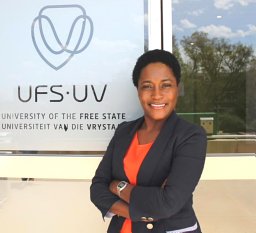 Faith Mkwananzi合作论文数Ctr Dev Support, Univ Free State8
 Elif Dastarlı合作论文数7
 Rahime Suleymaoglu-Kurum合作论文数Department of Political Science and International Relations, Bahçeşehir University7
 Necmettin Dogan合作论文数Sociol, Istanbul Ticaret Univ6
 Ecem Karlıdag-Dennis合作论文数Inst Social Innovat & Impact, Univ Northampton6
 Serife Koza Ciftci合作论文数Egitim Fak, Akdeniz Univ6
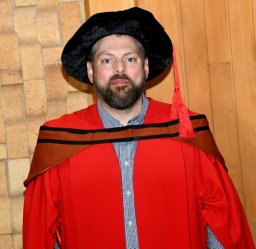 Gunter, A.W.合作论文数Univ. of Johannesburg;c;Univ. of Johannesburg6
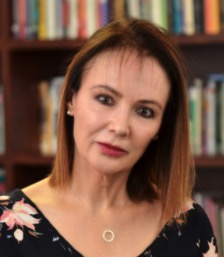 Melanie Walker合作论文数Centre For Research On Higher Education and Development, University of The Free State4
 Dianne Long合作论文数3
 Carmen Martinez-Vargas合作论文数Centre for Development Support, University of the Free State3
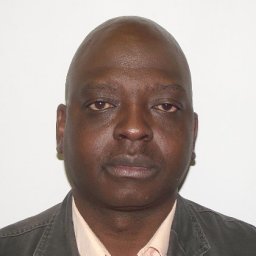 Tendayi Marovah合作论文数Ctr Dev Support, UFS3
 Markus Breines合作论文数Dept Infect Dis Epidemiol, London Sch Hyg & Trop Med3
 Parvati Raghuram合作论文数Faculty of Arts & Social Sciences, The Open University;School of Social Sciences & Global Studies, The Open University3
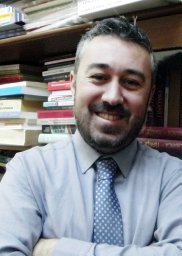 Engin Karadag合作论文数2
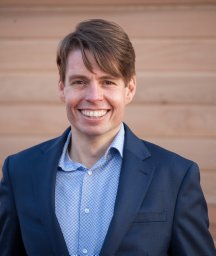 Bart Rienties合作论文数Maastricht University2
 A. Fevzi Baba合作论文数Electronics and Computer Department;Technical Education Faculty;Marmara University;Technical Education Faculty, Marmara University2
 Alejandra Boni合作论文数Escuela Técnica Superior de Ingenieros Industriales, Universidad Politecnica de Valencia2Katharine Reedy合作论文数1Mwazvita T.B. Dalu合作论文数1Chidi Ezegwu合作论文数1
 Zehra Keser Ozmantar合作论文数1
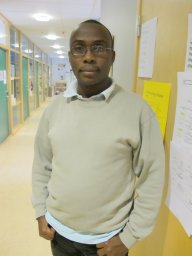 Frank Ahimbisibwe合作论文数1
 Sibel Cengizhan合作论文数marmara university1
 Zeynep Temiz合作论文数Nursing Dept, Artvin Coruh Univ1
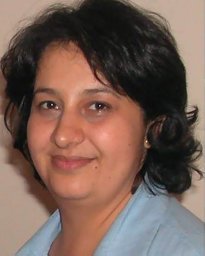 Elif Ural合作论文数Marmara University1
 Jekaterina Rogaten合作论文数London Coll Fash, Univ Arts1
 Emre Ordukaya合作论文数1
 Claire Paterson-Young合作论文数1Mehmet Melih Cin合作论文数1
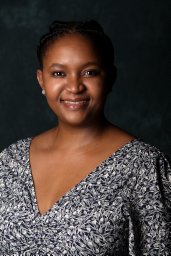 Mikateko Mathebula合作论文数SARChI Res Programme Higher Educ & Human Dev, Univ Free State1
 Yilmaz Akgunduz合作论文数Dokuz Eylul Univ1
 Sedat Gumus合作论文数Danish Sch Educ, Aarhus Univ1
 Jenna Mittelmeier合作论文数Manchester Institute of Education, School of Environment, Education and Development, Faculty of Humanities, The University of Manchester1
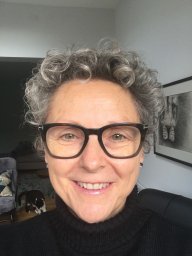 Clare Madge合作论文数Department of Geography, University of Leicester1
 Buket Dogan合作论文数1
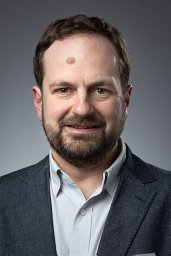 Felix Weiss合作论文数Institut für Informatik, Universität Jena1Didem Bakanay合作论文数1




