BOOMERanG has recently resolved structures on the last scattering surface at redshift ˜ 1100 with high signal to noise ratio. We review the technical advances which made this possible, and we focus on the current results for maps and power spectra, with special attention to the determination of the total mass-energy density in the Universe and of other cosmological parameters.
This paper presents a measurement of the angular power spectrum of the Cosmic Microwave Background from ` = 75 to ` = 1025 (∼ 10′ to 2.4) from a combined analysis of four 150 GHz channels in the BOOMERANG experiment. The spectrum contains multiple peaks and minima, as predicted by standard adiabatic-inflationary models in which the primordial plasma undergoes acoustic oscillations. These results, in concert with other types of cosmological measurements and theoretical models, significantly constrain the values of Ωtot, Ωbh , Ωch 2 and ns. Subject headings: Cosmic Microwave Background Anisotropy, Cosmology
We describe BOOMERANG, a balloon-borne microwave telescope designed to map the cosmic microwave background at a resolution of 10' from the Long Duration Balloon (LDB) platform. The millimeter-wave receiver employs new technology in bolometers, readout electronics, cold reimaging optics, millimeter-wave filters, and cryogenics to obtain high sensitivity to cosmic microwave background anisotropy. Sixteen detectors observe in four spectral bands centered at 90, 150, 240, and 410 GHz. The wide frequency coverage, the long-duration flight, the optical design, and the observing strategy provide strong rejection of systematic effects. We report the flight performance of the instrument during a 10.5 day stratospheric balloon flight launched from McMurdo Station, Antarctica, that mapped similar to2000 square degrees of the sky.
We present millimeter-wave observations of three extra-galactic and six Galactic sources in the Southern sky. Observations were made at 90, 150, 240 and 400 GHz with resolutions of 18, 10, 14 and 12 arcmin respectively during the 1998 Antarctic long duration balloon flight of BOOMERANG. Observations were also made with the SEST telescope, at 90 and 150 GHz with resolutions of 57 and 35 arcsec respectively. These observations can be used for calibrations of Cosmic Microwave Background (CMB) experiments as well as an understanding of the physical processes of the sources.
The BOOMERanG experiment has recently detected temperature fluctuations the Cosmic Microwave Background (CMB), the otherwise isotropic radiation coming from the early Universe. These anisotropies have a low contrast (about 30 ppm) and feature a peculiar angular power spectrum at angles corresponding to sub-horizon scales at recombination. In the current cosmological model, these structures result from acoustic oscillations in the primeval plasma. In the framework of the Hot Big Bang theory with the inflationary hypothesis, the statistical properties of the image of the CMB allow us to measure most of the cosmological parameters.
Several experiments (including BOOMERanG, MAXIMA, DASI, VSA, CBI) have recently detected very low contrast structures in the Cosmic Microwave Background (CMB), the otherwise isotropic radiation coming from the early Universe. These structures have a contrast of the order of 25 ppm and a dominant angular size of one degree. In the current cosmological model, these structures result from acoustic oscillations of the primeval plasma within the horizon at recombination (z » 1100). In the framework of the Hot Big Bang theory with the inflationary hypothesis, the statistical properties of the image of the CMB allow us to measure most of the cosmological parameters.
Three peaks and two dips have been detected in the power spectrum of the cosmic microwave background by the BOOMERANG experiment, at l = (213), (541), (845) and l = (416), (750), respectively. Using model-independent analyses, we find that all five features are statistically significant, and we measure their location and amplitude. These are consistent with the adiabatic inflationary model. We also calculate the mean and variance of the peak and dip locations and amplitudes in a large seven-dimensional parameter space of such models, which gives good agreement with the model-independent estimates. We forecast where the next few peaks and dips should be found if the basic paradigm is correct. We test the robustness of our results by comparing Bayesian marginalization techniques on this space with likelihood maximization techniques applied to a second seven-dimensional cosmological parameter space, using an independent computational pipeline, and find excellent agreement: Ωtot = 1.02 versus 1.04 ± 0.05, Ωbh2 = 0.022 versus 0.019, and ns = 0.96 versus 0.90 ± 0.08. The determination of the best fit by the maximization procedure effectively ignores nonzero optical depth of reionization τC > 0, and the difference in primordial spectral index ns between the two methods is thus a consequence of the strong correlation of ns with the τC.
We describe the new BOOMERanG payload, which is being prepared for a new circum-antarctic flight, with the aim to detect the linear polarization of the Cosmic Microwave Background (CMB). In addition to polarization capabilities, obtained by means of special bolometers, the instrument has been improved in the attitude reconstruction system and in the calibration system.
We describe three sun sensors which have been developed for balloon borne experiments. The sensors have different resolutions and sky coverage, and have been developed and used in the BOOMERanG project.
The BOOMERANG experiment provided the first high resolution map of the Cosmic Microwave Background (CMB) radiation. In this paper we summarize the main parts of the instrument, including bolometers, cryogenics, optics and pointing system. We show then how the instrument is designed to be robust to systematic effects.
The existence and anisotropy of the cosmic microwave background (CMB), the large scale distribution of Galaxies, the expansion of the Universe and the abundance of light elements can be all be explained with a single cosmological model. In this paper we focus on the CMB anisotropy maps produced by the BOOMERanG experiment and on their impact on cosmology. The images are consistent with the result of acoustic oscillations of the photons-matter plasma in the pre-recombination Universe (z ≳ 1000). We show how the instrument and the observations have been optimized and how the basic parameters of the model are derived from the data. These observations of the CMB are gaussian and point to a low curvature Universe (ω ∼ 1), as expected in the inflation scenario. In order to fit these observations and other cosmological evidence, the composition of the Universe must have significant contributions from dark matter (ω m ∼ 0.3) and dark energy (ωΛ ∼ 0.7).
The BOOMERanG experiment has recently produced detailed maps of the Cosmic Microwave Background, where sub-horizon structures are resolved with good signal to noise ratio. A power spectrum (spherical harmonics) analysis of the maps detects three peaks, at multipoles l = (213(-13)(+10)), (541(-32)(+20)), (845(-25)(+12)). In this paper we discuss the data analysis and the implications; of these results for cosmology.
We. describe the BOOMERanG experiment and its main result, i.e. the measurement of the large scale curvature of the Universe. BOOMERanG is a balloon-borne microwave telescope with sensitive cryogenic detectors. BOOMERanG has measured the angular distribution of the Cosmic Microwave Background on similar to 3% of the sky, with a resolution of similar to 10 arcmin and a sensitivity of similar to 20muK per pixel. The resulting image is dominated by hot. and cold spots with rms fluctuations similar to 80muK and typical size of similar to 1degrees. The detailed angular power spectrum of the image features three peaks and two dips at l = (213(-13)(+10)) (541(-32)(+20)) (845(-25)(+12)) and l = (416(-12)(+22)), (750(-750)(+20)), respectively. Such very characteristic spectrum can be explained assurning that the detected structures are the result of acoustic oscillations in the primeval plasma. In this framework, the measured pattern constrains the, density parameter Omega to be 0.85 < Omega < 1.1 (95% confidence interval). Other cosmological parameters, like the spectral index of initial density fluctuations, the density parameter for baryons, dark matter and dark energy, are detected or constrained by the BOOMERanG measurements and by other recent, CMB anisotropy experiments. When combined with other cosmological observations, these results depict a new, consistent,, cosmological scenario.
In this paper we report a short description of the BOOMERANG experiment explaining his scientific goal and the technologies implied. We concentrate then on the analysis of the noise properties discussing in particular the scan synchronous noise. Finally we present the calibration technique and the sensitivity of all the channels.
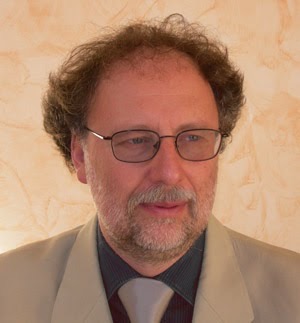 Paolo de Bernardis合作论文数Dipartimento di Fisica, Sapienza Università di Roma21
 Francesco Piacentini合作论文数Dipartimento di Fisica, Sapienza - Università di Roma19
 John Ruhl合作论文数Department of Physics, College of Arts and Sciences, Case Western Reserve University19
 Andrea Boscaleri合作论文数19Kim Coble合作论文数19
 P. Mauskopf合作论文数Sch Earth & Space Explorat, Arizona State Univ18Eric Hivon合作论文数Institut d'Astrophysique de Paris, CNRS Délégation Paris B18
 Ertus Pascale合作论文数18Ae Lange合作论文数17S. Masi合作论文数17G. Romeo合作论文数17
 Andrew Jaffe合作论文数Department of Physics, Faculty of Natural Sciences, Imperial College London17Anna Iacoangeli合作论文数17M. Giacometti合作论文数17G. De Troia合作论文数17
 James J. (Jamie) Bock合作论文数The Division of Physics, Mathematics and Astronomy, California Institute of Technology;Jet Propulsion Laboratory, California Institute of Technology17
 Brendan Crill合作论文数Jet Propulsion Laboratory, California Institute of Technology16Francesco Scaramuzzi合作论文数16Lorenzo Martinis合作论文数16
 J. Richard Bond合作论文数Department of Physics, University of Toronto;Canadian Institute for Theoretical Astrophysics, University of Toronto16V. V. Hristov合作论文数15
 Simon Prunet合作论文数Laboratoire Lagrange, Observatoire de la Côte d'Azur15
 Alessandro Melchiorri合作论文数Dipartimento di Fisica, Sapienza Universita di Roma15Dmitri Pogosyan合作论文数Department of Physics;University of Alberta;Department of Physics, University of Alberta15Ganga K合作论文数13
 Julian Borrill合作论文数Computational Cosmology Center, Lawrence Berkeley National Laboratory;Space Sciences Laboratory, UC Berkeley13
 Peter Ade合作论文数12P. Farese合作论文数11
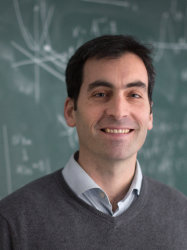 Carlo R Contaldi合作论文数Department of Physics, Faculty of Natural Sciences, Imperial College London11T. Montroy合作论文数10Gustavo Polenta合作论文数Dipartimento di Fisica, Universitá di Roma La Sapienza10
 Carlo Baccigalupi合作论文数Princeton University;Department of Physics;Department of Physics, Princeton University9
 Nicola Vittorio合作论文数Physics Department, University of Rome Tor Vergata9
 G. De Gasperis合作论文数Dipartimento di Fisica;Universita di Roma " Tor Vergata ";Dipartimento di Fisica, Universita di Roma " Tor Vergata "9
 L. Pizzino合作论文数INGV Istituto Nazionale di Geofisica e Vulcanologia, Roma, Italy8
 Fedora Quattrocchi合作论文数8
 Pedro G. Ferreira合作论文数Beecroft Institute for Particle Astrophysics and Cosmology, Department of Physics, University of Oxford;Oriel College, University of Oxford8D. Sforna合作论文数7p v mason合作论文数7T. E. Montroy合作论文数7L Miglio合作论文数7William Claude Jones合作论文数6Sandro Rao合作论文数6
 William C. Jones合作论文数Department of Physics, Princeton University5P. Cardoni合作论文数5
 Nunzia Voltattorni合作论文数Istituto Nazionale di Geofisica e Vulcanologia5
 Daniele Cinti合作论文数Instituto Nazionale di Geofisica e Vulcanologia (INGV), Sezione 1, Via di Vigna Murata 605, 00143, Roma, Italy5




