High-momentum two-particle correlations are a useful tool for studying jet-quenching effects in the quark-gluon plasma. Angular correlations between neutral-pion triggers and charged hadrons with transverse momenta in the range 4–12 GeV/c and 0.5–7 GeV/c, respectively, have been measured by the PHENIX experiment in 2014 for Au+Au collisions at √(s__NN)=200 GeV. Suppression is observed in the yield of high-momentum jet fragments opposite the trigger particle, which indicates jet suppression stemming from in-medium partonic energy loss, while enhancement is observed for low-momentum particles. The ratio and differences between the yield in Au+Au collisions and p+p collisions, I_AA and Δ_AA, as a function of the trigger-hadron azimuthal separation, Δϕ, are measured for the first time at the Relativistic Heavy Ion Collider. These results better quantify how the yield of low-p_T associated hadrons is enhanced at wide angle, which is crucial for studying energy loss as well as medium-response effects.
High-momentum two-particle correlations are a useful tool for studying jet-quenching effects in the quarkgluon plasma. Angular correlations between neutral-pion triggers and charged hadrons with transverse momenta in the range 4-12 GeV/c and 0.5-7 GeV/c, respectively, have been measured by the PHENIX experiment in 2014 for Au + Au collisions at root sNN = 200 GeV. Suppression is observed in the yield of high-momentum jet fragments opposite the trigger particle, which indicates jet suppression stemming from in-medium partonic energy loss, while enhancement is observed for low-momentum particles. The ratio and differences between the yield in Au + Au collisions and p + p collisions, I-AA and Delta(AA), as a function of the trigger-hadron azimuthal separation, Delta phi, are measured for the first time at the BNL Relativistic Heavy Ion Collider. These results better quantify how the yield of low-pT associated hadrons is enhanced at wide angle, which is crucial for studying energy loss as well as medium-response effects.
K .Abe,T.Akagi,B.D.Anderson,P.L.Anthony,R.G .Arnold,T.Averett,H.R.Band,C.M . Berisso,P.Bogorad,H.Borel,P.E.Bosted,V.Breton,M .J.Buenerd,G .D.Cates,T.E.Chupp,S. Churchwell,K .P.Coulter,M .Daoudi,P.Decowski,R.Erickson,J.N.Fellbaum ,H.Fonvieille,R. G earhart,V.G hazikhanian,K .A.G ri oen ,R.S.Hicks,R.Holm es,E.W .Hughes,G .Igo,S.Incerti,J. R.Johnson,W .K ahl,M .K hayat,Yu.G .K olom ensky,S.E.K uhn,K .K um ar,M .K uriki,R. Lom bard-Nelsen,D.M .M anley,J.M arroncle,T.M aruyam a,T.M arvin,W .M eyer,Z.-E.M eziani,D. M iller,G .M itchell,M .O lson,G .A.Peterson,G .G .Petratos,R.Pitthan,R.Prepost,P.Raines,B. Raue,D.Reyna,L.S.Rochester,S.E.Rock,M .V.Rom alis,F.Sabatie,G .Shapiro,J.Shaw,T.B. Sm ith,L.Sorrell,P.A.Souder,F.Staley,S.St.Lorant,L.M .Stuart,F.Suekane,Z.M .Szalata,Y. Terrien,A.K .Thom pson,T.Toole,X.W ang,J.W .W atson,R.C.W elsh,F.W esselm ann,T.W right, C.C.Young,B.Youngm an,H.Yuta,W .-M .Zhang,and P.Zyla 1 Am erican University,W ashington,DC 20016
K. Abe, T. Akagi, B. D. Anderson, P. L. Anthony, R. G. Arnold, T. Averett, H. R. Band, C. M. Berisso, P. Bogorad, H. Borel, P. E. Bosted, V. Breton, M. J. Buenerd, G. D. Cates, T. E. Chupp, S. Churchwell, K. P. Coulter, M. Daoudi, P. Decowski, R. Erickson, J. N. Fellbaum, H. Fonvieille, R. Gearhart, V. Ghazikhanian, K. A. Griffioen, R. S. Hicks, R. Holmes, E. W. Hughes, G. Igo, S. Incerti, J. R. Johnson, W. Kahl, M. Khayat, Yu. G. Kolomensky, S. E. Kuhn, K. Kumar, M. Kuriki, R. Lombard-Nelsen, D. M. Manley, J. Marroncle, T. Maruyama, T. Marvin, W. Meyer, Z.-E. Meziani, D. Miller, G. Mitchell, M. Olson, G. A. Peterson, G. G. Petratos, R. Pitthan, R. Prepost, P. Raines, B. Raue, D. Reyna, L. S. Rochester, S. E. Rock, M. V. Romalis, F. Sabatie, G. Shapiro, J. Shaw, T. B. Smith, L. Sorrell, P. A. Souder, F. Staley, S. St. Lorant, L. M. Stuart, F. Suekane, Z. M. Szalata, Y. Terrien, A. K. Thompson, T. Toole, X. Wang, J. W. Watson, R. C. Welsh, F. Wesselmann, T. Wright, C. C. Young, B. Youngman, H. Yuta, W.-M. Zhang, and P. Zyla 1 American University, Washington, DC 20016 2 University of California, Berkeley, CA 94720 3 LPC IN2P3/CNRS, Univ. Blaise Pascal, F-63170 Aubiere Cedex, France 4 University of Bonn, Nussallee 12 D-5300 Bonn, Germany 5 California Institute of Technology, Pasadena, California 91125 6 DAPNIA, Saclay, 91191 Gif-sur-Yvette Cedex, France 7 Kent State University, Kent, OH 44242 8 University of California, Los Angeles, CA 90024-1547 9 University of Massachusetts, Amherst, MA 01003 10 University of Michigan, Ann Arbor, MI 48109 11 National Institute of Standards and Technology, Gaithersburg, MD 20899 12 Northwestern University, Evanston, IL 60201 13 Old Dominion University, Norfolk, VA 23529 14 University of Pennsylvania, Philadelphia, PA 19104-6317 15 Princeton University, Princeton, NJ 08544 16 Southern Oregon State College, Ashland, OR 97520 17 Smith College, Northampton, MA 01063 18 Stanford Linear Accelerator Center, Stanford, CA 94309 19 Syracuse University, Syracuse, NY 13210 20 Temple University, Philadelphia, PA 19122 21 Tohoku University, Aramaki Aza Aoba, Sendai, Miyagi, Japan 22 College of William and Mary, Williamsburg, VA 23187 23 University of Wisconsin, Madison, WI 53706
As a colorless probe, direct photons balance the p_T of the away-side jet at leading order. Direct photon-hadron correlations are thus an excellent probe for nuclear structure and QCD effects, including parton energy loss in the Quark-Gluon Plasma. PHENIX has measured π^0 and direct photon-triggered two-particle azimuthal correlations in a variety of collision systems ranging from p+p to Au+Au at 200 GeV. In p+Au and d+Au collisions, no modification of the per-trigger jet yield or away-side correlation width compared to p+p collisions is observed for direct photon triggered correlations while an increase in the away-side width for π^0 triggered correlations in p+Au has been measured. In Au+Au collisions, direct photons have been identified statistically as well as using an isolation cut. Combining data sets from different collision systems allows us to quantify the transition from suppression at high z_T (p_T,h/p_T,γ) to the enhancement of low z_T particles relative to p+p, and to study this transition as a function of trigger p_T.
Experimental results at RHIC and at the LHC show a similar strong suppression for light and heavy quark probes at high pT, and a possible quark mass dependence of suppression at low pT. More high precision measurements of separated charm and bottom are needed to quantify the dependence of medium effects on the quark mass. The PHENIX experiment measured separated electrons from bottom and charm decays using displaced vertex distributions at mid-rapidity |y|<0.35. Azimuthal anisotropy of electrons from separated charm and bottom decays are obtained from high statistics Au+Au data taken in 2014. PHENIX also measures muons from heavy quark decays in d+Au collisions at forward rapidity to study collective effects on heavy flavor production in small systems. These proceedings report the azimuthal anisotropy of charm and bottom at mid-rapidity in minimum bias Au+Au collisions and the anisotropy of single muons from heavy quark decays in d+Au collisions.
Using the extraordinary versatility of RHIC in selecting different colliding species, the PHENIX experiment has collected data in p+Al, p+Au, d+Au, and He-3+Au collisions at 200 GeV center-of-mass energy and conducted a comprehensive set of anisotropic flow measurements. These geometry-controlled experiments provide a unique testing ground for theoretical models that produce azimuthal particle correlations based on initial- and/or final-state effects. A complete set of triangular anisotropies of inclusive charged particles and final results on identified pion and proton v(2)(p(T)) are shown. The mass-ordered splitting in v(2)(p(T)) provides information about the role of early-stage collective flow and late-stage hadronic rescattering. Detailed model comparisons with all observables are discussed.
The versatility of RHIC allowed the PHENIX collaboration to measure low momentum direct photons from small systems, such as p+p, p+A, d+Au at sNN=200GeV as well as from large A+A systems, such as Au+Au and Cu+Cu at 200GeV and Au+Au at 62.4GeV and 39GeV. In these measurements PHENIX has discovered a large excess over the scaled p+p yield of direct photons in A+A collisions, and a non-zero excess over the scaled p+p yield in central p+A collisions. Another PHENIX discovery is that at low-pT the integrated yield of direct photons, dNγ/dy, from large systems follows a universal scaling as a function of the charged-particle multiplicity, (dNch/dη)α, with α = 1.25. The observed scaling properties of direct photons from these systems show that the photon production yield increases faster than the charged-particle multiplicity.
Dilepton spectra are a classic probe to study ultra-relativistic heavy ion collisions. At RHIC energies, the dimuon continuum is dominated by correlated pairs from semi-leptonic decays of charm and bottom hadrons and the Drell-Yan process. The dimuon spectra contain information on heavy flavor angular correlations, which can constrain the relative contributions from different heavy flavor production mechanisms. Studying heavy flavor correlations in p+Au collisions may provide further insight on cold nuclear matter effects. Measurements of the Drell-Yan cross-section can provide constraints to PDFs, as well as further our understanding in initial state interactions in p+Au collisions. In this talk, we report measurements of pp pairs from charm, bottom, and Drell-Yan in p+p and p+Au collisions at root S-NN = 200 GeV. A further shape analysis is applied to the heavy flavor pair correlations to extract the relative contributions to heavy flavor production mechanisms.
Forward hadron measurements in p(d)+A provide a signal to study nuclear shadowing, initial state energy loss and/or gluon saturation effects as a function of rapidity, centrality and energy. High p(T) identified pi(0) measurements are an essential first step toward measuring prompt photon production. The pi(0) measurements are enabled by the PHENIX MPC-EX detector, a Si-W preshower detector located in front of the Muon Piston Calorimeter (MPC), expanding the neutral pion reconstruction capabilities in the rapidity range 3.1 < eta < 3.8 out to high energies, E < 80 GeV. Previous PHENIX measurements of punch-through charged hadrons in the muon arms in the rapidity range 1.4 < vertical bar eta vertical bar < 2.2 were significantly improved through the capability of the forward silicon vertex detector (FVTX) to determine the transverse momentum and rapidity with high precision and reject background from secondary hadrons. PHENIX collected d+Au data with the MPC-EX in the 2016 run at root s(NN) = 200, 62, 39 and 19.6 GeV; and p+p and p+Au(Al) data with the FVTX in 2015 at 200 GeV. In this talk, we will present first results for high p(T) pi(0) production from the root s(NN) = 200 GeV dataset, the status of the prompt photon measurement, as well as charged hadron nuclear modification factors in p+Au(Al) and He-3+Au.
Detailed measurements of collectivity in Au+Au collisions at RHIC provide a key connection between the initial geometry of the deposited energy and the hydrodynamic evolution of the medium created in heavy-ion collisions. Utilizing the highly segmented PHENIX inner trackers, we present new measurements of flow coefficients extending over a wide range in pseudorapidity 1 < |η| < 3 and pT. Over a centrality range of 0-90%, we present cumulant results v2{2} −v2{8} and v3{2} as well as quantifying the event-by-event flow fluctuations. Complementing these results, we measure event-by-event v2 and v3 distributions using an unfolding procedure.
Quarkonium suppression in nucleus-nucleus collisions is a powerful tool to probe the density and temperature of the medium created in heavy ion collisions. Forward rapidity measurements in p(d)+Au collisions are essential to understand how quarkonium states are affected by initial state effects, formation time, and local particle multiplicity. Earlier measurements in Au+Au collisions showed a stronger suppression of forward J/ψ compared to mid-rapidity results, indicating the possibility of a smaller contribution of regenerated quarkonium states at forward rapidity. These proceedings report on the latest quarkonium studies performed by the PHENIX collaboration in the rapidity range 1.2<|y|<2.2.
The PHENIX experiment has excellent data for small systems including p+Au, d+Au, He-3+Au at 200 GeV as well as the d+Au beam energy scan down to 19.6 GeV. We present new measurements of dN(ch)/d eta for all of these systems over a broad range in pseudorapidity -3 < eta < +3 and event multiplicity. These measurements provide key constraints of baryon stopping models and are compared with various theoretical calculations. The measurements are also compared with flow observables as a function of pseudorapidity to explore scaling relations. In particular measurements as a function of collision energy provide key inputs for calculations for the upcoming A+A beam energy scan at RHIC in terms of particle production and baryon rapidity shifts.
Proton-nucleus (p+A) collisions play an important role as a control system for interpreting hot nuclear matter effects in nucleus-nucleus (A+A) collisions. There is a large amount of data from both RHIC and the LHC that indicate that collective effects are also present in small systems. Understanding the origin of these effects is still incomplete, since a variety of models with very different underlying physics have been shown to describe p+A data. We present a comprehensive set of measurements of soft-physics observables and comparisons with theoretical models. These measurements include multi-particle correlations as a function of event multiplicity, ν2(pT) and ν3(pT) for inclusive charged particles at mid-rapidity, ν2(pT) for hadrons at forward/backward rapidities, and the centrality and pseudorapidity dependence of inclusive ν2. The implications for the origin of collectivity in p+Au collisions at RHIC is discussed.
The PHENIX collaboration presents first measurements of low-momentum (0.41 GeV/c) direct-photon yield dN_{γ}^{dir}/dη is a smooth function of dN_{ch}/dη and can be well described as proportional to (dN_{ch}/dη)^{α} with α≈1.25. This scaling behavior holds for a wide range of beam energies at the Relativistic Heavy Ion Collider and the Large Hadron Collider, for centrality selected samples, as well as for different A+A collision systems. At a given beam energy, the scaling also holds for high p_{T} (>5 GeV/c), but when results from different collision energies are compared, an additional sqrt[s_{NN}]-dependent multiplicative factor is needed to describe the integrated-direct-photon yield.
We measured direct photons for pT<5GeV/c in minimum bias and 0%–40% most-central events at midrapidity for Cu+Cu collisions at √sNN=200GeV. The e+e− contribution from quasireal direct virtual photons has been determined as an excess over the known hadronic contributions in the e+e− mass distribution. A clear enhancement of photons over the binary scaled p+p fit is observed for pT<4GeV/c in Cu+Cu data. The pT spectra are consistent with the Au+Au data covering a similar number of participants. The inverse slopes of the exponential fits to the excess after subtraction of the p+p baseline are 285±53(stat)±57(syst)MeV/c and 333±72(stat)±45(syst)MeV/c for minimum bias and 0%–40% most-central events, respectively. The rapidity density, dN/dy, of photons demonstrates the same power law as a function of dNch/dη observed in Au+Au at the same collision energy. (Less)
A. Adare,12 S. Afanasiev,30 C. Aidala,13,45 N. N. Ajitanand,64,* Y. Akiba,58,59,† H. Al-Bataineh,52 J. Alexander,64 M. Alfred,23 K. Aoki,32,35,58 L. Aphecetche,66 R. Armendariz,52 S. H. Aronson,6 J. Asai,59 E. T. Atomssa,36 R. Averbeck,65 T. C. Awes,54 B. Azmoun,6 V. Babintsev,24 A. Bagoly,17 G. Baksay,19 L. Baksay,19 A. Baldisseri,15 K. N. Barish,7 P. D. Barnes,39,* B. Bassalleck,51 S. Bathe,4,7,59 S. Batsouli,54 V. Baublis,57 A. Bazilevsky,6 S. Belikov,6,* R. Belmont,12 R. Bennett,65 A. Berdnikov,61 Y. Berdnikov,61 A. A. Bickley,12 M. Boer,39 J. G. Boissevain,39 J. S. Bok,52 H. Borel,15 K. Boyle,59,65 M. L. Brooks,39 J. Bryslawskyj,7 H. Buesching,6 V. Bumazhnov,24 G. Bunce,6,59 S. Butsyk,39,65 S. Campbell,13,65 V. Canoa Roman,65 B. S. Chang,74 J.-L. Charvet,15 S. Chernichenko,24 C. Y. Chi,13 J. Chiba,32 M. Chiu,6,25 I. J. Choi,25,74 T. Chujo,69,70 P. Chung,64 A. Churyn,24 V. Cianciolo,54 C. R. Cleven,21 B. A. Cole,13 M. P. Comets,55 M. Connors,21,59 P. Constantin,39 M. Csanád,17 T. Csörgő,18,73 T. Dahms,65 T. W. Danley,53 K. Das,20 G. David,6,65 M. B. Deaton,1 K. Dehmelt,19,65 H. Delagrange,66,* A. Denisov,24 D. d’Enterria,13 A. Deshpande,59,65 E. J. Desmond,6 O. Dietzsch,62 A. Dion,65 J. H. Do,74 M. Donadelli,62 O. Drapier,36 A. Drees,65 A. K. Dubey,72 J. M. Durham,39 A. Durum,24 V. Dzhordzhadze,7 Y. V. Efremenko,54 J. Egdemir,65 F. Ellinghaus,12 W. S. Emam,7 A. Enokizono,38,58,60 H. En’yo,58,59 S. Esumi,69 K. O. Eyser,6,7 W. Fan,65 N. Feege,65 D. E. Fields,51,59 M. Finger,8,30 M. Finger, Jr.,8,30 F. Fleuret,36 S. L. Fokin,34 Z. Fraenkel,72,* J. E. Frantz,53,65 A. Franz,6 A. D. Frawley,20 K. Fujiwara,58 Y. Fukao,35,58 T. Fusayasu,48 S. Gadrat,40 P. Gallus,14 P. Garg,3,65 I. Garishvili,38,67 H. Ge,65 A. Glenn,12,38 H. Gong,65 M. Gonin,36 J. Gosset,15 Y. Goto,58,59 R. Granier de Cassagnac,36 N. Grau,2,28 S. V. Greene,70 M. Grosse Perdekamp,25,59 T. Gunji,11 H.-Å. Gustafsson,41,* T. Hachiya,22,49,59 A. Hadj Henni,66 C. Haegemann,51 J. S. Haggerty,6 H. Hamagaki,11 R. Han,56 H. Harada,22 E. P. Hartouni,38 K. Haruna,22 S. Hasegawa,29 T. O. S. Haseler,21 E. Haslum,41 R. Hayano,11 X. He,21 M. Heffner,38 T. K. Hemmick,65 T. Hester,7 H. Hiejima,25 J. C. Hill,28 K. Hill,12 R. Hobbs,51 A. Hodges,21 M. Hohlmann,19 W. Holzmann,64 K. Homma,22 B. Hong,33 T. Horaguchi,58,68 D. Hornback,67 T. Hoshino,22 N. Hotvedt,28 J. Huang,6 T. Ichihara,58,59 H. Iinuma,35,58 K. Imai,29,35,58 M. Inaba,69 Y. Inoue,58,60 D. Isenhower,1 L. Isenhower,1 M. Ishihara,58 T. Isobe,11 M. Issah,64 A. Isupov,30 D. Ivanishchev,57 B. V. Jacak,65 Z. Ji,65 J. Jia,6,13,64 J. Jin,13 O. Jinnouchi,59 B. M. Johnson,6,21 K. S. Joo,47 D. Jouan,55 F. Kajihara,11 S. Kametani,11,71 N. Kamihara,58 J. Kamin,65 M. Kaneta,59 J. H. Kang,74 H. Kanou,58,68 D. Kawall,44,59 A. V. Kazantsev,34 V. Khachatryan,65 A. Khanzadeev,57 J. Kikuchi,71 D. H. Kim,47 D. J. Kim,31,74 E. Kim,63 E.-J. Kim,9 M. Kim,63 D. Kincses,17 E. Kinney,12 Á. Kiss,17 E. Kistenev,6 A. Kiyomichi,58 J. Klay,38 C. Klein-Boesing,46 L. Kochenda,57 V. Kochetkov,24 B. Komkov,57 M. Konno,69 D. Kotchetkov,7,53 D. Kotov,57,61 A. Kozlov,72 A. Král,14 A. Kravitz,13 J. Kubart,8,27 G. J. Kunde,39 B. Kurgyis,17 N. Kurihara,11 K. Kurita,58,60 M. J. Kweon,33 Y. Kwon,67,74 G. S. Kyle,52 R. Lacey,64 Y. S. Lai,13 J. G. Lajoie,28 A. Lebedev,28 D. M. Lee,39 M. K. Lee,74 S. H. Lee,28 T. Lee,63 M. J. Leitch,39 M. A. L. Leite,62 B. Lenzi,62 Y. H. Leung,65 N. A. Lewis,45 X. Li,10 X. Li,39 S. H. Lim,39,74 T. Liška,14 A. Litvinenko,30 M. X. Liu,39 S. Lökös,17 B. Love,70 D. Lynch,6 C. F. Maguire,70 T. Majoros,16 Y. I. Makdisi,5 A. Malakhov,30 M. D. Malik,51 V. I. Manko,34 Y. Mao,56,58 L. Mašek,8,27 H. Masui,69 F. Matathias,13 M. McCumber,39,65 P. L. McGaughey,39 D. McGlinchey,12,39 Y. Miake,69 A. C. Mignerey,43 D. E. Mihalik,65 P. Mikeš,8,27 K. Miki,69 T. E. Miller,70 A. Milov,65,72 S. Mioduszewski,6 M. Mishra,3 J. T. Mitchell,6 M. Mitrovski,64 G. Mitsuka,32,59 T. Moon,74 A. Morreale,7 D. P. Morrison,6 S. I. Morrow,70 T. V. Moukhanova,34 D. Mukhopadhyay,70 J. Murata,58,60 S. Nagamiya,32,58 K. Nagashima,22 Y. Nagata,69 J. L. Nagle,12 M. Naglis,72 I. Nakagawa,58,59 Y. Nakamiya,22 T. Nakamura,22 K. Nakano,58,68 J. Newby,38 M. Nguyen,65 B. E. Norman,39 R. Nouicer,6,59 T. Novák,18 N. Novitzky,65 A. S. Nyanin,34 E. O’Brien,6 S. X. Oda,11 C. A. Ogilvie,28 H. Ohnishi,58 M. Oka,69 K. Okada,59 O. O. Omiwade,1 J. D. Orjuela Koop,12 J. D. Osborn,45 A. Oskarsson,41 M. Ouchida,22 K. Ozawa,11,32,69 R. Pak,6 D. Pal,70 A. P. T. Palounek,39 V. Pantuev,26,65 V. Papavassiliou,52 J. Park,63 S. Park,58,63,65 W. J. Park,33 S. F. Pate,52 M. Patel,28 H. Pei,28 J.-C. Peng,25 W. Peng,70 H. Pereira,15 D. V. Perepelitsa,12 V. Peresedov,30 D. Yu. Peressounko,34 C. E. PerezLara,65 C. Pinkenburg,6 M. L. Purschke,6 A. K. Purwar,39 H. Qu,21 P. V. Radzevich,61 J. Rak,31,51 A. Rakotozafindrabe,36 I. Ravinovich,72 K. F. Read,54,67 S. Rembeczki,19 M. Reuter,65 K. Reygers,46 V. Riabov,50,57 Y. Riabov,57,61 D. Richford,4 T. Rinn,28 G. Roche,40,* A. Romana,36,* M. Rosati,28 S. S. E. Rosendahl,41 P. Rosnet,40 Z. Rowan,4 P. Rukoyatkin,30 J. Runchey,28 V. L. Rykov,58 B. Sahlmueller,46,65 N. Saito,32,35,58,59 T. Sakaguchi,6 S. Sakai,69 H. Sakata,22 H. Sako,29 V. Samsonov,50,57 M. Sarsour,21 S. Sato,29,32 S. Sawada,32 B. K. Schmoll,67 J. Seele,12 R. Seidl,25,58,59 V. Semenov,24 R. Seto,7 D. Sharma,65,72 I. Shein,24 A. Shevel,57,64 T.-A. Shibata,58,68 K. Shigaki,22 M. Shimomura,28,49,69 K. Shoji,35,58 A. Sickles,25,65 C. L. Silva,39,62 D. Silvermyr,41,54 C. Silvestre,15 K. S. Sim,33 C. P. Singh,3 V. Singh,3 M. J. Skoby,45 S. Skutnik,28 M. Slunečka,8,30 A. Soldatov,24 R. A. Soltz,38 W. E. Sondheim,39 S. P. Sorensen,67 I. V. Sourikova,6 F. Staley,15 P. W. Stankus,54 E. Stenlund,41 M. Stepanov,52,* A. Ster,73 S. P. Stoll,6 T. Sugitate,22 C. Suire,55 Z. Sun,16 J. Sziklai,73 T. Tabaru,59 S. Takagi,69 E. M. Takagui,62 A. Taketani,58,59 Y. Tanaka,48 K. Tanida,29,58,59,63 M. J. Tannenbaum,6 A. Taranenko,50,64 P. Tarján,16 T. L. Thomas,51 R. Tieulent,42 M. Togawa,35,58 A. Toia,65 J. Tojo,58 L. Tomášek,27 H. Torii,58 R. S. Towell,1 V.-N. Tram,36 I. Tserruya,72 Y. Tsuchimoto,22 Y. Ueda,22 B. Ujvari,16 C. Vale,28 H. Valle,70 H. W. van Hecke,39 J. Velkovska,70 R. Vértesi,16,73 A. A. Vinogradov,34 M. Virius,14 V. Vrba,14,27 E. Vznuzdaev,57 M. Wagner,35,58 D. Walker,65 X. R. Wang,52,59 D. Watanabe,22 Y. Watanabe,58,59 F. Wei,28,52 J. Wessels,46 S. N. White,6 D. Winter,13 C. P. Wong,21 C. L. Woody,6 M. Wysocki,12,54 W. Xie,59 C. Xu,52 Q. Xu,70 Y. L. Yamaguchi,59,65,71
We report the measurement of the transverse momentum dependence of inclusive J/psi polarization in p + p collisions at root s = 200 GeV performed by the PHENIX Experiment at the Relativistic Heavy Ion Collider. The J/psi polarization is studied in the helicity, Gottfried-Jackson, and Collins-Soper frames for p(T) < 5 GeV/c and vertical bar y vertical bar < 0.35. The polarization in the helicity and Gottfried-Jackson frames is consistent with zero for all transverse momenta, with a slight (1.8 sigma) trend towards longitudinal polarization for transverse momenta above 2 GeV/c. No conclusion is allowed due to the limited acceptance in the Collins-Soper frame and the uncertainties of the current data. The results are compared to observations for other collision systems and center of mass energies and to different quarkonia production models. Disciplines Elementary Particles and Fields and String Theory | Physics Comments This article is published as Adare, A., S. Afanasiev, C. Aidala, N. N. Ajitanand, Yasuyuki Akiba, H. Al-Bataineh, J. Alexander et al. "Transverse momentum dependence of J/ψ polarization at midrapidity in p+ p collisions at s= 200 GeV." Physical Review D 82, no. 1 (2010): 012001. DOI:10.1103/PhysRevD.82.012001. Posted with permission. Authors Andrew Adare, John C. Hill, Todd Kempel, John G. Lajoie, Alexandre Lebedev, Craig Ogilvie, H. Pei, Marzia Rosati, Alexey Yu. Semenov, Carla Vale, Feng Wei, et al., and PHENIX Collaboration This article is available at Iowa State University Digital Repository: http://lib.dr.iastate.edu/physastro_pubs/315 Transverse momentum dependence of J=c polarization at midrapidity in pþ p collisions at ffiffi s p 1⁄4 200 GeV A. Adare, S. Afanasiev, C. Aidala, N.N. Ajitanand, Y. Akiba, H. Al-Bataineh, J. Alexander, K. Aoki, L. Aphecetche, J. Asai, E. T. Atomssa, R. Averbeck, T. C. Awes, B. Azmoun, V. Babintsev, M. Bai, G. Baksay, L. Baksay, A. Baldisseri, K.N. Barish, P. D. Barnes, B. Bassalleck, A. T. Basye, S. Bathe, S. Batsouli, V. Baublis, C. Baumann, A. Bazilevsky, S. Belikov,* R. Bennett, A. Berdnikov, Y. Berdnikov, A. A. Bickley, J. G. Boissevain, H. Borel, K. Boyle, M. L. Brooks, H. Buesching, V. Bumazhnov, G. Bunce, S. Butsyk, C.M. Camacho, S. Campbell, B. S. Chang, W.C. Chang, J.-L. Charvet, S. Chernichenko, C.Y. Chi, M. Chiu, I. J. Choi, R. K. Choudhury, T. Chujo, P. Chung, A. Churyn, V. Cianciolo, Z. Citron, B. A. Cole, Z. Conesa del Valle, P. Constantin, M. Csanád, T. Csörgö, T. Dahms, S. Dairaku, K. Das, G. David, A. Denisov, D. d’Enterria, A. Deshpande, E. J. Desmond, O. Dietzsch, A. Dion, M. Donadelli, O. Drapier, A. Drees, K.A. Drees, A.K. Dubey, A. Durum, D. Dutta, V. Dzhordzhadze, Y. V. Efremenko, F. Ellinghaus, T. Engelmore, A. Enokizono, H. En’yo, S. Esumi, K. O. Eyser, B. Fadem, D. E. Fields, M. Finger, Jr., M. Finger, F. Fleuret, S. L. Fokin, Z. Fraenkel, J. E. Frantz, A. Franz, A.D. Frawley, K. Fujiwara, Y. Fukao, T. Fusayasu, I. Garishvili, A. Glenn, H. Gong, M. Gonin, J. Gosset, Y. Goto, R. Granier de Cassagnac, N. Grau, S. V. Greene, M. Grosse Perdekamp, T. Gunji, H.-Å. Gustafsson, A. Hadj Henni, J. S. Haggerty, H. Hamagaki, R. Han, E. P. Hartouni, K. Haruna, E. Haslum, R. Hayano, M. Heffner, T. K. Hemmick, T. Hester, X. He, J. C. Hill, M. Hohlmann, W. Holzmann, K. Homma, B. Hong, T. Horaguchi, D. Hornback, S. Huang, T. Ichihara, R. Ichimiya, Y. Ikeda, K. Imai, J. Imrek, M. Inaba, D. Isenhower, M. Ishihara, T. Isobe, M. Issah, A. Isupov, D. Ivanischev, B. V. Jacak,54,x J. Jia, J. Jin, B.M. Johnson, K. S. Joo, D. Jouan, F. Kajihara, S. Kametani, N. Kamihara, J. Kamin, J. H. Kang, J. Kapustinsky, D. Kawall, A.V. Kazantsev, T. Kempel, A. Khanzadeev, K.M. Kijima, J. Kikuchi, B. I. Kim, D.H. Kim, D. J. Kim, E. Kim, S. H. Kim, E. Kinney, K. Kiriluk, A. Kiss, E. Kistenev, J. Klay, C. Klein-Boesing, L. Kochenda, B. Komkov, M. Konno, J. Koster, A. Kozlov, A. Král, A. Kravitz, G. J. Kunde, K. Kurita, M. Kurosawa, M. J. Kweon, Y. Kwon, G. S. Kyle, R. Lacey, Y. S. Lai, J. G. Lajoie, D. Layton, A. Lebedev, D.M. Lee, K. B. Lee, T. Lee, M. J. Leitch, M.A. L. Leite, B. Lenzi, P. Liebing, T. Liška, A. Litvinenko, H. Liu, M.X. Liu, X. Li, B. Love, D. Lynch, C. F. Maguire, Y. I. Makdisi, A. Malakhov, M.D. Malik, V. I. Manko, E. Mannel, Y. Mao, L. Mašek, H. Masui, F. Matathias, M. McCumber, P. L. McGaughey, N. Means, B. Meredith, Y. Miake, P. Mikeš, K. Miki, A. Milov, M. Mishra, J. T. Mitchell, A. K. Mohanty, Y. Morino, A. Morreale, D. P. Morrison, T. V. Moukhanova, D. Mukhopadhyay, J. Murata, S. Nagamiya, J. L. Nagle, M. Naglis, M. I. Nagy, I. Nakagawa, Y. Nakamiya, T. Nakamura, K. Nakano, J. Newby, M. Nguyen, T. Niita, R. Nouicer, A. S. Nyanin, E. O’Brien, S. X. Oda, C.A. Ogilvie, H. Okada, K. Okada, M. Oka, Y. Onuki, A. Oskarsson, M. Ouchida, K. Ozawa, R. Pak, A. P. T. Palounek, V. Pantuev, V. Papavassiliou, J. Park, W. J. Park, S. F. Pate, H. Pei, J.-C. Peng, H. Pereira, V. Peresedov, D. Yu. Peressounko, C. Pinkenburg, M. L. Purschke, A. K. Purwar, H. Qu, J. Rak, A. Rakotozafindrabe, I. Ravinovich, K. F. Read, S. Rembeczki, K. Reygers, V. Riabov, Y. Riabov, D. Roach, G. Roche, S. D. Rolnick, M. Rosati, S. S. E. Rosendahl, P. Rosnet, P. Rukoyatkin, P. Ružička, V. L. Rykov, B. Sahlmueller, N. Saito, T. Sakaguchi, S. Sakai, K. Sakashita, V. Samsonov, T. Sato, S. Sawada, K. Sedgwick, J. Seele, R. Seidl, A.Yu. Semenov, V. Semenov, R. Seto, D. Sharma, I. Shein, T.-A. Shibata, K. Shigaki, M. Shimomura, K. Shoji, P. Shukla, A. Sickles, C. L. Silva, D. Silvermyr, C. Silvestre, K. S. Sim, B. K. Singh, C. P. Singh, V. Singh, M. Slunečka, A. Soldatov, R. A. Soltz, W. E. Sondheim, S. P. Sorensen, I. V. Sourikova, F. Staley, P.W. Stankus, E. Stenlund, M. Stepanov, A. Ster, S. P. Stoll, T. Sugitate, C. Suire, A. Sukhanov, J. Sziklai, E.M. Takagui, A. Taketani, R. Tanabe, Y. Tanaka, K. Tanida, M. J. Tannenbaum, A. Taranenko, P. Tarján, H. Themann, T. L. Thomas, M. Togawa, A. Toia, L. Tomášek, Y. Tomita, H. Torii, R. S. Towell, V-N. Tram, I. Tserruya, Y. Tsuchimoto, C. Vale, H. Valle, H.W. van Hecke, A. Veicht, J. Velkovska, R. Vertesi, A.A. Vinogradov, M. Virius, V. Vrba, E. Vznuzdaev, X. R. Wang, Y. Watanabe, F. Wei, J. Wessels, S. N. White, D. Winter, C. L. Woody, M. Wysocki, W. Xie, Y. L. Yamaguchi, K. Yamaura, R. Yang, A. Yanovich, J. Ying, S. Yokkaichi, G. R. Young, I. Younus, I. E. Yushmanov, W.A. Zajc, O. Zaudtke, C. Zhang, S. Zhou, and L. Zolin PHYSICAL REVIEW D 82, 012001 (2010) 1550-7998=2010=82(1)=012001(10) 012001-1 2010 The American Physical Society (PHENIX Collaboration) Abilene Christian University, Abilene, Texas 79699, USA Institute of Physics, Academia Sinica, Taipei 11529, Taiwan Department of Physics, Banaras Hindu University, Varanasi 221005, India Bhabha Atomic Research Centre, Bombay 400 085, India Collider-Accelerator Department, Brookhaven National Laboratory, Upton, New York 11973-5000, USA Physics Department, Brookhaven National Laboratory, Upton, New York 11973-5000, USA University of California-Riverside, Riverside, California 92521, USA Charles University, Ovocný trh 5, Praha 1, 116 36, Prague, Czech Republic China Institute of Atomic Energy (CIAE), Beijing, People’s Republic of China Center for Nuclear Study, Graduate School of Science, University of Tokyo, 7-3-1 Hongo, Bunkyo, Tokyo 113-0033, Japan University of Colorado, Boulder, Colorado 80309, USA Columbia University, New York, New York 10027, and Nevis Laboratories, Irvington, New York 10533, USA Czech Technical University, Zikova 4, 166 36 Prague 6, Czech Republic Dapnia, CEA Saclay, F-91191, Gif-sur-Yvette, France Debrecen University, H-4010 Debrecen, Egyetem tér 1, Hungary ELTE, Eötvös Loránd University, H-1117 Budapest, Pázmány P. s. 1/A, Hungary Florida Institute of Technology, Melbourne, Florida 32901, USA Florida State University, Tallahassee, Florida 32306, USA Georgia State University, Atlanta, Georgia 30303, USA Hiroshima University, Kagamiyama, Higashi-Hiroshima 739-8526, Japan IHEP Protvino, State Research Center of Russian Federation, Institute for High Energy Physics, Protvino, 142281, Russia University of Illinois at Urbana-Champaign, Urbana, Illinois 61801, USA Institute of Physics, Academy of Sciences of the Czech Republic, Na Slovance 2, 182 21 Prague 8, Czech Republic Iowa State University, Ames, Iowa 50011, USA Joint Institute for Nuclear Research, 141980 Dubna, Moscow Region, Russia KEK, High Energy Accelerator Research Organization, Tsukuba, Ibaraki 305-0801, Japan KFKI Research Institute for Particle and Nuclear Physics of the Hungarian Academy of Sciences (MTA KFKI RMKI), H-1525 Budapest 114, P.O. Box 49, Budapest, Hungary Korea University, Seoul 136-701, Korea Russian Research Center Kurchatov Institute, Moscow, Russia Kyoto University, Kyoto 606-8502, Japan Laboratoire Leprince-Ringuet, École Polytechnique, CNRS-IN2P3, Route de Saclay, F-91128, Palaiseau, France Lawrence Livermore National Laboratory, Livermore, California 94550, USA Los Alamos National Laboratory, Los Alamos, New Mexico 87545, USA LPC, Université Blaise Pascal, CNRS-IN2P3, Clermont-Fd, 63177 Aubiere Cedex, France Department of Physics, Lund University, Box 118, SE-221 00 Lund, Sweden Department of Physics, University of Massachusetts, Amherst, Massachusetts 01003-9337, USA Institut für Kernphysik, University of Muenster, D-48149 Muenster, Germany Muhlenberg College, Allentown, Pennsylvania 18104-5586, USA Myongji University, Yongin, Kyonggido 449-728, Korea Nagasaki Institute of Applied Science, Nagasaki-shi, Nagasaki 851-0193, Japan University of New Mexico, Albuquerque, New Mexico 87131, USA New Mexico State University, Las Cruces, New Mexico 88003, USA Oak Ridge National Laboratory, Oak Ridge, Tennessee 37831, USA IPN-Orsay, Universite Paris Sud, CNRS-IN2P3, BP1, F-91406, Orsay, France Peking University, Beijing, People’s Republic of China PNPI, Petersburg Nuclear Physics Institute, Gatchina, Leningrad Region, 188300, Russia RIKEN Nishina Center for Accelerator-Based Science, Wako, Saitama 351-0
Measurements of bottomonium production in heavy-ion and p + p collisions at the Relativistic Heavy Ion Collider (RHIC) are presented. The inclusive yield of the three states, (1S + 2S + 3S), was measured in the PHENIX experiment via electron-positron decay pairs at midrapidity for Au + Au and p + p collisions at root sNN = 200 GeV. The (1S + 2S + 3S) -> e(+)e(-) differential cross section at midrapidity was found to be B(ee)d sigma/dy = 108 +/38 (stat) +/15 (syst) +/11 (luminosity) pb in p + p collisions. The nuclear modification factor in the 30% most central Au + Au collisions indicates a suppression of the total. state yield relative to the extrapolation from p + p collision data. The suppression is consistent with measurements made by STAR at RHIC and at higher energies by the CMS experiment at the Large Hadron Collider. Disciplines Nuclear | Physics Comments This is an article from Physical Review C 91 (2015): 024913, doi:10.1103/PhysRevC.91.024913. Posted with permission. Authors Andrew Adare, Lei Ding, Alan Dion, John C. Hill, Todd Kempel, John G. Lajoie, Alexandre Lebedev, Craig Ogilvie, H. Pei, Marzia Rosati, Alexey Yu. Semenov, C. L. Silva, Carla Vale, Feng Wei, Shawn Whitaker, et al., and PHENIX Collaboration This article is available at Iowa State University Digital Repository: http://lib.dr.iastate.edu/physastro_pubs/233 PHYSICAL REVIEW C 91, 024913 (2015) Measurement of Υ(1S + 2S + 3S) production in p + p and Au + Au collisions at √sNN = 200 GeV A. Adare,14 S. Afanasiev,32 C. Aidala,41,45,46 N. N. Ajitanand,65 Y. Akiba,59,60 R. Akimoto,13 H. Al-Bataineh,53 H. Al-Ta’ani,53 J. Alexander,65 A. Angerami,15 K. Aoki,37,59 N. Apadula,66 L. Aphecetche,67 Y. Aramaki,13,59 J. Asai,59 H. Asano,37,59 E. C. Aschenauer,8 E. T. Atomssa,38,66 R. Averbeck,66 T. C. Awes,55 B. Azmoun,8 V. Babintsev,26 M. Bai,7 G. Baksay,21 L. Baksay,21 A. Baldisseri,17 B. Bannier,66 K. N. Barish,9 P. D. Barnes,41,* B. Bassalleck,52 A. T. Basye,1 S. Bathe,6,9,60 S. Batsouli,55 V. Baublis,58 C. Baumann,47 S. Baumgart,59 A. Bazilevsky,8 S. Belikov,8,* R. Belmont,71 R. Bennett,66 A. Berdnikov,62 Y. Berdnikov,62 A. A. Bickley,14 X. Bing,54 D. S. Blau,36 J. G. Boissevain,41 J. S. Bok,53 H. Borel,17 K. Boyle,60,66 M. L. Brooks,41 H. Buesching,8 V. Bumazhnov,26 G. Bunce,8,60 S. Butsyk,41,52 C. M. Camacho,41 S. Campbell,66 P. Castera,66 B. S. Chang,75 W. C. Chang,2 J.-L. Charvet,17 C.-H. Chen,66 S. Chernichenko,26 C. Y. Chi,15 M. Chiu,8,27 I. J. Choi,27,75 J. B. Choi,11 S. Choi,64 R. K. Choudhury,5 P. Christiansen,43 T. Chujo,70 P. Chung,65 A. Churyn,26 O. Chvala,9 V. Cianciolo,55 Z. Citron,66 B. A. Cole,15 M. Connors,66 P. Constantin,41 M. Csanád,19 T. Csörgő,74 T. Dahms,66 S. Dairaku,37,59 K. Das,22 A. Datta,45 M. S. Daugherity,1 G. David,8 A. Denisov,26 D. d’Enterria,38 A. Deshpande,60,66 E. J. Desmond,8 K. V. Dharmawardane,53 O. Dietzsch,63 L. Ding,30 A. Dion,30,66 M. Donadelli,63 O. Drapier,38 A. Drees,66 K. A. Drees,7 A. K. Dubey,73 J. M. Durham,41,66 A. Durum,26 D. Dutta,5 V. Dzhordzhadze,9 L. D’Orazio,44 S. Edwards,7 Y. V. Efremenko,55 F. Ellinghaus,14 T. Engelmore,15 A. Enokizono,40,55 H. En’yo,59,60 S. Esumi,70 K. O. Eyser,9 B. Fadem,48 D. E. Fields,52,60 M. Finger,10 M. Finger Jr.,10 F. Fleuret,38 S. L. Fokin,36 Z. Fraenkel,73,* J. E. Frantz,54,66 A. Franz,8 A. D. Frawley,22 K. Fujiwara,59 Y. Fukao,37,59 T. Fusayasu,50 K. Gainey,1 C. Gal,66 A. Garishvili,68 I. Garishvili,40,68 A. Glenn,14,40 H. Gong,66 X. Gong,65 M. Gonin,38 J. Gosset,17 Y. Goto,59,60 R. Granier de Cassagnac,38 N. Grau,3,15 S. V. Greene,71 M. Grosse Perdekamp,27,60 T. Gunji,13 L. Guo,41 H.-Å. Gustafsson,43,* T. Hachiya,59 A. Hadj Henni,67 J. S. Haggerty,8 K. I. Hahn,20 H. Hamagaki,13 R. Han,57 J. Hanks,15 E. P. Hartouni,40 K. Haruna,25 K. Hashimoto,59,61 E. Haslum,43 R. Hayano,13 X. He,23 M. Heffner,40 T. K. Hemmick,66 T. Hester,9 J. C. Hill,30 M. Hohlmann,21 R. S. Hollis,9 W. Holzmann,65 K. Homma,25 B. Hong,35 T. Horaguchi,13,59,69,70 Y. Hori,13 D. Hornback,68 S. Huang,71 T. Ichihara,59,60 R. Ichimiya,59 H. Iinuma,34,37,59 Y. Ikeda,59,70 K. Imai,31,37,59 J. Imrek,18 M. Inaba,70 A. Iordanova,9 D. Isenhower,1 M. Ishihara,59 T. Isobe,13,59 M. Issah,65,71 A. Isupov,32 D. Ivanischev,58 D. Ivanishchev,58 B. V. Jacak,66 M. Javani,23 J. Jia,8,15,65 X. Jiang,41 J. Jin,15 B. M. Johnson,8 K. S. Joo,49 D. Jouan,56 D. S. Jumper,27 F. Kajihara,13 S. Kametani,59 N. Kamihara,60 J. Kamin,66 S. Kaneti,66 B. H. Kang,24 J. H. Kang,75 J. S. Kang,24 J. Kapustinsky,41 K. Karatsu,37,59 M. Kasai,59,61 D. Kawall,45,60 A. V. Kazantsev,36 T. Kempel,30 A. Khanzadeev,58 K. M. Kijima,25 J. Kikuchi,72 B. I. Kim,35 C. Kim,35 D. H. Kim,49 D. J. Kim,33,75 E. Kim,64 E.-J. Kim,11 H. J. Kim,75 K.-B. Kim,11 S. H. Kim,75 Y.-J. Kim,27 Y. K. Kim,24 E. Kinney,14 K. Kiriluk,14 Á. Kiss,19 E. Kistenev,8 J. Klatsky,22 J. Klay,40 C. Klein-Boesing,47 D. Kleinjan,9 P. Kline,66 L. Kochenda,58 Y. Komatsu,13 B. Komkov,58 M. Konno,70 J. Koster,27 D. Kotchetkov,54 D. Kotov,58,62 A. Kozlov,73 A. Král,16 A. Kravitz,15 F. Krizek,33 G. J. Kunde,41 K. Kurita,59,61 M. Kurosawa,59 M. J. Kweon,35 Y. Kwon,68,75 G. S. Kyle,53 R. Lacey,65 Y. S. Lai,15 J. G. Lajoie,30 D. Layton,27 A. Lebedev,30 B. Lee,24 D. M. Lee,41 J. Lee,20 K. B. Lee,35 K. S. Lee,35 S. H. Lee,66 S. R. Lee,11 T. Lee,64 M. J. Leitch,41 M. A. L. Leite,63 M. Leitgab,27 B. Lenzi,63 B. Lewis,66 X. Li,12 P. Liebing,60 S. H. Lim,75 L. A. Linden Levy,14 T. Liška,16 A. Litvinenko,32 H. Liu,53 M. X. Liu,41 B. Love,71 D. Lynch,8 C. F. Maguire,71 Y. I. Makdisi,7 M. Makek,73,76 A. Malakhov,32 M. D. Malik,52 A. Manion,66 V. I. Manko,36 E. Mannel,15 Y. Mao,57,59 L. Mašek,10,29 H. Masui,70 S. Masumoto,13 F. Matathias,15 M. McCumber,14,66 P. L. McGaughey,41 D. McGlinchey,14,22 C. McKinney,27 N. Means,66 M. Mendoza,9 B. Meredith,27 Y. Miake,70 T. Mibe,34 A. C. Mignerey,44 P. Mikeš,29 K. Miki,70 A. Milov,8,73 D. K. Mishra,5 M. Mishra,4 J. T. Mitchell,8 Y. Miyachi,59,69 S. Miyasaka,59,69 A. K. Mohanty,5 H. J. Moon,49 Y. Morino,13 A. Morreale,9 D. P. Morrison,8,† S. Motschwiller,48 T. V. Moukhanova,36 D. Mukhopadhyay,71 T. Murakami,37,59 J. Murata,59,61 T. Nagae,37 S. Nagamiya,34,59 J. L. Nagle,14,‡ M. Naglis,73 M. I. Nagy,19,74 I. Nakagawa,59,60 Y. Nakamiya,25 K. R. Nakamura,37,59 T. Nakamura,25,59 K. Nakano,59,69 C. Nattrass,68 A. Nederlof,48 J. Newby,40 M. Nguyen,66 M. Nihashi,25,59 T. Niida,70 R. Nouicer,8,60 N. Novitzky,33 A. S. Nyanin,36 E. O’Brien,8 S. X. Oda,13 C. A. Ogilvie,30 M. Oka,70 K. Okada,60 Y. Onuki,59 A. Oskarsson,43 M. Ouchida,25,59 K. Ozawa,13 R. Pak,8 A. P. T. Palounek,41 V. Pantuev,28,66 V. Papavassiliou,53 B. H. Park,24 I. H. Park,20 J. Park,64 S. K. Park,35 W. J. Park,35 S. F. Pate,53 L. Patel,23 H. Pei,30 J.-C. Peng,27 H. Pereira,17 V. Peresedov,32 D.Yu. Peressounko,36 R. Petti,8,66 C. Pinkenburg,8 R. P. Pisani,8 M. Proissl,66 M. L. Purschke,8 A. K. Purwar,41 H. Qu,1,23 J. Rak,33,52 A. Rakotozafindrabe,38 I. Ravinovich,73 K. F. Read,55,68 S. Rembeczki,21 K. Reygers,47 D. Reynolds,65 V. Riabov,58 Y. Riabov,58,62 E. Richardson,44 N. Riveli,54 D. Roach,71 G. Roche,42,* S. D. Rolnick,9 M. Rosati,30 S. S. E. Rosendahl,43 P. Rosnet,42 P. Rukoyatkin,32 P. Ružička,29 V. L. Rykov,59 B. Sahlmueller,47,66 N. Saito,34,37,59,60 T. Sakaguchi,8 S. Sakai,70 K. Sakashita,59,69 V. Samsonov,51,58 M. Sano,70 M. Sarsour,23 T. Sato,70 S. Sawada,34 K. Sedgwick,9 J. Seele,14 R. Seidl,27,59,60 A.Yu. Semenov,30 V. Semenov,26,28 A. Sen,23 R. Seto,9 D. Sharma,73 I. Shein,26 T.-A. Shibata,59,69 K. Shigaki,25 M. Shimomura,70 K. Shoji,37,59 P. Shukla,5 A. Sickles,8 C. L. Silva,30,63 D. Silvermyr,55 C. Silvestre,17 K. S. Sim,35 B. K. Singh,4 C. P. Singh,4 V. Singh,4 M. Slunečka,10 A. Soldatov,26 R. A. Soltz,40 W. E. Sondheim,41 S. P. Sorensen,68 M. Soumya,65 I. V. Sourikova,8 F. Staley,17 P. W. Stankus,55 E. Stenlund,43 M. Stepanov,45,53 A. Ster,74 S. P. Stoll,8 T. Sugitate,25 C. Suire,56 A. Sukhanov,8 J. Sun,66 J. Sziklai,74 E. M. Takagui,63 A. Takahara,13 A. Taketani,59,60 R. Tanabe,70 Y. Tanaka,50 S. Taneja,66 K. Tanida,59,60,64 M. J. Tannenbaum,8 S. Tarafdar,4 A. Taranenko,51,65 P. Tarján,18 E. Tennant,53 H. Themann,66 T. L. Thomas,52 T. Todoroki,59,70 M. Togawa,37,59 A. Toia,66 L. Tomášek,29 M. Tomášek,16,29 Y. Tomita,70 H. Torii,25,59 R. S. Towell,1 V-N. Tram,38 I. Tserruya,73 Y. Tsuchimoto,13,25 T. Tsuji,13 C. Vale,8,30 H. Valle,71 0556-2813/2015/91(2)/024913(16) 024913-1 ©2015 American Physical Society A. ADARE et al. PHYSICAL REVIEW C 91, 024913 (2015) H. W. van Hecke,41 M. Vargyas,19 E. Vazquez-Zambrano,15 A. Veicht,15,27 J. Velkovska,71 R. Vértesi,18,74 A. A. Vinogradov,36 M. Virius,16 A. Vossen,27 V. Vrba,16,29 E. Vznuzdaev,58 X. R. Wang,53 D. Watanabe,25 K. Watanabe,70 Y. Watanabe,59,60 Y. S. Watanabe,13 F. Wei,30 R. Wei,65 J. Wessels,47 S. Whitaker,30 S. N. White,8 D. Winter,15 S. Wolin,27 C. L. Woody,8 M. Wysocki,14 W. Xie,60 Y. L. Yamaguchi,13,59,72 K. Yamaura,25 R. Yang,27 A. Yanovich,26 J. Ying,23 S. Yokkaichi,59,60 Z. You,41 G. R. Young,55 I. Younus,39,52 I. E. Yushmanov,36 W. A. Zajc,15 O. Zaudtke,47 A. Zelenski,7 C. Zhang,55 S. Zhou,12 and L. Zolin32 (PHENIX Collaboration) 1Abilene Christian University, Abilene, Texas 79699, USA 2Institute of Physics, Academia Sinica, Taipei 11529, Taiwan 3Department of Physics, Augustana College, Sioux Falls, South Dakota 57197, USA 4Department of Physics, Banaras Hindu University, Varanasi 221005, India 5Bhabha Atomic Research Centre, Bombay 400 085, India 6Baruch College, City University of New York, New York, New York 10010, USA 7Collider-Accelerator Department, Brookhaven National Laboratory, Upton, New York 11973-5000, USA 8Physics Department, Brookhaven National Laboratory, Upton, New York 11973-5000, USA 9University of California-Riverside, Riverside, California 92521, USA 10Charles University, Ovocný trh 5, Praha 1, 116 36 Prague, Czech Republic 11Chonbuk National University, Jeonju 561-756, Korea 12Science and Technology on Nuclear Data Laboratory, China Institute of Atomic Energy, Beijing 102413, People’s Republic of Chi
 Olivier Drapier合作论文数CNRS217
 Denis Jouan合作论文数French National Centre for Scientific Research, CNRS216A. Baldisseri合作论文数207Walter Sondheim合作论文数Los Alamos National Laboratory204
 Tatsuya Chujo合作论文数Institute of Physics, University of Tsukuba;Division of Physics, Faculty of Pure and Applied Sciences, University of Tsukuba203G. Roche合作论文数202Anders Oskarsson合作论文数Division of Particle and Nuclear Physics, Department of Physics, Faculty of Science, Lund University202
 Toru Sugitate (杉立徹)合作论文数Hiroshima University202
 Ron Soltz合作论文数Nuclear and Chemical Sciences Division, Lawrence Livermore National Laboratory201
 Yasuo Miake (三明康郎)合作论文数Institute of Physics, University of Tsukuba;Department of Pure and Applied Sciences, University of Tsukuba200
 Bernd Bassalleck合作论文数Department of Physics and Astronomy, The University of New Mexico200
 Ryugo Hayano合作论文数University of Tokyo199S. F. Pate合作论文数199Abhay Deshpande合作论文数Brookhaven National Laboratory199
 Philippe Rosnet合作论文数Laboratoire De Physique De Clermont Auvergne, Institut National De Physique Nucléaire Et De Physique Des Particules, CNRS199N. Kamihara合作论文数199
 Yasuyuki Akiba合作论文数RHIC Physics Research Laboratory, Nishina Center for Accelerator-Based Science, RIKEN199Sotiria Batsouli合作论文数199S. Chernichenko合作论文数199g bunce合作论文数198A. Bazilevsky合作论文数198Terry Awes合作论文数Oak Ridge National Laboratory198T. Ichihara合作论文数198F. Matathias合作论文数197A. Glenn合作论文数197
 Achim Franz合作论文数Physics Department, Brookhaven National Laboratory197
 Byung-Sik Hong合作论文数Department of Physics, College of Science, Korea University197
 Christopher Pinkenburg合作论文数Physics Department, Brookhaven National Laboratory197
 Kazuyoshi Kurita (栗田和好)合作论文数Department of Physics, College of Science, Rikkyo University;Center for Development and Support of Higher Education, Rikkyo University197O. Dietzsch合作论文数197S. Bathe合作论文数196A. S. Nyanin合作论文数196S. Esumi合作论文数196P. L. McGaughey合作论文数Los Alamos National Laboratory196H. Borel合作论文数196
 Ralf Averbeck合作论文数GSI Helmholtzzentrum für Schwerionenforschung196V. Bumazhnov合作论文数195
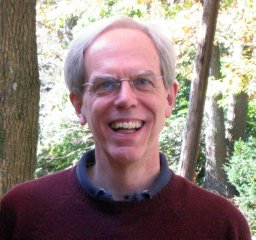 John Haggerty合作论文数Physics Department, Brookhaven National Laboratory195
 Hideki Hamagaki (浜垣秀樹)合作论文数Division of Fundamental Science, Institute for Innovative Science and Technology, Nagasaki Institute of Applied Science195V. Papavassiliou合作论文数195Vv Baublis合作论文数195
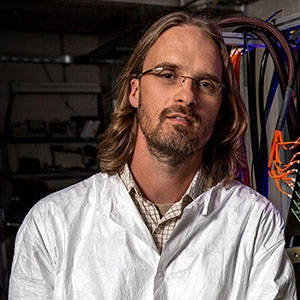 Mike Heffner合作论文数Lawrence Livermore National Laboratory195
 Mickey Chiu合作论文数Physics Department, Brookhaven National Laboratory;NEXO;PHENIX194
 Michael J. Tannenbaum合作论文数Physics Department, Brookhaven National Laboratory194V. Peresedov合作论文数194
 Laurent Aphecetche合作论文数SUBATECH;Laboratoire de Physique Subatomique et des Technologie Associées, Centre National de la Recherche Scientifique;Nantes Université194
 Ed Hartouni合作论文数Lawrence Livermore National Laboratory194
 Artur Durum合作论文数192S. Kametani合作论文数192




