Molecules provide a modular and chemically tunable platform for quantum information science. In recent years, significant advances have been made in enabling optical spin initialization, coherent control, and both optical and electrical readout of molecular qubits. Yet, a central challenge remains: realizing scalable architectures through the controlled and ultrafast activation of interqubit interactions. Here, we present a molecular system composed of two vanadyl porphyrin qubits bridged by a free-base porphyrin chromophore, where the qubits are magnetically independent in the ground state but become coupled upon photoexcitation. Femtosecond transient absorption and time-resolved electron paramagnetic resonance experiments, supported by DFT calculations and spectral simulations, reveal that photoexcitation induces the formation of a spin-quintet state within subpicosecond time scales. Notably, long-lived spin polarization persists up to room temperature. Theoretical modeling offers design principles for harnessing this mechanism in future applications. These results provide a proof of concept for optically controlled spin interactions in molecules, paving the way for light-activated molecular quantum gates.
Spin-selective charge-transfer pathways in helicene-based dyads are relevant to applications ranging from energy conversion to quantum information science. Here, we report a series of molecular systems comprising a thiahelicene donor and a perylenediimide (PDI) acceptor connected by oligophenyl bridges of varying length. The influence of donor-acceptor distance and relative orientation on the photophysical and spin-selective properties is investigated using a combined approach based on DFT calculations, transient absorption, and time-resolved electron paramagnetic resonance spectroscopies. Particular attention is given to the role of the bridge in tuning the magnetic exchange coupling within charge-transfer states and its impact on spin-selective recombination pathways to the PDI triplet state. Efficient formation of long-lived PDI triplets is observed and shown to sensitize singlet oxygen generation with high efficiencies. These results establish structure-property relationships governing spin-selective processes in helicene-based dyads.
Chirality-induced spin selectivity (CISS) revealed a close connection between molecular chirality and electron spin. Because CISS is observed even at room temperature, it offers a promising route toward spin-based technologies operable under ambient conditions. However, its microscopic origin remains the subject of debate. In recent theories, the parameters governing the electron motion through the chiral bridge play a key role in CISS efficiency. To disentangle this specific contribution from that arising from the overall intrinsic chirality of the molecule, we synthesized a new chiral donor-acceptor dyad (Dχ-B-A) incorporating a thia-bridged[4]helicene donor, known to have high CISS efficiency in transport experiments, and a perylene diimide (PDI) acceptor connected by a three-ethynylbenzene bridge. Transient absorption measurements at 85 K show that photoexcitation of PDI generates a long-lived radical pair (Dχ·+-B-A·-) with a lifetime exceeding 500 ns. The combined analysis of the spin polarization mechanism using time-resolved electron paramagnetic resonance, DFT calculations, and theoretical modeling indicates weak CISS polarization and suggests that CISS efficiency is higher in the presence of a chiral bridge.
The Soret band splitting of meso-meso-linked porphyrin dimers provides a quantitative optical signature of heterometallic two-qubit architecture. Time-dependent density functional theory calculations on [VO(TrPP)]2 and [Cu(TrPP)]2 (TrPP = 5,10,15-triphenylporphyrinate) show that the homodimer splitting vanishes at the orthogonal geometry, where the frontier a2-derived HOMOs are degenerate, producing a symmetry-protected node in excitonic coupling. In contrast, the heterodimer [VO(TrPP)-Cu(TrPP)] retains a two-peak Soret structure in orthogonal geometry because of the intrinsic reduction of the symmetry that cannot be removed by rotation. A two-chromophore exciton model reproduces this splitting quantitatively. Broken-symmetry DFT yields a superexchange magnetic coupling, |J| ≈ 10-2 cm-1, 5 orders of magnitude below the Soret splitting, confirming that optical and magnetic interactions are decoupled. The Soret profile and J together provide independent, complementary observables to characterize porphyrin-based two-qubit architectures.
Molecular multi-spin systems acting as potential quantum gates require fine-tuning magnetic interactions to achieve single spin addressability and entanglement of the spin qubits. We report here the synthesis of a new singly linked vanadyl-porphyrin dimer that crystallizes in two different pseudo-polymorphs. The single crystal continuous-wave Electron Paramagnetic Resonance investigation evidences a small but crucial isotropic exchange interaction, J, between the two tilted, and thus distinguishable, spin centers of the order of 10^-2 cm-1. The experimental and DFT studies evidence a correlation between J values and porphyrin planes tilting angle and distortion. Pulsed EPR analysis shows that the two vanadyl dimers maintain the coherence time of the monomer. Our results, coupled with the evaporability of porphyrin systems, establish this class of dimers as extremely promising for quantum information processing applications.
We present fully ab initio simulations of Fe L-edge X-ray absorption spectroscopy (XAS) for archetype single-molecule magnet tetrairon Fe4 using a linear-response time-dependent density functional theory with a spin-orbit coupling scheme. In particular, electronic and structural modifications in the Fe4 core, as induced by Li doping and by the change of R (-H and -C5S·), were studied by systematically benchmarking hybrid functionals and basis sets. A parameter-free computational protocol is, therefore, established, which reproduces experimental spectra with excellent agreement. The simulations capture key spectroscopic signatures, including L3-L2 splitting, redox-induced shifts upon Li doping, and the robustness of spectral shapes against magnetic coupling schemes and structural distortions. This study establishes a practical and accurate framework for simulating 2p XAS in complex magnetic molecules, providing valuable insight into their electronic behavior and enabling a rigorous connection between experiment and theory.
The controlled manipulation of electronic and magnetic states in single-molecule magnets (SMMs) is crucial for their implementation in molecular electronics, spintronics, and quantum computation. In typical SMMs, key properties like magnetic anisotropy and slow magnetic relaxation are imposed by complex ligand shells, whose bulky and three-dimensional structures hamper efficient manipulation of the molecular magnetism by chemical methods. This work demonstrates highly selective redox doping of an Fe4 nanomagnet on a Pb(111) surface using lithium atoms. Scanning tunneling microscopy, x-ray absorption spectroscopy, and ab initio calculations reveal the cooperative incorporation of three Li atoms per Fe4 molecule, resulting in a selective, threefold reduction of its iron-based magnetic core. The doping modifies the intramolecular exchange interaction, turning from antiferromagnetic to ferromagnetic, and changes the molecular magnetic anisotropy from easy-axis to easy-plane. This study demonstrates successful chemical redox doping of individual polynuclear molecular magnets, exploits a rare showcase of cooperative binding, and highlights a route for tuning magnetic properties of complex SMMs.
Despite the widespread use of scanning tunneling microscopy (STM) in atomic-scale investigations, the influence of the tip's atomic structure remains insufficiently characterized. This study addresses the issue by analyzing the electronic and magnetic properties of transition-metal-functionalized STM tips using both multireference wavefunction methods and density functional theory. The results demonstrate that strong electron correlations in transition-metal-based tips must be accounted for to accurately describe the structural and magnetic parameters involved-an essential requirement for the correct setup of inelastic and scanning tunneling spectroscopy experiments. By considering both minimal tip models and larger, more realistic pyramid structures, the approach balances computational efficiency with experimental relevance. The mechanism of spin-state reduction in NiCp2-functionalized tips is clarified, revealing the central roles of charge transfer, molecular distortion, and metal-substrate hybridization. Furthermore, selective substitution of the Cu apex atom in Cu(111)-based tips with 3d transition metals allows controlled modulation of the NiCp2 spin state. This provides a practical strategy for designing STM tips with tailored magnetic properties. Overall, the findings establish a robust theoretical framework for interpreting complex molecule-substrate interactions in spintronic systems and support the development of next-generation spin-polarized STM tips and molecular spintronic devices.
Graphene is an ideal candidate material for spintronics due to its layered structure and peculiar electronic structure. However, in its pristine state, the production of magnetic moments is not trivial. A very appealing approach is the chemical modification of pristine graphene. The main obstacle is the control of the geometrical features and the selectivity of functional groups. The lack of a periodic functionalization pattern of the graphene sheet prevents, therefore, the achievement of long-range magnetic order, thus limiting its use in spintronic devices. In such regards, the stability and the magnitude of the instilled magnetic moment depending on the size and shape of in silico designed graphane islands and ribbons embedded in graphene matrix will be computed and analysed. Our findings thus suggest that a novel and magneto-active graphene derivative nanostructure could become achievable more easily than extended graphone or nanoribbons, with a strong potential for future spintronics applications with a variable spin-current density.
As you begin your journey to the single molecule magnets, those of you who had the vision to deal with their real applications in the nearest future may well understand why you need to study surfaces and their interactions with molecular magnets (MMs). Indeed, the stairway to MM-based devices are made of several steps of which the adsorption on the surface (@surface) represents the first and crucial one. Ab initioAb initio characterization of molecular magnets adsorbed on a surface still has a limited impact at the numeric level in the literature, and this is due to the intrinsic complexity of the system and the demanding computational resources needed. Therefore, an assessment of the computational protocols will be presented for all the considered scenarios focusing on their limits and applicability. In this regard, a survey of systems that appeared in literature will serve as a guide in the route to the ‘heaven’ of operating molecular devices. The objectives of this chapter are threefold: (i) to introduce the reader to the criteria to be considered in the computational engineering of the in silico experiment for the MM@surface scenario; (ii) to give indications on the surface modelling and the whole MM@surface; (iii) to disclose the role of the surface and its effects on the geometry and the magnetic properties on the adsorbed molecular magnets and(or) vice versa.
In the development of two-qubit quantum gates, precise control over the intramolecular spin-spin interaction between molecular spin units plays a pivotal role. A weak but measurable exchange coupling is especially important for achieving selective spin addressability that allows controlled manipulation of the computational basis states |00⟩ |01⟩ |10⟩ |11⟩ by microwave pulses. Here, we report the synthesis and Electron Paramagnetic Resonance (EPR) study of a heterometallic meso-meso (m-m) singly-linked V IV O−Cu II porphyrin dimer. X-band continuous wave EPR measurements in frozen solutions suggest a ferromagnetic exchange coupling of ca. 8 ⋅ 10 −3 cm −1 . This estimation is supported by Density Functional Theory calculations, which also allow disentangling the ferro- and antiferromagnetic contributions to the exchange. Pulsed EPR experiments show that the dimer maintains relaxation times similar to the monometallic Cu II porphyrins. The addressability of the two individual spins is made possible by the different g -tensors of V IV and Cu II -ions, in contrast to homometallic dimers where tilting of the porphyrin planes plays a key role. Therefore, single-spin addressability in the heterometallic dimer can be maintained even with small tilting angles, as expected when deposited on surface, unlocking the full potential of molecular quantum gates for practical applications.
An entry from the Cambridge Structural Database, the world’s repository for small molecule crystal structures. The entry contains experimental data from a crystal diffraction study. The deposited dataset for this entry is freely available from the CCDC and typically includes 3D coordinates, cell parameters, space group, experimental conditions and quality measures.
Improving the performance of molecular qubits is a fundamental milestone towards unleashing the power of molecular magnetism in the second quantum revolution. Taming spin relaxation and decoherence due to vibrations is crucial to reach this milestone, but this is hindered by our lack of understanding on the nature of vibrations and their coupling to spins. Here we propose a synergistic approach to study a prototypical molecular qubit. It combines inelastic X-ray scattering to measure phonon dispersions along the main symmetry directions of the crystal and spin dynamics simulations based on DFT. We show that the canonical Debye picture of lattice dynamics breaks down and that intra-molecular vibrations with very-low energies of 1-2 meV are largely responsible for spin relaxation up to ambient temperature. We identify the origin of these modes, thus providing a rationale for improving spin coherence. The power and flexibility of our approach open new avenues for the investigation of magnetic molecules with the potential of removing roadblocks toward their use in quantum devices.
We report here the synthesis of a new meso-meso (m-m) singly linked vanadyl-porphyrin dimer that crystallizes in two different pseudo-polymorphs. The single crystal continuous-wave electron paramagnetic resonance investigation evidences a small but crucial isotropic exchange interaction, J, between the two tilted, and thus distinguishable, spin centers of the order of 10-2 cm-1. The experimental and DFT studies evidence a correlation between J values and porphyrin plane tilting angle and distortion. Pulsed EPR analysis shows that the two vanadyl dimers maintain the coherence time of the monomer. With the obtained spin Hamiltonian parameters, we identify suitable transitions that could be used as computational basis states. Our results, coupled with the evaporability of porphyrin systems, establish this class of dimers as extremely promising for quantum information processing applications.
Abstract The effect of para‐substituent X on the electronic structure of sixteen tridentate 4‐X‐(2,6‐di(pyrazol‐1‐yl))‐pyridine (bppX ) ligands and the corresponding solution spin crossover [FeII(bppX )2]2+ complexes is analysed further, to supply quantitative insights into the effect of X on the σ‐donor and π‐acceptor character of the Fe‐NA (pyridine) bonds. EDA‐NOCV on the sixteen LS complexes revealed that neither ΔE orb,σ+π (R2=0.48) nor ΔE orb,π (R2=0.31) correlated with the experimental solution T1/2 values (which are expected to reflect the ligand field imposed on the iron centre), but that ΔE orb,σ correlates well (R2=0.82) and implies that as X changes from EDG→EWG (Electron Donating to Withdrawing Group), the ligand becomes a better σ‐donor. This counter‐intuitive result was further probed by Mulliken analysis of the NA atomic orbitals: NA (px ) involved in the Fe−N σ‐bond vs. the perpendicular NA (pz ) employed in the ligand aromatic π‐system. As X changes EDG→EWG, the electron population on NA (pz ) decreases, making it a better π‐acceptor, whilst that in NA (px ) increases, making it a better σ‐bond donor; both increase ligand field, and T1/2 as observed. In 2016, Halcrow, Deeth and co‐workers proposed an intuitively reasonable explanation of the effect of the para‐X substituents on the T1/2 values in this family of complexes, consistent with the calculated MO energy levels, that M→L π‐backdonation dominates in these M−L bonds. Here the quantitative EDA‐NOCV analysis of the M−L bond contributions provides a more complete, coherent and detailed picture of the relative impact of M−L σ‐versus π‐bonding in determining the observed T1/2, refining the earlier interpretation and revealing the importance of the σ‐bonding. Furthermore, our results are in perfect agreement with the ΔE(HS‐LS) vs. σp +(X) correlation reported in their work.
Three vanillin derivatives (VTRIS, VTOS, and VCNG) were synthesized using the principles of Green Chemistry and evaluated as corrosion inhibitors for mild steel in acid media. Their anticorrosive efficiencies were obtained via gravimetric and electrochemical experiments, reaching an average maximum of 82.2%, 83.1%, and 93.1% efficiency for VTRIS, VTOS, and VCNG, respectively. Microstructure analysis alongside Atomic Force Microscopy images was used to rationalize the behavior of the polarization curves and verify the preferred adsorption sites of the organic molecules on the metallic surface. AFM and SEM confirmed the formation of a protective layer. Crossing data between gravimetric and electrochemical measurements showed the difference amid mono- and multi-layer adsorption inhibitors. Ab initio calculations were in excellent agreement with experimental results, unveiling the importance of the choice of the correct Electron Work Function for the calculation of the transferred electrons (ΔN). Such results are of fundamental importance to open the corrosion field for advanced analysis about reliable computed electrochemical parameters and crosslinked measurements able to understand the adsorption process of the inhibitors. Only the synergy among experimental and computed data made this possible.
Organometallic sandwich complexes are versatile molecular systems that have been recently employed for single-molecule manipulation and spin sensing experiments. Among related organometallic compounds, the mixed-sandwich S = 1/2 complex (η8-cyclooctatetraene)(η5-cyclopentadienyl)titanium, here [CpTi(cot)], has attracted interest as a spin qubit because of the long coherence time. Here the structural and chemical properties of [CpTi(cot)] on Au(111) are investigated at the monolayer level by experimental and computational methods. Scanning tunneling microscopy suggests that adsorption occurs in two molecular orientations, lying and standing, with a 3:1 ratio. XPS data evidence that a fraction of the molecules undergo partial electron transfer to gold, while our computational analysis suggests that only the standing molecules experience charge delocalization toward the surface. Such a phenomenon depends on intermolecular interactions that stabilize the molecular packing in the monolayer. This orientation-dependent molecule–surface hybridization opens exciting perspectives for selective control of the molecule–substrate spin delocalization in hybrid interfaces.
[This corrects the article DOI: 10.1039/D2SC04969D.].
Molecular electronic spins are good candidates as qubits since they are characterized by a large tunability of their electronic and magnetic properties through a rational chemical design. Coordination compounds of light transition metals are promising systems for spin-based quantum information technologies, thanks to their long spin coherence times up to room temperature. Our work aims at presenting an in-depth study on how the spin-phonon coupling in vanadyl-acetylacetonate, [VO(acac)2], can change as a function of temperature using terahertz time-domain spectroscopy and density functional theory (DFT) calculations. Powder THz spectra were recorded between 10 and 300 K. The temperature dependence of vibrational frequencies was then accounted for in the periodic DFT calculations using unit-cell parameters measured at two different temperatures and the optimized ones, as usually reported in the literature. In this way, it was possible to calculate the observed THz anharmonic frequency shift with high accuracy. The overall differences in the spin-phonon coupling magnitudes as a function of temperature were also highlighted showing that the computed trends have to be ascribed to the anisotropic variation of cell parameters.
 Roberta Sessoli合作论文数Laboratorio di Magnetismo Molecolare, Department of Chemistry "UGO Schiff", Universita degli Studi di Firenze49
 Matteo Briganti合作论文数Dept Chem U Schiff DICUS, Univ Florence25
 Alessandro Bencini合作论文数23
 Alessandro Lunghi合作论文数Trinity College Dublin21
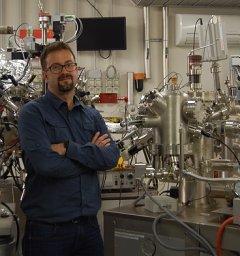 Matteo Mannini合作论文数INSTM & Department of Chemistry, University of Florence17
 Lorenzo Sorace合作论文数MPI-FKF and CNRS, Grenoble High Magnetic Field Laboratory17
 Dante Gatteschi合作论文数Laboratorio di Magnetismo Molecolare, Dipartimento di Chimica, Universita degli Studi di Firenze15
 Malavolti Luigi合作论文数Department of Chemistry "Ugo Schiff&and INSTM Research Unit, University of Florence;Department of Chemistry "Ugo Schiff" and INSTM Research Unit, University of Florence13
 Andrea Cornia合作论文数Dipartimento di Scienze Chimiche e Geologiche, Università degli Studi di Modena e Reggio Emilia13
 Guglielmo Fernandez Garcia合作论文数UPPA, Univ. Pau & Pays Adour12
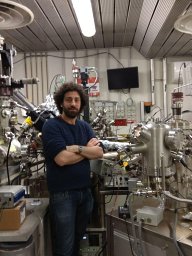 Poggini Lorenzo合作论文数Department of Chemistry 'Ugo Schiff' and INSTM RU, University of Firenze12
 Andrea Caneschi合作论文数Dipartimento di Ingegneria Industriale, Universita degli Studi di Firenze11Lanzilotto Valeria合作论文数10
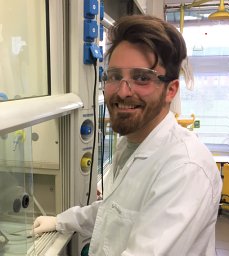 Fabio Santanni合作论文数Università Degli Studi di Firenze and UdR Firenze9
 Privitera Alberto合作论文数Department of Physics, University of Oxford9Brunetto Cortigiani合作论文数9
 Boris Le Guennic合作论文数Institut de chimie de Rennes, CNRS–université Rennes-19
 Enrico Salvadori合作论文数8
 Mario Chiesa合作论文数Univ Turin, Dipartimento Chim, IFM, I-10125 Turin, Italy8Andrea Bencini合作论文数Dipartimento di Chimica 'Ugo Schiff', Università Degli Studi di Firenze8Olivier Cador合作论文数8Claudia Giorgi合作论文数8
 Vincenzo Barone合作论文数DREAMSLab, Scuola Normale Superiore di Pisa;DREAMS Center, Scuola Normale Superiore di Pisa;Faculty of Sciences, Scuola Normale Superiore di Pisa8
 Barbara Valtancoli合作论文数Dipartimento di Chimica 'Ugo Schiff'8Davide Ranieri合作论文数7Ninova Silviya合作论文数7Lucaccini Eva合作论文数7Carla Bazzicalupi合作论文数7Jon A. Mccleverty合作论文数School of Chemistry, University of Bristol7
 Enrico Faggi合作论文数7
 Mike Ward合作论文数Department of Chemistry, University of Warwick7
 Andrea Albino合作论文数Dipartimento Chim Ugo Schiff, Univ Firenze6Stéphane Soriano合作论文数6
 Irene Cimatti合作论文数6
 Rafael A. Allao Cassaro合作论文数6
 Perfetti Mauro合作论文数Department of Chemistry "U. Schiff", Università di Firenze &INSTM RU Firenze, via della Lastruccia 3, 50019, Sesto Fiorentino (FI), Italy.6
 Edwige Otero合作论文数6
 Marius Andruh合作论文数Inorganic Chemistry Department, Faculty of Chemistry, University of Bucharest6
 Gopalan Rajaraman合作论文数School of chemistry, Bharathidasan University6
 Maria G F Vaz合作论文数6Laura Chelazzi合作论文数5Samuele Ciattini合作论文数5Calancea Sergiu合作论文数Institut Lavoisier de Versailles, Université Paris-Saclay5
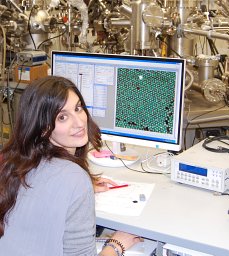 Serrano Giulia合作论文数Department of Physics, Università degli Studi di Roma "Tor Vergata", Via della Ricerca Scientifica 1, 00133 Rome, Italy.;Department of Physics, Università degli Studi di Roma "Tor Vergata"5Philippe Sainctavit合作论文数5Fabrice Pointillart合作论文数5
 Marcella Iannuzzi合作论文数Dipartimento di Scienza dei Materiali, Universitá di Milano-Bicocca5
 Sebastian Loth合作论文数Bielefeld University5Andrei A. Patrascu合作论文数Inorgan Chem Lab, Univ Bucharest4




