This paper presents a structured testing method to assess the capability of photovoltaic (PV) inverters connected via a tele-control interface through the German SmartMetering-Infrascture with control function to provide automatic Frequency Restoration Reserve (aFRR) services. The investigation focuses on communication interfaces, system architecture, and performance metrics under various communication network conditions. The experimental results highlight the impact of communication delays rather than protocol selection on the responsiveness and accuracy of control commands.
Dieser Artikel präsentiert eine innovative Lösung zur Integration von PV-Anlagen in den Regelreservemarkt unter Nutzung der deutschen Smart-Meter-Infrastruktur. Angesichts der steigenden Nachfrage nach Regelreserve und den hohen Preisen im Markt stellt die effiziente Regelung von PV-Anlagen eine attraktive Option für mehr Angebot auf dem Regelreservemarkt dar. Bisher verhinderten technische und regulatorische Hürden eine Marktteilnahme. Der Artikel zeigt eine mögliche Lösung auf, validiert diese durch Laboruntersuchungen, und demonstriert die prinzipielle Eignung der vorgeschlagenen technischen Lösung für diesen Zweck. Dieser Ansatz bietet neue Perspektiven für den Einsatz erneuerbarer Energien und deren Rolle im Strommarkt, insbesondere im Hinblick auf die Bereitstellung von Systemdienstleistungen.
As a result of the energy transition, an increasing number of Decentralized Energy Systems (DES) will be installed in the distribution grid in the future. Accordingly, new methods to systematically integrate the growing DES in distribution power systems must be developed utilizing the constantly evolving Information and Communication Technologies (ICT). This paper proposes the Automated Data Model Integration of DES (ADMID) approach for the integration of DES into the ICT environment of the Distribution System Operator (DSO). The proposed ADMID utilizes the data model structure defined by the standard-series IEC 61850 and has been implemented as a Python package. The presented two Use Cases focus on the Supervisory Control and Data Acquisition (SCADA) on the DSO operational level following a four-stage test procedure, while this approach has enormous potential for advanced DSO applications. The test results obtained during simulation or real-time communication to field devices indicate that the utilization of IEC 61850-compliant data models is eligible for the proposed automation approach, and the implemented framework can be a considerable solution for the system integration in future distribution grids with a high share of DES. As a proof-of-concept study, the proposed ADMID approach requires additional development with a focus on the harmonization with the Common Information Model (CIM), which could significantly improve its functional interoperability and help it reach a higher Technology Readiness Level (TRL).
Due to the currently high prices for balancing power, the provision of system services from PV plants is once again increasingly coming into focus. PV plant operators could generate additional revenue by participating in the balancing power market, and transmission system operators would benefit from an increased supply of balancing power. The use of PV plants to provide balancing power on sunny off-peak days could even become indispensable in the future. However, a lack of costeffective technical solutions for control as well as regulatory hurdles have so far prevented PV systems from participating in the control power market on a larger scale. A joint research project promises to remedy this situation, in which a technical prototype for the cost-effective control of small PV plants has already been successfully implemented.
The implementation of a Smart Metering Infrastructure (SMI) in Germany offers the opportunity to gather grid measurements in the low voltage grid and enable small scale systems like Photovoltaic(PV) systems for grid friendly control. The practical control of Decentralized Energy Resources (DER) can be realized via the CLS (Controllable-Local-System)-Gateway, which is implemented as a complementary device to Smart Meters Gateway. Advanced grid management systems can use the CLS-Gateways for low voltage grid optimization to prevent grid asset overloading and voltage band violation. This contribution presents the results from laboratory testing utilizing the Software-/Controller-in-the-Loop methodology.
With the ongoing digitalization in the energy transition and the rollout of intelligent measuring systems (iMSys) in Germany, new opportunities arise in communicating with distributed energy systems. For monitoring and telecontrolling the increasing number of distributed energy resources (DER) as well as flexible loads, the use of controlling systems in the distribution grid is gaining more importance. Therefore, different applications have been developed and basic functionalities tested in a laboratory and field environment. As a part of this progress the presented contribution focuses on the implementation of a test bench for monitoring and controlling systems named Controllable Local System (CLS) gateways. Based on the Controller Hardware-In-the-Loop (CHIL) respectively Power Hardware-In-the-Loop (PHIL) method, the test bench validates the bidirectional communication functionalities of a CLS Gateway, which is coupled with a photovoltaic inverter. The implemented test bench features a test automation which enables the conduction of multiple test scenarios concerning functionality, stability as well as resilience of a test object. Mainly this aims at investigating the suitability of such CLS gateways for field operation. Aside of the implemented test bench first test results are presented in this work. The investigated test CLS gateway has revealed a reliable transmission of measurement and control data during long-term examination. Also, frequent power interruptions can lead to failure of functionalities.
The integration of decentralized renewable energy systems into our distribution networks leads to a need of more detailed information about local network structure and state estimation down to the low voltage level [1]. This enforces the transformation of today's distribution networks into smart grids. Smart Meters with Smart Meter Gateways (iMSys) and Controllable Local Systems (CLS) are the essential new bricks of the future smart grid. In Germany the new law "Digitalization of the Energiewende"[2] sets up the rules for network operators to establish this secure energy information system based on the smart meter infrastructure. During the last two years the authors developed and demonstrated on laboratory and field level such a secure energy information system. The main innovation of the project is the direct and secure communication with decentralized energy systems such as photovoltaic inverters, battery storage systems, E-mobility charging stations or power to heat applications within this new smart meter infrastructure, which has been defined by technical rules from the German regulator for data security (BSI) [3]. The two-way communication is able to read measurement values from the field as well as change set points or activate curtailment of decentralized energy systems (see figure 1).
This contribution describes a setup for the combined system and equipment testing of micro grid and smart grid control concepts and components. The key aspects is the use of simple setup compared to typical power hardwarein-the-loop setup. This is achieved by using steady-state load flow calculations and a switched-mode amplifier. This setup was used to test a simple coordinate voltage control for distribution grids utilizing decentralised generation units. The used controllers and infrastructure comply with the German advanced metering infrastructure according to the digitalisation of the Energy Transition Act in July 2016.
The fundamental changes in the energy sector, due to the rise of renewable energy resources and the possibilities of the digitalisation process, result in the demand for new methodologies for testing Smart Grid concepts and control strategies. Using the Power Hardware-in-the-Loop (PHIL) methodology is one of the key elements for such evaluations. PHIL and other in-the-loop concepts cannot be considered as plug'n'play and, for a wider adoption, the obstacles have to be reduced. This paper presents the comparison of two different setups for the evaluation of components and systems focused on undisturbed operational conditions. The first setup is a conventional PHIL setup and the second is a simplified setup based on a quasi-dynamic PHIL (QDPHIL) approach which involves fast and continuously steady state load flow calculations. A case study which analyses a simple superimposed voltage control algorithm gives an example for the actual usage of the quasi-dynamic setup. Furthermore, this article also provides a comparison and discussion of the achieved results with the two setups and it concludes with an outlook about further research.
Increasing distributed photovoltaic (PV) systems can lead to overloading of grid assets and voltage violations at grid nodes, especially in distribution systems. This raises the necessity to consider the future growth of installed PV capacity for the mid- and long-term planning process of distribution system operators (DSOs). Considering solar roof potential analysis derived from an airborne light detection and ranging (LIDAR) mission, the evaluation of the hosting capacity of a given distribution grid can be improved. This paper compares different methods to allocate the future PV capacity based on such solar roof potential analysis at the distribution system level. Rule -Based methods are developed and compared with a probabilistic method, which is repeated several times as a Monte Carlo analysis, in order to define the allocation of PV power to grid nodes. The developed deterministic methods can provide DSOs with simple and reliable indication about the hosting capacity of PV and the need for grid reinforcement compared to other methods.
Increasing distributed photovoltaic (PV) systems can lead to voltage violations and overloading of grid assets in distribution grids. This raises the necessity to consider the future growth of installed PV capacity for the planning process of distribution system operators (DSOs). This paper proposes the combination of a solar roof potential analysis and grid integration studies at the medium voltage (MV) level based on detailed input at low voltage level. Three different methods were developed to define the distribution of PV along the feeders based on the solar roof potential, and subsequently to estimate the PV hosting capacity of these feeders. The results show that the approach with an even distribution of PV systems along the feeders leads to higher hosting capacity of PV for the analyzed grids. In addition, for most analyzed feeders in this study, an overloading of MV/LV (low voltage) transformers is expected to be the limitation of hosting capacity for potential PV systems.
Aging is an important factor to be considered by distribution grid operators when using oil-immersed power transformers. The life-time consumption mainly depends on the decomposition of the organic parts in the isolation paper and the oil. With a high number of photovoltaic systems in the distribution grid the worst-case-scenario changes from high power demand during low outdoor temperatures times in the winter to high feed-in power with high outdoor temperatures in the summer. The temperature increases the reaction rate of the chemical processes and affects the life-time consumption exponentially. An alternative to the evaluation of the highest power value per year is introduced by the national standard DIN 60076-7. The standard considers transferred power and transformer environment temperature as time series. By extending the simulation model with a simulative representation of the transformer housing it is possible to consider the influence of the housing in more detailed way. This allows the evaluation of the stress to the transformer by using available data without the need for additional field measurement. The benefit of this extension is demonstrated for six different scenarios of the PV penetration. The results of the first analysis demonstrates that the temperature and power combination in areas with a high amount of PV feed-in power gains additional life-time consumption that are not calculated in the common evaluation methods of distribution system operator.
 Gerd Heilscher合作论文数14
 Basem Idlbi合作论文数6
 Christoph Kondzialka合作论文数6
 Jeromie Morris合作论文数4Heiko Lorenz合作论文数4
 Florian Meier合作论文数4
 Graeber, D.合作论文数3
 Manuela McCulloch合作论文数2David Stakic合作论文数2
 Matthias Casel合作论文数2Holger Ruf合作论文数2Christian Seitl合作论文数Electr. Energy Syst.-Energy Dept., AIT Austrian Inst. of Technol.;c;Electr. Energy Syst.-Energy Dept., AIT Austrian Inst. of Technol.2
 Thomas I. Strasser合作论文数PROFACTOR Produktionsforschungs GmbH2
 Roland Bründlinger合作论文数2
 Silvia Caneva合作论文数1s arancon合作论文数1Jonas Dierenbach合作论文数1Kay Wiedemann合作论文数1
 Guus Pemen合作论文数1Konstantin Ditz合作论文数1Eliza Loucaidou合作论文数1
 j binder合作论文数1Marios Kynigos合作论文数1
 Christina Papadimitriou合作论文数PV Technol Lab, Univ Cyprus1Ioannis P. Panapakidis合作论文数Dept. of Electr. & Comput. Eng., Aristotle Univ. of Thessaloniki;c;Dept. of Electr. & Comput. Eng., Aristotle Univ. of Thessaloniki1
 Susanna Mocci合作论文数Dept Elect & Elect Engn, Univ Cagliari1
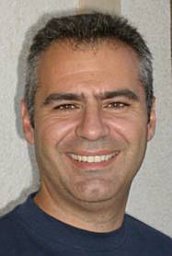 George E. Georghiou合作论文数Department of Electrical and Computer Engineering;University of Cyprus;Department of Electrical and Computer Engineering, University of Cyprus1
 Georgios C. Christoforidis合作论文数1
 Frank Sehnke合作论文数Faculty of Computer Science, Technische Universität München1
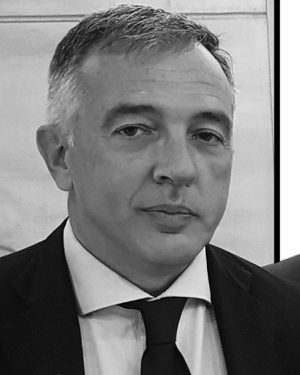 Fabrizio Pilo合作论文数Department of Electrical & Electronic Engineering;University of Cagliari;Department of Electrical & Electronic Engineering, University of Cagliari1
 Martin D. Felder合作论文数1
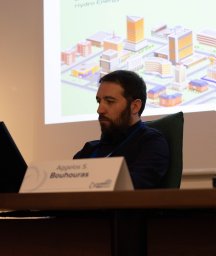 Aggelos S. Bouhouras合作论文数Power Systems Laboratory, Aristotle University of Thessaloniki1
 Andreas Stavrou合作论文数1




