A bstract A search for the exclusive decays of the Higgs and Z bosons to a ϕ or ρ meson and a photon is performed with a pp collision data sample corresponding to an integrated luminosity of up to 35 . 6 fb −1 collected at $$ \sqrt{s}=13 $$ s = 13 TeV with the ATLAS detector at the CERN Large Hadron Collider. These decays have been suggested as a probe of the Higgs boson couplings to light quarks. No significant excess of events is observed above the background, as expected from the Standard Model. Upper limits at 95% confidence level were obtained on the branching fractions of the Higgs boson decays to ϕ γ and ρ γ of 4 . 8 × 10 −4 and 8 . 8 × 10 −4 , respectively. The corresponding 95% confidence level upper limits for the Z boson decays are 0 . 9 × 10 −6 and 25 × 10 −6 for ϕ γ and ρ γ, respectively.
A search for leptoquarks decaying into the bτ final state is performed using Run 2 proton-proton collision data from the Large Hadron Collider, corresponding to an integrated luminosity of 139 fb−1 at √(s) = 13 TeV recorded by the ATLAS detector. The benchmark models considered in this search are vector leptoquarks with electric charge of 2/3e and scalar leptoquarks with an electric charge of 4/3e. No significant excess above the Standard Model prediction is observed, and 95
We describe the outcome of a data challenge conducted as part of the Dark Machines (https://www.darkmachines.org) initiative and the Les Houches 2019 workshop on Physics at TeV colliders. The challenged aims to detect signals of new physics at the Large Hadron Collider (LHC) using unsupervised machine learning algorithms. First, we propose how an anomaly score could be implemented to define model-independent signal regions in LHC searches. We define and describe a large benchmark dataset, consisting of >1 billion simulated LHC events corresponding to 10\, fb^{-1}10fb−1 of proton-proton collisions at a center-of-mass energy of 13 TeV. We then review a wide range of anomaly detection and density estimation algorithms, developed in the context of the data challenge, and we measure their performance in a set of realistic analysis environments. We draw a number of useful conclusions that will aid the development of unsupervised new physics searches during the third run of the LHC, and provide our benchmark dataset for future studies at https://www.phenoMLdata.org. Code to reproduce the analysis is provided at https://github.com/bostdiek/DarkMachines-UnsupervisedChallenge.
This Letter reports the observation of WWW production and a measurement of its cross section using 139 fb^{-1} of proton-proton collision data recorded at a center-of-mass energy of 13 TeV by the ATLAS detector at the Large Hadron Collider. Events with two same-sign leptons (electrons or muons) and at least two jets, as well as events with three charged leptons, are selected. A multivariate technique is then used to discriminate between signal and background events. Events from WWW production are observed with a significance of 8.0 standard deviations, where the expectation is 5.4 standard deviations. The inclusive WWW production cross section is measured to be 820±100 (stat)±80 (syst) fb, approximately 2.6 standard deviations from the predicted cross section of 511±18 fb calculated at next-to-leading-order QCD and leading-order electroweak accuracy.
This letter presents a search for narrow, high-mass resonances in the Zγ final state with the Z boson decaying into a pair of electrons or muons. The s=13 TeV pp collision data were recorded by the ATLAS detector at the CERN Large Hadron Collider and have an integrated luminosity of 140 fb−1. The data are found to be in agreement with the Standard Model background expectation. Upper limits are set on the resonance production cross section times the decay branching ratio into Zγ. For spin-0 resonances produced via gluon–gluon fusion, the observed limits at 95% confidence level vary between 65.5 fb and 0.6 fb, while for spin-2 resonances produced via gluon–gluon fusion (or quark–antiquark initial states) limits vary between 77.4 (76.1) fb and 0.6 (0.5) fb, for the mass range from 220 GeV to 3400 GeV.
The first measurement of longitudinal decorrelations of harmonic flow amplitudes v_{n} for n=2-4 in Xe+Xe collisions at sqrt[s_{NN}]=5.44 TeV is obtained using 3 μb^{-1} of data with the ATLAS detector at the LHC. The decorrelation signal for v_{3} and v_{4} is found to be nearly independent of collision centrality and transverse momentum (p_{T}) requirements on final-state particles, but for v_{2} a strong centrality and p_{T} dependence is seen. When compared with the results from Pb+Pb collisions at sqrt[s_{NN}]=5.02 TeV, the longitudinal decorrelation signal in midcentral Xe+Xe collisions is found to be larger for v_{2}, but smaller for v_{3}. Current hydrodynamic models reproduce the ratios of the v_{n} measured in Xe+Xe collisions to those in Pb+Pb collisions but fail to describe the magnitudes and trends of the ratios of longitudinal flow decorrelations between Xe+Xe and Pb+Pb. The results on the system-size dependence provide new insights and an important lever arm to separate effects of the longitudinal structure of the initial state from other early and late time effects in heavy-ion collisions.
A study of the charge conjugation and parity (CP) properties of the interaction between the Higgs boson and top quarks is presented. Higgs bosons are identified via the diphoton decay channel (H→γγ), and their production in association with a top quark pair (tt[over ¯]H) or single top quark (tH) is studied. The analysis uses 139 fb^{-1} of proton-proton collision data recorded at a center-of-mass energy of sqrt[s]=13 TeV with the ATLAS detector at the Large Hadron Collider. Assuming a CP-even coupling, the tt[over ¯]H process is observed with a significance of 5.2 standard deviations. The measured cross section times H→γγ branching ratio is 1.64_{-0.36}^{+0.38}(stat)_{-0.14}^{+0.17}(sys) fb, and the measured rate for tt[over ¯]H is 1.43_{-0.31}^{+0.33}(stat)_{-0.15}^{+0.21}(sys) times the Standard Model expectation. The tH production process is not observed and an upper limit on its rate of 12 times the Standard Model expectation is set. A CP-mixing angle greater (less) than 43 (-43)° is excluded at 95% confidence level.
The LArIAT liquid argon time projection chamber, placed in a tertiary beam of charged particles at the Fermilab Test Beam Facility, has collected large samples of pions, muons, electrons, protons, and kaons in the momentum range 300-1400 MeV/c. This paper describes the main aspects of the detector and beamline, and also reports on calibrations performed for the detector and beamline components.
The DUNE IDR describes the proposed physics program and technical designs of the DUNE Far Detector modules in preparation for the full TDR to be published in 2019. It is intended as an intermediate milestone on the path to a full TDR, justifying the technical choices that flow down from the high-level physics goals through requirements at all levels of the Project. These design choices will enable the DUNE experiment to make the ground-breaking discoveries that will help to answer fundamental physics questions. Volume 1 contains an executive summary that describes the general aims of this document. The remainder of this first volume provides a more detailed description of the DUNE physics program that drives the choice of detector technologies. It also includes concise outlines of two overarching systems that have not yet evolved to consortium structures: computing and calibration. Volumes 2 and 3 of this IDR describe, for the single-phase and dual-phase technologies, respectively, each detector module's subsystems, the technical coordination required for its design, construction, installation, and integration, and its organizational structure.
Machine learning has been applied to several problems in particle physics research, beginning with applications to high-level physics analysis in the 1990s and 2000s, followed by an explosion of applications in particle and event identification and reconstruction in the 2010s. In this document we discuss promising future research and development areas for machine learning in particle physics. We detail a roadmap for their implementation, software and hardware resource requirements, collaborative initiatives with the data science community, academia and industry, and training the particle physics community in data science. The main objective of the document is to connect and motivate these areas of research and development with the physics drivers of the High-Luminosity Large Hadron Collider and future neutrino experiments and identify the resource needs for their implementation. Additionally we identify areas where collaboration with external communities will be of great benefit. Editors: Sergei Gleyzer, Paul Seyfert, Steven Schramm Contributors: Kim Albertsson, Piero Altoe, Dustin Anderson, John Anderson, Michael Andrews, Juan Pedro Araque Espinosa, Adam Aurisano, Laurent Basara, Adrian Bevan, Wahid Bhimji, Daniele Bonacorsi, Bjorn Burkle, Paolo Calafiura, Mario Campanelli, Louis Capps, Federico Carminati, Stefano Carrazza, Yi-Fan Chen, Taylor Childers, Yann Coadou, Elias Coniavitis, Kyle Cranmer, Claire David, Douglas Davis, Andrea De Simone, Javier Duarte, Martin Erdmann, Jonas Eschle, Amir Farbin, Matthew Feickert, Nuno Filipe Castro, Conor Fitzpatrick, Michele Floris, Alessandra Forti, Jordi Garra-Tico, Jochen Gemmler, Maria Girone, Paul Glaysher, Sergei Gleyzer, Vladimir Vava Gligorov, Tobias Golling, Jonas Graw, Lindsey Gray, Dick Greenwood, Thomas Hacker, John Harvey, Benedikt Hegner, Lukas Heinrich, Ulrich Heintz, Ben Hooberman, Johannes Junggeburth, Michael Kagan, Meghan Kane, Konstantin Kanishchev, Przemys law Karpiński, Zahari Kassabov, Gaurav Kaul, Dorian Kcira, Thomas Keck, Alexei Klimentov, Jim Kowalkowski, Luke Kreczko, Alexander Kurepin, Rob Kutschke, Valentin Kuznetsov, Nicolas Köhler, Igor Lakomov, Kevin Lannon, Mario Lassnig, Antonio Limosani, Gilles Louppe, Aashrita Mangu, Pere Mato, Helge Meinhard, Dario Menasce, Lorenzo Moneta, Seth Moortgat, Meenakshi Narain, Mark Neubauer, Harvey Newman, Sydney Otten, Hans Pabst, Michela Paganini, Manfred Paulini, Gabriel Perdue, Uzziel Perez, Attilio Picazio, Jim Pivarski, Harrison Prosper, Fernanda Psihas, Alexander Radovic, Ryan Reece, Aurelius Rinkevicius, Eduardo Rodrigues, Jamal Rorie, David Rousseau, Aaron Sauers, Steven Schramm, Ariel Schwartzman, Horst Severini, Paul Seyfert, Filip Siroky, Konstantin Skazytkin, Mike Sokoloff, Graeme Stewart, Bob Stienen, Ian Stockdale, Giles Strong, Wei Sun, Savannah Thais, Karen Tomko, Eli Upfal, Emanuele Usai, Andrey Ustyuzhanin, Martin Vala, Sofia Vallecorsa, Justin Vasel, Mauro Verzetti, Xavier Vilaśıs-Cardona, Jean-Roch Vlimant, Ilija Vukotic, Sean-Jiun Wang, Gordon Watts, Michael Williams, Wenjing Wu, Stefan Wunsch, Kun Yang, Omar Zapata 1 Lulea University of Technology 2 NVidia 3 California Institute of Technology 4 Google 5 Carnegie Mellon University 6 LIP Lisboa 7 University of Cincinnati 8 Universita e INFN, Padova 9 University of London 10 Lawrence Berkeley National Laboratory 11 Universita e INFN, Bologna 12 Brown University 13 CERN 1 ar X iv :1 80 7. 02 87 6v 3 [ ph ys ic s. co m pph ] 1 6 M ay 2 01 9 14 Argonne National Laboratory 15 CPPM Aix Marseille Univ CNRS/IN2P3 16 Universitaet Freiburg 17 New York University 18 Deutsches Elektronen-Synchrotron 19 Duke University 20 SISSA Trieste Italy 21 Fermi National Accelerator Laboratory 22 RWTH Aachen University 23 Universität Zürich 24 University of Texas at Arlington 25 Southern Methodist University 26 Ecole Polytechnique Federale de Lausanne 27 University of Manchester 28 University of Cambridge 29 Karlsruher Institut für Technologie 30 University of Florida 31 LPNHE, Sorbonne Université et Université Paris Diderot, CNRS/IN2P3, Paris 32 Université de Genève 33 Louisiana Tech University 34 Purdue University 35 University of Illinois at Urbana-Champaign 36 Max Planck Institut für Physik 37 SLAC National Accelerator Laboratory 38 SoundCloud 39 University of Milan 40 Intel 41 Brookhaven National Laboratory 42 University of Bristol 43 Russian Academy of Sciences 44 Cornell University 45 University of Notre Dame 46 University of Melbourne 47 University of California Berkeley 48 Universita & INFN, Milano Bicocca 49 Vrije Universiteit Brussel 50 University of Amsterdam and Radboud University Nijmegen 51 Yale University 52 University of Alabama 53 University of Massachusetts 54 Princeton University 55 Florida State University 56 Indiana University 57 College of William and Mary 58 University of California, Santa Cruz 59 Rice University 60 Universite de Paris Sud 11 61 University of Oklahoma 62 Masaryk University 63 University of Glasgow 64 Radboud Universiteit Nijmegen 65 Altair Engineering 66 Ohio Supercomputer Center 67 Yandex School of Data Analysis 68 Technical University of Kosice 69 Gangneung-Wonju National University 70 University of Rochester 71 University of Barcelona 72 University of Chicago 73 University of Washington 74 Massachusetts Institute of Technology
It has been found that the theoretical predictions for W and Z boson cross sections, and for the W boson charge asymmetry, which are labelled as NNPDF3.1 [1] have in fact been calculated using the NNPDF3.0 PDF set [2] instead.
This report presents the activities of the `New Physics' working group for the `Physics at TeV Colliders' workshop (Les Houches, France, 10--28 June, 2019). These activities include studies of direct searches for new physics, approaches to exploit published data to constrain new physics, as well as the development of tools to further facilitate these investigations. Benefits of machine learning for both the search for new physics and the interpretation of these searches are also presented.
The production cross-sections for W +/- and Z bosons are measured using ATLAS data corresponding to an integrated luminosity of 4.0 pb-1 collected at a centre-ofmass energy v s = 2.76 TeV. The deca ...
The algorithms used by the ATLAS Collaboration during Run 2 of the Large Hadron Collider to identify jets containing b-hadrons are presented. The performance of the algorithms is evaluated in the simulation and the efficiency with which these algorithms identify jets containing b-hadrons is measured in collision data. The measurement uses a likelihood-based method in a sample highly enriched in $$t{\bar{t}}$$ events. The topology of the $$t \rightarrow W b$$ decays is exploited to simultaneously measure both the jet flavour composition of the sample and the efficiency in a transverse momentum range from 20 to 600 GeV. The efficiency measurement is subsequently compared with that predicted by the simulation. The data used in this measurement, corresponding to a total integrated luminosity of 80.5 $$\hbox {fb}^{-1}$$, were collected in proton–proton collisions during the years 2015–2017 at a centre-of-mass energy $$\sqrt{s}=$$ 13 TeV. By simultaneously extracting both the efficiency and jet flavour composition, this measurement significantly improves the precision compared to previous results, with uncertainties ranging from 1 to 8% depending on the jet transverse momentum.
A measurement of the associated production of a top-quark pair ($t\bar{t}$) with a vector boson ($W$, $Z$) in proton-proton collisions at a center-of-mass energy of 13 TeV is presented, using $36.1$ fb$^{-1}$ of integrated luminosity collected by the ATLAS detector at the Large Hadron Collider. Events are selected in channels with two same- or opposite-sign leptons (electrons or muons), three leptons or four leptons, and each channel is further divided into multiple regions to maximize the sensitivity of the measurement. The $t\bar{t}Z$ and $t\bar{t}W$ production cross sections are simultaneously measured using a combined fit to all regions. The best-fit values of the production cross sections are $\sigma_{t\bar{t}Z} = 0.95 \pm 0.08_{\mathrm{stat.}} \pm 0.10_{\mathrm{syst.}}$ pb and $\sigma_{t\bar{t}W} = 0.87 \pm 0.13_{\mathrm{stat.}} \pm 0.14_{\mathrm{syst.}}$ pb in agreement with the Standard Model predictions. The measurement of the $t\bar{t}Z$ cross section is used to set constraints on effective field theory operators which modify the $t\bar{t}Z$ vertex.
This change does not have any impact on the measured helicity fractions, but it changes the obtained limits on the anomalous couplings.
This paper reports searches for heavy resonances decaying into ZZ or ZW using data from proton-proton collisions at a centre-of-mass energy of √(s)=13 TeV. The data, corresponding to an integrated luminosity of 36.1 fb −1 , were recorded with the ATLAS detector in 2015 and 2016 at the Large Hadron Collider. The searches are performed in final states in which one Z boson decays into either a pair of light charged leptons (electrons and muons) or a pair of neutrinos, and the associated W boson or the other Z boson decays hadronically. No evidence of the production of heavy resonances is observed. Upper bounds on the production cross sections of heavy resonances times their decay branching ratios to ZZ or ZW are derived in the mass range 300-5000GeV within the context of Standard Model extensions with additional Higgs bosons, a heavy vector triplet or warped extra dimensions. Production through gluon-gluon fusion, Drell-Yan or vector-boson fusion are considered, depending on the assumed model.
Abstract A search for supersymmetry involving the pair production of gluinos decaying via third-generation squarks into the lightest neutralino $$ \left({\tilde{\chi}}_1^0\right) $$ χ ˜ 1 0 is reported. It uses LHC proton-proton collision data at a centre-of-mass energy $$ \sqrt{s}=13 $$ s = 13 TeV with an integrated luminosity of 36.1 fb−1 collected with the ATLAS detector in 2015 and 2016. The search is performed in events containing large missing transverse momentum and several energetic jets, at least three of which must be identified as originating from b-quarks. To increase the sensitivity, the sample is divided into subsamples based on the presence or absence of electrons or muons. No excess is found above the predicted background. For $$ {\tilde{\chi}}_1^0 $$ χ ˜ 1 0 masses below approximately 300 GeV, gluino masses of less than 1.97 (1.92) TeV are excluded at 95% confidence level in simplified models involving the pair production of gluinos that decay via top (bottom) squarks. An interpretation of the limits in terms of the branching ratios of the gluinos into third-generation squarks is also provided. These results improve upon the exclusion limits obtained with the 3.2 fb−1 of data collected in 2015.
This paper presents a search for direct electroweak gaugino or gluino pair production with a chargino nearly mass-degenerate with a stable neutralino. It is based on an integrated luminosity of 36.1 $\mathrm{fb}^{-1}$ of $pp$ collisions at $\sqrt{s} = 13$ TeV collected by the ATLAS experiment at the LHC. The final state of interest is a disappearing track accompanied by at least one jet with high transverse momentum from initial-state radiation or by four jets from the gluino decay chain. The use of short track segments reconstructed from the innermost tracking layers significantly improves the sensitivity to short chargino lifetimes. The results are found to be consistent with Standard Model predictions. Exclusion limits are set at 95% confidence level on the mass of charginos and gluinos for different chargino lifetimes. For a pure wino with a lifetime of about 0.2 ns, chargino masses up to 460 GeV are excluded. For the strong production channel, gluino masses up to 1.65 TeV are excluded assuming a chargino mass of 460 GeV and lifetime of 0.2 ns.
 Carlo Dallapiccola合作论文数Department of Physics, College of Natural Sciences, University of Massachusetts Amherst415
 Gerald Eigen合作论文数Department of Physics and Technology, University of Bergen403
 Blair Ratcliff合作论文数SLAC National Accelerator Laboratory;Stanford University402
 James Cochran合作论文数Department of Physics and Astronomy, College of Liberal Arts and Sciences, Iowa State University390
 Wahid Bhimji合作论文数Lawrence Berkeley National Laboratory376
 Masahiro Morii合作论文数Department of Physics, Harvard University367
 Philip J Clark合作论文数Institute for Particle and Nuclear Physics, School of Physics and Astronomy, The University of Edinburgh364
 Fabio Anulli合作论文数Istituto Nazionale di Fisica Nucleare363
 Glen Cowan合作论文数Centre for Particle Physics and Astronomy, Department of Physics, Royal Holloway, University of London359
 Stephane Willocq合作论文数Department of Physics, College of Natural Sciences, University of Massachusetts Amherst357
 David Leith合作论文数Stanford Linear Accelerator Center356
 Tim Adye合作论文数Particle Physics Department, Rutherford Appleton Laboratory354
 Justin Albert合作论文数Department of Physics and Astronomy, University of Victoria;Astronomy Research Centre, University of Victoria353
 G. Crosetti合作论文数352
 Bjarne Sandvik Stugu合作论文数Department of Physics and Technology University of Bergen349
 W. (Wouter) Verkerke合作论文数Institute of Physics, Faculty of Science, University of Amsterdam346S. Prell合作论文数346F. Salvatore合作论文数University of Pavia and INFN, Pavia, Italy346J. Brau合作论文数341
 Heiko Lacker合作论文数Institut für Physik, Mathematisch-Naturwissenschaftliche Fakultät, Humboldt-Universität zu Berlin;Department of Physics, Humboldt-Universität zu Berlin330
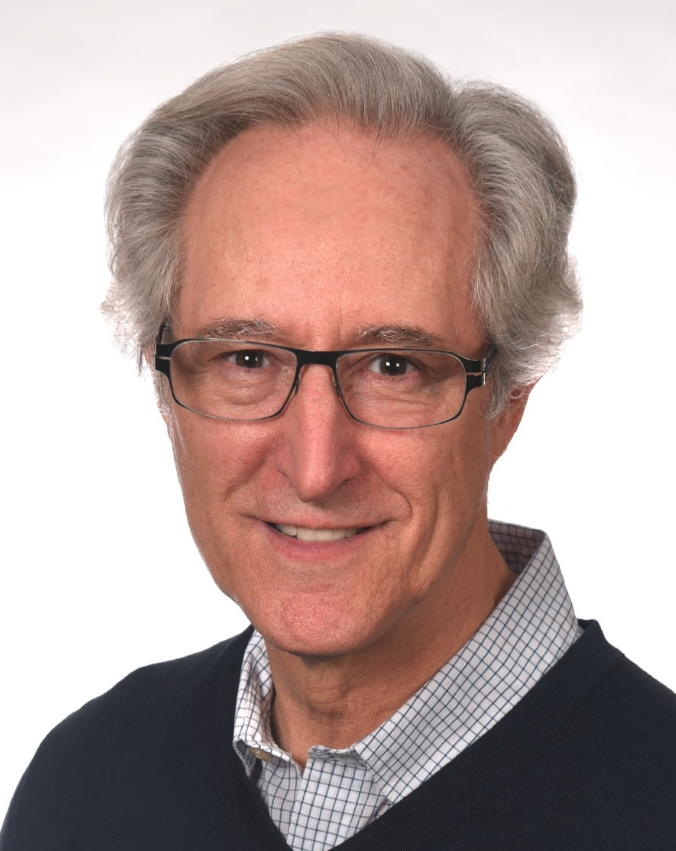 Andrew J. Lankford合作论文数Department of Physics & Astronomy, School of Physical Sciences, University of California, Irvine323
 Alan Watson合作论文数School of Physics and Astronomy, College of Engineering and Physical Sciences, University of Birmingham323N. Berger合作论文数322
 Bob Kowalewski合作论文数Victoria Subatomic Physics & Accelerator Research Centre, Department of Physics and Astronomy, Faculty of Science, University of Victoria321
 Ingrid Ofte合作论文数Anello Photonics321
 Abraham Seiden合作论文数Santa Cruz Institute for Particle Physics, University of California, Santa Cruz;Department of Physics, University of California, Santa Cruz320
 Paul Jackson合作论文数School of Physics, Chemistry and Earth Sciences, University of Adelaide;Faculty of Sciences, Engineering and Technology, University of Adelaide319
 Abner Soffer合作论文数School of Physics and Astronomy, Tel Aviv University319
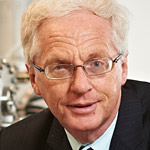 Roger Barlow合作论文数School of Computing and Engineering, University of Huddersfield318
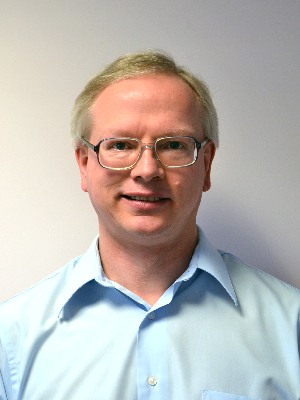 Chris Hawkes合作论文数School of Physics and Astronomy, University of Birmingham318W. Kozanecki合作论文数316S. Passaggio合作论文数315N. B. Sinev合作论文数309J. Ocariz合作论文数306
 Rolf Dubitzky合作论文数CARIAD306
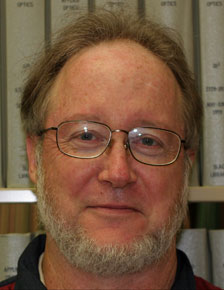 Bill Lockman合作论文数Santa Cruz Institute for Particle Physics, Department of Physics, University of California, Santa Cruz304
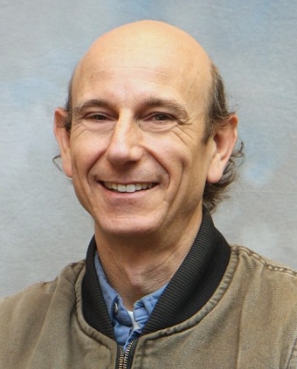 Joseph M. Izen合作论文数Department of Physics, School of Natural Sciences and Mathematics, The University of Texas at Dallas301
 Ben Brau合作论文数Department of Physics, College of Natural Sciences, University of Massachusetts Amherst300F. Taylor合作论文数292
 Sandrine Laplace合作论文数Laboratoire de Physique Nucléaire et de Hautes Énergies292Marcella Bona合作论文数291Y. Karyotakis合作论文数290
 Bruce Schumm合作论文数Physical & Biological Sciences Division, Physics Department, University of California, Santa Cruz;Santa Cruz Institute for Particle Physics, University of California, Santa Cruz288M. Steinke合作论文数287
 Christopher Hearty合作论文数Department of Physics & Astronomy, Faculty of Science, The University of British Columbia287J. Brose合作论文数286M. Dickopp合作论文数286A. Dvoretskii合作论文数286
 Dominique Boutigny合作论文数Institut National de Physique Nucleaire et de Physique des Particules285




