This paper introduces a novel track-length extension fitting algorithm for measuring the kinetic energies of inelastically interacting particles in liquid argon time projection chambers (LArTPCs). The algorithm finds the most probable offset in track length for a track-like object by comparing the measured ionization density as a function of position with a theoretical prediction of the energy loss as a function of the energy, including models of electron recombination and detector response. The algorithm can be used to measure the energies of particles that interact before they stop, such as charged pions that are absorbed by argon nuclei. The algorithm's energy measurement resolutions and fractional biases are presented as functions of particle kinetic energy and number of track hits using samples of stopping secondary charged pions in data collected by the ProtoDUNE-SP detector, and also in a detailed simulation. Additional studies describe the impact of the dE/dx model on energy measurement performance. The method described in this paper to characterize the energy measurement performance can be repeated in any LArTPC experiment using stopping secondary charged pions.
The Module-0 Demonstrator is a single-phase 600 kg liquid argon time projection chamber operated as a prototype for the DUNE liquid argon near detector. Based on the ArgonCube design concept, Module-0 features a novel 80k-channel pixelated charge readout and advanced high-coverage photon detection system. In this paper, we present an analysis of an eight-day data set consisting of 25 million cosmic ray events collected in the spring of 2021. We use this sample to demonstrate the imaging performance of the charge and light readout systems as well as the signal correlations between the two. We also report argon purity and detector uniformity measurements, and provide comparisons to detector simulations.
ProtoDUNE Single-Phase (ProtoDUNE-SP) is a 770-ton liquid argon time projection chamber that operated in a hadron test beam at the CERN Neutrino Platform in 2018. We present a measurement of the total inelastic cross section of charged kaons on argon as a function of kaon energy using 6 and 7 GeV/$c$ beam momentum settings. The flux-weighted average of the extracted inelastic cross section at each beam momentum setting was measured to be 380$\pm$26 mbarns for the 6 GeV/$c$ setting and 379$\pm$35 mbarns for the 7 GeV/$c$ setting.
Abstract Alan Watson discusses the current status of research into ultra-high energy cosmic rays
DUNE is an international experiment dedicated to addressing some of the questions at the forefront of particle physics and astrophysics, including the mystifying preponderance of matter over antimatter in the early universe. The dual-site experiment will employ an intense neutrino beam focused on a near and a far detector as it aims to determine the neutrino mass hierarchy and to make high-precision measurements of the PMNS matrix parameters, including the CP-violating phase. It will also stand ready to observe supernova neutrino bursts, and seeks to observe nucleon decay as a signature of a grand unified theory underlying the standard model. The DUNE far detector implements liquid argon time-projection chamber (LArTPC) technology, and combines the many tens-of-kiloton fiducial mass necessary for rare event searches with the sub-centimeter spatial resolution required to image those events with high precision. The addition of a photon detection system enhances physics capabilities for all DUNE physics drivers and opens prospects for further physics explorations. Given its size, the far detector will be implemented as a set of modules, with LArTPC designs that differ from one another as newer technologies arise. In the vertical drift LArTPC design, a horizontal cathode bisects the detector, creating two stacked drift volumes in which ionization charges drift towards anodes at either the top or bottom. The anodes are composed of perforated PCB layers with conductive strips, enabling reconstruction in 3D. Light-trap-style photon detection modules are placed both on the cryostat's side walls and on the central cathode where they are optically powered. This Technical Design Report describes in detail the technical implementations of each subsystem of this LArTPC that, together with the other far detector modules and the near detector, will enable DUNE to achieve its physics goals.
The international collaboration designing and constructing the Deep Underground Neutrino Experiment (DUNE) at the Long-Baseline Neutrino Facility (LBNF) has developed a two-phase strategy toward the implementation of this leading-edge, large-scale science project. The 2023 report of the US Particle Physics Project Prioritization Panel (P5) reaffirmed this vision and strongly endorsed DUNE Phase I and Phase II, as did the European Strategy for Particle Physics. While the construction of the DUNE Phase I is well underway, this White Paper focuses on DUNE Phase II planning. DUNE Phase-II consists of a third and fourth far detector (FD) module, an upgraded near detector complex, and an enhanced 2.1 MW beam. The fourth FD module is conceived as a "Module of Opportunity", aimed at expanding the physics opportunities, in addition to supporting the core DUNE science program, with more advanced technologies. This document highlights the increased science opportunities offered by the DUNE Phase II near and far detectors, including long-baseline neutrino oscillation physics, neutrino astrophysics, and physics beyond the standard model. It describes the DUNE Phase II near and far detector technologies and detector design concepts that are currently under consideration. A summary of key R&D goals and prototyping phases needed to realize the Phase II detector technical designs is also provided. DUNE's Phase II detectors, along with the increased beam power, will complete the full scope of DUNE, enabling a multi-decadal program of groundbreaking science with neutrinos.
Doping of liquid argon TPCs (LArTPCs) with a small concentration of xenon is a technique for light-shifting and facilitates the detection of the liquid argon scintillation light. In this paper, we present the results of the first doping test ever performed in a kiloton-scale LArTPC. From February to May 2020, we carried out this special run in the single-phase DUNE Far Detector prototype (ProtoDUNE-SP) at CERN, featuring 720 t of total liquid argon mass with 410 t of fiducial mass. A 5.4 ppm nitrogen contamination was present during the xenon doping campaign. The goal of the run was to measure the light and charge response of the detector to the addition of xenon, up to a concentration of 18.8 ppm. The main purpose was to test the possibility for reduction of non-uniformities in light collection, caused by deployment of photon detectors only within the anode planes. Light collection was analysed as a function of the xenon concentration, by using the pre-existing photon detection system (PDS) of ProtoDUNE-SP and an additional smaller set-up installed specifically for this run. In this paper we first summarize our current understanding of the argon-xenon energy transfer process and the impact of the presence of nitrogen in argon with and without xenon dopant. We then describe the key elements of ProtoDUNE-SP and the injection method deployed. Two dedicated photon detectors were able to collect the light produced by xenon and the total light. The ratio of these components was measured to be about 0.65 as 18.8 ppm of xenon were injected. We performed studies of the collection efficiency as a function of the distance between tracks and light detectors, demonstrating enhanced uniformity of response for the anode-mounted PDS. We also show that xenon doping can substantially recover light losses due to contamination of the liquid argon by nitrogen.
The rapid development of general-purpose computing on graphics processing units (GPGPU) is allowing the implementation of highly-parallelized Monte Carlo simulation chains for particle physics experiments. This technique is particularly suitable for the simulation of a pixelated charge readout for time projection chambers, given the large number of channels that this technology employs. Here we present the first implementation of a full microphysical simulator of a liquid argon time projection chamber (LArTPC) equipped with light readout and pixelated charge readout, developed for the DUNE Near Detector. The software is implemented with an end-to-end set of GPU-optimized algorithms. The algorithms have been written in Python and translated into CUDA kernels using Numba, a just-in-time compiler for a subset of Python and NumPy instructions. The GPU implementation achieves a speed up of four orders of magnitude compared with the equivalent CPU version. The simulation of the current induced on 10^3 pixels takes around 1 ms on the GPU, compared with approximately 10 s on the CPU. The results of the simulation are compared against data from a pixel-readout LArTPC prototype.
Measurements of the Elongation Rate of the depth of shower maximum above 1 EeV are reviewed. There is evidence, from four independent estimates of this rate, made in the two hemispheres using three different techniques, for a decrease in the Elongation Rate above ~3 EeV, as first discovered by the Pierre Auger Collaboration over 15 year ago. Unless there is a dramatic change in the hadronic physics above this energy, the mean mass of the primary cosmic rays must increase as a function of energy, well into the decade beyond 10 EeV. To estimate the mass, the use of hadronic models is required, the accuracy of which remains uncertain. However, the possibility of a dramatic change in the hadronic physics appears unlikely, and would be inconsistent with data from the Auger Collaboration on the mass composition in the range 3 to 10 EeV, and on the anisotropy of arrival directions above 8 EeV. Both of these conclusions are insensitive to uncertainties in the shower models. Some remarks are made about the belief, still firmly held by some, that the highest-energy cosmic rays are dominantly protons.
The origins of the series of European Cosmic-Ray Symposia are briefly described. The first meeting in the series, on ‘Hadronic Interactions and Extensive Air Showers’, held in Łódź, Poland in 1968, was attended by the author: some memories are recounted.
Recent design and development of precipitate reinforced refractory metal alloys demonstrate the possibility of A2 + B2 bcc superalloys as a new class of high temperature materials. Existing β-Ti alloys do not typically employ reinforcement with intermetallics, as in other high temperature alloys; to this effect sufficient additions of Fe, a low cost β-Ti stabiliser, can promote formation of an ordered-bcc intermetallic phase, β′-TiFe (B2), offering scope to develop a β + β′ dual-phase field. However, key uncertainties exist in the base Ti-Fe binary. The current research evaluates the formation of ordered-bcc TiFe precipitates within a disordered-bcc β-Ti matrix through variable heat treatment strategies. The microstructure optimisation has revealed new insight into the Ti-Fe phase equilibria at near eutectoid temperatures in the purported dual-phase field, where a complex interplay between β-Ti, β′-TiFe and α-Ti exists.
Measurements of electrons from $\nu_e$ interactions are crucial for the Deep Underground Neutrino Experiment (DUNE) neutrino oscillation program, as well as searches for physics beyond the standard model, supernova neutrino detection, and solar neutrino measurements. This article describes the selection and reconstruction of low-energy (Michel) electrons in the ProtoDUNE-SP detector. ProtoDUNE-SP is one of the prototypes for the DUNE far detector, built and operated at CERN as a charged particle test beam experiment. A sample of low-energy electrons produced by the decay of cosmic muons is selected with a purity of 95%. This sample is used to calibrate the low-energy electron energy scale with two techniques. An electron energy calibration based on a cosmic ray muon sample uses calibration constants derived from measured and simulated cosmic ray muon events. Another calibration technique makes use of the theoretically well-understood Michel electron energy spectrum to convert reconstructed charge to electron energy. In addition, the effects of detector response to low-energy electron energy scale and its resolution including readout electronics threshold effects are quantified. Finally, the relation between the theoretical and reconstructed low-energy electron energy spectrum is derived and the energy resolution is characterized. The low-energy electron selection presented here accounts for about 75% of the total electron deposited energy. After the addition of lost energy using a Monte Carlo simulation, the energy resolution improves from about 40% to 25% at 50~MeV. These results are used to validate the expected capabilities of the DUNE far detector to reconstruct low-energy electrons.
The Fluorescence Detector (FD) of the Pierre Auger Observatory has a large exposure to search for upward-going showers. Constraints have been recently obtained by using 14 years of FD data searching for upward-going showers in the zenith angle range $[110^\circ, 180^\circ]$. In this work, we translate these bounds to upper limits of a possible flux of ultra high energy tau-leptons escaping from the Earth into the atmosphere. Such a mechanism could explain the observation of "anomalous pulses" made by ANITA, that indicated the existence of upward-going air showers with energies above $10^{17}$ eV. As tau neutrinos would be absorbed within the Earth at the deduced angles and energies, a flux of upward-going taus could only be resulted from an unknown type of ultra high energy Beyond Standard Model particle penetrating the Earth with little attenuation, and then creating tau-leptons through interactions within a maximum depth of about 50 km before exiting. We test classes of such models in a generic way and determine upper flux limits of ultra high energy BSM particles as a function of their unknown cross section with matter.
A primary goal of the upcoming Deep Underground Neutrino Experiment (DUNE) is to measure the $\mathcal{O}(10)$ MeV neutrinos produced by a Galactic core-collapse supernova if one should occur during the lifetime of the experiment. The liquid-argon-based detectors planned for DUNE are expected to be uniquely sensitive to the $\nu_e$ component of the supernova flux, enabling a wide variety of physics and astrophysics measurements. A key requirement for a correct interpretation of these measurements is a good understanding of the energy-dependent total cross section $\sigma(E_\nu)$ for charged-current $\nu_e$ absorption on argon. In the context of a simulated extraction of supernova $\nu_e$ spectral parameters from a toy analysis, we investigate the impact of $\sigma(E_\nu)$ modeling uncertainties on DUNE's supernova neutrino physics sensitivity for the first time. We find that the currently large theoretical uncertainties on $\sigma(E_\nu)$ must be substantially reduced before the $\nu_e$ flux parameters can be extracted reliably: in the absence of external constraints, a measurement of the integrated neutrino luminosity with less than 10\% bias with DUNE requires $\sigma(E_\nu)$ to be known to about 5%. The neutrino spectral shape parameters can be known to better than 10% for a 20% uncertainty on the cross-section scale, although they will be sensitive to uncertainties on the shape of $\sigma(E_\nu)$. A direct measurement of low-energy $\nu_e$-argon scattering would be invaluable for improving the theoretical precision to the needed level.
The origin of ultra-high-energy cosmic rays (UHECRs), particles from outer space with energies~$E \geq 1\;$EeV, is still unknown, though the near-isotropy of their arrival direction distribution excludes a dominant Galactic contribution, and interactions with background photons prevent them from travelling cosmologically large distances. This suggests that their sources must be searched for in nearby galaxy groups and clusters. Deflections by intergalactic and Galactic magnetic fields are expected to hinder such searches but not preclude them altogether. So far, the only anisotropy detected with statistical significance $\geq 5\sigma$ is a modulation in right ascension in the data from the Pierre Auger Observatory at~$E \geq 8\;$EeV interpretable as a 7% dipole moment. Various hints for higher-energy, smaller-scale anisotropies have been reported. UHECR arrival direction data from both the Pierre Auger Observatory and the Telescope Array experiment have been searched for anisotropies by a working group with members from both collaborations; combining the two datasets requires a cross-calibration procedure due to the different systematic uncertainties on energy measurements but allows us to perform analyses that are less model-dependent than what can be done with partial sky coverage. We report a significant dipole pointing away from the Galactic Center and a ${\sim}4.6\sigma$ anisotropy found when comparing the directions of UHECRs with a catalog of starburst galaxies.
A bstract A search for the exclusive decays of the Higgs and Z bosons to a ϕ or ρ meson and a photon is performed with a pp collision data sample corresponding to an integrated luminosity of up to 35 . 6 fb −1 collected at $$ \sqrt{s}=13 $$ s = 13 TeV with the ATLAS detector at the CERN Large Hadron Collider. These decays have been suggested as a probe of the Higgs boson couplings to light quarks. No significant excess of events is observed above the background, as expected from the Standard Model. Upper limits at 95% confidence level were obtained on the branching fractions of the Higgs boson decays to ϕ γ and ρ γ of 4 . 8 × 10 −4 and 8 . 8 × 10 −4 , respectively. The corresponding 95% confidence level upper limits for the Z boson decays are 0 . 9 × 10 −6 and 25 × 10 −6 for ϕ γ and ρ γ, respectively.
A search for leptoquarks decaying into the bτ final state is performed using Run 2 proton-proton collision data from the Large Hadron Collider, corresponding to an integrated luminosity of 139 fb−1 at √(s) = 13 TeV recorded by the ATLAS detector. The benchmark models considered in this search are vector leptoquarks with electric charge of 2/3e and scalar leptoquarks with an electric charge of 4/3e. No significant excess above the Standard Model prediction is observed, and 95
A brief history of the development of surface detectors for the study of the high-energy cosmic rays is presented. The paper is based on an invited talk given at UHECR2022 held in LAquila, October 2022. In a complementary talk, P Sokolsky discussed the development of the fluorescence technique for air-shower detection.
The Pandora Software Development Kit and algorithm libraries provide pattern-recognition logic essential to the reconstruction of particle interactions in liquid argon time projection chamber detectors. Pandora is the primary event reconstruction software used at ProtoDUNE-SP, a prototype for the Deep Underground Neutrino Experiment far detector. ProtoDUNE-SP, located at CERN, is exposed to a charged-particle test beam. This paper gives an overview of the Pandora reconstruction algorithms and how they have been tailored for use at ProtoDUNE-SP. In complex events with numerous cosmic-ray and beam background particles, the simulated reconstruction and identification efficiency for triggered test-beam particles is above 80% for the majority of particle type and beam momentum combinations. Specifically, simulated 1 GeV/$c$ charged pions and protons are correctly reconstructed and identified with efficiencies of 86.1$\pm0.6$% and 84.1$\pm0.6$%, respectively. The efficiencies measured for test-beam data are shown to be within 5% of those predicted by the simulation.
The ProtoDUNE-SP detector is a single-phase liquid argon time projection chamber (LArTPC) that was constructed and operated in the CERN North Area at the end of the H4 beamline. This detector is a prototype for the first far detector module of the Deep Underground Neutrino Experiment (DUNE), which will be constructed at the Sandford Underground Research Facility (SURF) in Lead, South Dakota, USA. The ProtoDUNE-SP detector incorporates full-size components as designed for DUNE and has an active volume of 7× 6× 7.2 m^3. The H4 beam delivers incident particles with well-measured momenta and high-purity particle identification. ProtoDUNE-SP's successful operation between 2018 and 2020 demonstrates the effectiveness of the single-phase far detector design. This paper describes the design, construction, assembly and operation of the detector components.
 Roger Barlow合作论文数School of Computing and Engineering, University of Huddersfield1103
 Chris Hawkes合作论文数School of Physics and Astronomy, University of Birmingham1094
 George Lafferty合作论文数School of Physics and Astronomy, The University of Manchester1069
 David Leith合作论文数Stanford Linear Accelerator Center1055
 Masahiro Morii合作论文数Department of Physics, Harvard University996
 Blair Ratcliff合作论文数SLAC National Accelerator Laboratory;Stanford University992
 Carlo Dallapiccola合作论文数Department of Physics, College of Natural Sciences, University of Massachusetts Amherst954
 Abolhassan Jawahery合作论文数Department of Physics, College of Computer, Mathematical, & Natural Sciences, University of Maryland953J.W. Gary合作论文数950
 Gerald Eigen合作论文数Department of Physics and Technology, University of Bergen930
 Bjarne Sandvik Stugu合作论文数Department of Physics and Technology University of Bergen900
 Bob Kowalewski合作论文数Victoria Subatomic Physics & Accelerator Research Centre, Department of Physics and Astronomy, Faculty of Science, University of Victoria866P. Taras合作论文数858
 Ingrid Ofte合作论文数Anello Photonics854
 j a mckenna合作论文数University of British Columbia849Y. Karyotakis合作论文数828G. Lynch合作论文数Lawrence Berkeley National Laboratory826Serednyakov Sergey Ivanovich合作论文数Budker Institute of Nuclear Physics, Siberian Division, Russian Academy of Sciences818T. S. Mattison合作论文数815
 Antimo Palano合作论文数University of Bari807
 Christopher Hearty合作论文数Department of Physics & Astronomy, Faculty of Science, The University of British Columbia803
 James Cochran合作论文数Department of Physics and Astronomy, College of Liberal Arts and Sciences, Iowa State University797
 Rolf Dubitzky合作论文数CARIAD787
 Claudio Campagnari合作论文数Physics Department, University of California Santa Barbara;CERN781
 David Kirkby合作论文数Dept Phys & Astron, Univ Calif Irvine781B.C. Shen合作论文数780G. Vasseur合作论文数776
 Lucien Cremaldi合作论文数Department of Physics and Astronomy, University of Mississippi776
 Terry L. Schalk合作论文数Division of Physical & Biological Sciences, Department of Physics, University of California, Santa Cruz;Santa Cruz Institute for Particle Physics, University of California, Santa Cruz773
 J. Allison合作论文数Geant4 Associates International Ltd772
 Frank C. Porter合作论文数The Division of Physics, Mathematics and Astronomy, California Institute of Technology765
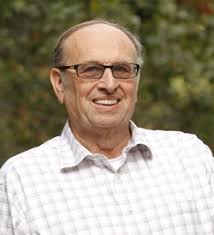 Abraham Seiden合作论文数Santa Cruz Institute for Particle Physics, University of California, Santa Cruz;Department of Physics, University of California, Santa Cruz764
 Mario Bondioli合作论文数Bloomberg LP763
 Heiko Lacker合作论文数Institut für Physik, Mathematisch-Naturwissenschaftliche Fakultät, Humboldt-Universität zu Berlin;Department of Physics, Humboldt-Universität zu Berlin763
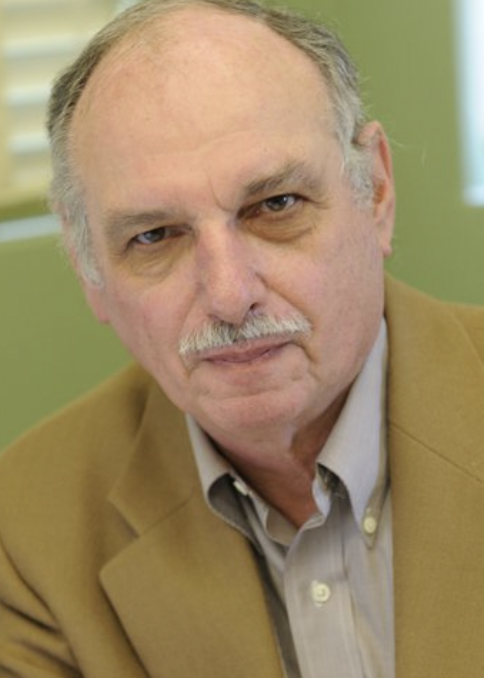 David Hitlin合作论文数Division of Physics Mathematics and Astronomy, California Institute of Technology762
 Eric Torrence合作论文数Institute for Fundamental Science, Department of Physics, College of Arts and Sciences, University of Oregon760R.Gamet合作论文数Department of Physics, Oliver Lodge Laboratory, University of Liverpool758G. Finocchiaro合作论文数758
 A. V. Gritsan合作论文数Johns Hopkins University753
 Gr Bonneaud合作论文数University of Paris752Gilbert Grosdidier合作论文数Laboratoire de l'Accélérateur Linéaire, Institut National de Physique Nucléaire et de Physique des Particules751
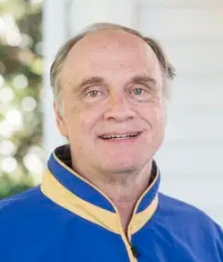 Robert Kroeger合作论文数Department of Physics and Astronomy, University of Mississippi750
 J. Michael Roney合作论文数Victoria Subatomic Physics and Accelerator Research Centre, University of Victoria749Ap Onuchin合作论文数747L. Piemontese合作论文数747S. Passaggio合作论文数745
 Philip J Clark合作论文数Institute for Particle and Nuclear Physics, School of Physics and Astronomy, The University of Edinburgh743
 Vincent Tisserand合作论文数Laboratoire de Physique Corpusculaire de Clermont-Ferrand743
 Fabio Anulli合作论文数Istituto Nazionale di Fisica Nucleare742




