The Acoustic Laboratory for Marine Applications (ALMA) has been used to address problems in underwater acoustics, such as sound propagation in fluctuating environments. In this work, data from the ALMA-2016 at-sea campaign are used to analyze the ocean fluctuation's influence on sound propagation in a shallow-water waveguide. The experiment took place in November 2016 on the continental shelf of the eastern coast of the island of Corsica. A source and a receiver array were 9.3 km apart in a nearly constant water depth of 100 m. A thermistor chain was moored near the source to monitor sound speed fluctuations. The source emitted a variety of signals from which the chirp (1–13 kHz) is used to extract the waveguide eigenrays. To do so, a time-domain beamforming is performed on the match-filtered received signals with an automatic detection of local maxima in the time of arrival/direction of arrival (TOA/DOA) domain. A 2 min acquisition period of more than 13 h duration shows significant fluctuations in eigenray TOAs/DOAs. Qualitative comparisons with synthetic signals obtained from simulations permit reproduction of the observed eigenray fluctuations without including range dependence of the sound-speed profile. In addition, the joint analysis of the probability density function of the normalized acoustic intensity and of the thermistor chain data highlights the time dependence of the received signal characteristics.
The Acoustic Laboratory for Marine Applications (ALMA) is a deployable and autonomous acoustic system, designed by DGA Naval Systems, to address problems in underwater acoustics, such as sound propagation in fluctuating environments. In this article, data from the ALMA-2016 at-sea campaign are used to analyze the ocean fluctuation's influence on sound propagation in a shallow-water waveguide. The experiment took place on the continental shelf of the island of Corsica in November 2016. A source and a receiver array were 9.3 km apart in a nearly constant water depth of 100 m. The source emitted a variety of signals from which the chirp (1-13 kHz) is used to extract the waveguide eigenrays. To do so, a time-domain beamforming is performed on the match-filtered received signals with an automatic detection of local maxima in the time of arrival/direction of arrival (TOA/DOA) domain. A 2 min acquisition period of more than 13 h duration shows significant fluctuations in eigenray TOAs/DOAs. Qualitative comparisons with synthetic signals obtained from simulations in two and three dimensions permit reproduction of the observed eigenray fluctuations without including range dependence of the sound-speed profile.
The authors present an acoustic system, designed by DGA Naval Systems, dedicated to the study of sound propagation in challenging environments. The system is called ALMA for Acoustic Laboratory for Marine Applications. Shallow and coastal waters, where oceanographic phenomena (such as linear internal waves, tides and 3-D effects) interact with acoustic propagation, represent the main area of deployments. Since 2014, 5 at-sea campaign have been successfully conducted in the Mediterranean Sea and in the Atlantic Ocean. They mainly consisted in propagating sound waves in the 1–15 kHz frequency band using fixed or towed sources towards a modular passive acoustic array. The latter is composed of 8 rigid arms carrying 16 hydrophones each. These arms can be, and actually were, arranged in various shapes, depending on the goal of the experiment. Environmental sensing using thermistor strings and CTD cast complete the experimental equipment. The analysis of the 2016 campaign demonstrates the ability of the system to gather data representative what was described as the “saturation” theory by S. Flatté in the 1980s. In fact, criteria based on the mutual coherence function and the normalized acoustic intensity probability density function allow to explain the observed variability of detection performance on a 4x32-hydrophones vertical comblike passive acoustic array. A global progress report on the use of data gathered by the ALMA system, as well as future plans—including deployment in high latitudes environments—will be discussed.
Recent advances and evolutions of the ALMA (Acoustic Laboratory for Marine Applications) project are tackled in this paper. While the system's goal continues to gather experimental data to share with the community and understand the underlying phenomena linked with ocean fluctuations and their interactions with sound waves propagation, the technological and technical updates of the system also allowed to conduct some measurements of the ambient noise properties. Both of these two aspects of the work conducted with ALMA are the topic of this paper: on one hand, the effect of temperature fluctuations on the variation of the estimated direction of arrival of acoustic waves emitted from a fixed source was previously shown and is studied here from a statistical point of view. In fact, the distribution of the normalized acoustic intensity is computed in different configurations and serves as an efficient tool to discriminate between the various regimes of fluctuations involved. On the other hand, noise properties (directivity, coherence) are studied and the design of the 2018 ALMA passive acoustic array is discussed.
The fundamental and practical problem of passive localization in range and depth, of an acoustic underwater source is addressed, with application to an at-sea experiment. We propose and try a new matching method based on a metric called as Hausdorff distance as a cost-function to be minimized, in order to perform the localization inversion. The data set analyzed here was collected during the DGA campaign ALMA 2015, which took place in a shallow water environment of the southern coast of France. Acoustic data were measured over a 10m-high vertical linear array (VLA), composed of 64 hydrophones. The 2-D localization, in range and depth, is performed by matching the patterns of time difference of arrival (TDOA), between respectively observed and modeled sequences. Several variants of the Hausdorff Distance are applied, firstly separately in each single hydrophone, and then combined in order to improve the localization accuracy, reducing the ambiguity either is depth and in range. The performance is evaluated in terms of the localization accuracy of the proposed method, in a context of passive localization with a cooperative system considering a motionless target. Very satisfactory performance and accuracy are obtained.
The authors present a recently developed acoustic system (ALMA for Acoustic Laboratory for Marine Applications). ALMA was designed and used to address the topic of sound waves propagating in fluctuating oceans (especially coastal and shallow waters). Observing and understanding the underlying phenomena such as wavefronts fluctuations due to internal waves, scattering from the sea surface and/or bottom and their impact on sonar performance is the main long-term goal of this work. Several measurement campaigns were conducted and will be presented. They were carried out in the Mediterrannean sea in various conditions of water depth, season or type of emitted signals. An analysis of some of the acoustic and environmental data collected during the 2016 campaign will also be provided. The influence of temperature fluctuations is shown with calculation of the mutual coherence function and conventional beamforming.
This paper is devoted to the study of the effects of ocean fluctuations on acoustic propagation. The development of an ultrasonic testbench allowing to reproduce, under laboratory conditions, the influence of 3D fluctuations on received acoustic data is presented. The experimental protocol consists in transmitting, in a water tank, a high-frequency wavetrain throughout an acoustic slab presenting a plane input face and a randomly rough output face. The various regimes of saturation and unsaturation classically used in the literature are explored by tuning the statistics of the so-called RAFAL (RAndom Faced Acoustic Lens). Comparisons to a “corresponding” oceanic medium are obtained via a scaling procedure. In parallel, numerical tools were developed to provide meaningful comparison with the acquired data. Both based on a split-step Fourier algorithm, a 3D PE simulation of the tank experiment and a 3D PE simulation of real scale acoustic propagation programs are presented. Features of acoustic fields perturbed by internal waves are found. The relevance of our procedure is evaluated through calculations of the coherence function (in particular, measurement of the radius of coherence) and statistical distributions of the received complex pressure and intensity. Comparisons between our scaled measurements, numerical computations and analytical results are analyzed.
source in a filament plane and in the plane perpendicular to the filament was measured for different conditions of focalization of the laser beam.In a second step, parameters affecting the efficiency of the opto-acoustic conversion were investigated.In order to get better laser propagation conditions in water the laser wavelength was changed from 800nm to 400nm.This was achieved by using a KDP crystal (second harmonic generation).The influence of optical pulse duration and total laser pulse energy on the level of the received acoustical signals were successively investigated.In this experiment three hydrophones were used, covering all together the frequency band [0-15 MHz].Finally, some tests of sound source generation in a saline solution (35 g/l NaCl) were made in order to predict what would be the source level in a real sea experiment.
Acoustic signals generated by filamentation of ultrashort terawatt laser pulses in water are characterized experimentally. Measurements reveal a strong influence of input pulse duration on the shape and intensity of the acoustic wave. Numerical simulations of the laser pulse nonlinear propagation and the subsequent water hydrodynamics and acoustic wave generation show that the strong acoustic emission is related to the mechanism of superfilamention in water. The elongated shape of the plasma volume where energy is deposited drives the far-field profile of the acoustic signal, which takes the form of a radially directed pressure wave with a single oscillation and a very broad spectrum.
In this work the non-linear opto-acoustic problem which consists in generating an acoustic signal in water from an intense ultra short laser pulse has been studied. The acoustic source obtained could be related to the phenomenon of filamentation which produces a contraction of the initial beam accompanied by the formation of plasma. Relatively recent work has shown that lasers of this type could be used to produce remote acoustic sources with interesting applications to underwater acoustics. The spectrum of the sound source obtained was investigated and its directivity pattern in both planes (plane of the filament and plane perpendicular to the filament) was measured. The sound level of the source as a function of energy, duration, and wavelength of the laser pulse was also measured.
Acoustic signals generated in water by terawatt (TW) laser pulses undergoing filamentation are studied. The acoustic signal has a very broad spectrum, spanning from 0.1 to 10 MHz and is confined in the plane perpendicular to the laser direction. Such a source appears to be promising for the development of remote laser based acoustic applications.
The authors focus on the effects of phenomena, such as linear internal waves, that are responsible for fluctuations of the depth-dependent sound speed profile and, hence, induce distortions of the resulting acoustic pressure field and degradation of the associated sonar performances. The main goal of this study is to develop a scaled experiment configuration able to provide some results representative of this kind of distortions. To do so, a theoretical study of the phenomenon has first been carried out: we obtained an expression for the standard parabolic equation applied to the Fourier transform of the moments of order 2 and 4 in 3D medium. Various simulation programs were developed and used for the following purposes: validating or discarding some relationships given by Flatte through his classical dimensionless analysis (ΛΦ plane); tracing rays through an acoustic lens featuring a plane face and a randomly rough face and propagating an acoustic wave through the same object in order to anticipate for the shape of the distorted pressure field, including diffraction effects. We were able both theoretically and experimentally to induce acoustic scattering that mimics, at reduced scale and frequencies around 2MHz, the correlation properties and the corresponding array performance that would be observed at sea, after propagation through a linear internal wave field, or reflection on a rough sea surface.
When recorded on an horizontal array, the acoustic intensity of a broadband source presents a striation pattern due to interferences between modes. This pattern is a robust feature of waveguide propagation and is described by a scalar parameter called waveguide invariant. In classical shallow water configurations, this invariant is close to 1 and has been used to perform source localization or to study the environment. For deep water waveguides, the invariant varies and no straightforward methods exist to take benefit of it. Indeed, in deep water many modes contributes to the acoustic intensity and the invariant depends on different modal contributions at different frequencies. This paper proposes a study of the invariant in deep water in a propagation channel. It is viewed as a three dimensional distribution depending on frequency, on central mode and on number of modes considered. Then, it is shown that the invariant distribution can be used to perform range estimation of the source in deep water. To compute it, a priori knowledge of the environment is required. However, the proposed localization method is robust to realistic errors on the environment knowledge as it uses mean of the invariant distribution.
Low frequency propagation (0-200 Hz) in shallow water (10-400 m) is described by modal theory. When using a single receiver, one challenge is to extract information about the modes in order to localize an acoustic source and/or characterize the environment. Indeed, when source/receiver distance is about a few kilometers to a dozen of kilometers, modes are overlapped in time and in frequency. This article presents a method for extracting modal travel times using a single receiver without any a priori knowledge of the environment. Adaptive signal processing is applied to compensate for modal dispersion, using time and frequency warping transformations adapted to the physics of propagation. Warping allows to filter each modal contribution by overcoming inherent limitations of time-frequency representations. Once each modal component is filtered, high resolution estimation of modal travel times is performed using reallocated spectrogram. The extracted modal travel times are robust features of propagation, as they can straightforwardly be linked to modal group velocities. This article presents an inversion scheme based on these features. It is successfully applied on experimental data recorded in an ultrasonic tank.
Passive source localization is a crucial issue in underwater acoustics. In this paper, we focus on shallow water environment (0 to 400 m) and broadband Ultra-Low Frequency acoustic sources (1 to 100 Hz). In this configuration and at a long range, the acoustic propagation can be described by normal mode theory. The propagating signal breaks up into a series of depth-dependent modes. These modes carry information about the source position. Mode excitation factors and mode phases analysis allow, respectively, localization in depth and distance. We propose two different approaches to achieve the localization: multidimensional approach (using a horizontal array of hydrophones) based on frequency-wavenumber transform ( method) and monodimensional approach (using a single hydrophone) based on adapted spectral representation ( method). For both approaches, we propose first complete tools for modal filtering, and then depth and distance estimators. We show that adding mode sign and source spectrum informations improves considerably the localization performance in depth. The reference acoustic field needed for depth localization is simulated with the new realistic propagation modelMoctesuma. The feasibility of both approaches, and , are validated on data simulated in shallow water for different configurations. The performance of localization, in depth and distance, is very satisfactory.
This paper presents a new signal processing tool: frequency warping, and its application in waveguide characterization. It can be applied in the context of signals recorded in shallow water (0-400 m) for an impulsive low-frequency source (0-200 Hz) and a single static receiver. In this configuration, propagation is described by modal theory: the recorded pressure field can be decomposed into several modes. Modes are non linear-frequency modulations which share a common frequency band. When the radial distance between source and receiver is smaller than 15 km, modes are also overlapped in time on the receiver. In this case, the recorded signal cannot be represented using classical time frequency representations and adaptive signal processing is required. Frequency warping processing transforms a give mode into a Dirac in time, using a priori information of the environment. As it is sensitive to environment mismatch, it can also be used to perform waveguide characterization. First, modal propagation is quickly reviewed. Secondly, it is shown that environment information is embedded in the time-frequency structure of the modes, but that adaptive signal processing is required to access it. Then, frequency warping processing is presented, both theoretically and experimentally. Finally, it is shown that frequency warping can be used to perform environment characterization.
In underwater acoustics, shallow water is a complex and dispersive medium. For low frequencies, the propagation is described by normal mode theory. Modes are nonlinear structures overlapped in time, in frequency, and in time-frequency domains. Advanced signal processing methods are needed to study them. This paper presents two different warping methods allowing modal separation and estimation of parameters of the modes. As these transformations are invertible, they also allow modal filtering. Thus, they are a good preprocessing tool for source localization or tomography. This is shown on simulations and real data. Warping is a transformation of a propagated signal and is based on an environment model. Here the environment is modeled with isovelocity or Pekeris waveguide. However, both methods are quite robust to mismatches with the real environment and can be used with minimal preliminary knowledge of the real environment. The first warping method is applied on the time domain. It transforms each mode into a sinus function of frequency fm (with fm the cutoff frequency of the mode m). The second is applied on the frequency domain. It transforms a chosen mode into a dirac, which is localized on the arrival time of the mode.
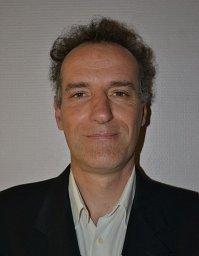 Jerome Mars合作论文数GIPSA-lab, Grenoble INP11
 Barbara Nicolas合作论文数GIPSA-Lab/DIS, CNRS11
 Xavier Cristol合作论文数9
 Gaultier Real合作论文数DGA Naval Systems, Toulon, France8
 Grégoire Le Touzé合作论文数6
 Julien Bonnel合作论文数Department of Applied Ocean Physics and Engineering, Woods Hole Oceanographic Institution6
 Jean-Pierre Sessarego合作论文数5
 Aurelien Houard合作论文数Lab Opt Appl, CNRS4
 Régine Guillermin合作论文数CNRS, UPR 7051, Lab Mecan & Acoust, F-13402 Marseille 20, France4Jérôme Carbonnel合作论文数4
 Amélie Jarnac合作论文数4
 Cornel Ioana合作论文数University of Montenegro4Andre Mysyrowicz合作论文数Laboratoire d’Optique Appliquée, CNRS4
 Yohann Brelet合作论文数Ecole Polytechnique de l'Universite de Nantes4Yvesbernard André合作论文数4Maciej Lopatka合作论文数3Victor Quilfen合作论文数2
 Florent Le Courtois合作论文数2
 Samuel Pinson合作论文数Institut de Recherche de l'Ecole Navale (IRENav),, BCRM Brest2Dominique Habault合作论文数2b chalindar合作论文数1Iannis Bennaceur合作论文数1
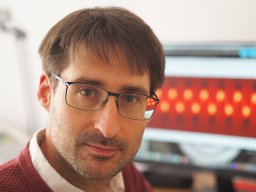 Carles Milian合作论文数1
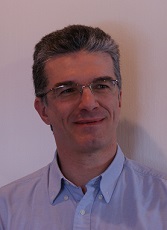 Arnaud Couairon合作论文数1Florian Dadouchi合作论文数1Philippe Danet合作论文数1Gautier Picard Destelan合作论文数1
 Cedric Gervaise合作论文数Institut de Recherche Chorus1
 Jean-Louis Lacoume合作论文数GIPSA-Lab/DIS, CNRS1Odile Gerard合作论文数1
 Vytautas Jukna合作论文数Ecole Polytech, CNRS1




