Carbohydrates play essential roles in nature, such as in cell–cell communication, cell growth and immunoresponse. However, the synthesis of structurally well-defined carbohydrates, especially large-sized glycans, is a challenging task. Here we report an automated solution-phase multiplicative synthesis of complex glycans enabled by preactivation-based, multicomponent, one-pot glycosylation and continuous multiplying amplification. This was achieved by making a dual-mode automated solution-phase glycan synthesizer. Using this synthesizer, a library of oligosaccharides covering various glycoforms and glycosidic linkages was assembled rapidly, either in a general promoter-activation mode or in a light-induced-activation mode. The automated synthesis of a fully protected fondaparinux pentasaccharide (an anticoagulant) was realized on the gram scale. Furthermore, automated ten-component tandem reactions were performed, allowing the assembly of arabinans up to a 1,080-mer using this automated multiplicative synthesis strategy. The complexity of carbohydrate structures makes their synthesis challenging. Now, an automated glycan synthesizer is reported which is capable of preparing a library of bioactive oligosaccharides, including a fully protected fondaparinux pentasaccharide. Furthermore, the synthesizer can rapidly assemble arabinans up to 1,080-mer size, starting from monosaccharide building blocks.
Mycobacterial arabinogalactan (AG) is an essential cell wall component of mycobacteria and a frequent structural and bio-synthetical target for anti-tuberculosis (TB) drug development. Here, we report that mycobacterial AG is recognized by galectin-9 and exacerbates mycobacterial infection. Administration of AG-specific aptamers inhibits cellular infiltration caused by Mycobacterium tuberculosis (Mtb) or Mycobacterium bovis BCG, and moderately increases survival of Mtb-infected mice or Mycobacterium marinum-infected zebrafish. AG interacts with carbohydrate recognition domain (CRD) 2 of galectin-9 with high affinity, and galectin-9 associates with transforming growth factor β-activated kinase 1 (TAK1) via CRD2 to trigger subsequent activation of extracellular signal-regulated kinase (ERK) as well as induction of the expression of matrix metalloproteinases (MMPs). Moreover, deletion of galectin-9 or inhibition of MMPs blocks AG-induced pathological impairments in the lung, and the AG-galectin-9 axis aggravates the process of Mtb infection in mice. These results demonstrate that AG is an important virulence factor of mycobacteria and galectin-9 is a novel receptor for Mtb and other mycobacteria, paving the way for the development of novel effective TB immune modulators.
To investigate the chemical components from the stems of Casearia velutina Bl.,the constituents were isolated by repeated chromatography with silica gel,Sephadex LH-20,and ODS columns.The structures were elucidated by spectroscopic analysis.Eleven triterpenoids and its glycosides were isolated from the crude extract of C.velutina,and their structures were identified as friedelin-2,3-1actone (1),friedelane (2),epifriedelanol (3),friedelin (4),2α,3α,19α-trihydroxy-urs-12-cn-28-oic acid (5),2α,3β,19α-trihydroxy-urs-12-en-28-oic acid (6),2α,3α,23-trihydroxy-urs-12-en-28-oic acid (7),2α,3α,23-trihydroxyolean-12-en-28-oic acid (8),2α,3α,19α,23-tetrahydroxy-urs-12-en-28-oic acid (9),2α,3α,19α,23-tetrahydroxy-urs-12-en-28-oic acid-28-O-β-D-glucopyranosyl ester (10),and 3β,19α-dihydroxy-urs-12-en-28-oic acid 3-O-α-L-arabinopyranoside (11).All the compounds described above were isolated from this species for the first time.Compound 1 is a rarely occurred secofriedelolactone in Flacourtiaceae.
Chemical investigation of the stems of Casearia velutina led to the isolation and structural elucidation of three new acylated glycosides, casearicosides A-C (1-3), together with 13 known compounds. The structures of the new compounds were established by spectroscopic and chemical methods. These isolates were evaluated for protective effects against H(2)O(2)-induced impairment in PC12 cells and inhibitory activity against snake venom phosphodiesterase I. A brief chemotaxonomy of the genus Casearia is also discussed.
Investigations of two Flacourtiaceae plants, Bennettiodendron leprosipes and Flacourtia ramontchi, resulted in the isolation and structural elucidation of six new constituents including two phenolic glycosides ( 1 and 2), one lignan ( 3), two lignan glycosides ( 4 and 5), and a monoterpene glycoside ( 6), together with 22 known compounds ( 7- 28). The structures of the new compounds were elucidated by spectroscopic analysis and chemical methods. The selected isolates 1, 2, 8- 10, 22- 26, and some phenolic glycosides 29- 42 previously isolated from another Flacourtiaceae plant, Itoa orientalis, were tested against snake venom phosphodiesterase I (PDE I) activity. The result indicated that 22, 30, 32, 34, and 40 exhibited moderate inhibitory activities against PDE I with the values ranging from 13.15 to 20.86 %, and 1, 8, 10, 25, 31, 33, 35, 38, 39, and 41 showed weak inhibitory activity.
Four rare isoryanodane diterpenoids namely itols A–D (1–4) and two isoryanodane glucosides (5 and 6) were isolated from the bark and twigs of Itoa orientalis. Their structures were determined by NMR and MS techniques and the structure of 1 was confirmed by a single-crystal X-ray diffraction. These six diterpenoids obviously showed insecticidal activity against Spodoptera exigua, with LC50 28.62 ppm for 1 and 52.76 ppm for 2, respectively. In anti-inflammatory assay, compounds 1 and 4–6 showed anti-COX-2 activity, with inhibitory rates of 54.7–78.3% at 10 μM.
Eight new benzoylated gentisyl alcohol (=2-(hydroxymethyl)benzene-1,4-diol) glucosides, itosides A-H (1-8), together with the new pyrocatechol (= benzene- 1,2-diol) glycoside itoside 1 (9) were isolated front the bark and twigs of Itoa orientalis (Flacourtiaceae). In itosides B-D (2-4), the gentisyl alcohol moiety was esterified by 1-hydroxy-6-oxocyclohex-2-ene-1-carboxylic acid, while itosides E-H (5-8) contained instead an additional 2-hydroxybenzoic acid moiety. The compounds were accompanied by the known derivatives 4-hydroxytremulacin (10), poliothyrsoside (11), poliothyrsin (12). homaloside D (13), tremulacin, and pyrocatechol beta-D-glucopyranoside. The structures of the new compounds were elucidated by spectral and chemical methods.
目的研究爪哇脚骨脆Casearia velutina茎及枝条的化学成分。方法采用多种现代色谱手段对其化学成分进行分离,利用理化性质并结合光谱数据鉴定化合物结构。结果分离鉴定了9个化合物,分别为:丁香酸葡萄糖苷(Ⅰ)、儿茶素(Ⅱ)、腺嘌呤核苷(Ⅲ)、(2R,3S,4R,5R)-直链肌醇(Ⅳ)、5-p-trans-coumaroylquinic acid(Ⅴ)、3′-O-methylquercetin3-O-α-L-rhamnopyranosyl-(1→6)-β-D-glucopyranoside(Ⅵ)、(3S,6R)-trans-linalool-3,7-oxideglucoside(Ⅶ)、蔗糖(Ⅷ)、果糖(Ⅸ)。结论该9个化合物均为首次从爪哇脚骨脆中分离得到。
AIM:To investigate the chemical constituents from the leaves of Itoa orientalis Hemsl..METHODS:Chromatography of silica gel,Sephadex LH-20 and ODS and spectral analysis of MS,1D and 2D NMR were respectively used to isolate and identify the constituents.RESULTS:Five compounds were isolated from the leaves of Itoa orientalis Hemsl..and identified as β-D-galactopyranoside,2,3-bis[(1-oxo-9,12,15-octadecatrienyl)oxy]propyl(1),β-D-galactopyranoside,2,3-bis[(1-oxo-hexadecyl)oxy]propyl-6-O-α-D-galactopyranyl(2),β-D-galactopyranoside,(2S)-3-[[(9Z,12Z)-1-oxo-9,12-octadecadienyl]oxy]-2-[[(9Z,12Z,15Z)-1-oxo-9,12,15-octadecatrienyl]oxy]propyl-6-O-α-D-galactopyranosyl(3),gingerglycolipid A(4)and(3S,5R,6R,7E,9S)-megastigman-7-ene-3,5,6,9-tetrol 3-O-β-D-glucopyranoside(5).CONCLUSION:All compounds were isolated from the genus for the first time,among which the NMR data of compound 1 was firstly reported.
挪挪果Flacoutia ramontchii L.,又名大果刺篱木,在当地也称为山李子等,为大风子科刺篱木属常绿乔木,多生于海拔200~1700 m的常绿阔叶林中或以壳斗科Fagaceae植物为主的常绿阔叶林中[1],主产广西、贵州及云南等省区[2].
伊桐Itoa orientalis Hemsl.又名栀子皮、野厚朴等,为大风子科伊桐属植物,常绿乔木,主要分布于我国的西南和广西地区,在民间主要用于风湿痹痛,跌打损伤,肝炎及贫血等症状,药用其根和树皮,名为大黄树[1].
 Xingyun Chai (柴兴云)合作论文数School of Chinese Materia Medica, Beijing University of Chinese Medicine9
 Pengfei Tu (屠鹏飞)合作论文数Department of Natural Medicines, School of Pharmaceutical Sciences, Peking University9
 Zhengren Xu (徐正仁)合作论文数School of Basic Medical Sciences, Peking University Health Science Center7
 Yanan Lu (陆亚男)合作论文数中国水产科学研究院东海水产研究所4
 Hongyan Ren合作论文数4
 Haiming Shi (史海明)合作论文数Corresponding author.3Bai Chang-Cai (白长财)合作论文数3
 Yuelin Song (宋月林)合作论文数School of Chinese Materia Medica, Beijing University of Chinese Medicine;Modern Research Center for Traditional Chinese Medicine, Beijing University of Chinese Medicine2
 Xinshan Ye (叶新山)合作论文数Department of Medicinal Chemistry, School of Pharmaceutical Sciences, Peking University2
 Liangdong Lyu (吕亮东)合作论文数Department of Medical Microbiology and Parasitology, School of Basic Medical Sciences, Fudan University1Lingming Chen (陈玲铭)合作论文数1Wan-Ying Xue (薛婉莹)合作论文数1Mingtong Ma合作论文数1
 Yao Wenlong合作论文数1Fei-Ran Zhou合作论文数1sikai ling合作论文数1Xianjin Qin合作论文数1Bo-Han Li合作论文数1Liu Zhonghua合作论文数1
 Lin Wang (王琳)合作论文数School of Medicine, Tongji University1Yajuan Cao合作论文数1Hanyu Zhang合作论文数1Bo Yan合作论文数1Xia Wu合作论文数1Xiangyang Wu合作论文数Tongji Univ, Shanghai Pulm Hosp, Shanghai Key Lab TB, Sch Med, Shanghai, Peoples R China1Jinyu Zhang合作论文数1Jie Wang合作论文数1Xiaochen Huang合作论文数Tongji Univ, Shanghai Key Lab TB, Shanghai Pulm Hosp, Sch Med, Shanghai 200092, Peoples R China1
 Wu Yong合作论文数Peking Univ, Sch Pharmaceut Sci, State Key Lab Nat & Biomimet Drugs, Xue Yuan Rd 38, Beijing 100191, Peoples R China1ZhangCai Bai (白长财)合作论文数1ZhiQin Guo (郭志琴)合作论文数1
 Fen Tang (唐芬)合作论文数1
 Lu Zhang (张鹭)合作论文数School of Life Sciences, Fudan University1
 Moura-Alves Pedro合作论文数Dept Immunol, Max Planck Inst Infect Biol1Dorhoi Anca合作论文数1
 Jiayu Chen (陈嘉瑜)合作论文数School of Life Sciences and Technology, Tongji University1
 Wang Yang合作论文数1
 Ruijuan Zheng (郑瑞娟)合作论文数School of Medicine, Tongji University;Shanghai Pulmonary Hospital1
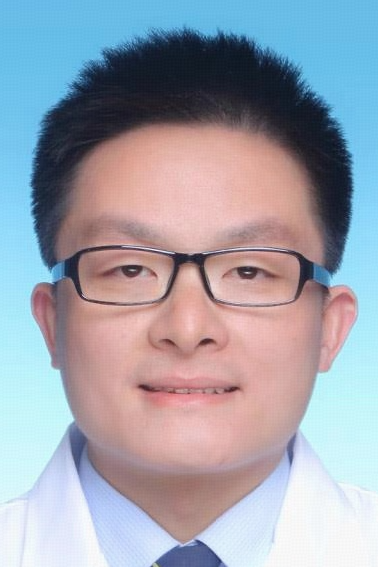 Haipeng Liu (刘海鹏)合作论文数School of Medicine, Tongji University;Shanghai Pulmonary Hospital1
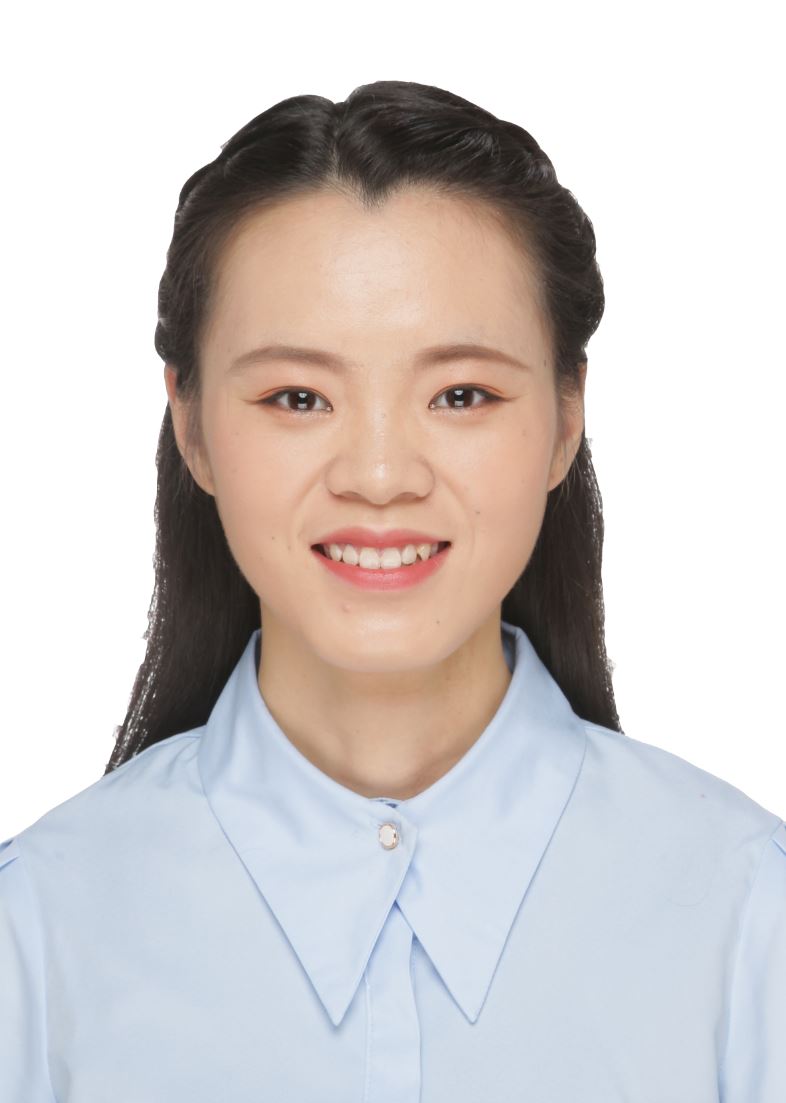 Fei Wang (王菲)合作论文数College of Animal Science and Technology, Northwest A&F University1
 Peng Wang (王鹏)合作论文数School of Ocean and Earth Science, Tongji University1
 Wei Sha (沙巍)合作论文数School of Medicine, Tongji University1
 Chang Chen (陈昶)合作论文数School of Medicine, Tongji University;Shanghai Pulmonary Hospital1Yuping Chen (陈玉平)合作论文数1
 Hua Yang (杨华)合作论文数School of Medicine, Tongji University;Shanghai Pulmonary Hospital Affiliated to Tongji University1
 Peng Zhang (张鹏)合作论文数Shanghai Pulmonary Hospital;school of medicine, Tongji University1
 Stefan H. E. Kaufmann合作论文数Medical Faculty, Humboldt University Berlin;Max-Planck-Institute for Infection Biology1
 Qin Sun (孙勤)合作论文数Department of Tuberculosis, Shanghai Pulmonary Hospital, Tongji University School of Medicine;School of Medicine, Tongji University1Jian-Xia Chen合作论文数1




