We present results over an 11-year Solar cycle of cosmic antiprotons based on 1.1×10^{6} events in the rigidity range from 1.00 to 41.9 GV. The p[over ¯] fluxes exhibit distinct properties. The magnitude of the p[over ¯] flux temporal variation is significantly smaller than those of p, e^{-}, and e^{+}. A hysteresis between the p[over ¯] fluxes and the p fluxes is observed, whereas the p[over ¯] and e^{-} fluxes show a linear correlation. With a model-independent analysis, we found a universal relation between the shape of the rigidity spectrum and the magnitude of flux temporal variation over an 11-year Solar cycle for both positively and negatively charged particles. The simultaneous results on p[over ¯] and p, e^{-}, and e^{+} provide unique information for understanding particle transport in the Solar System as a function of mass, charge, and spectral shape.
We report the properties of precision time structures of cosmic nuclei He, Li, Be, B, C, N, and O fluxes over an 11-year solar cycle from May 2011 to November 2022 in the rigidity range from 1.92 to 60.3 GV. The nuclei fluxes show similar but not identical time variations with amplitudes decreasing with increasing rigidity. In particular, below 3.64 GV the Li, Be, and B fluxes, and below 2.15 GV the C, N, and O fluxes, are significantly less affected by solar modulation than the He flux. We observe that these differences in solar modulation are linearly correlated with the differences in the spectral indices of the cosmic nuclei fluxes. This shows, in a model-independent way, that solar modulation of galactic cosmic nuclei depends on their spectral shape. In addition, solar modulation differences due to nuclei velocity dependence on the mass-to-charge ratio (A/Z) are not observed.
The photoionization and subsequent Auger decay of the 2s subshell in vapor phase potassium are investigated using multielectron coincidence spectroscopy with synchrotron radiation. This method, capable of detecting multiple particles simultaneously, enables a comprehensive description of all cascade decay paths of the K 2s vacancy. It establishes, at each step of the 2s cascade decay, whether the outer 4s electron is a spectator or participates in the decay. The study determines the populations of the cascade final state and the different ionization rates. Experimental findings are compared with theoretical predictions derived from the multiconfiguration Dirac-Fock approach and previous observations of cascade processes in argon, emphasizing differences attributed to the presence of an additional 4s electron. The research contributes to our understanding of the electronic structure of potassium and quantum mechanical transition processes.
We present the precision measurements of 11 years of daily cosmic electron fluxes in the rigidity interval from 1.00 to 41.9 GV based on 2.0×10^{8} electrons collected with the Alpha Magnetic Spectrometer (AMS) aboard the International Space Station. The electron fluxes exhibit variations on multiple timescales. Recurrent electron flux variations with periods of 27 days, 13.5 days, and 9 days are observed. We find that the electron fluxes show distinctly different time variations from the proton fluxes. Remarkably, a hysteresis between the electron flux and the proton flux is observed with a significance of greater than 6σ at rigidities below 8.5 GV. Furthermore, significant structures in the electron-proton hysteresis are observed corresponding to sharp structures in both fluxes. This continuous daily electron data provide unique input to the understanding of the charge sign dependence of cosmic rays over an 11-year solar cycle.
Ruddlesden-Popper and reduced Ruddlesden-Popper nickelates are intriguing candidates for mimicking the properties of high-temperature superconducting cuprates. The degree of similarity between these nickelates and cuprates has been the subject of considerable debate. Resonant inelastic x-ray scattering (RIXS) has played an important role in exploring their electronic and magnetic excitations, but these efforts have been stymied by inconsistencies between different samples and the lack of publicly available data for detailed comparison. To address this issue, we present open RIXS data on La4Ni3O10 and La4Ni3O8.
We present the precision measurement of 2824 daily helium fluxes in cosmic rays from May 20, 2011 to October 29, 2019 in the rigidity interval from 1.71 to 100 GV based on 7.6×10^{8} helium nuclei collected with the Alpha Magnetic Spectrometer (AMS) aboard the International Space Station. The helium flux and the helium to proton flux ratio exhibit variations on multiple timescales. In nearly all the time intervals from 2014 to 2018, we observed recurrent helium flux variations with a period of 27 days. Shorter periods of 9 days and 13.5 days are observed in 2016. The strength of all three periodicities changes with time and rigidity. In the entire time period, we found that below ∼7 GV the helium flux exhibits larger time variations than the proton flux, and above ∼7 GV the helium to proton flux ratio is time independent. Remarkably, below 2.4 GV a hysteresis between the helium to proton flux ratio and the helium flux was observed at greater than the 7σ level. This shows that at low rigidity the modulation of the helium to proton flux ratio is different before and after the solar maximum in 2014.
We present the precision measurement of the daily proton fluxes in cosmic rays from May 20, 2011 to October 29, 2019 (a total of 2824 days or 114 Bartels rotations) in the rigidity interval from 1 to 100 GV based on 5.5×10^{9} protons collected with the Alpha Magnetic Spectrometer aboard the International Space Station. The proton fluxes exhibit variations on multiple timescales. From 2014 to 2018, we observed recurrent flux variations with a period of 27 days. Shorter periods of 9 days and 13.5 days are observed in 2016. The strength of all three periodicities changes with time and rigidity. The rigidity dependence of the 27-day periodicity is different from the rigidity dependences of 9-day and 13.5-day periods. Unexpectedly, the strength of 9-day and 13.5-day periodicities increases with increasing rigidities up to ∼10 GV and ∼20 GV, respectively. Then the strength of the periodicities decreases with increasing rigidity up to 100 GV.
The discovery of superconductivity in a d^{9-δ} nickelate has inspired disparate theoretical perspectives regarding the essential physics of this class of materials. A key issue is the magnitude of the magnetic superexchange, which relates to whether cuprate-like high-temperature nickelate superconductivity could be realized. We address this question using Ni L-edge and O K-edge spectroscopy of the reduced d^{9-1/3} trilayer nickelates R_{4}Ni_{3}O_{8} (where R=La, Pr) and associated theoretical modeling. A magnon energy scale of ∼80 meV resulting from a nearest-neighbor magnetic exchange of J=69(4) meV is observed, proving that d^{9-δ} nickelates can host a large superexchange. This value, along with that of the Ni-O hybridization estimated from our O K-edge data, implies that trilayer nickelates represent an intermediate case between the infinite-layer nickelates and the cuprates. Layered nickelates thus provide a route to testing the relevance of superexchange to nickelate superconductivity.
We report the observation of new properties of primary iron (Fe) cosmic rays in the rigidity range 2.65 GV to 3.0 TV with 0.62×10^{6} iron nuclei collected by the Alpha Magnetic Spectrometer experiment on the International Space Station. Above 80.5 GV the rigidity dependence of the cosmic ray Fe flux is identical to the rigidity dependence of the primary cosmic ray He, C, and O fluxes, with the Fe/O flux ratio being constant at 0.155±0.006. This shows that unexpectedly Fe and He, C, and O belong to the same class of primary cosmic rays which is different from the primary cosmic rays Ne, Mg, and Si class.
This corrects the article DOI: 10.1103/PhysRevLett.127.021101.
The Alpha Magnetic Spectrometer (AMS) is a precision particle physics detector on the International Space Station (ISS) conducting a unique, long-duration mission of fundamental physics research in space. The physics objectives include the precise studies of the origin of dark matter, antimatter, and cosmic rays as well as the exploration of new phenomena. Following a 16-year period of construction and testing, and a precursor flight on the Space Shuttle, AMS was installed on the ISS on May 19, 2011. In this report we present results based on 120 billion charged cosmic ray events up to multi-TeV energies. This includes the fluxes of positrons, electrons, antiprotons, protons, and nuclei. These results provide unexpected information, which cannot be explained by the current theoretical models. The accuracy and characteristics of the data, simultaneously from many different types of cosmic rays, provide unique input to the understanding of origins, acceleration, and propagation of cosmic rays.
Betatron radiation based on laser-plasma accelerator has properties of collimated, ultrafast, small sources size, high brightness, and broad energy spectrum. These features make it suitable for many applications, such as phase-contrast imaging or X-ray absorption spectroscopy. In this paper, we present two methods to improve the photon energy and photon number of betatron radiation. As a result, high-brightness photon sources with high yield, adjustable photon energy range from hard X-ray to gamma ray and polarization were generated. The main reason for the enhancement is due to the accelerated electrons efficiently wiggling in a laser field.
We experimentally studied electron beams and synchrotron x-ray radiation generated from the interaction of high-intensity picosecond laser pulses of 1-3 x 10(19) W/cm(2) with underdense plasmas of 1-8 x 10(19) cm(-3). Electron beams with maximum energy over 120 MeV, hundreds mrad divergence and tens of nC charge were generated in the experiments. The measured x-ray spectra were fit well with a synchrotron radiation spectrum combination with a bremsstrahlung spectrum. When laser pulses with intensity of 2.38 x 10(19) W/cm(2) interacting with pure Nitrogen gas with density of 2.35 x 10(18) cm(-3), we obtained betatron x-ray radiation with critical energy 3-4 keV and photon number up to 10(13) photons/Sr per shot, the energy conversion efficiency is about 3 x 10(-5). The high photon yield and large energy conversion efficiency are due to large amounts of electrons trapped by self-modulated laser wakefield and mainly accelerated by direct-laser-acceleration mechanism. Such high yield betatron x-ray sources have widely application prospect as backlight or probe in large scale of laser facilities used for high energy density or fusion sciences.
We investigate the electronic structure of a two-dimensional electron gas created at the surface of the multivalley semimetal 1T-PtSe2. Using angle-resolved photoemission and first-principles-based surface space-charge calculations, we show how the induced quantum well sub-band states form multiple Fermi surfaces, which exhibit highly anisotropic Rashba-like spin splittings. We further show how the presence of both electronlike and holelike bulk carriers causes the near-surface band bending potential to develop an unusual nonmonotonic form, with spatially segregated electron accumulation and hole accumulation regions, which in turn amplifies the induced spin splitting. Our results thus demonstrate the novel environment that semimetals provide for tailoring electrostatically induced potential profiles and their corresponding quantum sub-band states.
The band inversions that generate the topologically non-trivial band gaps of topological insulators and the isolated Dirac touching points of three-dimensional Dirac semimetals generally arise from the crossings of electronic states derived from different orbital manifolds. Recently, the concept of single orbital-manifold band inversions occurring along high-symmetry lines has been demonstrated, stabilising multiple bulk and surface Dirac fermions. Here, we discuss the underlying ingredients necessary to achieve such phases, and discuss their existence within the family of transition metal dichalcogenides. We show how their three-dimensional band structures naturally produce only small kz projected band gaps, and demonstrate how these play a significant role in shaping the surface electronic structure of these materials. We demonstrate, through spin- and angle-resolved photoemission and density functional theory calculations, how the surface electronic structures of the group-X TMDs PtSe2 and PdTe2 are host to up to five distinct surface states, each with complex band dispersions and spin textures. Finally, we discuss how the origin of several recently-realised instances of topological phenomena in systems outside of the TMDs, including the iron-based superconductors, can be understood as a consequence of the same underlying mechanism driving kz-mediated band inversions in the TMDs.
We study the low-energy surface electronic structure of the transition-metal dichalcogenide superconductor PdTe2 by spin-and angle-resolved photoemission, scanning tunneling microscopy, and density-functional theory-based supercell calculations. Comparing PdTe2 with its sister compound PtSe2, we demonstrate how enhanced interlayer hopping in the Te-based material drives a band inversion within the antibonding p-orbital manifold well above the Fermi level. We show how this mediates spin-polarized topological surface states which form rich multivalley Fermi surfaces with complex spin textures. Scanning tunneling spectroscopy reveals type-II superconductivity at the surface, and moreover shows no evidence for an unconventional component of its superconducting order parameter, despite the presence of topological surface states.
We present the precision measurement from May 2011 to May 2017 (79 Bartels rotations) of the proton fluxes at rigidities from 1 to 60 GV and the helium fluxes from 1.9 to 60 GV based on a total of 1×10^{9} events collected with the Alpha Magnetic Spectrometer aboard the International Space Station. This measurement is in solar cycle 24, which has the solar maximum in April 2014. We observed that, below 40 GV, the proton flux and the helium flux show nearly identical fine structures in both time and relative amplitude. The amplitudes of the flux structures decrease with increasing rigidity and vanish above 40 GV. The amplitudes of the structures are reduced during the time period, which started one year after solar maximum, when the proton and helium fluxes steadily increase. Above ∼3 GV the p/He flux ratio is time independent. We observed that below ∼3 GV the ratio has a long-term decrease coinciding with the period during which the fluxes start to rise.
We report on the observation of new properties of secondary cosmic rays Li, Be, and B measured in the rigidity (momentum per unit charge) range 1.9 GV to 3.3 TV with a total of 5.4×10^{6} nuclei collected by AMS during the first five years of operation aboard the International Space Station. The Li and B fluxes have an identical rigidity dependence above 7 GV and all three fluxes have an identical rigidity dependence above 30 GV with the Li/Be flux ratio of 2.0±0.1. The three fluxes deviate from a single power law above 200 GV in an identical way. This behavior of secondary cosmic rays has also been observed in the AMS measurement of primary cosmic rays He, C, and O but the rigidity dependences of primary cosmic rays and of secondary cosmic rays are distinctly different. In particular, above 200 GV, the secondary cosmic rays harden more than the primary cosmic rays.
The nature of the magnetic order in (La2/3Sr1/3MnO3)9/(LaNiO3)3 superlattices is investigated using x-ray resonant magnetic reflectometry. We observe a new c-axis magnetic helix state in the (LaNiO3)3 layers that had never been reported in nickelates, and which mediates the ~130deg magnetic coupling between the ferromagnetic (La2/3Sr1/3MnO3)9 layers, illustrating the power of x-rays for discovering the magnetic state of complex oxide interfaces. Resonant inelastic x-ray scattering and x-ray absorption spectroscopy show that Ni-O ligand hole states from bulk LaNiO3 are mostly filled due to interfacial electron transfer from Mn, driving the Ni orbitals closer to an atomic-like 3d8 configuration. We discuss the constraints imposed by this electronic configuration to the microscopic origin of the observed magnetic structure. The presence of a magnetic helix in (La2/3Sr1/3MnO3)9/(LaNiO3)3 is crucial for modeling the potential spintronic functionality of this system and may be important for designing emergent magnetism in novel devices in general.
G. Fabbris, 2, ∗ N. Jaouen, D. Meyers, J. Feng, J. D. Hoffman, 6 R. Sutarto, S. G. Chiuzbăian, 3 A. Bhattacharya, 6 and M. P. M. Dean † Department of Condensed Matter Physics and Materials Science, Brookhaven National Laboratory, Upton, New York 11973, USA Advanced Photon Source, Argonne National Laboratory, Argonne, Illinois 60439, USA Synchrotron SOLEIL, L’Orme des Merisiers, Saint-Aubin, BP 48, 91192 Gif-sur-Yvette, France Sorbonne Universités, UPMC Univ. Paris 06, UMR 7614, Laboratoire de Chimie Physique-Matière et Rayonnement, 11 rue Pierre et Marie Curie, F-75005 Paris, France Materials Science Division, Argonne National Laboratory, Argonne, Illinois 60439, USA Nanoscience and Technology Division, Argonne National Laboratory, Argonne, Illinois 60439, USA Canadian Light Source, University of Saskatchewan, Saskatoon, Saskatchewan S7N 2V3, Canada (Dated: October 9, 2018)
 Z. M. Zheng合作论文数17Bruna Bertucci合作论文数17S. Haino合作论文数17
 Pier Giorgio Rancoita合作论文数17
 Andrea Contin合作论文数17V. Bindi合作论文数17N. Masi合作论文数17F. Barao合作论文数17B. S. Shan合作论文数17S. Pensotti合作论文数17P. Mott合作论文数17A. Eline合作论文数17
 Francesco Dimiccoli合作论文数17L. Derome合作论文数17C. H. Chung合作论文数17K. Bollweg合作论文数17L. Barrin合作论文数17
 F. Nozzoli合作论文数17
 Paolo Zuccon合作论文数17O Kounina合作论文数17Honglin Zhuang合作论文数17
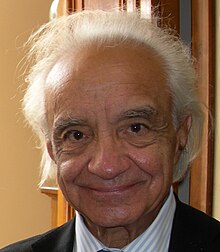 Antonino Zichichi合作论文数University of Bologna17
 Valery Zhukov合作论文数RWTH Aachen University17
 M. Aguilar合作论文数Hospital Universitario Virgen Macarena17H Jinchi合作论文数17E. Valente合作论文数17V Choutko合作论文数MIT17H. Y. Chou合作论文数17A Kounine合作论文数17Z Cui合作论文数17J Gong合作论文数17
 Alberto Oliva合作论文数Lab Nazl Sud, Ist Nazl Fis Nucl17
 Carlos Delgado合作论文数17
 Mercedes Paniccia合作论文数17Vagelli V合作论文数17
 Orcinha M合作论文数Laboratório de Instrumentação e Física Experimental de Partículas, (LIP), P-1000 Lisboa, Portugal.17Graziani M合作论文数17Della Torre S合作论文数INFN Sezione di Milano-Bicocca17
 Corti C合作论文数Physics and Astronomy Department, University of Hawaii17Vladimir Koutsenko合作论文数17Emanuele Fiandrini合作论文数Humboldt University17Guy G. Coignet合作论文数17Mauro Tacconi合作论文数Istituto Nazionale di Fisica Nucleare17S. Di Falco合作论文数17
 Giovanni Ambrosi合作论文数Dipartimento di Fisica e Geologia, Università degli Studi di Perugia;Istituto Nazionale di Fisica Nucleare Sezione di Perugia17M. Capell合作论文数17
 Ignazio Lazzizzera合作论文数Trento University;Trento Institute for Fundamental Physics and Applications17
 Eun-Suk Seo合作论文数Department of Physics, College of Computer, Mathematical & Natural Sciences, University of Maryland17
 Stefan Schael合作论文数I. Physics Institute and JARA-FAME, RWTH Aachen University17




