Describe patient characteristics in African American (AA) women seen for gynecologic cancer related genetic counseling at a large southeastern comprehensive cancer center.We reviewed an IRB approved, prospective observational cohort of patients from a Gynecologic Cancer Risk Assessment Clinic. Data evaluated included personal cancer history, family history, frequency of genetic testing, frequency/type of genetic mutations, and frequency of surgical intervention. Standard statistical statistics were utilized.1227 patients were evaluated from 2003 to 2015, of which 95 (7.7%) were AA. Sixteen patients had a personal history of ovarian cancer. 21 women (22%) underwent genetic counseling only; subsequent genetic testing was not recommended based on absence of risk factors. Of the seventy-four AA patients in whom genetic testing was recommended, sixty-six (69.5%) completed testing. Of women tested, 37 (56%) had abnormal results. Eight and 14 patients had pathogenic variants in BRCA1 and BRCA2, respectively. Two were found to have pathogenic PALB2 variants; one had a pathogenic ATM variant and one constitutional MLH1 epimutation case was identified. Eleven had BRCA variants of uncertain significance. Of the patients with abnormal testing, six of 22 women with pathogenic BRCA variants underwent risk-reducing salpingo-oophorectomy (RRSO).Our study demonstrates that in a region where AAs represent 27% of the population, the proportion of AA patients referred to a Gynecologic Cancer Risk Assessment Clinic remains low. Pathogenic variant and variant of uncertain significance rates were high in patients tested, likely representing a selection bias of high-risk patients. Endeavors should continue to identify minorities at risk for ovarian cancer and institute measures to provide thorough genetic counseling and testing.
Introduction Minimal residual disease (MRD) measured by multi-color flow cytometry has been associated with an increased risk of relapse in patients with acute myeloid leukemia (AML). There is also a strong interest in using somatic mutation as an MRD marker and persistence of NPM1 mutation after 2 cycles of induction therapy has been shown to increase the risk of relapse in AML (Ivey et al, NEJM 2016). However, only one third of AML patients carry NPM1 mutation and prognostic impact of persistent mutations in the context of other co-occurring mutations and association with flow cytometry measured MRD is not well understood. Methods We studied 95 patients with previously untreated AML who received frontline induction chemotherapy and subsequently achieved complete remission (CR). Paired bone marrow samples obtained at pre-treatment and CR (median day 31) were analyzed by targeted capture exome sequencing of 295 genes (median 309x coverage). Mutect and Pindel was used to call single nucleotide variants (SNVs) and small indels, respectively. We defined two levels of mutation clearance (MC) based on the variant allele frequency (VAF) of the detected mutations at CR: 1) MC2.5, if persistent mutation with VAF Results Of 95 patients, 49 (52%) were male and 46 (48%) were female. The median age was 53 (range: 17-76). Conventional karyotyping showed one (1%) patient with favorable cytogenetics (CG), 70 (74%) with intermediate CG, and 21 (22%) with adverse CG (all defined by ELN criteria). Eighty nine (94%) patients had de novo AML and 6 (6%) had secondary AML. Thirty-nine (41%) patients underwent allogeneic stem cell transplant in first CR. In the pre-treatment samples of 95 AML patients, we detected 299 high-confidence somatic mutations (192 SNVs and 107 indels) in 60 genes in 85 (89%) patients. The most frequently mutated genes were NPM1 (31%) followed by DNMT3A (29%), FLT3 (18%), and IDH2 (18%). In the matching CR samples, 84 (28%) and 108 (36%) mutations persisted at the level of VAF ≥2.5% and ≥1%, respectively, which corresponded to 41 (48%) and 31 (36%) patients achieving MC2.5 and MC1.0, respectively. Pattern of MC was distinct between mutated genes and affected molecular pathways (Table1). Mutations associated with clonal hematopoiesis of indeterminate potential (CHIP), DNA methylation, and splicing had low rate of MC, whereas mutations in transcription factor genes or receptor tyrosine kinase (RTK) pathway had high rate of MC. With the median follow-up of 41 months (95% CI: 39-47), patients who achieved MC1.0 had significantly better RFS, EFS, OS and lower CIR than those without MC1.0, while there was no significant difference in any of the above outcomes by MC2.5 (Table 2). Flow cytometry-based MRD (flow-MRD) data were available in 92 (97%) patients at CR. Positive flow-MRD was associated with significantly worse RFS, EFS, OS and CIR (Table2). Among 61 patients with negative flow-MRD, 25 (41%) and 32 (52%) had persistent mutations with VAF ≥2.5% and ≥1%, respectively. Multivariable analysis considering mutations that were prognostic in univariable analysis (NPM1, IDH1), age, ELN-defined adverse cytogenetics, flow-MRD and MC revealed that MC1.0 was a significant prognostic factor for RFS (p = 0.03, HR 0.36, 95%CI: 0.14-0.91) and CIR (p = 0.03, HR 0.42, 95%CI: 0.19-0.92). MC1.0 in DNA methylation (2-year EFS: 85% (95% CI: 51-96) in MC1.0 vs. 40% (95% CI: 23-56) in non-MC1.0, p = 0.01; 2-year OS: 85% (95% CI: 51-96) in MC1.0 vs. 58% (95% CI: 39-72) in non-MC1.0, p = 0.03) or in chromatin-cohesin pathways (2-year EFS: 73% (95% CI: 37-90) in MC1.0 vs. 15% (95% CI: 3-39) in non-MC1.0, p Conclusion In patients with AML treated with induction chemotherapy, persistent somatic mutation at CR with VAF >1% was associated with increased risk of death and relapse. Assessment of both mutation clearance and flow-based MRD at CR may help further risk stratification of AML. Download : Download high-res image (138KB) Download : Download full-size image Disclosures Daver: Immunogen: Research Funding; Kiromic: Research Funding; Bristol-Myers Squibb Company: Consultancy, Research Funding; Karyopharm: Consultancy, Research Funding; Incyte Corporation: Honoraria, Research Funding; Novartis Pharmaceuticals Corporation: Consultancy; Otsuka America Pharmaceutical, Inc.: Consultancy; Sunesis Pharmaceuticals, Inc.: Consultancy, Research Funding; Daiichi-Sankyo: Research Funding; Jazz: Consultancy; Pfizer Inc.: Consultancy, Research Funding. Cortes: ARIAD: Consultancy, Research Funding; Pfizer: Consultancy, Research Funding; Teva: Research Funding; Novartis Pharmaceuticals Corporation: Consultancy, Research Funding; ImmunoGen: Consultancy, Research Funding; Sun Pharma: Research Funding; BMS: Consultancy, Research Funding. Jabbour: Bristol-Myers Squibb: Consultancy. Kantarjian: Bristol-Meyers Squibb: Research Funding; ARIAD: Research Funding; Delta-Fly Pharma: Research Funding; Pfizer: Research Funding; Amgen: Research Funding; Novartis: Research Funding. Takahashi: Symbio Pharmaceuticals: Consultancy.
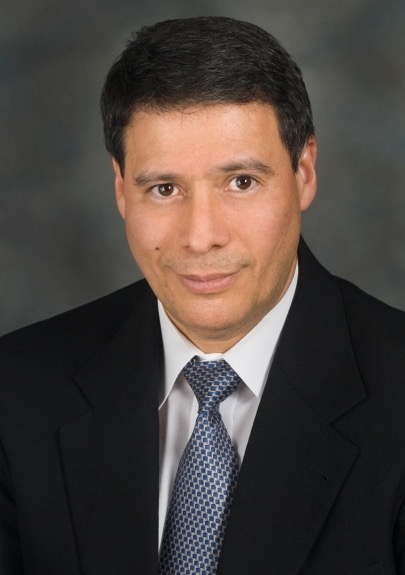 Carlos E. Bueso-Ramos合作论文数Bone Marrow Laboratory, Department of Hematopathology, The University of Texas MD Anderson Cancer Center;Division of Pathology/Lab Medicine, The University of Texas MD Anderson Cancer Center6
 Patel Krish合作论文数5
 Curtis Gumbs合作论文数5
 Marina Konopleva合作论文数Department of Oncology, Albert Einstein College of Medicine;Department of Molecular Pharmacology, Albert Einstein College of Medicine4
 Andy Futreal合作论文数Department of Genomic Medicine, Division of Cancer Medicine, The University of Texas MD Anderson Cancer Center4K. Takahashi合作论文数3
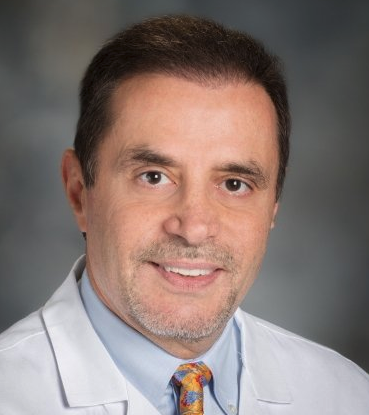 Hagop M. Kantarjian合作论文数Department of Leukemia, Division of Cancer Medicine, The University of Texas MD Anderson Cancer Center3
 Guillermo Garcia-Manero合作论文数Section of Myelodysplastic Syndromes, Department of Leukemia, Division of Cancer Medicine, The University of Texas MD Anderson Cancer Center;UTHealth Houston Graduate School of Biomedical Sciences3
 Elias Jabbour合作论文数Department of Leukemia, Division of Cancer Medicine, MD Anderson Cancer Center, University of Texas3Latasha Little合作论文数3
 Naval G. Daver合作论文数Department of Leukemia, Division of Cancer Medicine, The University of Texas MD Anderson Cancer Center3J. Zhang合作论文数2T. Kadia合作论文数2F. Ravandi合作论文数2
 Ghayas C Issa合作论文数2
 Michael Andreeff合作论文数Department of Leukemia, Division of Cancer Medicine, The University of Texas MD Anderson Cancer Center;Bone Marrow Aspiration Clinic, Department of Hematology, The University of Texas MD Anderson Cancer Center2
 Ana Alfonso Pierola合作论文数Clinica Universidad de Navarra1W. Wierda合作论文数1G. Borthakur合作论文数1Samantha Tippen合作论文数Univ Texas MD Anderson Canc Ctr, Dept Genom Med, Houston, TX 77030 USA1
 Irene Ganan-Gomez合作论文数MD Anderson Cancer Center, The University of Texas1Marcus Coyle合作论文数Univ Texas MD Anderson Canc Ctr, Dept Genom Med, Houston, TX 77030 USA1E. Kim合作论文数1Rebecca Thornton合作论文数Univ Texas MD Anderson Canc Ctr, Dept Genom Med, Houston, TX 77030 USA1Xuelin Huang合作论文数1
 Keyur Patel合作论文数Institute of Medical Science, Temerty Faculty of Medicine, University of Toronto1
 Courtney DiNardo合作论文数Department of Leukemia, The University of Texas MD Anderson Cancer Center1Xingzhi Song合作论文数1
 Jan Burger合作论文数Department of Leukemia, Division of Cancer Medicine, The University of Texas MD Anderson Cancer Center;Graduate School of Biomedical Sciences, University of Texas-Houston Health Science Center;School of Medicine, Albert-Ludwigs University1
 Michael J. Keating合作论文数University of Texas MD Anderson Cancer Center1
 Philip A. Thompson合作论文数Sir Peter MacCallum Department of Oncology, University of Melbourne;Royal Melbourne Hospital;The Peter MacCallum Cancer Centre1
 Naveen Pemmaraju合作论文数Department of Leukemia, The University of Texas MD Anderson Cancer Center1Jianhua Zhang合作论文数1Benton Christopher B合作论文数Division of Cancer Medicine, The University of Texas MD Anderson Cancer Center1
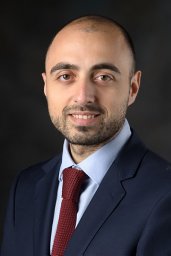 Strati Paolo合作论文数Department of Leukemia, The University of Texas MD Anderson Cancer Center1Morita Kiyomi合作论文数1Alessandra Ferrajoli合作论文数1
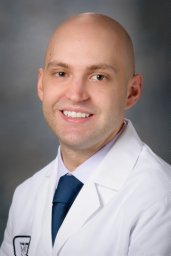 Nicholas Short合作论文数Department of Cellular and Structural Biology, University of Texas Health Science Center at San Antonio1
 Graciela M Nogueras Gonzalez合作论文数MD Anderson Cancer Center1
 Koichi Takahashi合作论文数1
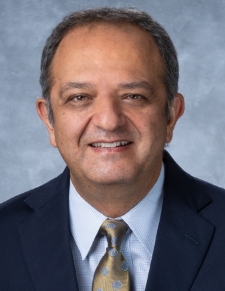 Farhad Ravandi-Kashani合作论文数Section of Developmental Therapeutics, Department of Leukemia, The University of Texas MD Anderson Cancer Center;Division of Cancer Medicine, The University of Texas MD Anderson Cancer Center1
 Tapan M. Kadia合作论文数Department of Leukemia, Division of Cancer Medicine, M.D. Anderson Cancer Center1
 Kim-Anh Do合作论文数Department of Biostatistics, Division of VP, Research, The University of Texas MD Anderson Cancer Center;Department of Statistics, Rice University;Department of Statistics, Texas A&M University1




