This paper explores the complex behavior of advanced persistent threat (APT) attacks, characterized by a dual threat: the sophisticated manipulation of adversarial disturbance inputs and the exacerbation of system vulnerabilities due to environmental uncertainties. To address these security concerns in large-scale multi-agent industrial cyber-physical systems (CPSs), we develop a decentralized control framework using mean-field game (MFG) theory with multiplicative noise in the dynamics. Our approach effectively tackles the scalability challenges inherent in large-scale environments while countering both intelligent adversarial disturbances and operational uncertainties. By designing resilient and robust decentralized controllers, we ensure system stability and convergence, even under worst-case disturbance inputs. We prove that the mean-field approximation accurately captures the system's collective behavior, and the proposed decentralized controllers achieve & varepsilon; -Nash equilibrium. Numerical experiments, inspired by the Ukraine power grid attack, demonstrate the effectiveness of the proposed control strategy.
Small Language Models (SLMs) are increasingly deployed in resource-constrained, privacy-sensitive settings, where safety and bias failures can cause security and societal risks. However, existing AI safetysecuritycompliance benchmarks are designed for large language models that may not transfer reliably to SLMs. We therefore ask: Can these benchmarks effectively and reliably evaluate SLMs? To answer this question, we conduct a large-scale assessment of the effectiveness and robustness of these automated pipelines by evaluating five widely used benchmark suites across 26 open-source SLMs under a unified judging rubric, which assigns a score of 0, 1, or 0.5 to harmful, safe, or ambiguous/irrelevant responses, respectively. Across the benchmarks, ambiguous judgments dominate and correlate with prompt complexity and model architecture, indicating that LLM-centric safety benchmarks are insufficient as standalone evidence for SLM safety assessment. In general, the ambiguity rate increases with lexical density, output perplexity, and output length and decreases with lexical sophistication, self-coherence, and reply-prompt similarity. This reveals a capability-safety confound that mixes model capability with apparent safety. Since ambiguity is prevalent, aggregate mean-score leaderboards are mathematically brittle: model rankings change significantly under reasonable ambiguity treatments, even when the underlying outputs remain unchanged.
Deepfakes, especially face-swapping attacks, pose significant challenges to authenticity, security, and ethics across science, engineering, and society. While most existing detection/tracing approaches operate post hoc, proactive defenses that aim to intervene before deepfake generation remain limited in terms of real-world effectiveness. In this paper, we present PhantomSeal, the first proactive defense to simultaneously protect both the identity and the context of users' images from being used in face-swapping attacks, while supporting forensic tracing. We present a novel cloaking technique that embeds a selected identity as a stealthy identifier. This mechanism steers the deepfake generation process toward producing content that resembles the chosen cloak identity, thereby preventing successful face-swapping while enabling effective feature-based forensic analysis. The effectiveness and robustness of PhantomSeal is demonstrated in extensive experiments across different face-swapping architectures and models. For example, it reduces the attack success rate of SimSwap, an advanced deepfake model, to 0.30
The widespread adoption of IoT devices and applications in smart homes has transformed the way we engage with our living environments. While enabling seamless automation and intelligent functionalities, interactions between different IoT applications, typically through trigger-condition-action (TCA) rules, may introduce new interaction threats due to rule conflicts, which sometimes lead to severe security and safety risks. However, existing detection and defense approaches often tackle specific threat categories in isolation, thereby failing to deliver a holistic perspective and robust, comprehensive protection. In this paper, we present InteractionShield, a novel framework that systematically detects and resolves rule conflicts by leveraging a logic analysis model based on event relations. The InteractionShield framework formalizes event relationships, detects event interferences, and classifies rule conflicts. It generates risk scores and conflict rankings to enable comprehensive conflict detection and risk assessment. To address the identified interaction threats, an optimization-based approach is employed to mitigate risks while maintaining system functionality. Evaluated on large-scale real-world IoT datasets, InteractionShield effectively enhances system reliability, offering a robust solution for detecting and resolving rule conflicts in smart environments.
This paper presents a novel cyber-physical attack paradigm, termed the Dual State-Space Fidelity Blade (D-STAB), which targets the firmware of core cyber-physical components as a new class of attack surfaces. The D-STAB attack exploits the information asymmetry caused by the fidelity gap between high-fidelity and low-fidelity physical models in cyber-physical systems. By designing precise adversarial constraints based on high-fidelity state-space information, the attack induces deviations in high-fidelity states that remain undetected by defenders relying on low-fidelity observations. The effectiveness of D-STAB is demonstrated through a case study in cyber-physical battery systems, specifically in an optimal charging task governed by a Battery Management System (BMS).
Recently, a series of vulnerabilities occurred to divulge or forge single sign-on tickets, such as the famous SolarWinds incident Once malicious attackers obtain fraudulent tickets, they can pry into user privacy as well as compromise the system by impersonating the victim user. Inspired by certificate transparency, a ticket transparency (TT) framework for detecting fraudulent tickets is proposed. However, it suffers from inefficiency and potential failure. In this paper, we further propose an enhanced ticket transparency (eTT) scheme, which ensures that all fraudulent tickets can be detected efficiently through a novel dual-backup structure to store ticket entries in the public log. Meanwhile, we design specific calculations for pairwise pseudonymous identifiers (PPIDs), to support fraudulent-detection towards tickets in which user identifiers are pseudonyms. We implemented the prototype system, and the experimental evaluation shows that eTT framework introduces acceptable overheads in the sign-on process.
Voice assistants (VAs), such as Amazon Alexa, are integrated with numerous smart home devices to process user requests using apps called skills. With their growing popularity, VAs also pose serious privacy concerns. Sensitive user data captured by VAs may be transmitted to third-party skills without users’ consent or knowledge about how their data is handled. Privacy policies are a standard medium to inform the users of the skills’ data practices. However, privacy policy compliance verification of such skills is challenging, since the source code is controlled by the skill developers, who can make arbitrary changes to the behaviors of the skill without being audited; hence, conventional defense mechanisms using static/dynamic code analysis can be easily evaded. In this paper, we present Eunomia, the first real-time privacy compliance firewall for Alexa skills. As the skills interact with the users, Eunomia hijacks and examines their communications from the skills to the users, and validates them against the published privacy policies that are parsed using a BERT-based policy analysis module. When non-compliant skill behaviors are detected, Eunomia stops the interaction and warns the user about the non-compliance. We evaluate Eunomia with 55,898 skills on Amazon skills store to demonstrate its effectiveness and to provide a privacy compliance landscape of Alexa skills.
With ChatGPT under the spotlight, utilizing large language models (LLMs) to assist academic writing has drawn a significant amount of debate in the community. In this paper, we aim to present a comprehensive study of the detectability of ChatGPT-generated content within the academic literature, particularly focusing on the abstracts of scientific papers, to offer holistic support for the future development of LLM applications and policies in academia. Specifically, we first present GPABench2, a benchmarking dataset of over 2.8 million comparative samples of human-written, GPT-written, GPT-completed, and GPT-polished abstracts of scientific writing in computer science, physics, and humanities and social sciences. Second, we explore the methodology for detecting ChatGPT content. We start by examining the unsatisfactory performance of existing ChatGPT detecting tools and the challenges faced by human evaluators (including more than 240 researchers or students). We then test the hand-crafted linguistic features models as a baseline and develop a deep neural framework named CheckGPT to better capture the subtle and deep semantic and linguistic patterns in ChatGPT written literature. Last, we conduct comprehensive experiments to validate the proposed CheckGPT framework in each benchmarking task over different disciplines. To evaluate the detectability of ChatGPT content, we conduct extensive experiments on the transferability, prompt engineering, and robustness of CheckGPT.
Face recognition systems have been targeted by recent physical adversarial machine learning attacks, which attach or project visible patterns on adversaries' faces to trick backend FR models. While these attacks have demonstrated effectiveness in the literature, they often rely on visibly suspicious patterns, are susceptible to environmental noise, or exhibit limited success rates in practice. In this paper, we propose a novel physical adversarial attack against deep face recognition systems, namely Agile (adversarial glasses with infrared laser). It generates adjustable, invisible laser perturbations and emits them into the camera CMOS to launch dodging and impersonation attacks against facial biometrics systems. To do so, we first theoretically model physical adversarial perturbations and convert them to the digital domain. The generated synthesized attack signals are utilized to guide real-world laser settings. Our experiments with real-world attackers and a benchmark face database show that Agile is highly effective in DoS, dodging, and impersonation attacks. More importantly, the candidate impersonation target and optimal attack settings identified by Agile's attack synthesis approach are highly consistent with real-world physical attack results. The grey-box and black-box evaluation against commercial FR models also confirms the effectiveness of the Agile attack.
The certificate transparency (CT) framework has been deployed to improve the accountability of the TLS certificate ecosystem.However, the current implementation of CT does not enforce or guarantee the correct behavior of third-party monitors, which are essential components of the CT framework, and raises security and reliability concerns.For example, recent studies [32], [33] reported that 5 popular third-party CT monitors cannot always return the complete set of certificates inquired by users, which fundamentally impairs the protection that CT aims to offer.This work revisits the CT design and proposes an additional component of the CT framework, CT watchers.A watcher acts as an inspector of third-party CT monitors to detect any misbehavior by inspecting the certificate search services of a third-party monitor and detecting any inconsistent results returned by multiple monitors.It also semi-automatically analyzes potential causes of the inconsistency, e.g., a monitor's misconfiguration, implementation flaws, etc.We implemented a prototype of the CT watcher and conducted a 52-day trial operation and several confirmation experiments involving 8.26M unique certificates of about 6,000 domains.From the results returned by 6 active thirdparty monitors in the wild, the prototype detected 14 potential design or implementation issues of these monitors, demonstrating its effectiveness in public inspections on third-party monitors and the potential to improve the overall reliability of CT.We revisit the CT framework design and propose a new component, called watchers, to inspect third-party monitor services.Similar to CT auditors that are tasked with detecting misbehavior on the logs, watchers are expected to detect misbehavior on third-party monitors, including faulty services and malicious actions.The watchers enable public inspections on third-party monitors and their certificate search services,
Generative AI models can produce high-quality images based on text prompts. The generated images often appear indistinguishable from images generated by conventional optical photography devices or created by human artists (i.e., real images). While the outstanding performance of such generative models is generally well received, security concerns arise. For instance, such image generators could be used to facilitate fraud or scam schemes, generate and spread misinformation, or produce fabricated artworks. In this paper, we present a systematic attempt at understanding and detecting AI-generated images (AI-art) in adversarial scenarios. First, we collect and share a dataset of real images and their corresponding artificial counterparts generated by four popular AI image generators. The dataset, named ARIA, contains over 140K images in five categories: artworks (painting), social media images, news photos, disaster scenes, and anime pictures. This dataset can be used as a foundation to support future research on adversarial AI-art. Next, we present a user study that employs the ARIA dataset to evaluate if real-world users can distinguish with or without reference images. In a benchmarking study, we further evaluate if state-of-the-art open-source and commercial AI image detectors can effectively identify the images in the ARIA dataset. Finally, we present a ResNet-50 classifier and evaluate its accuracy and transferability on the ARIA dataset. The ARIA dataset and the project source code are shared at: https://github.com/AdvAIArtProject/AdvAIArt .
In the swift evolution of Cyber-Physical Systems (CPSs) within intelligent environments, especially in the industrial domain shaped by Industry 4.0, the surge in development brings forth unprecedented security challenges. This paper explores the intricate security issues of Industrial CPSs (ICPSs), with a specific focus on the unique threats presented by intelligent attackers capable of directly compromising the controller, thereby posing a direct risk to physical security. Within the framework of hierarchical control and incentive feedback Stackelberg game, we design a resilient leading controller (leader) that is adaptive to a compromised following controller (follower) such that the compromised follower acts cooperatively with the leader, aligning its strategies with the leader's objective to achieve a team-optimal solution. First, we provide sufficient conditions for the existence of an incentive Stackelberg solution when system dynamics are known. Then, we propose a Q-learning-based Approximate Dynamic Programming (ADP) approach for the online resolution of the incentive Stackelberg solution without requiring prior knowledge of system dynamics. Last but not least, we prove the convergence of our approach to the optimum.
In the past decade, we have witnessed an exponential growth of deep learning models, platforms, and applications. While existing DL applications and Machine Learning as a service (MLaaS) frameworks assume fully trusted models, the need for privacy-preserving DNN evaluation arises. In a secure multi-party computation scenario, both the model and the data are considered proprietary, i.e., the model owner does not want to reveal the highly valuable DL model to the user, while the user does not wish to disclose their private data samples either. Conventional privacy-preserving deep learning solutions ask the users to send encrypted samples to the model owners, who must handle the heavy lifting of ciphertext-domain computation with homomorphic encryption. In this paper, we present a novel solution, namely, PrivDNN, which (1) offloads the computation to the user side by sharing an encrypted deep learning model with them, (2) significantly improves the efficiency of DNN evaluation using partial DNN encryption, (3) ensures model accuracy and model privacy using a core neuron selection and encryption scheme. Experimental results show that PrivDNN reduces privacy-preserving DNN inference time and memory requirement by up to 97% while maintaining model performance and privacy. Codes can be found at https://github.com/LiangqinRen/PrivDNN
Automotive companion apps are mobile apps designed to remotely connect with cars to provide features such as diagnostics, logging, navigation, and safety alerts. Specifically, onboard diagnostics (OBD) based mobile applications directly communicate with the in-vehicle network through the OBD device. This can lead to several security issues, for instance, onboard information of vehicles can be tracked or altered through a malicious or vulnerable app. We conduct a comprehensive measurement study including static, runtime, and network traffic analysis of OBD companion apps. Our analysis has been applied to 125 Android mobile applications available on the Google Play Store. We identify a set of vulnerabilities and further validate these vulnerabilities with real-world vehicles. We show that 70
Detecting and segmenting polyps is crucial for expediting the diagnosis of colon cancer. This is a challenging task due to the large variations of polyps in color, texture, and lighting conditions, along with subtle differences between the polyp and its surrounding area. Recently, vision Transformers have shown robust abilities in modeling global context for polyp segmentation. However, they face two major limitations: the inability to learn local relations among multi-level layers and inadequate feature aggregation in the decoder. To address these issues, we propose a novel decoder architecture aimed at hierarchically aggregating locally enhanced multi-level dense features. Specifically, we introduce a novel module named Dense Attention Gate (DAG), which adaptively fuses all previous layers' features to establish local feature relations among all layers. Furthermore, we propose a novel nested decoder architecture that hierarchically aggregates decoder features, thereby enhancing semantic features. We incorporate our novel dense decoder with the PVT backbone network and conduct evaluations on five polyp segmentation datasets: Kvasir, CVC-300, CVC-ColonDB, CVC-ClinicDB, and ETIS. Our experiments and comparisons with nine competing segmentation models demonstrate that the proposed architecture achieves state-of-the-art performance and outperforms the previous models on four datasets. The source code is available at: https://github.com/krushi1992/Dense-Decoder.
Nowadays, the emerging digital technologies and digitalization trend in safety‐critical industrial process systems are bringing great opportunities for system performance improvements. However, new big challenges are also encountered in the reliability and safety evaluation of large complex industrial process systems due to its multi‐state, multi‐phase dynamic interactions, resilience on software and inter‐dependencies among digital components. The objectives of this study are i) to present an introductory overview of a hybrid computing framework as a supplementary to conventional fault tree analysis toolkit for risk‐oriented reliability analysis in dynamic probabilistic safety assessment context; ii) to illustrate how to combine the three methods of DDET, Markov/CCMT, and GO‐FLOW for integrated risk solutions by a case study of small‐break LOCA in nuclear power plants. Within the hybrid computing framework, the DDET model is implemented based on graph‐based search and sequence diagram refactoring by linking with Markov/CCMT and GO‐FLOW solver for branch probability estimation. The dynamic event tree model is adopted to represent the accident sequence of small‐break LOCA, where the heading events of system failure of digital RPS and phased‐mission ECCS in realization of safety‐critical functions of reactivity control and emergency core cooling are respectively modeled and analyzed by Markov chain and GO‐FLOW method. The demonstration results show that the failure analysis of complex dynamic process interactions together with time‐dependent mission reliability analysis of safety systems involved in accident prevention and mitigation can be easily implemented with accurate modeling and fast evaluation within the hybrid integration platform. The core algorithms and principles implemented for dynamic risk scenarios development by DDET, modeling, and analysis of dynamic process interactions by Markov/CCMT, time‐dependent and multi‐phase mission reliability analysis by GO‐FLOW as well as their integration to provide comprehensive solutions for the application of dynamic reliability in risk assessment are also discussed as open problems for future research.
A well-organized SmartApps dataset provides a valuable resource for researchers to evaluate their work on smart home automation systems. The IoTBench dataset created by Celik et al. 1 is a significant contribution to the IoT research community [1]. However, due to the fast growth of SmartApps and the retirement of some old apps, the IoTBench dataset becomes outdated. The research community is in need of a new large-scale and carefully cleaned benchmarking dataset. In this poster, we present a new repository, namely, SmartAppZoo, which contains 3,526 SmartApps collected from GitHub repositories, including 184 SmartThings official apps, 468 third-party apps from IoTBench, and 2,874 new third-party apps. SmartAppZoo is a manually-verified, comprehensive, clean, and diverse IoT benchmarking dataset. SmartAppZoo is available at: https://github.com/SmartAppZoo/SmartAppZoo.
Ethics is an important criterion for security research. This work presents the current status and trends that security researchers have taken to address ethical concerns in their studies from a data perspective. In particular, we created a dataset of 3,756 papers published in three top-tier conferences between 2010 and 2022, among which 963 papers were identified with ethical concerns. With this dataset, we provided answers to three questions regarding the current practices and trends : (1) What is the landscape of ethical considerations in security research? For example, how many security research projects have raised ethical concerns in their studies, and which research areas are likely to cause ethical risks and concerns? (2) What are the current practices to address these ethical risks? And (3) What are the important factors impacting the ethical awareness of researchers?
The critical challenge of single image inpainting stems from accurate semantic inference via limited information while maintaining image quality. Typical methods for semantic image inpainting train an encoder-decoder network by learning a one-to-one mapping from the corrupted image to the inpainted version. While such methods perform well on images with small corrupted regions, it is challenging for these methods to deal with images with large corrupted area due to two potential limitations. 1) Such one-to-one mapping paradigm tends to overfit each single training pair of images; 2) The inter-image prior knowledge about the general distribution patterns of visual semantics, which can be transferred across images sharing similar semantics, is not explicitly exploited. In this paper, we propose the Generative Memory-guided Semantic Reasoning Model (GM-SRM), which infers the content of corrupted regions based on not only the known regions of the corrupted image, but also the learned inter-image reasoning priors characterizing the generalizable semantic distribution patterns between similar images. In particular, the proposed GM-SRM first pre-learns a generative memory from the whole training data to explicitly learn the distribution of different semantic patterns. Then the learned memory are leveraged to retrieve the matching semantics for the current corrupted image to perform semantic reasoning during image inpainting. While the encoder-decoder network is used for guaranteeing the pixel-level content consistency, our generative priors are favorable for performing high-level semantic reasoning, which is particularly effective for inferring semantic content for large corrupted area. Extensive experiments on Paris Street View, CelebA-HQ, and Places2 benchmarks demonstrate that our GM-SRM outperforms the state-of-the-art methods for image inpainting in terms of both visual quality and quantitative metrics.
 Bo Luo合作论文数Department of Electrical Engineering and Computer Science, School of Engineering, The University of Kansas;High Assurance and Secure Systems Research Center, Institute for Information Sciences, The University of Kansas40
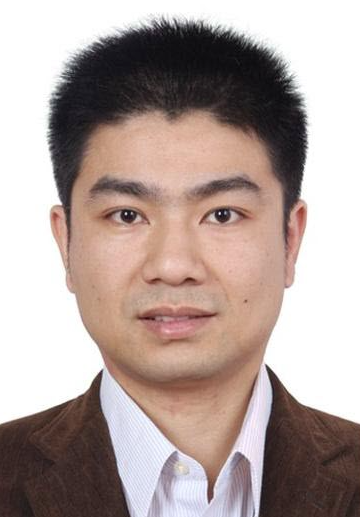 Jingqiang Lin (林璟锵)合作论文数School of Cyber Security, University of Science and Technology of China;Institute of Advanced Technology, University of Science and Technology of China15
 Peng Liu合作论文数College of Information Sciences and Technology, Pennsylvania State University11
 ZeYan Liu (刘泽砚)合作论文数山东理工大学交通与车辆工程学院8
 Lei Yang合作论文数Dept EECS, Univ Kansas8
 Dongwon Lee合作论文数College of Information Sciences and Technology, The Pennsylvania State University8
 Qiongxiao Wang合作论文数8
 Chao Hsien Chu (朱昭贤)合作论文数Pennsylvania State University6
 Hao Xue合作论文数5
 Le Guan合作论文数School of Computing, University of Georgia5
 Wei Wang (王伟)合作论文数School of Cyber Science and Technology, University of Science and Technology of China4
 Quanwei Cai合作论文数Sch Chem Engn, Sichuan Univ4
 Sana Awan合作论文数University of Kansas, Lawrence, KS, USA4Dawei Chu合作论文数4
 Ghazanfar Ali合作论文数Faculty of Biological Sciences, Quaid-i-Azam University4
 Wenqiang Li合作论文数3
 Jiameng Shi合作论文数3
 Qiaozhi Wang合作论文数Univ Kansas, Dept EECS, Lawrence, KS 66045 USA3
 Xiaokun Zhang (张晓坤)合作论文数中国科学院光电研究院3
 Abdulmalik Humayed合作论文数Government Expenditure & Projects Efficiency Authority3
 Ming Yang (杨明)合作论文数College of Physics and Optoelectronic Engineering, Shenzhen University3
 Bingyu Li合作论文数3
 Jiwu Jing (荆继武)合作论文数School of Cryptology, University of Chinese Academy of Sciences3
 Jia Yu (于佳)合作论文数College of Computer Science and Technology, Qingdao University3
 Hanlin Zhang (张翰林)合作论文数College of Computer Science & Technology, Qingdao University;Towson University3
 Zhu Li合作论文数Department of Computer Science & Electrical Engineering, School of Science and Engineering, University of Missouri – Kansas City;NSF Center for Big Learning, University of Missouri – Kansas City3
 Huazhen Fang合作论文数Mechanical Engineering, University of Kansas3
 Chengliang Tian合作论文数College of Computer Science & Technology, Qingdao University3
 Prasenjit Mitra合作论文数College of Information Sciences and Technology, Penn State University3
 Morteza Hashemi合作论文数Dept Elect & Comp Engn, Boston Univ3Zhaohui Wang合作论文数2
 Xin Feng (冯鑫)合作论文数Harbin Institute of Technology (Shenzhen)2Chenyu Jiang合作论文数2Javaria Ahmad合作论文数2Guangqi Liu合作论文数2
 Sohaib Kiani合作论文数Inst Nachrichtentech, Rhein Westfal TH Aachen2Krushi Patel合作论文数Univ Kansas, Dept Elect Engn & Comp Sci, Lawrence, KS 66045 USA2
 Fanglin Chen (陈芳林)合作论文数School of Computer Science and Technology, Harbin Institute of Technology, Shenzhen2
 Hyunjin Seo合作论文数William Allen White School of Journalism and Mass Communications, University of Kansas;Harvard University2
 Jun Yang (杨俊)合作论文数School of Mathematics, South China University of Technology2Ziqiang Ma (马自强)合作论文数School of Information Engineering, Ningxia University2
 Guangming Lu (卢光明)合作论文数Harbin Institute of Technology, Shenzhen2
 Wang-Chien Lee (李旺謙)合作论文数Department of Computer Science and Engineering, The Pennsylvania State University2
 Wenjie Pei (裴文杰)合作论文数School of Computer Science and Technology, Harbin Institute of Technology, Shenzhen2
 Xukai Zou合作论文数Luddy School of Informatics, Computing, and Engineering, Indiana University2
 Mei Liu合作论文数Division of Biomedical Informatics, Department of Health Outcomes & Biomedical Informatics, College of Medicine, University of Florida2
 Wing Shing Wong (黃永成)合作论文数Department of Information Engineering, The Chinese University of Hong Kong2
 Guanghui (Richard) Wang合作论文数Computer Vision and Intelligence Systems Laboratory, George Vari Engineering and Computing Centre, Department of Computer Science, Toronto Metropolitan University2Ye Wang合作论文数1




