Image captioning has been shown as an effective pretraining method similar to contrastive pretraining. However, the incorporation of location-aware information into visual pretraining remains an area with limited research. In this paper, we propose a simple visual pretraining method with location-aware captioners (LocCa). LocCa uses a simple image captioner task interface, to teach a model to read out rich information, i.e. bounding box coordinates, and captions, conditioned on the image pixel input. Thanks to the multitask capabilities of an encoder-decoder architecture, we show that an image captioner can easily handle multiple tasks during pretraining. Our experiments demonstrate that LocCa outperforms standard captioners significantly on localization downstream tasks while maintaining comparable performance on holistic tasks.
In this report, we introduce the Gemini 1.5 family of models, representing the next generation of highly compute-efficient multimodal models capable of recalling and reasoning over fine-grained information from millions of tokens of context, including multiple long documents and hours of video and audio. The family includes two new models: (1) an updated Gemini 1.5 Pro, which exceeds the February version on the great majority of capabilities and benchmarks; (2) Gemini 1.5 Flash, a more lightweight variant designed for efficiency with minimal regression in quality. Gemini 1.5 models achieve near-perfect recall on long-context retrieval tasks across modalities, improve the state-of-the-art in long-document QA, long-video QA and long-context ASR, and match or surpass Gemini 1.0 Ultra's state-of-the-art performance across a broad set of benchmarks. Studying the limits of Gemini 1.5's long-context ability, we find continued improvement in next-token prediction and near-perfect retrieval (>99 as Claude 3.0 (200k) and GPT-4 Turbo (128k). Finally, we highlight real-world use cases, such as Gemini 1.5 collaborating with professionals on completing their tasks achieving 26 to 75 categories, as well as surprising new capabilities of large language models at the frontier; when given a grammar manual for Kalamang, a language with fewer than 200 speakers worldwide, the model learns to translate English to Kalamang at a similar level to a person who learned from the same content.
This paper presents PaLI-3, a smaller, faster, and stronger vision language model (VLM) that compares favorably to similar models that are 10x larger. As part of arriving at this strong performance, we compare Vision Transformer (ViT) models pretrained using classification objectives to contrastively (SigLIP) pretrained ones. We find that, while slightly underperforming on standard image classification benchmarks, SigLIP-based PaLI shows superior performance across various multimodal benchmarks, especially on localization and visually-situated text understanding. We scale the SigLIP image encoder up to 2 billion parameters, and achieves a new state-of-the-art on multilingual cross-modal retrieval. We hope that PaLI-3, at only 5B parameters, rekindles research on fundamental pieces of complex VLMs, and could fuel a new generation of scaled-up models.
We present the training recipe and results of scaling up PaLI-X, a multilingual vision and language model, both in terms of size of the components and the breadth of its training task mixture. Our model achieves new levels of performance on a wide-range of varied and complex tasks, including multiple image-based captioning and question-answering tasks, image-based document understanding and few-shot (in-context) learning, as well as object detection, video question answering, and video captioning. PaLI-X advances the state-of-the-art on most vision-and-language benchmarks considered (25+ of them). Finally, we observe emerging capabilities, such as complex counting and multilingual object detection, tasks that are not explicitly in the training mix.
There has been a recent explosion of computer vision models which perform many tasks and are composed of an image encoder (usually a ViT) and an autoregressive decoder (usually a Transformer). However, most of this work simply presents one system and its results, leaving many questions regarding design decisions and trade-offs of such systems unanswered. In this work, we aim to provide such answers. We take a close look at autoregressive decoders for multi-task learning in multimodal computer vision, including classification, captioning, visual question answering, and optical character recognition. Through extensive systematic experiments, we study the effects of task and data mixture, training and regularization hyperparameters, conditioning type and specificity, modality combination, and more. Importantly, we compare these to well-tuned single-task baselines to highlight the cost incurred by multi-tasking. A key finding is that a small decoder learned on top of a frozen pretrained encoder works surprisingly well. We call this setup locked-image tuning with decoder (LiT-decoder). It can be seen as teaching a decoder to interact with a pretrained vision model via natural language.
Vision Transformers convert images to sequences by slicing them into patches. The size of these patches controls a speed/accuracy tradeoff, with smaller patches leading to higher accuracy at greater computational cost, but changing the patch size typically requires retraining the model. In this paper, we demonstrate that simply randomizing the patch size at training time leads to a single set of weights that performs well across a wide range of patch sizes, making it possible to tailor the model to different compute budgets at deployment time. We extensively evaluate the resulting model, which we call FlexiViT, on a wide range of tasks, including classification, image-text retrieval, openworld detection, panoptic segmentation, and semantic segmentation, concluding that it usually matches, and sometimes outperforms, standard ViT models trained at a single patch size in an otherwise identical setup. Hence, FlexiViT training is a simple drop-in improvement for ViT that makes it easy to add compute-adaptive capabilities to most models relying on a ViT backbone architecture. Code and pretrained models are available at github.com/googleresearch/big_vision.
This report introduces a new family of multimodal models, Gemini, that exhibit remarkable capabilities across image, audio, video, and text understanding. The Gemini family consists of Ultra, Pro, and Nano sizes, suitable for applications ranging from complex reasoning tasks to on-device memory-constrained use-cases. Evaluation on a broad range of benchmarks shows that our most-capable Gemini Ultra model advances the state of the art in 30 of 32 of these benchmarks - notably being the first model to achieve human-expert performance on the well-studied exam benchmark MMLU, and improving the state of the art in every one of the 20 multimodal benchmarks we examined. We believe that the new capabilities of the Gemini family in cross-modal reasoning and language understanding will enable a wide variety of use cases. We discuss our approach toward post-training and deploying Gemini models responsibly to users through services including Gemini, Gemini Advanced, Google AI Studio, and Cloud Vertex AI.
A compositional understanding of the world in terms of objects and their geometry in 3D space is considered a cornerstone of human cognition. Facilitating the learning of such a representation in neural networks holds promise for substantially improving labeled data efficiency. As a key step in this direction, we make progress on the problem of learning 3D-consistent decompositions of complex scenes into individual objects in an unsupervised fashion. We introduce Object Scene Representation Transformer (OSRT), a 3D-centric model in which individual object representations naturally emerge through novel view synthesis. OSRT scales to significantly more complex scenes with larger diversity of objects and backgrounds than existing methods. At the same time, it is multiple orders of magnitude faster at compositional rendering thanks to its light field parametrization and the novel Slot Mixer decoder. We believe this work will not only accelerate future architecture exploration and scaling efforts, but it will also serve as a useful tool for both object-centric as well as neural scene representation learning communities.
Generalization to novel domains is a fundamental chal-lenge for computer vision. Near-perfect accuracy on bench-marks is common, but these models do not work as expected when deployed outside of the training distribution. To build computer vision systems that truly solve real-world prob-lems at global scale, we need benchmarks that fully capture real-world complexity, including geographic domain shift, long-tailed distributions, and data noise. We propose urban forest monitoring as an ideal testbed for studying and improving upon these computer vision challenges, while working towards filling a crucial environ-mental and societal need. Urban forests provide significant benefits to urban societies. However, planning and main-taining these forests is expensive. One particularly costly aspect of urban forest management is monitoring the ex-isting trees in a city: e.g., tracking tree locations, species, and health. Monitoring efforts are currently based on tree censuses built by human experts, costing cities millions of dollars per census and thus collected infrequently. Previous investigations into automating urban forest monitoring focused on small datasets from single cities, covering only common categories. To address these short-comings, we introduce a new large-scale dataset that joins public tree censuses from 23 cities with a large collection of street level and aerial imagery. Our Auto Arborist dataset contains over 2.5M trees and 344 genera and is >2 or-ders of magnitude larger than the closest dataset in the literature. We introduce baseline results on our dataset across modalities as well as metrics for the detailed analy-sis of generalization with respect to geographic distribution shifts, vital for such a system to be deployed at-scale.
Disclosed herein is an improved mechanism for identifying abusive videos that have been inserted in a video. The mechanism can identify a video to be analyzed. The mechanism can then identify, for each frame of the video, a group of candidate locations within the video at which a two-dimensional video is likely to be embedded. The system can cluster the identified candidate locations and identify a subset of the candidate locations based on the clusters. The system can then identify a two-dimensional video embedded at one of the locations included in subset of candidate locations. BACKGROUND Video content providers can receive uploaded video content, store the uploaded video content, and then provide the uploaded video content to many users, for example, by streaming the video content to multiple user devices. These video content providers may determine whether the uploaded video content matches video content in a reference database, for example, that includes reference files of copyrighted content. However, in an effort to bypass or circumvent these detection systems, some content uploaders may upload a first video, where a second video is embedded within the first video and where the second video may be copyrighted or otherwise protected. It can be difficult to identify abusive videos that are embedded within another video. Thus, there is a need for an improved mechanism for identifying abusive videos inserted in a video. 2 Pavetic and Vorushin: Identifying Abusive Videos Inserted In A Video Published by Technical Disclosure Commons, 2019 DESCRIPTION The systems and techniques described in this disclosure relate to identifying abusive videos inserted in a video. The system can be implemented on a server, such as a server associated with a media content sharing service. FIG. 1 illustrates an example process for identifying abusive videos inserted in a video. FIG. 1 IDENTIFY A VIDEO TO BE ANALYZED 102 IDENTIFY, FOR EACH FRAME OF THE VIDEO, A GROUP OF CANDIDATE LOCATIONS WITHIN THE VIDEO AT WHICH A 2D MOVIE IS LIKELY TO BE EMBEDDED CLUSTER THE IDENTIFIED CANDIDATE LOCATIONS IN THE GROUP OF CANDIDATE LOCATIONS IDENTIFY A SUBSET OF THE CANDIDATE LOCATIONS BASED ON THE CLUSTERS IDENTIFY A VIDEO EMBEDDED AT ONE OF THE SUBSET OF CANDIDATE LOCATIONS 104
Longest Common Subsequence (LCS) deals with the problem of measuring similarity of two strings. While this problem has been analyzed for decades, the recent interest stems from a practical observation that considering single characters is often too simplistic. Therefore, recent works introduce the variants of LCS based on shared substrings of length exactly or at least k (LCS_k and LCS_k+ respectively). The main drawback of the state-of-the-art algorithms for computing LCS_k and LCS_k+ is that they work well only in a limited setting: they either solve the average case well while being suboptimal in the pathological situations or they achieve a good worst-case performance, but fail to exploit the input data properties to speed up the computation. Furthermore, these algorithms are based on non-trivial data structures which is not ideal from a practitioner's point of view. We present a single algorithm to compute both LCS_k and LCS_k+ which outperforms the state-of-the art algorithms in terms of runtime complexity and requires only basic data structures. In addition, we implement an algorithm to reconstruct the solution which offers significant improvement in terms of memory consumption. Our empirical validation shows that we save several orders of magnitude of memory on human genome data. The C++ implementation of our algorithms is made available at: https://github.com/google/fast-simple-lcsk
We address the problem of choosing a fixed number of sensor vertices in a graph in order to detect the source of a partially-observed diffusion process on the graph itself. Building on the definition of double resolvability we introduce a notion of vertex resolvability. For the case of tree graphs we give polynomial time algorithms for both finding the sensors that maximize the probability of correct detection of the source and for identifying the sensor set that minimizes the expected distance between the real source and the estimated one.
In this paper we present $LCSk$++: a new metric for measuring the similarity of long strings, and provide an algorithm for its efficient computation. With ever increasing size of strings occuring in practice, e.g. large genomes of plants and animals, classic algorithms such as Longest Common Subsequence (LCS) fail due to demanding computational complexity. Recently, Benson et al. defined a similarity metric named $LCSk$. By relaxing the requirement that the $k$-length substrings should not overlap, we extend their definition into a new metric. An efficient algorithm is presented which computes $LCSk$++ with complexity of $O((|X|+|Y|)\log(|X|+|Y|))$ for strings $X$ and $Y$ under a realistic random model. The algorithm has been designed with implementation simplicity in mind. Additionally, we describe how it can be adjusted to compute $LCSk$ as well, which gives an improvement of the $O(|X|\dot|Y|)$ algorithm presented in the original $LCSk$ paper.
 Xiaohua Zhai (翟晓华)合作论文数Meta5
 Lucas Beyer合作论文数Meta5
 Keran Rong (荣克然)合作论文数Google DeepMind4
 Xi Chen合作论文数Google Research4
 Mario Lučić合作论文数Google DeepMind4
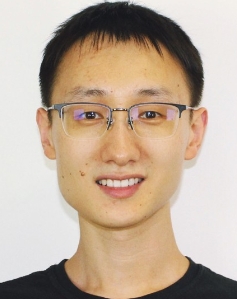 Xiao Wang合作论文数Google DeepMind4
 Ibrahim Alabdulmohsin合作论文数Google DeepMind4
 Radu Soricut合作论文数Google DeepMind4
 Basil Mustafa合作论文数Google Brain4
 Alexander Kolesnikov合作论文数Meta4
 Siamak Shakeri合作论文数Google DeepMind3
 Roman Vorushin合作论文数3
 Andreas Peter Steiner合作论文数Google Research3Josip Djolonga合作论文数Google Brain3
 Mostafa Dehghani合作论文数Google DeepMind3
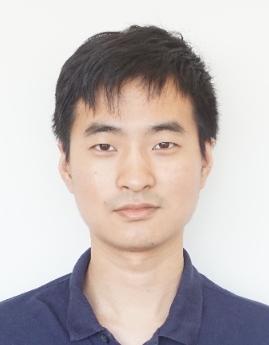 Yuanzhong Xu (徐元仲)合作论文数Google DeepMind3
 Michael Tschannen合作论文数Google DeepMind3
 Neil Houlsby合作论文数Anthropic3
 Dan Horgan合作论文数Google DeepMind2Juliette Love合作论文数2Kate Olszewska合作论文数2Minh Giang合作论文数2Sholto Douglas合作论文数2Geoff Brown合作论文数2Paul Natsev合作论文数2Cosmo Du合作论文数2Jong Lee合作论文数2Daniel Sohn合作论文数2Eli Collins合作论文数2Anita Gergely合作论文数2
 Ce Zheng (郑策)合作论文数National Key Laboratory for Multimedia Information Processing, Peking University2
 Fantine Huot合作论文数Google DeepMind2
 Eren Sezener合作论文数Google DeepMind2Seb Noury合作论文数DeepMind2
 Sid Mittal合作论文数Google2
 Nemanja Rakićević合作论文数DeepMind;Imperial College London2
 Hannah Sheahan合作论文数Google DeepMind2Amol Mandhane合作论文数DeepMind2
 Joost Van Amersfoort合作论文数Google DeepMind2
 Kaushik Shivakumar合作论文数Google DeepMind;ZeroUI;Robotics Without Limits2
 Mina Khan合作论文数Deepmind, Google2
 Nicholas Fitzgerald合作论文数Google2
 Samira Daruki合作论文数Google2
 Tom Kwiatkowski合作论文数Google2
 Toby Shevlane合作论文数Google DeepMind2
 Marco Selvi合作论文数Google DeepMind2
 Wojciech Stokowiec合作论文数DeepMind2Ross Hemsley合作论文数Google DeepMind2
 Adrià Recasens合作论文数Google DeepMind2




