The APA Awards for Distinguished Scientific Contributions are presented to persons who, in the opinion of the Committee on Scientific Awards, have made distinguished theoretical or empirical contributions to basic research in psychology. The 2015 recipients of the APA Scientific Contribution Awards were recognized by the 2014 Board of Scientific Affairs and selected by the 2014 Committee on Scientific Awards. The winners for 1956 through 2015 are listed here. The 2015 award winners are Stanislas Dehaene, Edna B. Foa, and Michael Tomasello. (PsycINFO Database Record
Aggressive BehaviorVolume 5, Issue 3 p. 313-316 Book Review Hormones and aggression, Vol 1, by Paul F. Brain. Montreal: Eden, 1977, pp viii + 126 Frank A. Beach, Frank A. Beach University of California, BerkeleySearch for more papers by this author Frank A. Beach, Frank A. Beach University of California, BerkeleySearch for more papers by this author First published: 1979 https://doi.org/10.1002/1098-2337(1979)5:3<313::AID-AB2480050309>3.0.CO;2-2AboutPDF ToolsRequest permissionExport citationAdd to favoritesTrack citation ShareShare Give accessShare full text accessShare full-text accessPlease review our Terms and Conditions of Use and check box below to share full-text version of article.I have read and accept the Wiley Online Library Terms and Conditions of UseShareable LinkUse the link below to share a full-text version of this article with your friends and colleagues. Learn more.Copy URL Share a linkShare onFacebookTwitterLinkedInRedditWechat Volume5, Issue31979Pages 313-316 RelatedInformation
Pseudohermaphroditic Stanley-Gumbreck male rats showed infrequent and incomplete copulatory responses to receptive females. Administration of testosterone propionate produced no increase in this behavior. Injections of estradiol and progesterone induced the pseudohermaphrodites to exhibit lordosis when mounted by stimulus males, but feminine responses were no more frequent than those of normal males given the same hormonal treatment. The hypothesis is suggested that early in development sufficient endogenous testis hormone is produced to cause normal desensitization of feminine behavioral mechanisms to estradiol, but that mechanisms for male behavior are not normally sensitized to testosterone.
Special definitions are proposed for three concepts representing characteristics of female mammals when they are in estrus. Attractivity refers to the female's stimulus value in evoking sexual responses by the male. Proceptivity connotes various reactions by the female toward the male which constitute her assumption of initiative in establishing or maintaining sexual interaction. Receptivity is defined in terms of female responses necessary and sufficient for the male's success in achieving intravaginal ejaculation. Attempts are made to measure each variable in the S-R paradigm and to identify the causal agents determining each aspect of the estrous female's behavioral characteristics.
1. Female animals exposed to stimulation by testosterone in utero or very soon after birth may exhibit changes in adult mating behavior which are indicative of two independent types of modification. One is defeminization, and another quite different one is masculinization. The behavioral modifications are believed to represent changes in separate neural mechanisms, either of which can be altered without changing the other. The implication is, of course, that the CNS is originally bisexual with respect to its behavioral potential. 2. Independent changes which can be produced in males by eliminating the effects of endogenous testosterone during early development are demasculinization and/or defeminization. Here again, separate neural mechanisms are postulated. 3. In rodents and carnivores there are at least two types of behavior which are normally dimorphic in adulthood and are subject to modification by manipulation of androgenic stimulation during very early development. One type, represented by mating behavior, depends heavily upon concurrent hormonal stimulation in adulthood during the time it is being manifested. The other, represented by urination behavior in female dogs, is hormonally modifiable in utero but independent of gonadal hormones in adulthood. Female dogs genitally masculinized by testosterone pre- and neonatally exhibit male mounting responses as adults but only if they are injected with testosterone propionate before and during the time of testing. The same females display the male urination pattern as adults, but this behavior occurs without any concurrent androgenic stimulation and is in fact unaffected by testosterone injections. It would appear that certain sex differences in behavior which normally appear at the time of puberty are dependent upon both prenatal and pubertal hormonal action, whereas other differences may depend only upon hormonal action during development and emerge at the normal age of puberty without any additional endocrine facilitation.
Because mine is the only paper in this very stimulating symposium to deal with the topic of behavior I wish it were possible to present a comprehensive review of the current state of knowledge with respect to hormonal control of behavioral phenomena in general. Since the very extensive literature on this subject precludes so ambitious an undertaking I have chosen a much more modest objective which is to describe in some detail a few experiments which my associates and I have conducted to investigate hormonal factors affecting socio-sexual behavior in dogs.
Male rats of proven copulatory ability were castrated and tested with females until they ceased achieving intromission. At this point one group (TP) received single injections of 10 mg testosterone propionate and a second group (TA) received single injections of 10 mg testosterone phenylacetate. Biweekly mating tests were continued until each male had failed to achieve intromission in four successive tests. A different series of male rats was castrated at 100 days of age and 7 weeks later half of the castrates received one injection of 10 mg of TP and the other half were given one injection of 10 mg of TA. On successive weeks a few males from each group were sacrificed and the seminal vesicles and penis were preserved for study. In terms of mating performance the effects of TA lasted approximately twice as long as those of TP. Seminal vesicle weight and secretory activity declined to the untreated castrate level within 2 weeks after TP injection but had not completely done so by 8 weeks after the injection of TA. Cornification of the epithelial spines on the integument of the glans penis was lost 4 weeks after TP treatment but still persisted 8 weeks after administration of TA.
Developmental PsychobiologyVolume 1, Issue 1 p. 71-71 Letter Increasing work in area Frank A. Beach, Frank A. Beach Department of Psychology, Uniuersity of California, Berkeley, California 94720Search for more papers by this author Frank A. Beach, Frank A. Beach Department of Psychology, Uniuersity of California, Berkeley, California 94720Search for more papers by this author First published: March 1968 https://doi.org/10.1002/dev.420010117AboutPDF ToolsRequest permissionExport citationAdd to favoritesTrack citation ShareShare Give accessShare full text accessShare full-text accessPlease review our Terms and Conditions of Use and check box below to share full-text version of article.I have read and accept the Wiley Online Library Terms and Conditions of UseShareable LinkUse the link below to share a full-text version of this article with your friends and colleagues. Learn more.Copy URL Share a linkShare onFacebookTwitterLinkedInRedditWechat No abstract is available for this article. Volume1, Issue1March 1968Pages 71-71 RelatedInformation
Observations and experiments relating to the causes and results of ejaculation in male mammals of several species reveal that in a number of different mammals, erection and emission can be mediated by purely spinal mechanisms. In intact males, emission is possible without genital stimulation, and the occurrence of emission is not automatically associated with orgasm in men or with the normal behavior sequelae to ejaculation produced in animals by copulation. These and other similarities between sexual reflexes in primates, carnivores, and rodents are taken to indicate the potential values of a broadly comparative approach to human sexual functions.
By the use of spreading cortical depression, an avoidance response was established in a single hemisphere in 10 rats. The interhemispheric transfer of this response could be demonstrated in 50% of the Ss following a single conditioning trial with both cortical hemispheres functional. Transfer of the response was not dependent upon the S receiving shock during this 1 trial.
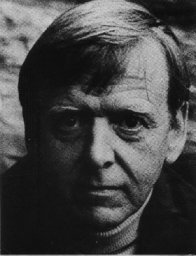 Julian Jaynes合作论文数Yale U.2
 Clellan S. Ford合作论文数2Curt P. Richter合作论文数1MARY D. SALTER AINSWORTH合作论文数1donald b lindsley合作论文数1
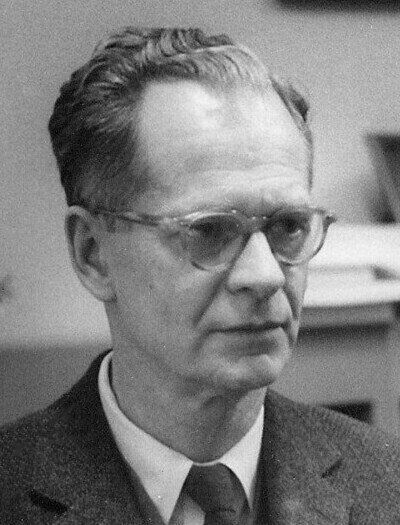 B. F. Skinner合作论文数Harvard University1Lg Clemens合作论文数1Wh Westbrook合作论文数1irving l janis合作论文数1
 Harry F. Harlow合作论文数University of Arizona1
 Saul Sternberg合作论文数Department of Psychology, School of Arts and Sciences, University of Pennsylvania1
 Noam Chomsky (诺姆·乔姆斯基)合作论文数Department of Linguistics and Philosophy, School of Humanities, Arts and Social Sciences, Massachusetts Institute of Technology1
 David M. Green合作论文数University of Florida1Allen Newell合作论文数1
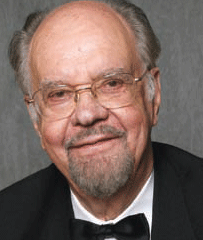 Endel Tulving合作论文数Department of Psychology, Faculty of Arts and Science, University of Toronto1
 James L. (Jay) McClelland合作论文数Center for Mind, Brain, Computation and Technology, Department of Psychology, Stanford University;University of Manchester1
 Amos Tversky合作论文数Stanford University1Frederic M. Lord合作论文数Educational Testing Service1
 Mortimer Mishkin合作论文数National Institutes of Health1Hans Wallach合作论文数1Neal E. Miller合作论文数1Charles E. Osgood合作论文数1Richard S. Lazarus合作论文数1
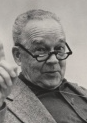 James Jerome Gibson合作论文数Smith College, Cornell University1Jerome Kagan合作论文数1
 George A. Miller合作论文数Department of Psychology, Princeton University1William J. McGuire合作论文数Yale University1Robert Paul Abelson合作论文数Yale University1Martin Buehler合作论文数1Roger G. Barker合作论文数1
 Paul Meehl合作论文数University of Minnesota1
 John Bowlby合作论文数Tavistock Clinic1
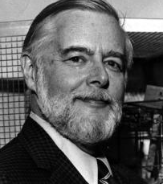 Mark R. Rosenzweig合作论文数University of California, Berkeley1Gunnar Johansson合作论文数1
 William Kaye Estes合作论文数Indiana University Bloomington1Walter Mis合作论文数1Niko Tinbergen合作论文数1John Thibaut合作论文数1Floyd Ratliff合作论文数1
 Jerome Bruner合作论文数School of Law, New York University1Robert E. Kuehn合作论文数1Larry P. Nucci合作论文数University of Illinois at Chicago1
 John Flavell合作论文数Department of Psychology, School of Humanities and Sciences, Stanford University1Carl I. Hovland合作论文数1




