J.Allen, T.Awes, A.Badal a, S.Baum gart , R.Bellwied, L.Benhabib, C.Bernard, N.Bianchi, F.Blanco, Y.Bortoli, G .Bourdaud, O .Bourrion, B.Boyer, E.Bruna, J.Butterworth, H.Caines, D.Calvo Diaz Aldagalan, G .P.Capitani, Y.Carcagno, A.Casanova Diaz, M .Cherney, G .Conesa Balbastre, T.M .Corm ier, L.Cunqueiro M endez, H.Delagrange, M .DelFranco, M .Dialinas, P.DiNezza, A.Donoghue, M .Elnim r, A.Enokizono, M .Estienne, J.Faivre, A.Fantoni, F.Fichera, B.Foglio, S.Fresneau, J.Fujita, C.Furget, S.G adrat, I.G arishvili, M .G erm ain, N.G iudice, Y.G orbunov, A.G rim aldi, N.G uardone, R.G uernane, C.Hadjidakis, J.Ham blen, J.W .Harris, D.Hasch, M .Heinz, P.T.Hille, D.Hornback, R.Ichou, P.Jacobs, S.Jangal, K .Jayananda, J.L.K lay, A.G .K nospe, S.K ox, J.K ral, P.Laloux, S.LaPointe, P.La Rocca, S.Lewis, Q .Li, F.Librizzi, D.M adagodahettigeDon, I.M artashvili, B.M ayes, T.M illetto, V.M uccifora, H.M uller, J.F.M uraz, C.Nattrass, F.Noto, N.Novitzky, G .O dyniec, A.O rlandi, A.Palm eri, G .S.Pappalardo, A.Pavlinov, W .Pesci, V.Petrov, C.Petta, P.Pichot, L.Pinsky, M .Ploskon, F.Pom pei, A.Pulvirenti, J.Putschke, C.A.Pruneau, J.Rak, J.Rasson, K .F.Read, J.S.Real, A.R.Reolon, F.Riggi, J.Riso, F.Ronchetti, C.Roy, D.Roy, M .Salem i, S.Salur, M .Sharm a, D.Silverm yr, N.Sm irnov, R.Soltz, V.Sparti, J.-S.Stutzm ann, T.J.M .Sym ons, A.Tarazona M artinez, L.Tarini, R.Thom en, A.Tim m ins, M .van Leeuwen, R.Vieira, A.Viticchi e, S.Voloshin, D.W ang, Y.W ang, and R.M .W ard
The inclusive charged particle transverse momentum distribution is measured in proton-proton collisions at root s = 900 GeV at the LHC using the ALICE detector. The measurement is performed in the central pseudorapidity region (vertical bar eta vertical bar < 0.8) over the transverse momentum range 0.15 < p(T) < 10 GeV/c. The correlation between transverse momentum and particle multiplicity is also studied. Results are presented for inelastic (INEL) and non-single-diffractive (NSD) events. The average transverse momentum for vertical bar eta vertical bar < 0.8 is < p(T)>(INEL) = 0.483 +/- 0.001 (stat.) +/- 0.007 (syst.) GeV/c and < p(T)>(NSD) = 0.489 +/- 0.001 (stat.) +/- 0.007 (syst.) GeV/c, respectively. The data exhibit a slightly larger < p(T)> than measurements in wider pseudorapidity intervals. The results are compared to simulations with the Monte Carlo event generators PYTHIA and PHOJET. (C) 2010 Published by Elsevier B.V.
We report on the measurement of two-pion correlation functions from pp collisions at {radical}(s)=900 GeV performed by the ALICE experiment at the Large Hadron Collider. Our analysis shows an increase of the Hanbury Brown-Twiss radius with increasing event multiplicity, in line with other measurements done in particle- and nuclear collisions. Conversely, the strong decrease of the radius with increasing transverse momentum, as observed at the Relativistic Heavy Ion Collider and at Tevatron, is not manifest in our data.
ALICE (A Large Ion Collider Experiment) is the LHC (Large Hadron Collider) experiment devoted to investigating the strongly interacting matter created in nucleus-nucleus collisions at the LHC energies. The ALICE ITS, Inner Tracking System, consists of six cylindrical layers of silicon detectors with three different technologies; in the outward direction: two layers of pixel detectors, two layers each of drift, and strip detectors. The number of parameters to be determined in the spatial alignment of the 2198 sensor modules of the ITS is about 13,000. The target alignment precision is well below 10 mu m in some cases (pixels). The sources of alignment information include survey measurements, and the reconstructed tracks from cosmic rays and from proton-proton collisions. The main track-based alignment method uses the Millepede global approach. An iterative local method was developed and used as well. We present the results obtained for the ITS alignment using about 10(5) charged tracks from cosmic rays that have been collected during summer 2008, with the ALICE solenoidal magnet switched off.
The performance of prototypes for the ALICE electromagnetic sampling calorimeter has been studied in test beam measurements at FNAL and CERN. A 4×4 array of final design modules showed an energy resolution of about 11%/E(GeV)⊕1.7% with a uniformity of the response to electrons of 1% and a good linearity in the energy range from 10 to 100GeV. The electromagnetic shower position resolution was found to be described by 1.5mm⊕5.3mm/E(GeV). For an electron identification efficiency of 90% a hadron rejection factor of >600 was obtained.
ALICE (A Large Ion Collider Experiment) at the LHC contains a wide array of detector systems for measuring hadrons, leptons, and photons. ALICE is designed to carry out comprehensive measurements of high energy nucleus-nucleus collisions, in order to study QCD matter under extreme conditions and to study the phase transition between confined matter and the Quark-Gluon Plasma (QGP). Discussion of the full ALICE physics program can be found in [1, 2]. The interaction and energy loss of high energy partons in matter provides a sensitive tomographic probe of the medium generated in high energy nuclear collisions (“jet quenching”) [3–6]. Jet quenching measurements have played a key role at the Relativistic Heavy Ion Collider (RHIC) [7–10] and will be central to the study of nuclear collisions at the LHC. This Technical Design Report describes a large acceptance Electromagnetic Calorimeter (EMCal) that will be installed in the ALICE central detector. The EMCal enhances ALICE's capabilities for jet quenching measurements. The addition of the EMCal enables triggering on high energy jets, reduces significantly the measurement bias for jet quenching studies, improves jet energy resolution, and augments existing ALICE capabilities to measure high momentum photons and electrons. Combined with ALICE's excellent capabilities to track and identify particles from very low pt to high pt the EMCal enables an extensive study of jet quenching at the LHC.
 N. Bianchi合作论文数8G. Conesa Balbastre合作论文数8M. Dialinas合作论文数8C. Furget合作论文数7H. Delagrange合作论文数7A. Enokizono合作论文数7Harold Spinka合作论文数Argonne National Laboratory7
 Julien Faivre合作论文数Laboratoire De Physique Subatomique Et De Cosmologie, Institut National De Physique Nucléaire Et De Physique Des Particules, CNRS7R. Ichou合作论文数7
 Helen Caines合作论文数Wright Laboratory, Department of Physics, Yale University;Brookhaven National Laboratory7M. Estienne合作论文数SUBATECH, Ecole des Mines de Nantes, Université de Nantes, CNRS-IN2P3, Nantes, France7Emilio M. Bruna合作论文数7S. Jangal合作论文数7Delia Hasch合作论文数7P. T. Hille合作论文数7
 Paola La Rocca合作论文数Department of Physics and Astronomy "Ettore Majorana", University of Catania7
 Joern Putschke合作论文数College of Liberal Arts and Sciences, Wayne State University6A. Pavlinov合作论文数6
 Cynthia Hadjidakis合作论文数Laboratoire de Physique des 2 Infinis Irène Joliot-Curie6
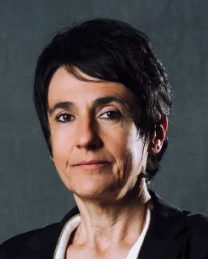 Christelle Roy合作论文数France-Arizona Institute for Global Grand Challenges, The University of Arizona;European and International Division, CNRS6E. Moreno合作论文数Penn State Univ, University Pk6
 Federico Ronchetti合作论文数National Laboratory of Frascati6G. S. Pappalardo合作论文数6R. Guernane合作论文数6
 S. Kox合作论文数6
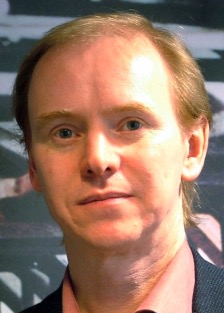 David Evans合作论文数School of Physics and Astronomy, University of Birmingham6
 Pasquale Di Nezza合作论文数Laboratori Nazionali di Frascati, Istituto Nazionale di Fisica Nucleare6
 Cussonneau Jean-Pierre合作论文数6
 Kenneth F Read Jr合作论文数Physics Division, Oak Ridge National Laboratory;University of Tennessee6
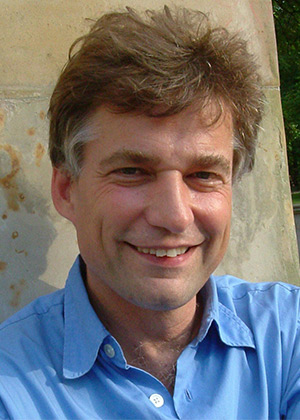 Rene Bellwied合作论文数Department of Physics, College of Natural Sciences and Mathematics, University of Houston6A. Pulvirenti合作论文数6Terry Awes合作论文数Oak Ridge National Laboratory6Guido Capitani合作论文数6
 J. Hamblen合作论文数University of Rochester6S. Gadrat合作论文数6
 Catia Maria Annunziata Petta合作论文数Dipartimento di Fisica e Astronomia "Ettore Majorana", Università di Catania6
 Francesco Riggi合作论文数Department of Physics and Astronomy "Ettore Majorana", University of Catania6
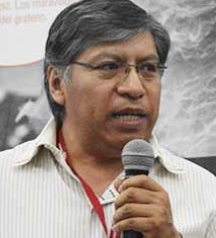 Eleazar Cuautle Flores合作论文数Departamento de Altas Energías, Instituto de Ciencias Nucleares, Universidad Nacional Autónoma de México6S. Di Liberto合作论文数6K. Kozlov合作论文数6S. Kapusta合作论文数6Rodion Kolevatov合作论文数6Y. Gorbunov合作论文数6Mateusz Ploskon合作论文数Nuclear Science Division, Lawrence Berkeley National Laboratory6M. Bondila合作论文数6A. Casanova Diaz合作论文数6C. Bombonati合作论文数6E. Kornas合作论文数6
 Lawrence Pinsky合作论文数Department of Physics, University of Houston6




